Buon Ma Thuot · Itinerary
Buon Ma Thuot Itinerary: 2–5 Day Coffee & Culture Guide
Ni Wander in Vietnam editorial team · Hanoi, Vietnam
Buon Ma Thuot (Thành phố Buôn Mê Thuột) sits in Đắk Lắk Province, Vietnam's coffee belt. Unlike Hanoi's chaos or Ho Chi Minh City's hum, this city of roughly 500,000 moves at a plantation rhythm. We've road-tripped the red earth here multiple times—learning which coffee farms let you stay overnight, which waterfalls require guides to navigate safely, and which restaurants serve the best local game dishes.
This guide cuts through the noise. We name actual neighborhoods, real prices in both VND and Philippine peso equivalents (for 2026), and what genuinely works versus what's inflated for travelers.
Kailangan mo ba ng 2 oras o 5 araw dito?
If you fly into Buon Ma Thuot on a coffee tour, 2 days suffices: one plantation visit, one waterfall, quick meals. But 3–5 days lets you sleep on a farm, trek properly, visit ethnic villages in Buon Don District, and sit with local coffee roasters without rushing. Plan longer if weather is wet (May–September); dry season (October–March) is ideal.
Most travelers allot 3 days. That's enough to taste the rhythm without feeling stranded.
Saan exactly magsisimula ang iyong araw?
Start in Thành phố Buôn Mê Thuột itself, District 1 (Quận 1). This is where the bus terminal, markets, and main hotels sit. Tây Nguyên Street (Đường Tây Nguyên) and Lê Duẩn Street (Đường Lê Duẩn) run through downtown—simple cafés, pho shops, and motorbike rental stalls line them.
From here, all tours radiate outward:
- Plantations are 15–50 km north and west (Ea Sup, Ea H'leo).
- Waterfalls (Dray Nur, Dray Sap) are 30–40 km south.
- Ethnic villages require guides and sit deep in surrounding wards (Ea Sup Ward, Cư M'gar Ward).
Do not rent a motorbike solo if you've not driven here before. Roads are unpaved in patches, and locals drive fast. Hire a guide with a bike or book a minivan tour—around 400,000–600,000 VND (PHP 650–975) per person for a half-day group tour.
🗺️ Planuhin ang iyong ruta sa Vietnam
Alin ang best coffee farm experience—day trip o overnight?
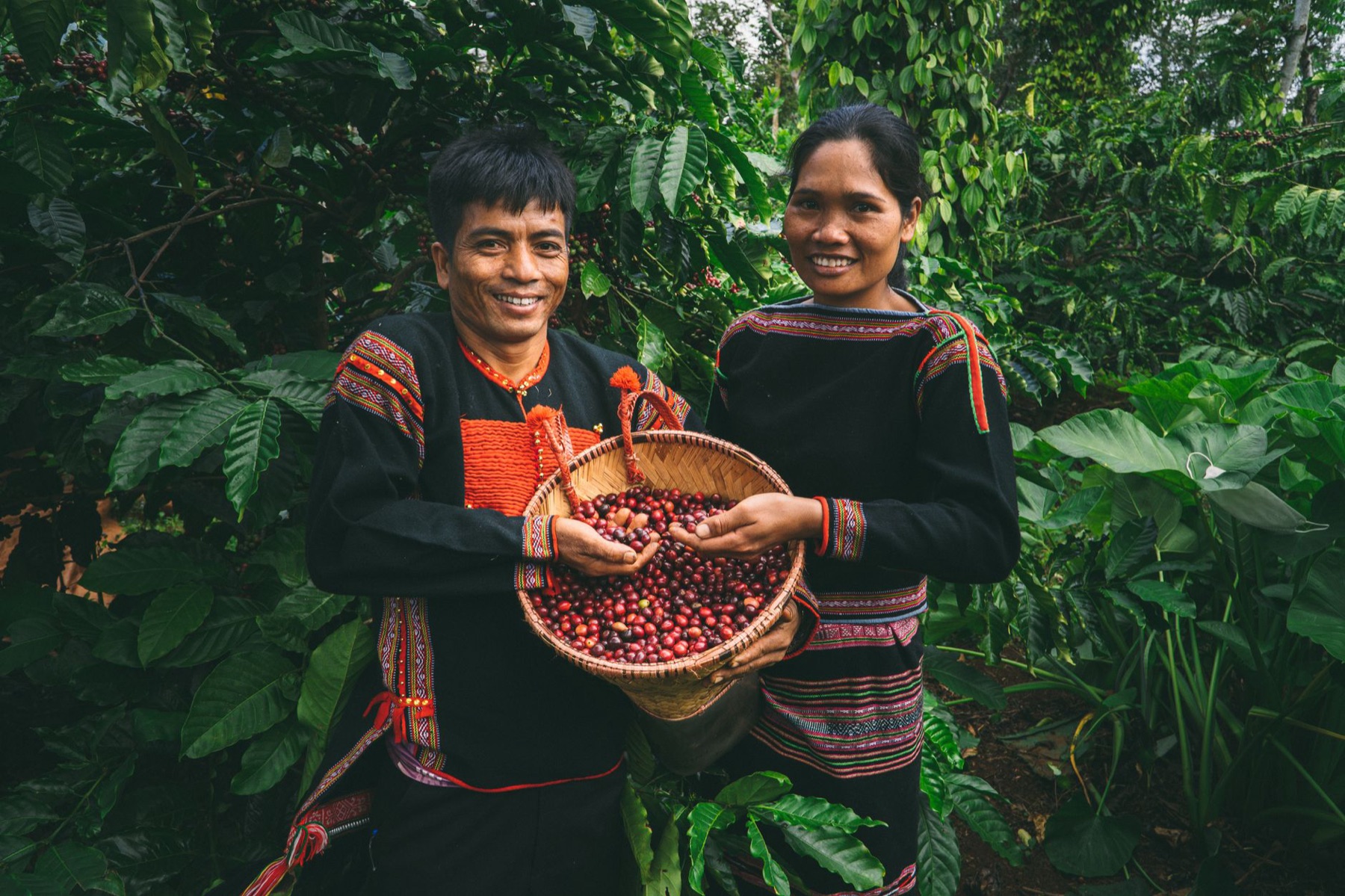
Day trips (8 am–4 pm): Visit a working plantation, see harvest methods (usually November–February), taste the beans on-site. Cost: 150,000–300,000 VND (PHP 245–490) including transport and a small coffee ceremony. Tour operators cluster near the bus station on Lê Duẩn Street.
Overnight stays: A handful of family-run plantation homestays offer basic bungalows. You wake at 5 am, walk the red-earth rows with the owner, pick beans (or watch), and eat meals they prepare. Cost: 600,000–1,200,000 VND (PHP 975–1,950) per night, meals included. Book via your hotel or a tour guide—no standalone Airbnb-like platform works reliably here.
Overnight is immensely better if you have the time. You see why locals defend their land against industrial monoculture, taste coffee roasted in their kitchen same-day, and leave with real relationships instead of photos.
Guides often upsell "special coffee ceremonies" and "village lunches" at marked-up prices. Politely decline extras; the farm experience itself is the value.
Dray Nur at Dray Sap: Hike or just watch?
Dray Nur (Thác Dray Nur) and Dray Sap (Thác Dray Sap) are tiered waterfalls 30 km south, in Cư M'gar Ward. They sit on the Sêrêpok River.
Dray Nur is taller, dramatic, and busy with tour groups. Dray Sap is wilder, less visited. A single guided visit to both takes 4–5 hours (including drive time). Cost: 200,000–400,000 VND (PHP 325–650) per person with guide, entrance, and transport. Swim afterward if water level is safe—ask the guide before diving.
Do not hike without a guide. Trails are slippery, river crossings are not marked, and cell signal drops. The reward is genuine jungle and minority Ê Đê people selling water and snacks at the base.
What to check before booking:
- Ask your guide if boats or log-crossings are needed. Wear water shoes or sandals that strap on.
- Bring sun protection and insect repellent. Afternoon gnats are vicious.
- Water levels drop by late April; early-season (October–January) is best for swimming.
- Avoid midday heat; start tours by 7–8 am.
Saan kumain tulad ng local, hindi tourist?
District 1 street food (around downtown): Phở shops open 6–8 am, close by 10 am. Bánh mì stands set up by 10 am. A bowl of phở costs 30,000–50,000 VND (PHP 50–80). Bánh mì: 15,000–25,000 VND (PHP 25–40). Find them on Lê Duẩn and side streets; no English signs, but point and order. Locals eat standing or crouched on tiny stools.
Central Highlands Museum café (Bảo tàng Tây Nguyên): Open 7 am–5 pm (closed Mondays). This museum displays Montagnard weavings, gongs, and colonial coffee-era relics. A visit takes 1–1.5 hours. Entry: 40,000 VND (PHP 65). The small café serves regional coffee and snacks at fair prices—around 30,000–50,000 VND (PHP 50–80) for a coffee with condensed milk and a pastry. Real locals come here, not backpackers.
Specialty game restaurants: Buon Ma Thuot is known for deer, wild boar, and game birds. Ask your hotel for "quán cơm ngang" (family restaurants). A full meal (rice, grilled meat, greens, soup) runs 80,000–150,000 VND (PHP 130–245) per person. These are not tourist traps; locals eat here. Expect no English menu or staff—bring a photo or ask your guide to call ahead.
Coffee roasteries: A few roasters in District 1 (ask at your hotel for current names—they move) sell fresh-roasted beans and serve cups for 25,000–40,000 VND (PHP 40–65). These are run by younger locals marketing to Hanoi and expat customers. Beans to take home cost 100,000–300,000 VND (PHP 165–490) per kilogram, depending on grade.
Avoid "tourist coffee shops" on main streets; they water-mark prices 2–3x and serve instant mixes. Eat where you see Vietnamese families with children.
Buon Don: Ethnic minority villages—guide or self-guided?
Buon Don Ward (Xã Buôn Đôn) lies 50 km south, toward the Cambodian border. Ê Đê and M'Nông minorities live there in still-houses. Do not visit solo or without advance permission; cultural sensitivity matters, and roads are unmapped.
A reputable guide costs 400,000–700,000 VND (PHP 650–1,140) for a full-day trip (8 am–5 pm) including transport, entrance to villages, and a meal. The guide introduces you properly and translates traditions instead of treating villagers as a backdrop for photos.
Cáo Studio offers áo dài photo sessions in Hanoi and Saigon; for Buon Ma Thuot ethnic dress photography, hire a local guide who can connect you with Ê Đê weavers—more authentic than studio shots.
📸 Mag-book ng ao dai photoshoot sa Hanoi o Saigon (Cáo Studio)
What to check:
- Does the tour include time inside a still-house, or just photo stops outside?
- Will you share a meal with the family? (Yes is better.)
- Is the guide from the community or an outsider?
- Ask beforehand if photography is okay; some families decline.

Drying facilities, coffee festivals, at best season to visit
Best months: October–March. Harvest runs November–February; mornings are cool and dry. Afternoon rains are rare. Humidity drops, making plantation walks pleasant. April–May is hot and dusty. June–September is wet; farms close to visitors during heavy rains.
Coffee festivals: Buon Ma Thuot Coffee Festival happens sporadically in late October or November (dates shift yearly; confirm with your hotel). Expect live music, coffee-cupping competitions, and family crowds. Entry is free; food stalls charge standard prices. Book hotels early if timing coincides.
Drying facilities: During harvest season, you'll see massive tarps of beans sun-drying in fields and courtyards. Some farms let you walk through the drying process—no extra cost if you're already on a tour. Photographs here are stunning but ask permission first.
Buon Ma Thuot versus other Central Highlands destinations
| Destination | Best for | Distance from Buon Ma Thuot | Stays | Vibe |
|---|---|---|---|---|
| Buon Ma Thuot | Coffee, waterfalls, ethnic villages | — | 3–5 days | Slower, local, agricultural |
| Dalat | Hill-station cool, flower gardens, pine forests | 150 km north | 2–3 days | Romantic, expat-friendly, tourist-heavy |
| Kontum | Mountain scenery, minority culture, fewer tourists | 100 km north | 1–2 days | Rawer, less infrastructure |
| Pleiku | War history museum, minority markets | 120 km west | 1 day pass-through | Historical, less tourist comfort |
If you're chasing "authentic Central Highlands," Buon Ma Thuot and Kontum beat Dalat. Dalat is prettier and easier, but crowded. Pick based on whether you want coffee + waterfalls or remote highland trekking.
🗺️ Planuhin ang iyong ruta sa Vietnam
Motorbike rental, transport, at practical costs
Bus to Buon Ma Thuot: From Hanoi (around 24 hours, 200,000–350,000 VND / PHP 325–570) or Ho Chi Minh City (12 hours, 150,000–250,000 VND / PHP 245–410). Book via your hotel or a travel agent in the city you're leaving. Sleeping buses have rough suspension; overnight is tiring.
Flights: Buon Ma Thuot airport (Buôn Mê Thuột – Phù Cát Airport, BAN) has daily flights to Hanoi and Ho Chi Minh City. Cost: 800,000–1,500,000 VND (PHP 1,300–2,440) one-way with local carriers. Flight time: 1.5–2 hours. Book via Vietjet or Bamboo Airways.
In-city motorbike rental: 100,000–150,000 VND (PHP 165–245) per day at rental stalls. Helmets are legally required (and provided). Insurance is optional (add 30,000 VND / PHP 50). Deposit a passport copy or credit card. Only rent if you're confident; roads are winding and locals drive fast.
Taxis and apps: Grab and local taxi apps work here, but less reliably than in big cities. Short trips (5–10 km) cost 40,000–80,000 VND (PHP 65–130). For longer hires (half-day, full-day), negotiate with a taxi stand or book through your hotel.
eSIM for Vietnam: If you need mobile data for maps and booking, buy a local eSIM before arriving or at Hanoi/HCMC airport. Cost: around 50,000–100,000 VND (PHP 80–165) with 7–30 days of data.
📞 Bumili ng eSIM para sa Vietnam
Souvenirs na worth bumili
Coffee beans are the obvious choice—but quality varies wildly. Buy from a roaster who'll let you taste first, not vacuum-sealed packages from tourist shops. Cost: 80,000–250,000 VND (PHP 130–410) per kilogram depending on grade and roaster reputation.
Ê Đê weavings (scarves, wall hangings) are handmade by minority women. Fair-trade shops and guesthouses stock authentic pieces—100,000–500,000 VND (PHP 165–815) per item. Avoid mass-produced "tribal" goods; ask if the weaver's name is on a tag.
Wooden gongs and decorative items are sold at the Central Highlands Museum gift shop and village markets. Small gongs: 80,000–200,000 VND (PHP 130–325). Verify they're not plastic fakes—tap and listen.
Consider a gift box or keepsake with a coffee-farm story—we recommend browsing curated collections of Vietnam-themed stationery and home goods for ideas to recreate locally or bring back.
🎁 Tuklasin ang aming collections
---
Buon Ma Thuot in context: How it fits a longer Vietnam trip
If you're doing a full Vietnam itinerary planner, Buon Ma Thuot works as a 3–5 day detour between Ho Chi Minh City (12 hours south) and Hanoi (24 hours north). Direct flights save time but cost more.
A common route: HCMC → Buon Ma Thuot → Hanoi, or reverse. Alternatively, combine it with Dalat (3 hours by bus) for a full Central Highlands loop.
If you're not into agriculture or hiking, skip it—Hanoi's Old Quarter and Ha Long Bay or Hoi An beaches pull more visitors for good reason. Buon Ma Thuot is for people who want to slow down and sit with the land.
🗺️ Planuhin ang iyong ruta sa Vietnam
---
What to check before you book a Buon Ma Thuot trip
- Weather forecast: Is it dry season (Oct–Mar) or wet (Jun–Sep)? Wet season closes many plantation tours.
- Tour guide reviews: Ask your hotel for trusted guides; unknown operators sometimes over-charge or cut corners on safety.
- Visa and eSIM: Ensure your Vietnam e-visa is approved. Grab a local eSIM or buy a local SIM card at arrival.
- Homestay vs. hotel: Decide if you want the immersion of a plantation homestay or comfort of a mid-range hotel. Book homestays 2–3 weeks early.
- Dietary needs: Tell restaurants and homestays in advance if you're vegetarian or have allergies. English is sparse; use translation apps or ask your guide to phone ahead.
- Physical fitness: Waterfall hikes are not strenuous but involve river crossings and uneven ground. Wear proper shoes.
---
Buon Ma Thuot is not a headline destination for most travelers. That's precisely why it rewards those who go. You'll drink better coffee, meet farmers who care about their craft, and see a Vietnam that's not packaged for tourists. Budget 3–5 days, hire a good guide, and expect red earth under your fingernails and genuine gratitude from locals who rarely see foreign visitors.

FAQ
Gaano katagal ang flight mula sa Ho Chi Minh City papunta Buon Ma Thuot?
About 1.5–2 hours. Flights leave daily with Vietjet and Bamboo Airways. Prices range around 800,000–1,500,000 VND (PHP 1,300–2,440) one-way. Book online or through your hotel. Buses take 12 hours and cost roughly half as much but are exhausting overnight.
Ligtas ba umit mag-alala sa traveler scams dito?
Buon Ma Thuot is safer than Hanoi or HCMC. Main scams: inflated tour prices if you book directly with strangers, overcharged "tourist coffee shops," and fake homestay listings. Book tours through your hotel or Grab, eat where locals eat, and confirm homestay details via phone or video before payment.
Kailangan ko ba ng guide sa coffee farms?
Yes, if you want real insight. Self-guided plantation walking is unsafe (fences, machinery, no signage). Guides cost 150,000–400,000 VND (PHP 245–650) per half-day and explain the farming cycle, roasting, economics. Worth every dong for context.
Available ba ang vegetarian meals sa farms at restaurants?
Farms serve meat-based dishes by default—phở with meat, grilled game. Tell your guide or homestay ahead (24 hours' notice). Most will prepare rice, vegetables, and tofu soup instead. City restaurants (District 1) have vegetarian phở and bánh mì. Game restaurants may refuse to cook vegetarian; ask before sitting.
Ano ang best time to see the coffee harvest?
November–February. Berries ripen in October; picking peaks through February. Tours run during this window. March–October, farms focus on pruning and maintenance—less dramatic but still informative. Dry season (Oct–Mar) means comfortable weather and fewer rain delays. Book 2–3 weeks in advance for overnight homestays during peak harvest.
Kailangan ko ba ng malaking travel insurance para dito?
Standard Southeast Asia travel insurance covers medical and evacuation. Buon Ma Thuot has a hospital in District 1, but serious emergencies need airlifting to Hanoi or HCMC (2+ hours). Buy insurance that includes evacuation. Hiking and waterfall visits are low-risk if you follow guide instructions.
Ano ang best affordable midrange hotel na malapit sa downtown?
We don't name specific properties to avoid endorsements. Search "Buon Ma Thuot hotel District 1" online; read reviews carefully. Expect 300,000–700,000 VND (PHP 490–1,140) per night for clean, basic rooms with Wi-Fi. Book direct via their website or Booking.com—no markup that way.
Pwede ba akong bumili ng coffee na fair-trade at direct from farmers?
Yes. Ask your guide or hotel for a roaster's contact. Many roasters work directly with small-holder farmers and sell 100–250 VND per kilogram. You can also buy at the Central Highlands Museum café, though selection is small. Avoid vacuum-sealed tourist-shop bags; they're often stale or blended with lower-grade robusta.
Mga karaniwang tanong
Gaano katagal ang flight mula sa Ho Chi Minh City papunta Buon Ma Thuot?
About 1.5–2 hours. Flights leave daily with Vietjet and Bamboo Airways. Prices range around 800,000–1,500,000 VND (PHP 1,300–2,440) one-way. Book online or through your hotel. Buses take 12 hours and cost roughly half as much but are exhausting overnight.
Ligtas ba umit mag-alala sa traveler scams dito?
Buon Ma Thuot is safer than Hanoi or HCMC. Main scams: inflated tour prices if you book directly with strangers, overcharged "tourist coffee shops," and fake homestay listings. Book tours through your hotel or Grab, eat where locals eat, and confirm homestay details via phone or video before payment.
Kailangan ko ba ng guide sa coffee farms?
Yes, if you want real insight. Self-guided plantation walking is unsafe (fences, machinery, no signage). Guides cost 150,000–400,000 VND (PHP 245–650) per half-day and explain the farming cycle, roasting, economics. Worth every dong for context.
Available ba ang vegetarian meals sa farms at restaurants?
Farms serve meat-based dishes by default—phở with meat, grilled game. Tell your guide or homestay ahead (24 hours' notice). Most will prepare rice, vegetables, and tofu soup instead. City restaurants (District 1) have vegetarian phở and bánh mì. Game restaurants may refuse to cook vegetarian; ask before sitting.
Ano ang best time to see the coffee harvest?
November–February. Berries ripen in October; picking peaks through February. Tours run during this window. March–October, farms focus on pruning and maintenance—less dramatic but still informative. Dry season (Oct–Mar) means comfortable weather and fewer rain delays. Book 2–3 weeks in advance for overnight homestays during peak harvest.
Kailangan ko ba ng malaking travel insurance para dito?
Standard Southeast Asia travel insurance covers medical and evacuation. Buon Ma Thuot has a hospital in District 1, but serious emergencies need airlifting to Hanoi or HCMC (2+ hours). Buy insurance that includes evacuation. Hiking and waterfall visits are low-risk if you follow guide instructions.
Ano ang best affordable midrange hotel na malapit sa downtown?
We don't name specific properties to avoid endorsements. Search "Buon Ma Thuot hotel District 1" online; read reviews carefully. Expect 300,000–700,000 VND (PHP 490–1,140) per night for clean, basic rooms with Wi-Fi. Book direct via their website or Booking.com—no markup that way.
Pwede ba akong bumili ng coffee na fair-trade at direct from farmers?
Yes. Ask your guide or hotel for a roaster's contact. Many roasters work directly with small-holder farmers and sell 100–250 VND per kilogram. You can also buy at the Central Highlands Museum café, though selection is small. Avoid vacuum-sealed tourist-shop bags; they're often stale or blended with lower-grade robusta.
Higit pa: Gabay sa paglalakbay: Buon Ma Thuot · Itinerary sa Buon Ma Thuot: 1, 2, 3 araw