Hoi An
Hoi An Worth Visiting in 2026? Real Honest Take
Par Wander in Vietnam editorial team · Hanoi, Vietnam
Yes, Hoi An is worth visiting, but differently than five years ago. The Ancient Town (Phố Cổ) spreads across Hoàn Kiếm and Cẩm Phúc wards in Quảng Nam province, 30 km south of Đà Nẵng; a 2–3-day stay captures it better than a daytrip. Expect ochre-painted tube houses, Chinese-Japanese architecture, and lantern-lit Tuesdays—but also tour-group bottlenecks, €8–12 meals (180,000–270,000 VND), and a homogenised souvenir strip. The entrance fee (120,000 VND, around €4) includes five sites; riverside walks and tailoring remain genuine. Avoid high season (December–February), pre-booked group tours, and shops claiming "silk that changes colour"—most fabric comes from Hà Nội or China. Visit for the town's spatial beauty, not Instagram legend. Wander in Vietnam recommends pairing Hoi An with Ha Long Bay or Ninh Binh for real Vietnamese texture.
Hoi An remains Vietnam's most atmospheric old-town destination, but 2026 visitors face new realities: daytrip crowds, rising restaurant prices, and gentrification. Here's what actually justifies a visit—and how to do it right.
Yes, Hoi An is worth visiting, but differently than five years ago. The Ancient Town (Phố Cổ) spreads across Hoàn Kiếm and Cẩm Phúc wards in Quảng Nam province, 30 km south of Đà Nẵng; a 2–3-day stay captures it better than a daytrip. Expect ochre-painted tube houses, Chinese-Japanese architecture, and lantern-lit Tuesdays—but also tour-group bottlenecks, €8–12 meals (180,000–270,000 VND), and a homogenised souvenir strip. The entrance fee (120,000 VND, around €4) includes five sites; riverside walks and tailoring remain genuine. Avoid high season (December–February), pre-booked group tours, and shops claiming "silk that changes colour"—most fabric comes from Hà Nội or China. Visit for the town's spatial beauty, not Instagram legend. Wander in Vietnam recommends pairing Hoi An with Ha Long Bay or Ninh Binh for real Vietnamese texture.
Does Hoi An Feel Authentic Anymore?
The Ancient Town is physically preserved—pedestrian cobblestones, 18th-century tube-house footprints, no cars—but authenticity today means paying for experience. Residents have migrated to the suburb; shopfronts are now tourist cafés, tailors, and lantern sellers. The 14th-century Phoon Hoan Bridge and Japanese Covered Bridge are real. Quiet alleyways north of Trần Phú Street (the main drag) still have working families, local restaurants with handwritten menus in Vietnamese only, and lower prices (40,000–60,000 VND for phở, around €1.35–2). Peak crowds (10 a.m.–3 p.m., especially weekends) make it feel like a theme park; arrive before 8 a.m. or after 5 p.m. to sense the original rhythm. Conclusion: Yes, but only if you arrive early or stay overnight—day-trippers see theatre.
🗺️ Préparer son itinéraire au Vietnam

Why Is Hoi An on Every Vietnam Itinerary?
UNESCO listed the Ancient Town in 1999 because of its rare architectural continuity: no French colonial overlay, no American bombing damage, no modern towers. It's a working town museum of Southeast Asian trade (Chinese, Japanese, Indian, French influences converged here in the 15th–19th centuries). For travellers planning multi-week Vietnam trips, Hoi An is geographically central (equidistant from Hà Nội and Hồ Chí Minh), near Đà Nẵng's beach, and offers unique experiences (lantern-making, silk-weaving classes, custom tailoring within 24 hours). The town's compact size (walkable in 3–4 hours) fits easily into a 2-week itinerary. However, if you're doing Hà Nội, Hồ Chí Minh, and beach time, Hoi An is optional, not essential. Conclusion: It's famous because it's genuinely rare, but it's not required if you lack time.
What Costs More Than Expected in Hoi An?
Restaurant prices in the Ancient Town are 3–5× local rates outside it. A simple beef phở costs 50,000–60,000 VND (€1.70–2) on a side street, but 120,000–150,000 VND (€4–5) at a tourist-facing establishment near the bridge or market. Tailoring starts at 400,000 VND (€13.50) for basic trousers; a silk áo dài (traditional tunic) runs 800,000–1,500,000 VND (€27–50) for mid-range quality (finer workshops charge 2–3 million VND, around €67–100). Entrance fees (120,000 VND once, then free re-entry for 3 days) are reasonable, but guided tours (offered at hostels) cost 150,000–300,000 VND (€5–10) and often push shops that pay commission. Drinks (coffee, beer, juice) are 20,000–50,000 VND (€0.70–1.70) inside the Old Town vs. 15,000–30,000 VND outside. Accommodation ranges from 200,000 VND/night (€6.70, basic dorm) to 1,500,000 VND (€50, mid-range hotel); mid-range family-run guesthouses (400,000–600,000 VND, €13.50–20) are best value.
| Item | Standard Price (Non-Tourist) | Tourist Zone Price | Markup |
|---|---|---|---|
| Phở | 50,000–60,000 VND (€1.70–2) | 120,000–150,000 VND (€4–5) | 2.4–2.7× |
| Beer (0.5 L) | 15,000–20,000 VND (€0.50–0.67) | 40,000–60,000 VND (€1.35–2) | 2.5–3× |
| Tailored trousers | 400,000–500,000 VND (€13.50–17) | 600,000–1,000,000 VND (€20–33.50) | 1.5–2× |
| Lantern (small) | 50,000–80,000 VND (€1.70–2.70) | 100,000–200,000 VND (€3.35–6.70) | 1.5–2.5× |
| Coffee | 15,000–20,000 VND (€0.50–0.67) | 40,000–80,000 VND (€1.35–2.70) | 2.5–4× |
Conclusion: Budget €50–80/day (1.1–1.7 million VND) for comfort; day-trippers spend double per meal.
How to Avoid Hoi An Tourist Scams
"Silk" shops on Trần Phú Street sell synthetic polyester dyed to feel stiff; genuine silk (from Hà Nội's Văn Miếu district or Huế) costs 3–4× more and feels fluid. Never buy based on shopkeeper claims; feel the fabric, ask the fibre content (nylon = fake), and buy only from named weavers or your hotel's recommendation. Tailors promise "24-hour delivery" then rush a garment with loose seams; give 48 hours and check stitching in daylight before paying. Tour guides steering you to their "uncle's" shop earn 20–30% commission and will claim items are "last piece" or "factory-direct"; walk past and shop independently if prices matter. Shoe shiners, flower-crown sellers, and fortune-tellers work on the café strip and will overcharge; agree prices in advance or decline. Cyclo (three-wheeled taxi) drivers ask for 50,000–80,000 VND (€1.70–2.70) then expect tips; use Grab (ride-sharing app) for 25,000–40,000 VND (€0.85–1.35) or walk (the town is tiny). Book accommodation directly (phone or email) rather than via Facebook messenger to avoid fakes.
Scam Checklist:
- [ ] Never pay for "silk" without examining fibre or receipt.
- [ ] Agree cyclo/taxi price before boarding; use Grab if unsure.
- [ ] Avoid guides with shop kickbacks; hire via hotel concierge only.
- [ ] Tailoring: get a written receipt, specify delivery date in writing.
- [ ] Street food: choose busy stalls with high turnover (safer).
📸 Réserver une séance photo en ao dai à Hanoï ou Saïgon (Cáo Studio)
Conclusion: The scams are mild compared to Southeast Asia generally, but solo payment agreements and independent choices prevent 90% of issues.
What Should You Actually Do in Hoi An?
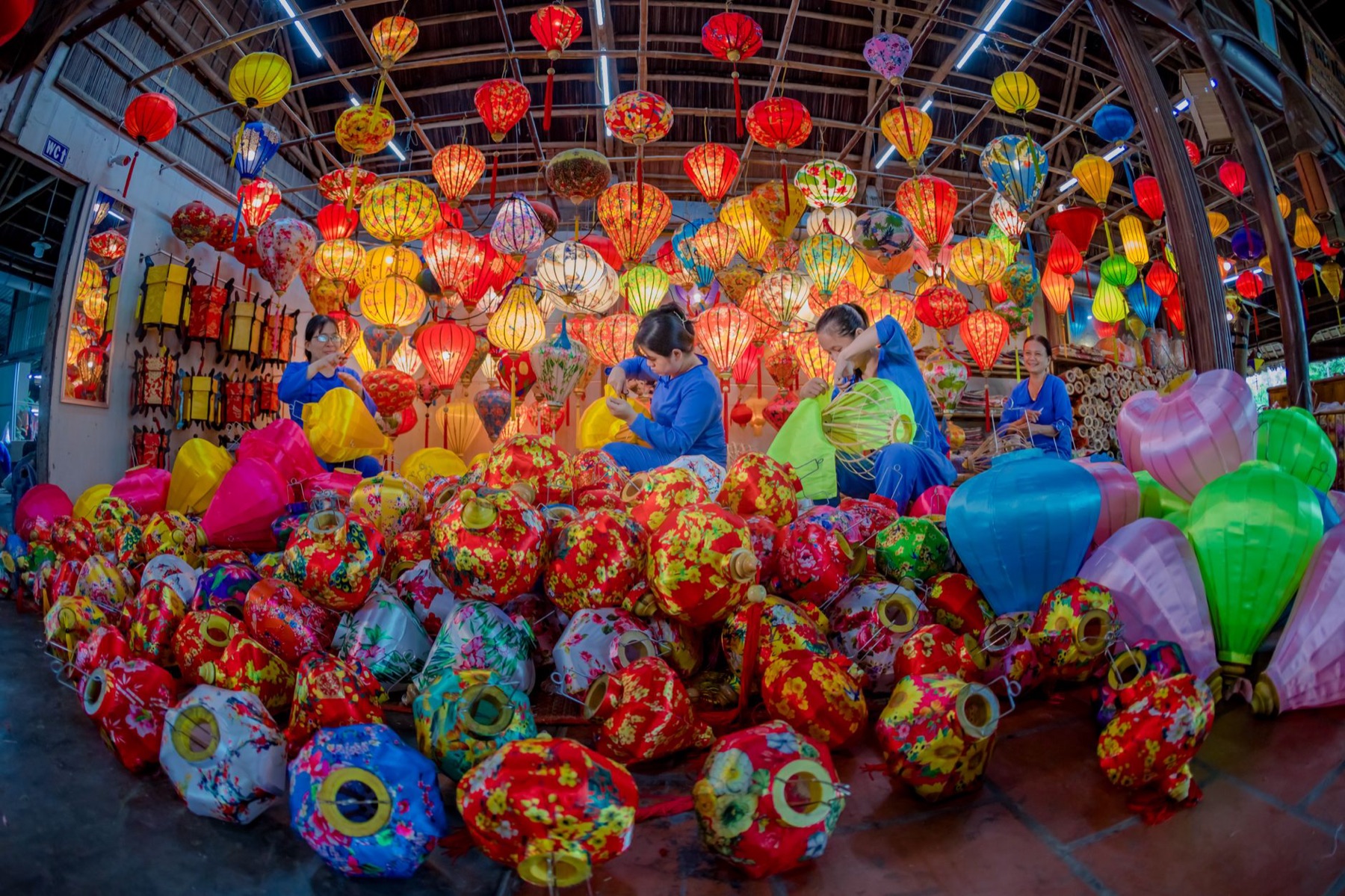
Walk the Ancient Town on foot at dawn (6–8 a.m.) or dusk (5–7 p.m.): the town is magical, crowds are gone, and photos are better. Cẩm Phúc Ward (north side) has fewer tourists and real local life. Visit the Phoon Hoan (Japanese Covered) Bridge: the ticket (120,000 VND, valid 3 days) includes five cultural sites (Assembly Hall for Cantonese merchants, old house of Tấn Ký, museum). Spend 30 minutes here, not an hour with a guide. Take a tailoring class or order custom áo dài: this is Hoi An's unique skill; choose a mid-range workshop (ask your hotel), agree on fibre and style in writing, and collect it as a keepsake (see Collections for similar memory gifts). Bike or walk to Cam Thanh Coconut Forest (7 km east): a genuine landscape tourists often miss, with canoe rides through mangrove channels (30 minutes, 80,000–120,000 VND, €2.70–4, cash only). Eat at family-run spots north of the main street: Cao Lau (local noodle dish, 40,000 VND, €1.35) at a tiny stall beats a €10 café. Skip: the riverside restaurants, lantern-making kits (overpriced), and temple tours with paid monks.
Honest 48-Hour Itinerary:
- Evening 1: arrive by train or bus; wander Cẩm Phúc Ward; dinner at a local phở stall.
- Day 1: 6–8 a.m. walk; Japanese Bridge, Assembly Hall, old houses (90 min). Coffee. Lantern-making studio (60 min, 150,000 VND, €5—if interested). Lunch. Tailoring consultation. Afternoon bike or walk to An Hân Beach or Cam Thanh.
- Day 2: sunrise walk; tailoring fitting (if ordered); market visit (Hoi An Central Market, Trần Phú Ward: vegetables, fish, local breakfast); mid-day departure to Đà Nẵng or beyond.
🎟️ Comparer les excursions et billets
Which Hoi An Souvenirs Actually Last?
Skip the mass-produced lanterns and silk scarves. Instead, bring home a custom tailored áo dài (see Collections: Custom Tailoring Gifts) or hand-embroidered textiles from a named workshop—these carry genuine craft. A wooden carved Buddha or incense holder from a local artisan (not the tourist-street versions) costs 150,000–300,000 VND (€5–10) and feels authentic. Cao lau instant noodles (20,000–40,000 VND, €0.67–1.35 per pack) make decent edible gifts if you know someone who cooks. Best keepsakes, however, are personalized or engraved items with your Hoi An dates—a photo print of the Japanese Bridge, a star map from your visit date, or a leather journal. These combine Hoi An's memory with timeless quality that rival high-street souvenirs. For memorable travel photos wearing an áo dài against Hoi An's ochre backdrop, Cáo Studio's ao dai photoshoot (available in Hà Nội and Hồ Chí Minh) offers a professional alternative to street vendors.
What to Check Before You Buy:
- Tailoring: Insist on a written receipt with fibre content, style sketch, and collection date. Pay 50% upfront, 50% on delivery. Get the tailor's phone number.
- Silk/fabric: Ask, "Is this 100% silk?" and request a small swatch to take to your hotel and check under daylight.
- Wooden items: Check for rough edges, cracks, or paint flaking. Fair-trade workshops (ask your hotel for names) pay artisans better.
- Lanterns: Measure your luggage; many tourist lanterns are 30 cm tall and won't fit carry-on.
- Photography: If buying a souvenir photo, verify the seller owns the rights and can email it to you—phone-printed photos fade.
---
Hoi An is worth visiting for its rarity and beauty, but only if you stay 2+ days, avoid peak season (Dec–Feb), and treat it as a spatial experience rather than a shopping destination. It pairs well with Đà Nẵng's beaches, a Vietnam itinerary planner to sequence your stops, and an eSIM for Vietnam to navigate independently. The real Hoi An is quieter, slower, and more human than the Instagram version—find it on side streets, in local meals, and in the light.

FAQ
Hoi An worth visiting if I only have one day?
Only if you arrive before 8 a.m. and skip the main tourist loop. Walk Cẩm Phúc Ward, see the Japanese Bridge, eat lunch at a local phở stall, and leave by 4 p.m. Otherwise, invest 2–3 days for the town to feel real; daytime visits feel rushed and expensive.
Is Hoi An better than Hanoi's Old Quarter?
Different. Hoi An is a preserved 18th–19th-century town; Hà Nội's Old Quarter is living, chaotic, cheaper, and more local. Hoi An for architecture and calm; Hanoi for energy and authenticity. Both are worth 2–3 days each on a longer trip.
What is the best time to visit Hoi An in 2026?
September–November (warm, drier) and March–April (cool). Avoid December–February (peak crowds, €12 meals, full hotels). May–August brings rain and fewer tourists but is hot and humid.
How much should I pay for a custom áo dài in Hoi An?
Mid-range (quality silk, neat stitching): 800,000–1,500,000 VND (€27–50). Premium (finer workshops, high-end silk): 1,500,000–3,000,000 VND (€50–100). Budget 24–48 hours delivery. Anything under 500,000 VND is polyester or rushed; expect loose seams.
Is Hoi An's food scene worth the money?
Not in the Ancient Town proper. Cao lau (local noodle dish) is worth tasting once (40,000 VND, €1.35, at a stall). Riverside restaurants are 3–5× overpriced. Eat breakfast at the Central Market, lunch at side-street phở or bánh mì stalls (40,000–60,000 VND, €1.35–2), and reserve dinner at a guesthouse-recommended family restaurant outside the pedestrian zone.
How many days should I spend in Hoi An?
2–3 days is ideal (one evening, one full day, one morning). Day-trippers miss the town's texture. If you have only one day, skip Hoi An entirely and spend it in Đà Nẵng or Ninh Binh; you'll see more Vietnam per hour.
What is the entrance fee to Hoi An Ancient Town?
120,000 VND (around €4) per person. The ticket covers five sites: Japanese Covered Bridge, Assembly Hall for Cantonese merchants, Tan Ky House, Phung Hung House, and the Museum of Sa Huynh Culture. Valid for 3 days from first entry. Children under 6 are free.
Questions fréquentes
Hoi An worth visiting if I only have one day?
Only if you arrive before 8 a.m. and skip the main tourist loop. Walk Cẩm Phúc Ward, see the Japanese Bridge, eat lunch at a local phở stall, and leave by 4 p.m. Otherwise, invest 2–3 days for the town to feel real; daytime visits feel rushed and expensive.
Is Hoi An better than Hanoi's Old Quarter?
Different. Hoi An is a preserved 18th–19th-century town; [Hà Nội's Old Quarter](/fr/hanoi) is living, chaotic, cheaper, and more local. Hoi An for architecture and calm; Hanoi for energy and authenticity. Both are worth 2–3 days each on a longer trip.
What is the best time to visit Hoi An in 2026?
September–November (warm, drier) and March–April (cool). Avoid December–February (peak crowds, €12 meals, full hotels). May–August brings rain and fewer tourists but is hot and humid.
How much should I pay for a custom áo dài in Hoi An?
Mid-range (quality silk, neat stitching): 800,000–1,500,000 VND (€27–50). Premium (finer workshops, high-end silk): 1,500,000–3,000,000 VND (€50–100). Budget 24–48 hours delivery. Anything under 500,000 VND is polyester or rushed; expect loose seams.
Is Hoi An's food scene worth the money?
Not in the Ancient Town proper. Cao lau (local noodle dish) is worth tasting once (40,000 VND, €1.35, at a stall). Riverside restaurants are 3–5× overpriced. Eat breakfast at the Central Market, lunch at side-street phở or bánh mì stalls (40,000–60,000 VND, €1.35–2), and reserve dinner at a guesthouse-recommended family restaurant outside the pedestrian zone.
How many days should I spend in Hoi An?
2–3 days is ideal (one evening, one full day, one morning). Day-trippers miss the town's texture. If you have only one day, skip Hoi An entirely and spend it in [Đà Nẵng](/fr/ho-chi-minh-city) or [Ninh Binh](/fr/ninh-binh); you'll see more Vietnam per hour.
What is the entrance fee to Hoi An Ancient Town?
120,000 VND (around €4) per person. The ticket covers five sites: Japanese Covered Bridge, Assembly Hall for Cantonese merchants, Tan Ky House, Phung Hung House, and the Museum of Sa Huynh Culture. Valid for 3 days from first entry. Children under 6 are free.
À lire aussi: Guide de voyage : Hoi An