เวียดนาม
Can Tho on a Budget: Food, Transport & Real Costs 2026
โดย Wander in Vietnam editorial team · Hanoi, Vietnam
Can Tho, the capital of Hau Giang Province in the Mekong Delta, costs far less than Hanoi or Ho Chi Minh City. Budget travelers spend around 300,000–500,000 VND (USD 12–20) daily on a basic room in Ninh Kieu district; street meals run 25,000–50,000 VND (USD 1–2) per bowl. The city's real draw is the floating markets—Cai Rang and Phong Dien—best visited by rental boat (120,000–180,000 VND/USD 5–7 for 2–3 hours) at 5 a.m., before crowds and heat. Skip the overpriced tour-operator boats launching from Can Tho Tourist Wharf; instead, walk to Cai Rang Market's public dock directly and negotiate with boatmen in Vietnamese. Ferries, local buses, and cyclos cost under 10,000 VND (USD 0.40). According to Wander in Vietnam's field observations, the lowest daily spend hits USD 18–22 when you share lodging, eat only pho and bánh mì, and use public transport. What kills budgets: hotel booking-site markups (add 30%), riverside restaurant menus (2× street prices), and unmetered taxi rides. Avoid taxis altogether; use Grab app instead. 📸 จองถ่ายรูปชุดอ๋าวหญ่ายที่ฮานอยหรือไซ่ง่อน (Cáo Studio) ---
Why Can Tho Beats Hanoi and Ho Chi Minh on Budget?
Can Tho's cost of living sits 35–45% below Hanoi and Saigon because it lacks tourist infrastructure and foreign investment saturation. A pho bowl at street-side shops in Can Tho runs 30,000–40,000 VND (USD 1.20–1.60); the same bowl in Hanoi's Old Quarter costs 50,000–70,000 VND (USD 2–2.80). Guesthouse dorm beds start at 200,000 VND (USD 8) nightly; private rooms with air-con, 350,000–450,000 VND (USD 14–18). The Mekong Delta's agricultural base keeps food prices stable and low year-round. Most foreign visitors end up spending USD 22–35 daily when they add market snacks, entrance fees (floating markets are free; temples charge 10,000–20,000 VND/USD 0.40–0.80), and day trips to Phong Dien or Tan Phu districts. The Mekong Delta's rhythm is slower than urban Vietnam, which also means fewer bars and nightlife pushing tourist prices upward. Transport between cities is cheap: a direct bus to Ho Chi Minh City runs 120,000–150,000 VND (USD 5–6); to Chau Doc, 100,000 VND (USD 4). Can Tho rewards travelers who eat local, move early, and skip branded cafés.
---
Where Should You Stay to Minimize Costs?
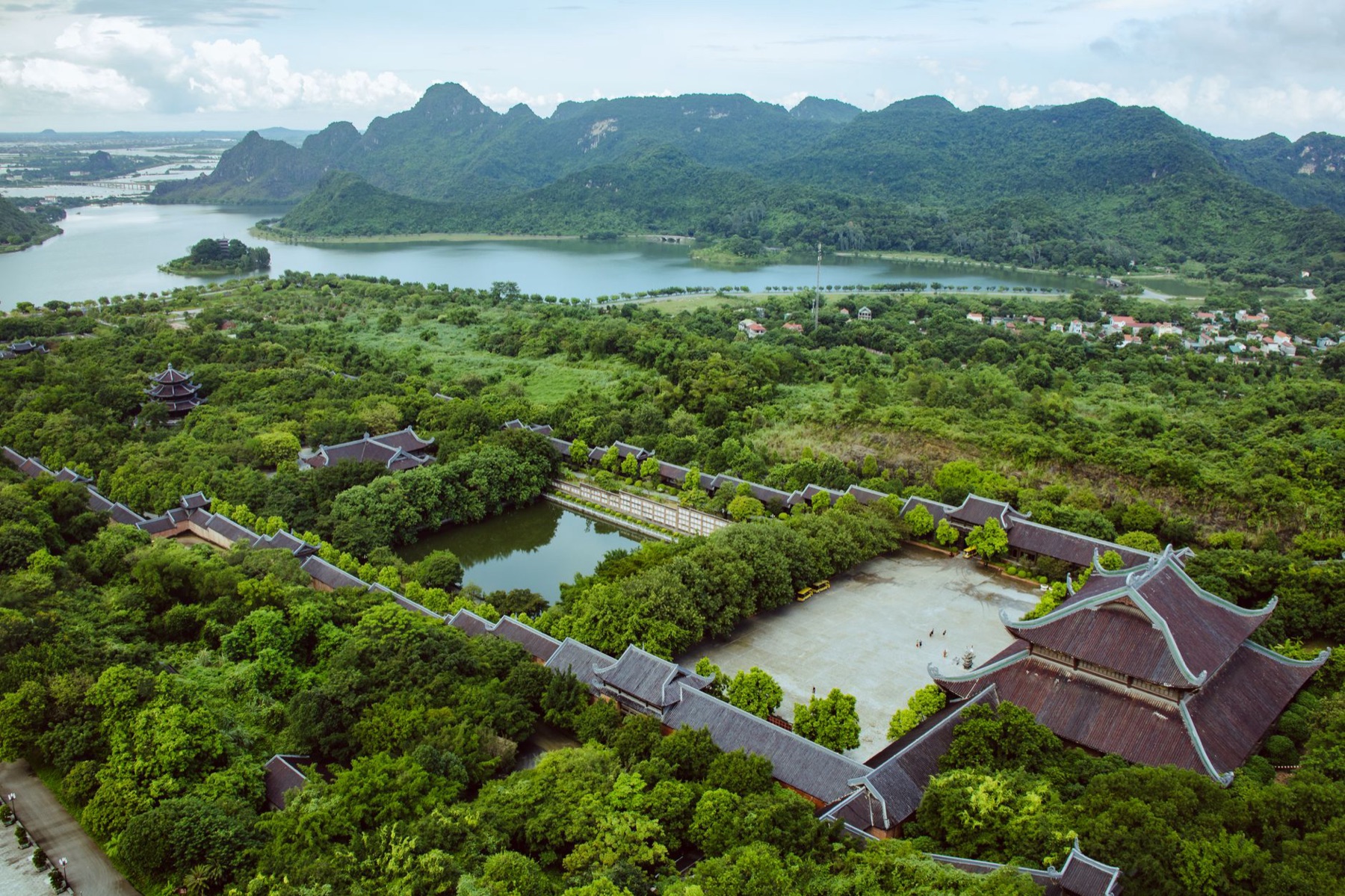
Ninh Kieu district, the central zone, has the most budget lodging and street food within walking distance. Avoid riverside hotels; they charge 600,000–1,200,000 VND (USD 24–48) for a double room. Instead, book in side streets one block back from the Hau River—hostels and small guesthouses there charge 180,000–280,000 VND (USD 7–11) for a dorm, 350,000–500,000 VND (USD 14–20) for a private room with shared bath. The An Binh area, east of the central market (Cho Can Tho), is even cheaper and more local; expect 250,000–380,000 VND (USD 10–15) for a basic double. Cai Rang district, near the floating market of the same name, is quieter and offers guesthouse rooms at 300,000–420,000 VND (USD 12–17). Don't book via Booking.com or Agoda; they add 25–35% commission. Instead, walk the district or call small guesthouses directly—Vietnamese owners will often knock 10–15% off online rates if you show up and negotiate in person or over WhatsApp. Water and electricity are usually included; breakfast is not. The trade-off: smaller rooms, no daily housekeeping, sparse English, but zero markup and genuine local owners. Budget stays cluster in Ninh Kieu's back lanes and An Binh; avoid the riverside tourist strip.
---
What's the Real Cost of Eating in Can Tho?
Street food runs 20,000–50,000 VND (USD 0.80–2); markets and restaurants, 40,000–120,000 VND (USD 1.60–5) per meal. Pho at dawn vendors (around 6–7 a.m., before 8 a.m.) costs 30,000–40,000 VND (USD 1.20–1.60) for a large bowl; by noon, the same vendor raises it to 35,000–45,000 VND. Bánh mì at corner stalls run 20,000–35,000 VND (USD 0.80–1.40). Iced coffee (cà phê đen đá), 10,000–15,000 VND (USD 0.40–0.60). The Mekong fish-farming region means fresh cá kho to (braised catfish), available at street stalls for 50,000–80,000 VND (USD 2–3.20) per serving. Markets (Cho Can Tho, Cho Khanh Hoi) sell cooked meals at dedicated stall sections; grab a plastic stool, order from 2–3 vendors (noodles, greens, meat), and spend 60,000–90,000 VND (USD 2.40–3.60) total. Convenience stores (Circle K, FamilyMart) charge 40,000–70,000 VND (USD 1.60–2.80) for packaged snacks—avoid them unless you're desperate. Sit-down restaurants with English menus charge 90,000–200,000 VND (USD 3.60–8) per plate. Tourist-facing restaurants on Hai Ba Trung or Tran Hung Dao streets mark up by 100–150%; skip them. Eat at street vendors and markets: USD 1.50–3 per meal. Restaurants: USD 3.60–8. Never order at a table without seeing prices written down or asking first.
---
How Do You Move Around Without Overspending?
Public buses and ferries cost 5,000–10,000 VND (USD 0.20–0.40) per trip. Grab app (ride-hailing) runs 25,000–50,000 VND (USD 1–2) for short trips within Ninh Kieu; longer routes to Cai Rang floating market, 60,000–100,000 VND (USD 2.40–4). Cyclos (three-wheeled taxis) take advantage of tourists; a 15-minute cyclo ride that should cost 30,000–50,000 VND often starts at 100,000 VND if the driver senses a foreigner. Use Grab instead: cheaper, GPS-tracked, no negotiation. Rental bicycles from guesthouses run 30,000–50,000 VND (USD 1.20–2) daily; the city is flat and relatively safe. For the floating markets, walk directly to Cai Rang dock early (around 5–5:30 a.m.); boatmen charge 120,000–180,000 VND (USD 5–7) for 2–3 hours if you ask in person. Tour operators based at Can Tho Tourist Wharf or Saigon Tourist mark up the same trip to 300,000–500,000 VND (USD 12–20) and add time waiting in air-con offices. Ferries to nearby provinces (Chau Doc, Long Xuyên) are cheap and scenic: 60,000–90,000 VND (USD 2.40–3.60) for 1–1.5 hours. Skip taxis, use Grab. Rent a bicycle. Negotiate boat prices at the dock, not through hotels.
---
Budget Itinerary Checklist: 3 Days Under USD 90
| Day | Activity | Cost (VND) | Cost (USD) | Notes |
|---|---|---|---|---|
| Day 1 | Dorm bed (1 night) | 200,000 | 8 | Ninh Kieu; breakfast not included |
| Day 1 | 3 street meals | 90,000 | 3.60 | Pho, bánh mì, cá kho to |
| Day 1 | Cai Rang floating market by boat | 140,000 | 5.60 | Direct to dock, 5 a.m. start |
| Day 2 | Dorm bed (1 night) | 200,000 | 8 | Same guesthouse |
| Day 2 | 3 meals + coffee | 95,000 | 3.80 | Stick to vendors and markets |
| Day 2 | Bike rental + temple visit | 60,000 | 2.40 | Bike 50k, temple 10k |
| Day 3 | Dorm bed (1 night) | 200,000 | 8 | Last night |
| Day 3 | 3 meals + coffee | 95,000 | 3.80 | Breakfast before departure |
| Day 3 | Local ferry to neighboring province | 80,000 | 3.20 | E.g., Chau Doc or Long Xuyen |
| Total | 1,160,000 | 46.40 | Per person, shared lodging |
Single-traveler variation: Private room instead of dorm (add 150,000–220,000 VND/USD 6–9 per night). Eat at restaurants instead of street (add 120,000–150,000 VND/USD 4.80–6 per day). Total: USD 65–75 for 3 days. This is a realistic budget if you avoid hotels, skip tourist menus, and use Grab or public ferries.
---
What Trap Costs Do You Need to Sidestep?
Hotel booking-site markups: Booking.com and Agoda add 25–35% to Can Tho guesthouse prices. A room listed at 400,000 VND often costs 300,000–350,000 VND if you call the owner directly. Always contact the guesthouse via WhatsApp before booking online.
Overpriced boat tours: Tourist-operator boats (sold through hotel lobbies, souvenir shops, or "Can Tho Tourist" branded offices) charge 300,000–500,000 VND (USD 12–20) for the same 2.5-hour floating-market trip that costs 120,000–180,000 VND (USD 5–7) if you walk to the dock and hire a boatman independently. Arrive at Cai Rang dock between 5–5:30 a.m., speak Vietnamese (or show a translation on your phone), and negotiate. No English = no markup.
Unmetered taxis: Taxis without Grab app integration often fake meters or take long routes. Never hail a street taxi; use the Grab app exclusively. Fares are transparent, and you can report drivers.
Restaurant menus without prices: If a restaurant doesn't display prices, ask directly. Tourist-facing places on Hai Ba Trung or Tran Hung Dao streets routinely charge 2–3× the street rate for the same food.
Convenience-store snacks: Circle K and FamilyMart charge 40–70% more than street vendors for drinks and snacks. Buy fruit and water at wet markets instead (5,000–15,000 VND/USD 0.20–0.60).
Motorbike rental without insurance: If you rent a bike and get stopped by police, an uninsured vehicle can result in a fine of 400,000–600,000 VND (USD 16–24). Rent through reputable guesthouses that include insurance; never rent from street hawkers.
Ferry ticket scalpers: Ignore touts at ferry wharfs offering "better prices" or "direct buses." Walk into the ticket office yourself; prices are fixed by law (60,000–90,000 VND per ticket). Touts take a 10–20% commission and overcharge you.
---
How Can You Connect Can Tho to Nearby Regions on a Budget?
Can Tho is a hub for the Mekong Delta. Ferries and buses link it cheaply to Chau Doc (4–5 hours, 100,000–120,000 VND/USD 4–5), Long Xuyen (2.5 hours, 80,000–100,000 VND/USD 3.20–4), and Ho Chi Minh City (3.5–4 hours, 120,000–150,000 VND/USD 5–6). Combine Can Tho with Ninh Binh and Ha Long Bay on a longer trip, or base yourself in Can Tho and day-trip to Chau Doc. See our Vietnam itinerary planner for multi-city budget routing. If flying in, check your Vietnam e-visa requirements early—visa-on-arrival at Can Tho airport can delay entry. Grab an eSIM for Vietnam at the airport to activate Grab, Google Maps, and currency converters before leaving the terminal. Can Tho works best as a 3–4-day stop within a 2-week Mekong Delta loop, not as a solo week-long destination.
---
Gift Ideas & Keepsake Options for Can Tho Memories
If you're visiting Can Tho and want to capture or gift memories of your trip, consider keepsake options that reflect the Mekong's cultural richness:
- Personalized travel journals or engraved keepsake boxes with Mekong motifs, perfect for recording floating-market encounters and local names. Check our personalized gifts collection for options.
- Custom star-map prints marking the date and location of sunrise at Cai Rang Market—a unique way to commemorate your early-morning moment. Browse our art & print collection.
- Ah Dai custom photoshoots: If you're traveling with a partner or friend, book a professional photoshoot at Cáo Studio's Hanoi or Saigon locations before or after your Delta trip to capture yourself in traditional Vietnamese áo dài, then pair that with a keepsake gift.
- Handcrafted local items from Can Tho's Ninh Kieu Market—woven baskets, coconut handicrafts—make authentic, affordable gifts (30,000–150,000 VND/USD 1.20–6). Don't buy at tourist shops; negotiate at the market stalls.
For a thoughtful gift to send home after your trip, consider our memory & travel collections to commemorate your time in the Mekong Delta.
📸 จองถ่ายรูปชุดอ๋าวหญ่ายที่ฮานอยหรือไซ่ง่อน (Cáo Studio)
---
What to Check Before You Travel to Can Tho
Visa & health: Confirm your Vietnam e-visa is approved before departure. Check if malaria or dengue precautions are recommended (they're rare in Can Tho city center but present in rural Delta areas).
Money & banking: The Vietnamese dong (VND) is cash-dominant outside hotels. ATMs are available in Ninh Kieu, but they charge 20,000–30,000 VND (USD 0.80–1.20) per withdrawal. Withdraw larger sums per trip. Cards are accepted at restaurants and shops near Hai Ba Trung street but rarely at street vendors.
Connectivity: Get an eSIM for Vietnam activated before arrival or buy a local SIM at the airport. Grab app and Google Maps require data. Guesthouses offer Wi-Fi, but speeds are inconsistent.
Best time to visit: October–March (cool and dry). April–September is hot, humid, and flooded in some Delta areas; avoid June–August unless you enjoy 35°C+ heat.
Floating-market timing: Arrive at Cai Rang dock by 5–5:30 a.m. After 7 a.m., crowds and heat make the experience less pleasant, and prices creep up.
Language: English is minimal outside tourist zones. Download Google Translate offline; learn 5–10 key Vietnamese phrases (hello = xin chào, thank you = cảm ơn, how much = bao nhiêu). Respect goes a long way in negotiating prices.
---

FAQ
Is Can Tho cheaper than Hanoi or Saigon?
Yes. A dorm bed costs 200,000 VND (USD 8) in Can Tho vs. 300,000–400,000 VND in Hanoi. Meals are 30–40% cheaper. Overall daily spend: USD 18–25 in Can Tho vs. USD 25–40 in Hanoi. Can Tho is Vietnam's cheapest major city for independent travelers.
How early must I arrive at floating markets to avoid crowds?
Arrive at Cai Rang or Phong Dien dock by 5–5:30 a.m. By 7 a.m., tour groups fill boats, prices rise, and vendors are packing up. A 5 a.m. start gives you 2–3 hours alone with boatmen and fewer tourists. Later starts feel rushed.
Can I negotiate taxi fares, or should I use Grab?
Always use Grab. Taxis often lack meters or fake them. Grab charges 25,000–100,000 VND (USD 1–4) for in-city trips with transparent GPS pricing. No negotiations, no disputes. Grab is faster and safer than street taxis.
What's the best guesthouse neighborhood for budget travelers?
Ninh Kieu's back lanes (one street back from the Hau River) and An Binh district offer dorms for 200,000 VND (USD 8) and private rooms for 350,000–420,000 VND (USD 14–17). Avoid riverside hotels; they charge 600,000 VND+ (USD 24+) and cater to tour groups.
Should I book hotels online, or should I call guesthouses directly?
Call directly via WhatsApp. Booking.com and Agoda add 25–35% commission. A guesthouse listed at 400,000 VND online often costs 300,000–350,000 VND (USD 12–14) if you book directly. Save 50,000–100,000 VND (USD 2–4) per night per room.
Is it safe to rent a motorbike in Can Tho?
Yes, if you rent through a guesthouse that includes third-party insurance. Never rent from street hawkers; uninsured bikes can result in 400,000–600,000 VND (USD 16–24) fines. Helmets are required. Traffic is manageable; ride defensively and stay in inner districts.
Can I visit Ha Long Bay or Ninh Binh from Can Tho as a day trip?
No. Ha Long Bay is 12+ hours north; Ninh Binh is 10+ hours. Both require overnight trips or flights. Can Tho works better as a base for the Mekong Delta. See Ninh Binh and Ha Long Bay guides for dedicated planning.
What's a realistic daily budget for Can Tho?
USD 20–30 if you stay in a dorm (USD 8), eat street food (USD 7–12), and use Grab/bikes (USD 2–5). Private rooms and restaurant meals push it to USD 35–50. Floating-market boat tours and temple visits add USD 5–10. Budget travelers routinely spend USD 22–28 daily.
คำถามที่พบบ่อย
Is Can Tho cheaper than Hanoi or Saigon?
Yes. A dorm bed costs 200,000 VND (USD 8) in Can Tho vs. 300,000–400,000 VND in Hanoi. Meals are 30–40% cheaper. Overall daily spend: USD 18–25 in Can Tho vs. USD 25–40 in Hanoi. Can Tho is Vietnam's cheapest major city for independent travelers.
How early must I arrive at floating markets to avoid crowds?
Arrive at Cai Rang or Phong Dien dock by 5–5:30 a.m. By 7 a.m., tour groups fill boats, prices rise, and vendors are packing up. A 5 a.m. start gives you 2–3 hours alone with boatmen and fewer tourists. Later starts feel rushed.
Can I negotiate taxi fares, or should I use Grab?
Always use Grab. Taxis often lack meters or fake them. Grab charges 25,000–100,000 VND (USD 1–4) for in-city trips with transparent GPS pricing. No negotiations, no disputes. Grab is faster and safer than street taxis.
What's the best guesthouse neighborhood for budget travelers?
Ninh Kieu's back lanes (one street back from the Hau River) and An Binh district offer dorms for 200,000 VND (USD 8) and private rooms for 350,000–420,000 VND (USD 14–17). Avoid riverside hotels; they charge 600,000 VND+ (USD 24+) and cater to tour groups.
Should I book hotels online, or should I call guesthouses directly?
Call directly via WhatsApp. Booking.com and Agoda add 25–35% commission. A guesthouse listed at 400,000 VND online often costs 300,000–350,000 VND (USD 12–14) if you book directly. Save 50,000–100,000 VND (USD 2–4) per night per room.
Is it safe to rent a motorbike in Can Tho?
Yes, if you rent through a guesthouse that includes third-party insurance. Never rent from street hawkers; uninsured bikes can result in 400,000–600,000 VND (USD 16–24) fines. Helmets are required. Traffic is manageable; ride defensively and stay in inner districts.
Can I visit Ha Long Bay or Ninh Binh from Can Tho as a day trip?
No. Ha Long Bay is 12+ hours north; Ninh Binh is 10+ hours. Both require overnight trips or flights. Can Tho works better as a base for the Mekong Delta. See [Ninh Binh](/th/ninh-binh) and [Ha Long Bay](/th/ha-long-bay) guides for dedicated planning.
What's a realistic daily budget for Can Tho?
USD 20–30 if you stay in a dorm (USD 8), eat street food (USD 7–12), and use Grab/bikes (USD 2–5). Private rooms and restaurant meals push it to USD 35–50. Floating-market boat tours and temple visits add USD 5–10. Budget travelers routinely spend USD 22–28 daily.