นิญบิ่ญ
What to Eat in Ninh Binh: Local Dishes & Where to Find Them
โดย Wander in Vietnam editorial team · Hanoi, Vietnam
Ninh Binh's food scene revolves around three pillars: goat (dê), river fish (cá), and sticky rice (xôi). The province's limestone hills shelter herds raised for slow-cooked soups and grilled specialities; the Ngo Dong River feeds herbivore-caught carp, catfish, and snakehead. Expect to spend around 50,000–150,000 VND (USD 2–6) per person at roadside vermicelli shops and district-town restaurants. Wander in Vietnam recommends starting in Ninh Binh city centre (near the market on Truong Han Sieu Street) or Tam Coc village (close to boat tours), where goat stalls cluster and family-run fishmongers still gut carp at dawn. The season matters: wet-season fish (May–September) taste milder; dry-season goat (October–April) is leaner. Avoid places serving frozen imported goat from China; locals know the real herds come from Ba Thuoc district. Best meals: dawn to 9 a.m., or 11:30 a.m.–1 p.m. Dinner after 5 p.m. is sparse—many kitchens close by 8 p.m. outside the city. --- 🗺️ วางแผนเที่ยวเวียดนาม | 🎟️ เปรียบเทียบทัวร์และตั๋ว ---
Goat: Why Ninh Binh's Signature Dish Tastes Nothing Like Supermarket Meat
Ninh Binh goat (dê Ninh Binh) is not a fancy trend. It's survival: for 50 years, hill farmers here bred feral-leaning goats on limestone scrub where crops fail. The meat is lean, age-dependent gamey, and prized across northern Vietnam. A whole grilled kid costs around 300,000–500,000 VND (USD 12–20) at a district restaurant; stewed shoulder (dê kho) runs 60,000–100,000 VND (USD 2.40–4) per bowl at street stalls. The error tourists make: ordering at unmarked "goat specialist" shacks on the main road without checking the herd's origin. Real family operators near Ninh Binh market source from Ba Thuoc or Yen Mo cooperatives. Ask the owner point-blank: "Dê từ đâu?" (Where's the goat from?). If they hesitate or say "Trung Quốc" (China), leave. A cooked goat's smell tells truth too—authentic Ninh Binh goat smells mineral and clean; frozen imports smell sour.
Goat soup (canh dê) and grilled ribs (sườn dê nướng) are the two dishes that define the experience. Soup is a 3-hour simmer with star anise, ginger, and bitter melon; ribs are charred over charcoal and basted with fish sauce and chilli. The best versions come from midday home kitchens (10:30 a.m.–2 p.m.). Evening goat exists but lacks the slow-cook attention. Ninh Binh city's Truong Han Sieu area and Tam Coc (10 km south) host most reputable stalls. Prices are fixed by weight: goat meat is priced around 250,000–350,000 VND (USD 10–14) per kg at family spots, and you'll order what you want cooked.
Honest take: Goat in Ninh Binh is real and affordable—but volume tourism has seeded fake "goat feasts" for group tours at inflated prices (800,000+ VND / USD 32+ per person). These use lower-grade or imported meat cooked once for 20 diners. The local's move: go solo or as a pair, arrive at 11 a.m., sit at the counter, order one bowl of soup plus ribs, and watch the cook work.
---
River Fish: Carp, Catfish & Snakehead from the Ngo Dong
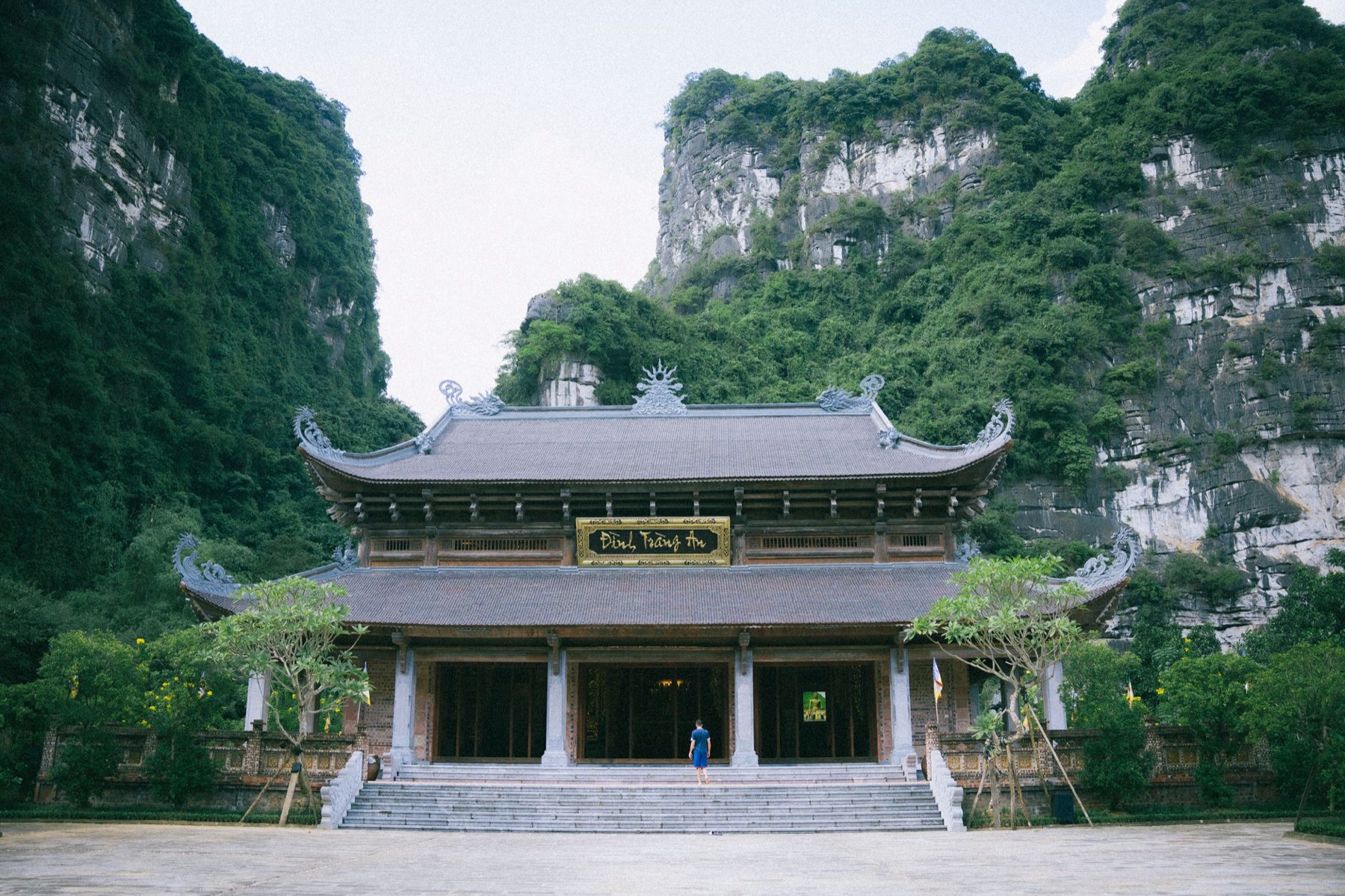
The Ngo Dong River winds through Ninh Binh's limestone peaks and feeds fish that taste like the water itself—mineral-forward, delicate. Carp (cá chép), catfish (cá trê), and snakehead (cá lóc) are the trinity. Most visitors see them alive in restaurant tanks or passed on boats during Tam Coc tours; few realise the best-value fish meals sit on narrow backstreets 200 metres from the main tourist drag. A whole grilled snakehead (lóc nướng) weighing 400 g costs around 100,000–150,000 VND (USD 4–6) at a local-run joint. Carp steamed in foil with herbs (cá chép hấp) is 80,000–120,000 VND (USD 3.20–4.80).
The difference between a tourist-trap fish meal and a real one is where the fish is caught and how fast it reaches the pan. Restaurants in Tam Coc village (on the river) have fishermen bringing in carp daily; they're eaten same-day or next morning. Restaurants 2 km inland in Ninh Binh city still source locally but hold fish 1–2 days, and taste suffers. Fish from freezers at supermarkets in the city centre are always avoided by locals for eating out—you might see these sold to group tours under a fake "fresh catch" banner.
A warning: "Exotic fish" menus (offering pangasius, tilapia) are cheaper (50,000–80,000 VND / USD 2–3.20 per serving) but taste muddy. They're farmed in Mekong Delta ponds. Locals order them only at home, boiled in basic broth—never grilled or fried at a restaurant. Insist on snakehead or carp; they cost 25% more but taste like the region.
---
Sticky Rice, Herbs & Sides: The Unsung Architecture of Ninh Binh Meals
Sticky rice (xôi) is not a carb filler in Ninh Binh; it's the plate's foundation. Made from glutinous rice steamed in bamboo with shredded chicken (xôi gà), mushrooms (xôi nấm), or corn (xôi bắp), one portion (around 30,000–50,000 VND / USD 1.20–2) feeds one person and pairs with soup or grilled meat. Early morning (6–8 a.m.) is peak sticky-rice hour; by noon, kitchen runs dry.
Fresh herbs and vegetables form the second pillar. Ninh Binh's rural markets overflow with bitter melon, water spinach (rau muống), morning glory (mồng tơi), and wild mint. These are bundled into meals raw—you tear them, dip in fish sauce, eat with meat or soup. A herb plate (rau sống) is free or costs 5,000–10,000 VND (USD 0.20–0.40) if charged separately. Tourists often skip them, missing the point: the raw herb's coldness and bitterness cuts through fat and heat, resets your palate between bites.
Dipping sauces (nước chấm) are three-fold: fish sauce with lime and chilli (nước mắm), shrimp paste (mắm tôm), and salt-pepper-lime mix (muối tiêu chanh). Each restaurant has a house blend. None cost extra. The nước mắm should smell intense and taste umami-forward, not acrid. If it smells like old brine, the kitchen's not changing their sauce daily—eat elsewhere.
---
Market-to-Table: Where Locals Actually Eat & What Costs Really Look Like
Ninh Binh Central Market (Chợ Ninh Bình, on Truong Han Sieu Street, open 5:30 a.m.–11 a.m.) is where the town's cooks buy fish and goat. It's also where you can eat the cheapest, cleanest meals. Around the market's perimeter, three or four family stalls set up folding tables (no signage, no English menus). A bowl of goat soup (canh dê): 40,000–60,000 VND (USD 1.60–2.40). A plate of braised carp with dill: 50,000–80,000 VND (USD 2–3.20). Sticky rice: 20,000–30,000 VND (USD 0.80–1.20). Total meal for two: 150,000–250,000 VND (USD 6–10).
Honest comparison table:
| Meal type | Where | Price per person (VND) | Price per person (USD) | Quality | Foot traffic |
|---|---|---|---|---|---|
| Market stall (goat soup) | Chợ Ninh Bình | 40,000–60,000 | 1.60–2.40 | Authentic, best at 6–8 a.m. | 80% local |
| Family goat restaurant (stewed shoulder + rice) | Side street, Ninh Binh city | 70,000–120,000 | 2.80–4.80 | Consistent, slower cook | 60% local, 40% tour group |
| Tam Coc restaurant (grilled fish + herbs + soup) | Tam Coc village | 100,000–180,000 | 4–7.20 | River-fresh, 30–40 min wait | 95% tourist |
| Tourist-branded "goat feast" (group meal, per person) | Roadside, main Ninh Binh–Tam Coc road | 600,000–900,000 | 24–36 | Bulk-cooked, mixed quality | 100% tour groups |
What the numbers mean: You can eat extraordinarily well in Ninh Binh for the price of a coffee in Hanoi. The trade-off is speed and comfort. Market stalls serve fast, no air conditioning, plastic stools. Family restaurants are slower (order, wait 20–30 mins, eat), but calm and seated. Tam Coc restaurants have views and slower service (tourist expectations). Avoid the branded feast packages—they're priced 5–10 times higher than eating à la carte at real family spots, and quality is sacrificed for volume.
---
Scams, Closed Days & Timing: What Ruins a Ninh Binh Food Trip
Fake "goat feasts" for tour groups. These are packaged by hotels and tour operators as "authentic Ninh Binh experience." They cost 700,000–1,200,000 VND (USD 28–48) per person, serve 15–25 diners same dishes, and use frozen imported goat or goat offcuts masked by heavy sauce. Avoid by booking no package; go solo or with a friend.
Fish tank tourism. Restaurants near Tam Coc's boat-tour pier display massive live fish tanks to lure tourists. The fish are beautiful; the pricing is not. A snakehead that costs 120,000 VND (USD 4.80) at a backstreet stall costs 200,000–280,000 VND (USD 8–11.20) at a tank-front restaurant. Same fish, same preparation, triple mark-up. Check the menu board's prices before sitting.
"Fresh" frozen fish labelled as local catch. Ask the server, "Cá này từ sông hay từ tủ đông?" (Is this river fish or from the freezer?). A truthful answer is "từ sông sáng nay" (from the river this morning). If they hesitate or say "có lẽ từ sông" (maybe from the river), it's frozen.
Closed on lunar holidays. Many family kitchens shut during Lunar New Year (late January or February, varies yearly). Some also close on the 1st and 15th of each lunar month for temple visits. Check before traveling; a wasted meal slot is rare but possible.
Dinner service is weak. Outside Ninh Binh city's main restaurants, kitchens close by 8 p.m. If you're late, eat instant noodles at a 24-hour corner stall (phở or mì tôm, 20,000–40,000 VND / USD 0.80–1.60) instead of hunting for closed goat shops.
---
📸 จองถ่ายรูปชุดอ๋าวหญ่ายที่ฮานอยหรือไซ่ง่อน (Cáo Studio)
---

Step-by-Step: How to Eat Like a Local in Ninh Binh
1. Arrive between 11 a.m. and 1 p.m. This is lunch rush. Kitchens are warm, ingredients fresh, and locals still eating. Timing matters more than restaurant choice.
2. Head to Truong Han Sieu Street or a side lane off it (Ninh Binh city centre). Skip the main road's branded restaurants. One-minute walk left or right, you'll find unmarked family stalls with plastic tables. No English signage = good sign.
3. Ask "Cái gì ngon nhất hôm nay?" (What's best today?). The cook will point to a pot or live tank. Trust their answer; it reflects what arrived fresh that morning.
4. Order one dish (soup or grilled), sticky rice, and a herb plate. Total order should be 100,000–150,000 VND (USD 4–6) per person. Ask sauce on the side if nervous about spice; don't ask for substitutions (kitchens are small, one cook).
5. Eat with your hands and herbs. Don't rush. Tear herb leaves, dip goat or fish in sauce, eat with rice. A real meal takes 20–30 minutes. Tourists finish in 5 and wonder why locals linger.
6. Pay cash. Bills are under 200,000 VND (USD 8) per person. Many small stalls don't accept cards. ATMs are on Truong Han Sieu and near the market.
---
Before You Book a Ninh Binh Food Tour or Plan a Meal
Check these things:
- Season. October–April: leaner goat, drier weather. May–September: milder fish, wet limestone paths.
- Your hotel's location. If you're in Hoa Lu (archaeological site, 15 km north), most goat and fish spots are 20–30 mins away by bike. Plan taxi or rented motorbike.
- Booking private tours vs. group packages. Private guides (hire via local hotels, around 300,000–500,000 VND / USD 12–20 per day) will take you to real family kitchens. Group tours feed you processed feasts.
- Allergies. Fish sauce is in almost everything. If allergic, tell the cook immediately: "Tôi dị ứng với nước mắm" (I'm allergic to fish sauce). They'll serve unsauced versions or salt-pepper-lime instead.
- Language. English is rare at family stalls. Learn "ngon" (delicious), "cay" (spicy), "không cay" (not spicy), and point at dishes. Smiling works better than words.
---
🗺️ วางแผนเที่ยวเวียดนาม | 📸 จองถ่ายรูปชุดอ๋าวหญ่ายที่ฮานอยหรือไซ่ง่อน | 🎟️ เปรียบเทียบทัวร์และตั๋ว
---
Planning Your Ninh Binh Food Trail
Ninh Binh is a one-day trip from Hanoi (90 km south, 2 hours by bus or taxi; around 150,000–250,000 VND / USD 6–10 per person by public bus, or 800,000–1,200,000 VND / USD 32–48 for a hired driver). Or stay overnight in Tam Coc village (homestays and guesthouses, 300,000–500,000 VND / USD 12–20 per night) and eat dinner and breakfast there. We recommend the latter for unhurried eating.
Ninh Binh's food geography:
- Ninh Binh city centre (Truong Han Sieu, near market): Goat stalls, cheapest meals, local crowd, 6 a.m.–2 p.m.
- Tam Coc village (10 km south, river-side): Fish restaurants, boat tours, mid-range prices, 11 a.m.–8 p.m.
- Hoa Lu site (15 km north): Buddhist temples, no dedicated food spots; eat in Ninh Binh city, then drive.
- Ba Thuoc district (40 km west): Goat farms visible, family meals at farm gates, requires rented motorbike or driver.
A full itinerary link is available at Wander in Vietnam's Ninh Binh guide. For context on how Ninh Binh fits into a larger trip, see Vietnam itinerary planner. If you're starting from Hanoi, Hanoi food and travel guide covers your base. For comparison with other food regions, Ha Long Bay and Hoi An offer different seafood-focused cuisines.
---
Gifts & Keepsakes: Bringing Ninh Binh Home
If you want to preserve the memory of your meal, consider authentic gifts tied to the experience. A handcrafted ceramic bowl or traditional Vietnamese pottery piece echoes the rustic bowls your goat soup arrived in. For food lovers, a Vietnamese cooking guide or cookbook printed locally includes regional recipes. Ninh Binh locals often send friends pressed-flower cards or watercolour prints of the limestone landscape; these are sold at markets and can be mailed home.
If you're photographing your trip—especially in traditional áo dài dress at the market or by the river—Cáo Studio offers professional áo dài photoshoots and makeup in Hanoi and Ho Chi Minh City. Many travelers combine a Ninh Binh food trip with a photo session in Hanoi (2 hours north) to document the experience in formal dress.
📸 จองถ่ายรูปชุดอ๋าวหญ่ายที่ฮานอยหรือไซ่ง่อน (Cáo Studio)
---
The Bottom Line: What to Eat in Ninh Binh
Ninh Binh's food isn't ornate or carefully made by global standards. It's direct: goat from the hills, fish from the river, herbs from the garden, and rice from the fields. Eaten fresh, at the right hour, with locals around you, it's unforgettable. A full, authentic meal costs 100,000–150,000 VND (USD 4–6) per person—cheaper than a tourist coffee in Hanoi.
Skip the packaged "goat feasts" and restaurant tanks. Arrive at 11 a.m., go to an unmarked stall, ask what's best, and eat with your hands. You'll taste why people have lived here for centuries.
---

FAQ
What's the best time of day to eat goat in Ninh Binh?
11:30 a.m. to 1:30 p.m. is peak lunch. Kitchens are warm, ingredients fresh, and pots have been simmering since dawn. Evening goat (after 5 p.m.) exists but lacks slow-cook care. Market stalls serve 6–9 a.m. if you're early.
How do I avoid eating frozen or imported goat?
Ask the owner directly: "Dê từ đâu?" (Where's the goat from?). Real Ninh Binh goat comes from Ba Thuoc or Yen Mo districts. If they hesitate, leave. Smell tells truth—authentic goat smells mineral and clean; frozen imports smell sour or chemical.
Is fish from Tam Coc restaurants worth the higher price?
Only if you eat at a simple family-run spot 50 metres from the boat dock, where fishermen land catch daily. Tank-front tourist restaurants charge 2–3 times more for the same fish. Ask if the fish is from the Ngo Dong River this morning; if unsure, eat at a backstreet stall instead.
What's a realistic meal cost for two people in Ninh Binh?
At a market stall or family restaurant, 250,000–400,000 VND (USD 10–16) total for two people, including soup, grilled meat, sticky rice, and herbs. Tourist-branded restaurants cost 600,000–800,000 VND (USD 24–32) per head. Avoid the latter.
Do I need to book ahead, or can I just turn up and eat?
Turn up. No reservations needed at family stalls or market kitchens. They work on a first-come basis, and tables turn over fast at lunch. Evening (after 5 p.m.) risks finding kitchens closed or running low. Arrive hungry between 11 a.m. and 1 p.m.
What if I don't eat meat or fish?
Vegetarian options are limited at meat-focused stalls. Order sticky rice, herb plates, and ask the cook to prepare a vegetable soup (canh rau). Most will oblige. Alternatively, eat at a pagoda near Hoa Lu temple (free or donation-based noon meals for visitors). Fish sauce is in nearly all dishes; tell the cook you can't eat it and ask for alternatives.
Can I get good Ninh Binh goat and fish in Hanoi or Ho Chi Minh City?
Not authentically. Some Hanoi restaurants claim "Ninh Binh goat," but it's sourced and stored for days. Quality and price don't justify the trip. Eat in Ninh Binh itself, or stick to other dishes in the cities. See Hanoi's food guide and Ho Chi Minh City guide for regional alternatives.
คำถามที่พบบ่อย
What's the best time of day to eat goat in Ninh Binh?
11:30 a.m. to 1:30 p.m. is peak lunch. Kitchens are warm, ingredients fresh, and pots have been simmering since dawn. Evening goat (after 5 p.m.) exists but lacks slow-cook care. Market stalls serve 6–9 a.m. if you're early.
How do I avoid eating frozen or imported goat?
Ask the owner directly: "Dê từ đâu?" (Where's the goat from?). Real Ninh Binh goat comes from Ba Thuoc or Yen Mo districts. If they hesitate, leave. Smell tells truth—authentic goat smells mineral and clean; frozen imports smell sour or chemical.
Is fish from Tam Coc restaurants worth the higher price?
Only if you eat at a simple family-run spot 50 metres from the boat dock, where fishermen land catch daily. Tank-front tourist restaurants charge 2–3 times more for the same fish. Ask if the fish is from the Ngo Dong River this morning; if unsure, eat at a backstreet stall instead.
What's a realistic meal cost for two people in Ninh Binh?
At a market stall or family restaurant, 250,000–400,000 VND (USD 10–16) total for two people, including soup, grilled meat, sticky rice, and herbs. Tourist-branded restaurants cost 600,000–800,000 VND (USD 24–32) per head. Avoid the latter.
Do I need to book ahead, or can I just turn up and eat?
Turn up. No reservations needed at family stalls or market kitchens. They work on a first-come basis, and tables turn over fast at lunch. Evening (after 5 p.m.) risks finding kitchens closed or running low. Arrive hungry between 11 a.m. and 1 p.m.
What if I don't eat meat or fish?
Vegetarian options are limited at meat-focused stalls. Order sticky rice, herb plates, and ask the cook to prepare a vegetable soup (canh rau). Most will oblige. Alternatively, eat at a pagoda near Hoa Lu temple (free or donation-based noon meals for visitors). Fish sauce is in nearly all dishes; tell the cook you can't eat it and ask for alternatives.
Can I get good Ninh Binh goat and fish in Hanoi or Ho Chi Minh City?
Not authentically. Some Hanoi restaurants claim "Ninh Binh goat," but it's sourced and stored for days. Quality and price don't justify the trip. Eat in Ninh Binh itself, or stick to other dishes in the cities. See [Hanoi's food guide](/th/hanoi) and [Ho Chi Minh City guide](/th/ho-chi-minh-city) for regional alternatives.
อ่านต่อ: คู่มือเที่ยว นิญบิ่ญ