河江
Ha Giang Food Guide: Where to Eat & What to Try
作者 Wander in Vietnam editorial team · Hanoi, Vietnam
Ha Giang province (far north Vietnam, ~4–6 hours from Hanoi) is defined by H'Mong, Tay & Nung cooking: sticky rice, grilled pork, fresh herbs, pounded millet, fermented vegetables. Meals cost around 50,000–150,000 VND (2–6 USD) at family-run spots; tourist cafés charge double. Best seasons: September–November, March–May (avoid wet roads). The provincial town of Ha Giang city offers street-food clusters on Hang Vuong and Pham Boi Chau streets; mountain villages (Dong Van, Meo Vac) serve meals only at guesthouses. We recommend staying 2–3 days to taste seasonal crops, join market visits, and avoid pricey tour-group restaurants pretending to be "authentic." Bring small cash—many family eateries have no card readers.
Ha Giang tươi—Ha Giang fresh—means mountain vegetables, foraged herbs & grilled meat nobody markets as "fusion." We live in and visit this province regularly, eating where locals do: packed tables, no English menu, real bargain.
Sticky Rice & Grilled Meat: What Defines Ha Giang Food?
Xôi and thịt nướng (grilled pork) anchor every hill-station breakfast. Why? Rice terraces flood June–August; locals dry & pound surplus into glutinous xôi, pair it with spring onion, salt & charcoal-grilled belly-pork. A plate (large enough for two) costs around 60,000–90,000 VND (2.40–3.60 USD). You'll find it sold on plastic tables outside markets 6–7 a.m. Buy fresh—by 8 a.m. it hardens. Avoid vacuum-packed xôi in convenience stores; texture dies.
Thịt nướng isn't "barbecue"—it's pork ribs or shoulder, speared on bamboo, cooked over charcoal til skin blisters. Flavour comes from animal diet (mountain grass) & smoke, not sauce. Count on 80,000–120,000 VND per skewer (3.20–4.80 USD), or order half a kilo pre-cooked at market stalls for 200,000 VND (8 USD).
Where to Eat in Ha Giang City: Markets Over Cafés?
Hang Vuong Street (trung tâm, city centre) hosts a loose street-food strip: vendors arrive 6 a.m.–9 a.m. with xôi, bánh mì, phở. Morning crowds mean fresher stock. By noon, choice shrinks. Pham Boi Chau (parallel street south) has settled eateries—low plastic chairs, broth-pot visible. No signage matters; follow nose. A full phở (local broth style, heavier than Hanoi) runs 35,000–50,000 VND (1.40–2 USD).
Tourist trap: cafés on the main north–south highway (Ha Giang–Dong Van road) mark up by 100%. Avoid. Instead, eat in the town market (Chợ Ha Giang, north side of river) around 11 a.m.–1 p.m. A rice bowl + side dish + drink = 50,000–80,000 VND (2–3.20 USD). Card readers rare; bring 500,000 VND (20 USD) cash per person per day.
Mountain Villages: Dong Van, Meo Vac & Guesthouses as Kitchens
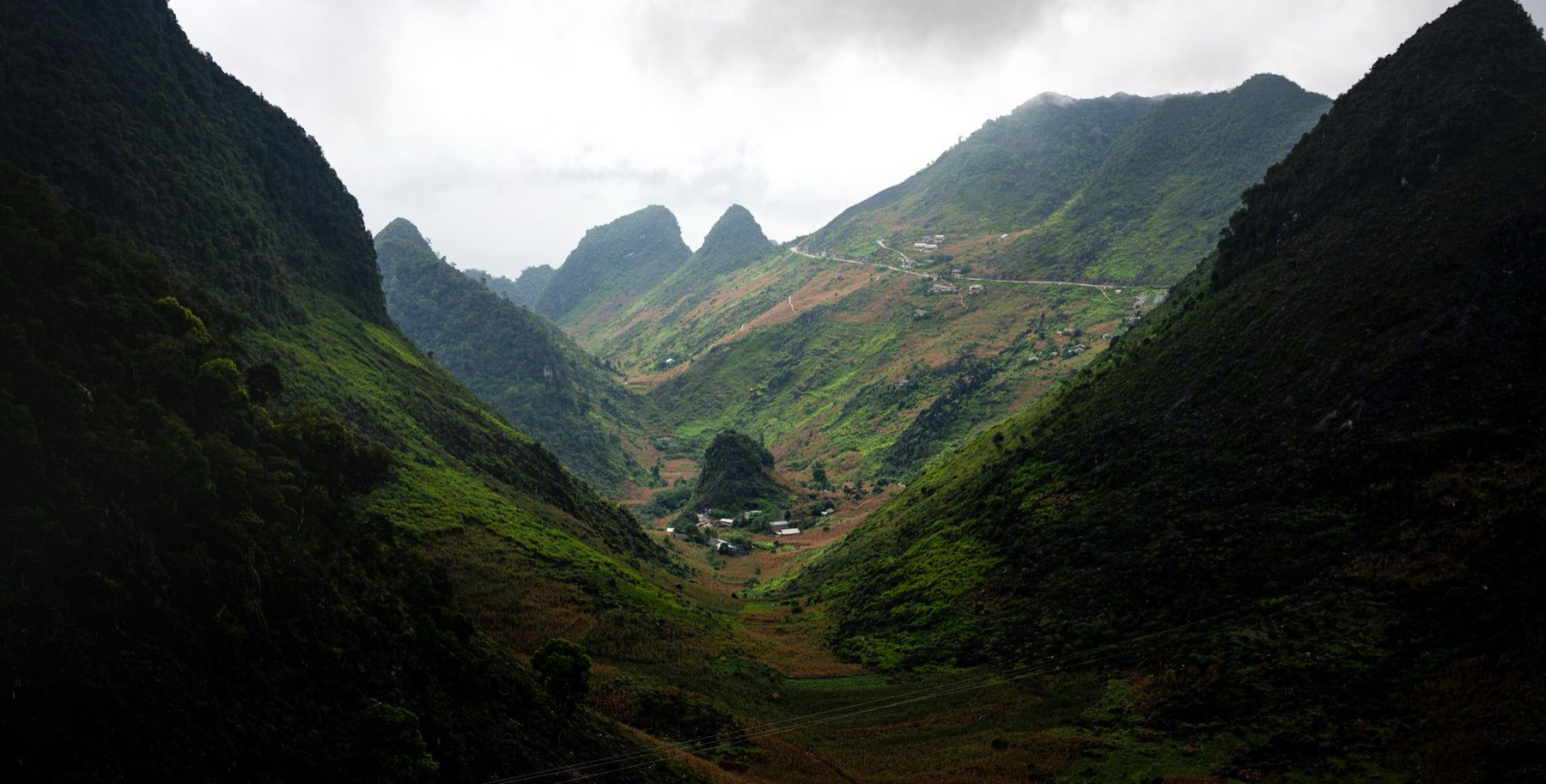
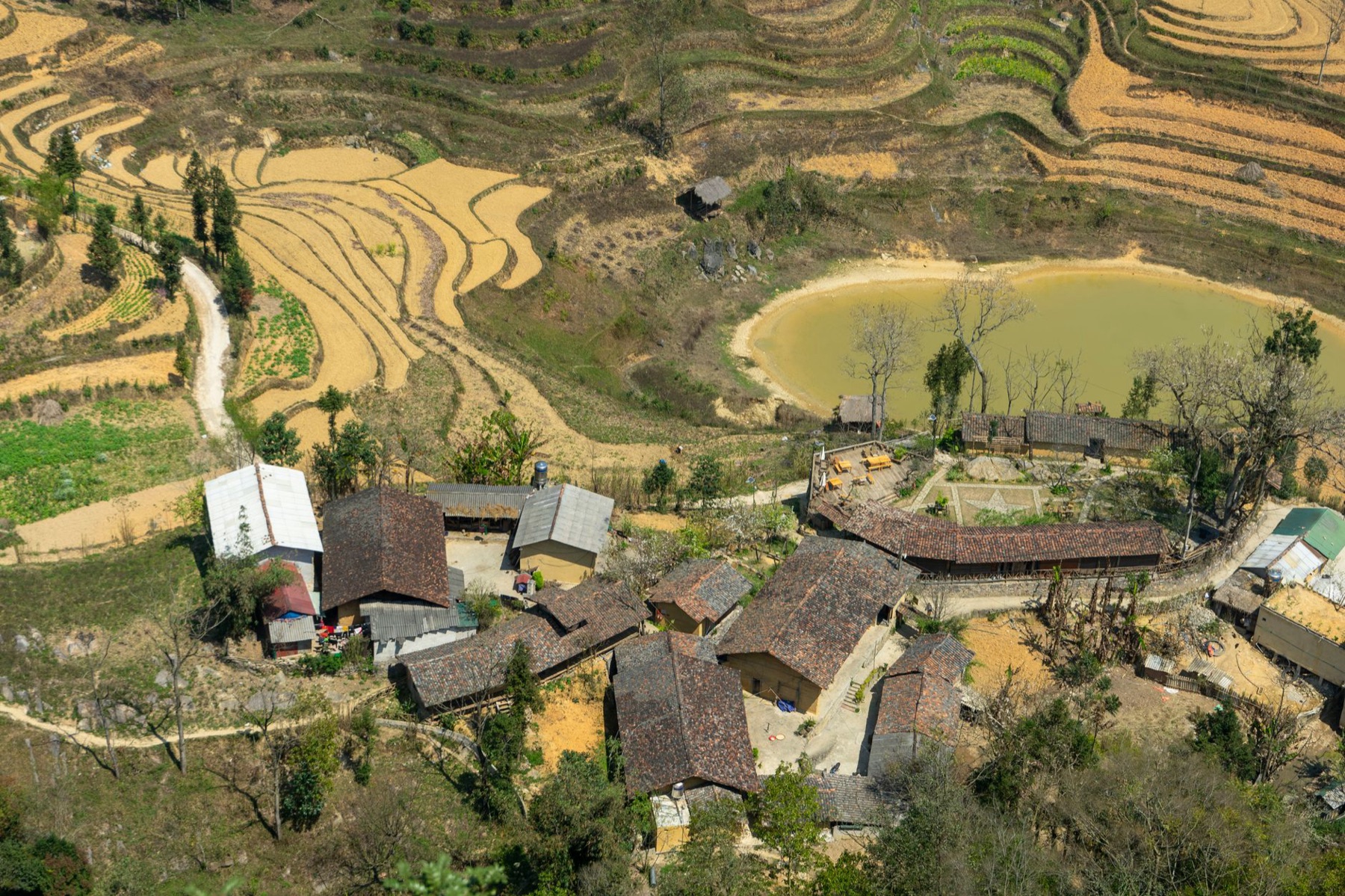
Dong Van (90 km northeast, ~3 hours drive) sits above a valley of corn, buckwheat & hemp fields. Few restaurants exist; most travellers eat at their guesthouse. This isn't lazy—guesthouses here are family kitchens. Owners forage morning herbs, buy fresh meat at weekly markets (Dong Van town market: Sunday best, 8 a.m.–noon), & cook communal dinners. Cost: ~150,000–200,000 VND per meal (6–8 USD), booked the night before.
Dishes: corn soup, wild greens stir-fried with garlic & preserved fish-paste, cassava or sweet potato (seasonal), boiled chicken. Texture & salt matter—expect simple, not fancy. If you arrive late/unbooked, you'll either eat instant noodles or drive 30 km back to Ha Giang town. Plan ahead.
Meo Vac (130 km, ~4.5 hours) is higher, colder, fewer eateries. Same rule: guesthouse meals only. Water buffalo meat appears October–December (slaughter season); try it—flavour is rich, slightly gamey. Offal (liver, tripe) prepared as soup or grilled. Prices inch to 200,000–250,000 VND (8–10 USD) per meal.
Seasonal Crops & Markets: When to Eat What?
| Season | Crop/Dish | Where | Price (VND) | Why It Matters |
|---|---|---|---|---|
| March–May | Fresh fava beans, spring herbs | Markets, xôi stalls | 40,000–60,000 | Tender, no pesticide, best flavour |
| June–August | Sticky rice, corn soup | Guesthouses | 150,000–200,000 | Rice harvest, wet-season forage peak |
| Sept–Nov | Cassava, mushrooms, dried chilli | Village eateries, markets | 50,000–100,000 | Autumn harvest, stable roads |
| Dec–Feb | Water buffalo meat, preserved vegetables | Guesthouses Meo Vac/Dong Van | 200,000–250,000 | Slaughter season, festival time |
Weather matters: June–August roads flood; September–November clears them. April–May sees tourists & prices rise 10–20%. December–February is coldest (bring layers); January often closes mountain passes.
What to Skip, What to Avoid & Honest Scam Warnings
"Authentic lunch with ethnic family" tours pitched in Hanoi backpacker bars cost 800,000–1,500,000 VND (32–60 USD) & deliver a bus-load to one rehearsed house. Skip. The meal is mediocre; the "family" has cooked it 10 times that week. Instead, hire a local English-speaking guide (ask at your guesthouse: ~200,000 VND/day, 8 USD) to take you to a weekday market or a friend's home.
Cash-only eateries are standard, not a scam—just normal in rural areas. However, some guesthouses inflate meal prices if you book via online platforms (30–50% markup). Ask the price before confirming; confirm by phone or in person if possible.
Snake liquor, bought at roadside stalls, is real (though legality gray). Avoid it unless you're certain of the vendor's hygiene. Stomach upset from unclear provenance is common.
Dried chilli, cured pork & wild herbs sold to tourists at markets are authentic; prices are low (20,000–50,000 VND, 0.80–2 USD per pack). They're fine to take home if vacuum-sealed. Vendors rarely tamper; these are their profit margins, not tourist-trap premiums.
How to Eat Like a Local: A 3-Step Framework
Step 1: Arrive at markets before 7:30 a.m. Xôi, bánh mì & phở vendors set up 6–7 a.m., sell out by 9 a.m. Taste food warm, fresh. Bring cash.
Step 2: Ask guesthouses the night before. If you're in Dong Van or Meo Vac, confirm dinner at 6 p.m. the evening prior. Hosts shop 8–9 a.m.; they need notice.
Step 3: Carry a translation app. Menus don't exist. Point at ingredients, laugh, eat. Locals find foreign interest in their food charming; they'll cook better if they think you care.
A typical day eats to ~200,000 VND (8 USD): breakfast xôi + coffee 60,000, lunch rice bowl + soup 70,000, dinner guesthouse 150,000 if booking; or street snacks 40,000 if not.
Practical Checklist Before You Travel to Ha Giang
- Mobile data: Get eSIM for Vietnam (covers Hanoi–Ha Giang corridor; local carriers Viettel/Vinaphone work in mountains but patch out above Dong Van).
- Visa & entry: Confirm Vietnam e-visa status before departure.
- Cash: ATMs exist in Ha Giang city only; withdraw 2 million VND (80 USD). Mountain villages have none.
- Medications: Carry imodium, antacid & vitamins. Mountain water & new oils can upset urban stomachs for 1–2 days.
- Guesthouses: Book via direct phone/email, not Booking.com (they often lie about meal prices). Ask Hanoi tour desks for operator referrals.
- Roads: Check weather Nov–Feb & June–Aug; heavy rain closes passes 12–24 hours.
- Guides: Hire at guesthouse (200,000–300,000 VND/day, 8–12 USD), not tour companies (markup 200–300%).
Compare this with nearby regions: Sapa Food Guide (hill-tribe, rice terraces, closer to Hanoi); Ninh Binh Food Guide (river, cave, tourist-friendly). Ha Giang is rougher, less visited—that's the point.
FAQ
Ha Giang和Sapa的食物有什麼區別?
Sapa(靠近中國邊界,海拔更高)是清湯、馬肉、蕨類。Ha Giang是焦香烤肉、糯米、發酵菜。Sapa人多、路好;Ha Giang野性、價格低50%。Sapa一日餐飲200,000 VND(8 USD);Ha Giang 150,000 VND(6 USD)。
我應該在Ha Giang待幾天來品嚐食物?
2–3天夠。第一天適應、嚐市場早餐、地方湯麵。第二天爬山或騎摩托拜訪Dong Van村落,在民宿晚餐。第三天探索週邊市場(如果是週末)。少於2天會錯過季節蔬菜與烹飪節奏。
一個人(獨旅)在Ha Giang安全嗎?食物怎麼吃?
安全。居民對單獨旅客好奇、友善。民宿老闆會邀你與家人共餐——不必獨自吃。避免深夜獨自行動;白天市場、小徑很安全。帶翻譯app、零食。獨旅者多吃早餐(60,000 VND)與午餐碗飯(70,000 VND)。
我可以帶Ha Giang乾肉或乾菜回家嗎?什麼不能帶?
可以。真空包裝的豬肉乾、乾菜、乾辣椒無問題。檢查包裝日期。新鮮肉、新鮮草藥在飛行時會腐爛——避免。酒精飲品與麻類製品法律模糊;別帶。肉乾成本低(20,000–50,000 VND一包);品質真實。
Ha Giang有素食或清真食物嗎?
素食在城市市場有——豆類湯、蔬菜炒飯、豆腐(20 Hang Vuong街區常見)。村莊沒有;民宿老闆會提前準備(告訴他們你是chay素食者)。清真肉類(halal)不存在;多數豬肉且沒有宗教屠宰認證。事先通知民宿。
我該帶多少現金去Ha Giang城市與山區?
城市(Ha Giang city)可在ATM提領;一次提2百萬VND(80 USD)。山區(Dong Van、Meo Vac)零ATM——在Ha Giang城帶足款。3天山區:450,000–600,000 VND(18–24 USD)。多帶;沒人找零。信用卡完全無用。
最便宜的一餐是什麼?地道嗎?
早餐xôi + 咖啡 = 60,000 VND(2.40 USD)。最道地——這是農民、學童吃的。烤肉(一串)80,000 VND(3.20 USD)也道地但蛋白質重。最便宜陷阱:路邊速凍phở(35,000 VND)——湯是昨日剩水,肉是回收。避免。
常見問題
Ha Giang和Sapa的食物有什麼區別?
Sapa(靠近中國邊界,海拔更高)是清湯、馬肉、蕨類。Ha Giang是焦香烤肉、糯米、發酵菜。Sapa人多、路好;Ha Giang野性、價格低50%。Sapa一日餐飲200,000 VND(8 USD);Ha Giang 150,000 VND(6 USD)。
我應該在Ha Giang待幾天來品嚐食物?
2–3天夠。第一天適應、嚐市場早餐、地方湯麵。第二天爬山或騎摩托拜訪Dong Van村落,在民宿晚餐。第三天探索週邊市場(如果是週末)。少於2天會錯過季節蔬菜與烹飪節奏。
一個人(獨旅)在Ha Giang安全嗎?食物怎麼吃?
安全。居民對單獨旅客好奇、友善。民宿老闆會邀你與家人共餐——不必獨自吃。避免深夜獨自行動;白天市場、小徑很安全。帶翻譯app、零食。獨旅者多吃早餐(60,000 VND)與午餐碗飯(70,000 VND)。
我可以帶Ha Giang乾肉或乾菜回家嗎?什麼不能帶?
可以。真空包裝的豬肉乾、乾菜、乾辣椒無問題。檢查包裝日期。新鮮肉、新鮮草藥在飛行時會腐爛——避免。酒精飲品與麻類製品法律模糊;別帶。肉乾成本低(20,000–50,000 VND一包);品質真實。
Ha Giang有素食或清真食物嗎?
素食在城市市場有——豆類湯、蔬菜炒飯、豆腐(20 Hang Vuong街區常見)。村莊沒有;民宿老闆會提前準備(告訴他們你是chay素食者)。清真肉類(halal)不存在;多數豬肉且沒有宗教屠宰認證。事先通知民宿。
我該帶多少現金去Ha Giang城市與山區?
城市(Ha Giang city)可在ATM提領;一次提2百萬VND(80 USD)。山區(Dong Van、Meo Vac)零ATM——在Ha Giang城帶足款。3天山區:450,000–600,000 VND(18–24 USD)。多帶;沒人找零。信用卡完全無用。
最便宜的一餐是什麼?地道嗎?
早餐xôi + 咖啡 = 60,000 VND(2.40 USD)。最道地——這是農民、學童吃的。烤肉(一串)80,000 VND(3.20 USD)也道地但蛋白質重。最便宜陷阱:路邊速凍phở(35,000 VND)——湯是昨日剩水,肉是回收。避免。
延伸閱讀: 河江 旅遊攻略