Hue food comprises imperial court dishes: bánh khoái (crispy pancakes), bún bò (beef noodle), mắm tôm (fermented shrimp), and thịt nướng (grilled pork). Wander in Vietnam helps travelers and food lovers find authentic vendors, local markets, and mail-order options for specialty pastes and dried goods that define the region's centuries-old culinary identity.
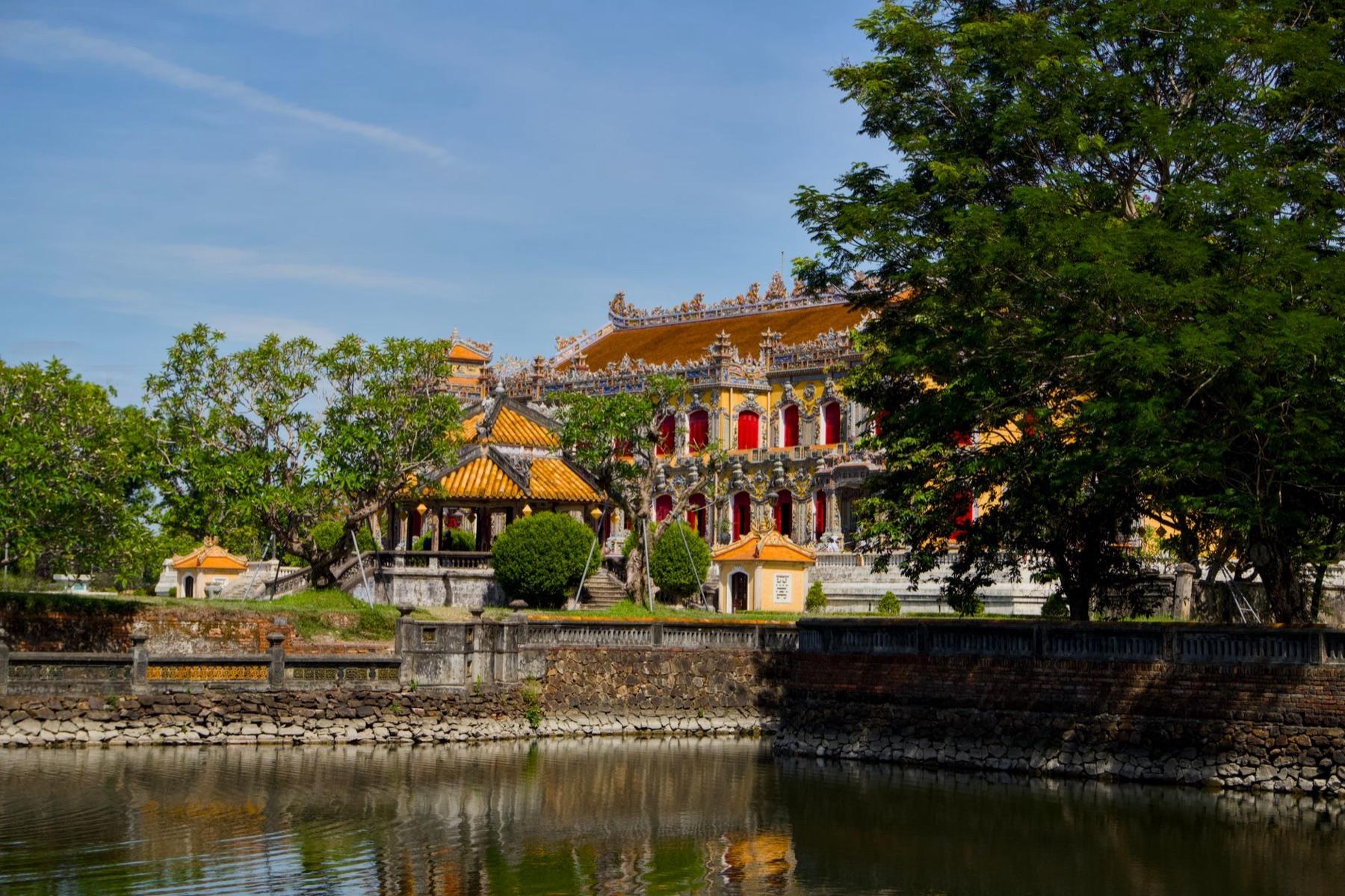
Hue, capital of Vietnam's Thua Thiên Huế province, sits on the Perfume River (Sông Hương). Between the 1600s and 1945, emperors lived here. That court legacy shaped every dish. Imperial kitchens demanded elaborate spice blends, slow-cooked proteins, and precise herb ratios. Today, street vendors and home cooks preserve those recipes. If you're visiting Hue or buying from overseas, understanding what makes Hue food distinct—and where to source it—saves money and guarantees authenticity.
🗺️ Planuhin ang iyong ruta sa Vietnam
Ano ang Signature Hue Dishes at Saan Bumili?
Hue's iconic dishes are harder to find outside the province. Bánh khoái (half-moon fried pancakes), filled with turmeric-stained pork and shrimp, costs around 25,000–40,000 VND (₱40–65 USD) for 2–3 pieces at street stalls. Bún bò Huế (spiced beef rice vermicelli with lemongrass) runs 45,000–70,000 VND (₱75–115 USD) for a bowl in local shops. Mắm tôm (fermented shrimp paste), the polarizing condiment that defines Hue flavor, retails around 80,000–150,000 VND (₱130–245 USD) per 500g jar—higher for vacuum-sealed export versions.
Where to buy: Street food stalls cluster around the Old Citadel (Kinh Thành Huế), along Đường Thái Phiên and Phạm Hồng Thái in downtown Hue. Huế Central Market (Chợ Đông Ba) on Trần Hưng Đạo stocks fresh ingredients and packaged specialty items. Online, Vietnamese food retailers ship mắm tôm and bánh hoai flour mixes to North America and Europe in 5–10 days; expect markup of 30–50% over local prices.
📸 Mag-book ng ao dai photoshoot sa Hanoi o Saigon (Cáo Studio)

Paano Naiiba ang Hue Food mula sa North at South?
Northern Vietnamese food (Hanoi, Red River Delta) is subtle: mild spice, less herb. Southern (Ho Chi Minh City, Mekong) is sweet, coconut-heavy, fish-sauce forward. Hue sits in the middle but tips spicy—it's the gateway where imperial court technique meets central coast fire. Lemongrass, chili, shrimp paste, and meat dominate. Portions are tighter; flavor is denser.
A comparison: Bún bò Huế vs. Phở Hà Nội vs. Bún riêu Nam Bộ
| Dish | Origin | Base | Heat | Price (local) | Buy? |
|---|---|---|---|---|---|
| Bún bò Huế | Hue | Beef broth + lemongrass + chili | High | 50k–70k VND | Mail-order paste kits |
| Phở Hà Nội | Hanoi | Clear beef broth, star anise | Low | 40k–60k VND | Broth packs (Hanoi vendors) |
| Bún riêu Nam Bộ | South | Tomato, crab, shrimp | Medium | 45k–65k VND | Frozen broth (HCMC brands) |
Hue's dominance: boldness, spice tolerance, imperial refinement. If you hate shrimp paste or chili, North or South food may suit you better. But if you crave complexity and don't shy from funk, Hue is non-negotiable.
See also our guides to Hanoi, Ho Chi Minh City, and Hoi An for broader culinary context.
Mắm Tôm: Dito Bumili at Kung Paano Piliin?
Fermented shrimp paste is Hue's essence and most exported item. It's pungent—first-timers often recoil. But spooned onto cơm (rice), mixed into broth, or thinned as a dipping sauce, it deepens every meal. Most food tours serve it unlabeled to prove tourists' mettle.
What to check before you buy:
- Origin label: Does it say "Huế" (Hue) or a specific brand (e.g., Tân Cảng, Hải Huế)? Fake or mixed-source versions lack depth.
- Jar type: Glass = longer shelf life. Plastic = cheaper, but oxidizes faster once opened. Vacuum-sealed = safest for shipping; lasts 2+ years unopened.
- Color & texture: Rich rust-brown, oily, firm paste—not watery or black (spoiled).
- Price reality: Local market, 100,000–120,000 VND (₱165–195 USD) per 500g. Export versions (via Vietnam-US/EU retailers) run 180,000–250,000 VND (₱295–410 USD), plus shipping.
- Smell test: Open at the vendor if possible. Funky is good; rotten (ammonia-sour) is not.
Legitimate sellers:
- Đông Ba Market, Huế (Chợ Đông Ba): stalls near the northeast corner, morning hours (6–9 a.m.) freshest stock.
- Online Vietnamese grocers: Specializing in Central Vietnam goods; cross-check reviews on vendor reputation sites.
- Avoid: Supermarkets in Ho Chi Minh City or Hanoi often stock diluted or sweetened versions. Check labels.
Buying for cooking at home? A 200g jar lasts 4–6 weeks if refrigerated. A single spoon per meal is enough.
Bánh Khoái, Bánh Hoai, at Iba Pang Sweet-Savory Treats
These are harder to ship fresh but doable. Bánh khoái (crispy, turmeric-gold pancakes filled with pork, shrimp, greens) are best eaten hot. Cost: 30,000–40,000 VND (₱50–65 USD) per 2–3 pieces at stalls. Bánh hoai (round, greasy, sesame-dusted fried cake) costs 15,000–25,000 VND (₱25–40 USD) per piece and keeps 1–2 days in an airtight box.
To buy online: Some Huế bakeries sell frozen bánh khoái dough or pre-made bánh hoai in vacuum packs; they'll keep en route (3–5 days to US/EU). Thaw, reheat in oil or oven. Flavor isn't 100% fresh-stall quality, but close. Expect 150,000–300,000 VND (₱245–490 USD) per order including shipping.
Sweet side: Bánh nếp nóng & Bánh cam (sticky rice cake, orange-fill pastry) are lighter, less oily. 20,000–35,000 VND (₱33–57 USD) per piece. Ship better because they're not fried.
Where stalls cluster: Tràng Tiền Street (pedestrian zone), near the Perfume River. Morning = busiest, freshest. Go before 10 a.m.
🎟️ Ihambing ang mga tour at tiket
Specialty Spice & Paste Mixes: DIY Hue Cooking
If you want to cook Hue dishes at home, buying individual ingredients is tedious. Some Vietnamese vendors now sell pre-mixed bún bò Huế paste (lemongrass, chili, shrimp stock) in vacuum packs: 80,000–150,000 VND (₱130–245 USD) per pack, feeds 4–6. Add to boiling broth, rice noodles, and proteins. It cuts prep from 2 hours to 15 minutes.
What these kits include:
- Pre-measured chili-lemongrass base
- Shrimp paste or dried shrimp
- Sometimes a dried herb sachet (cinnamon, star anise)
- Cooking instructions (usually in Vietnamese; translate with a phone app)
Pros: Authentic, convenient, ships well. Cons: Less flexibility than fresh ingredients; some kits lack intensity of street versions.
Brands to research: Look for ones with "Huế" in the name, clear ingredient lists, and recent (2024+) manufacturing dates. Check shipping policy—most charge 50,000–100,000 VND (₱82–165 USD) extra for international orders.
Cost Comparison: Eating in Hue vs. Ordering Online
A reality check for your budget:
| What | Where | Cost | Shipping | Total | Worth it? |
|---|---|---|---|---|---|
| Bánh khoái (3 pieces) | Hue stall | 35k VND | — | 35k (₱57) | Yes (fresh) |
| Bánh khoái (frozen, 3-pack) | Online to PH | 80k VND | 150k | 230k (₱376) | Maybe (convenience) |
| Mắm tôm (500g) | Hue market | 110k VND | — | 110k (₱180) | Yes (authentic) |
| Mắm tôm (500g) | Online to PH | 110k VND | 120k | 230k (₱376) | Only for expats |
| Bún bò Huế bowl | Hue restaurant | 60k VND | — | 60k (₱98) | Yes (immediate) |
| Bún bò paste kit | Online, 4-serve | 120k VND | 100k | 220k (₱360) | For home cooks |
Bottom line: Eat locally while in Hue. Buy pastes and shelf-stable items if sending gifts or need long-term stock. Fresh bánh khoái shipped = novelty tax; not worth unless money is no object.
Best Times to Visit Hue for Food & Sourcing
Lunar New Year (Tết, late Jan–Feb) brings holiday specialties: thịt nướng (grilled pork), bánh chưng (sticky rice cake). Markets overflow; prices rise 15–20%. Tourist crowds spike.
Summer (May–Aug) is wet season; fresh produce is abundant, but street stalls close during downpours. Mắm tôm fermentation is slower; fewer new batches.
Autumn (Sept–Nov) is ideal: dry, cool, ingredients peak. Markets are full. Prices stable.
Winter (Dec–Jan) brings cooler evenings—perfect for hot bún bò. Tourist lull means friendly vendors, less inflation.
Pro tip: Visit Đông Ba Market on a weekday morning (Tues–Fri, 6–9 a.m.). Fewer tourists, vendors chat openly, freshness guaranteed. Bring a reusable bag; plastic bags are sold separately (2,000–5,000 VND / ₱3–8 USD).
🗺️ Planuhin ang iyong ruta sa Vietnam
Common Scams & How to Avoid Them
- "Tourist menu" markup: Restaurants near hotels charge 3x the local price. Eat where locals eat—side streets, markets, ask your hotel staff (not the concierge) for advice.
- Fake mắm tôm: Vendors cut real paste with sugar water or diluted fish sauce. Ask to open a jar and smell before buying. Legit paste is potent and oily, never runny.
- Frozen goods sold as fresh: Bánh khoái thawed and re-fried look fresh but taste flat. Ask the vendor how old the item is or buy from visible prep stalls.
- Tourist taxi overcharge: Grab or Gojek are standard; negotiate tuk-tuk prices before boarding. From hotels to Đông Ba Market: around 60,000–100,000 VND (₱98–165 USD) depending on distance.
- Online scams: Buy from established Vietnamese retailers with English-language websites, clear return policies, and verifiable reviews. Avoid marketplace sellers with zero feedback.
- Unlabeled "organic" or "handmade": If a vendor can't point to a maker name or date, move on. Real artisans brand their work.
What not to skip: Never skip the Perfume River boat tour (50,000–120,000 VND / ₱82–195 USD, 1–2 hours); it frames Hue's geography. And don't eat at franchise restaurants (they exist but betray the city's character).
For context on Vietnam's broader food scene and itinerary planning, see our Vietnam itinerary guide.
---
Anong Specialty Items ang Madaling I-Ship?
Shelf-stable goods travel best:
- Mắm tôm (vacuum-sealed, 200–500g jars): 5–7 days, USA; 7–10 days, EU/Australia.
- Bún bò paste kits: 5–7 days same regions.
- Dried herbs & spice blends (lemongrass powder, chili flakes): 5 days, low breakage.
- Bánh hoai & bánh nếp (in sealed boxes): 7–10 days; best consumed within 5 days of arrival.
- Fish sauce concentrate (Hue brands): 5 days, airtight bottles.
Avoid shipping: Fresh bánh khoái, cooked meat, fresh herbs, live seafood. They spoil or arrive warm/spoiled.
---
📸 Mag-book ng ao dai photoshoot sa Hanoi o Saigon (Cáo Studio)
---
#
FAQ
Aman ba ang mắm tôm kung binibili online?
Yes, if sealed in glass and vacuum-packed. Verify the vendor's return policy and shipping timeline (≤10 days best). Smell immediately upon arrival; rotten paste will be obvious. Refrigerate after opening; lasts 2+ months. Avoid plastic jars from unknown sellers.
Saan nangggaling ang turmeric sa bánh khoái?
Turmeric (nghệ) grows throughout central Vietnam. Local markets sell fresh or dried roots. Hue's street vendors buy from farmers or Đông Ba Market and grind it daily. No artificial dyes in legitimate stalls. Try any bánh khoái—the color is natural.
Makakakuha ba ako ng Hue food recipes in English?
Yes. Many Vietnamese food bloggers (English-language) post bún bò and bánh khoái recipes. YouTube has Hue home-cook channels with subtitles. Paste-kit makers include basic English instructions. Ask vendors for contact info if you want detailed guidance—they're proud of their methods and often happy to teach.
Magkano ang typical meal cost sa Hue (2026)?
Street bowl (bánh khoái, bún bò, bánh mỳ): 40,000–80,000 VND (₱65–130 USD). Sit-down local restaurant: 100,000–250,000 VND (₱165–410 USD). Tourist-zone restaurant: 200,000–500,000 VND (₱330–815 USD). Budget ₱500–1,500 (USD) per person per day for meals if eating mixed stall/restaurant.
Pwede ba akong mag-order ng Hue food gift box para sa kaibigan sa abroad?
Yes, some Hue-based vendors curate boxes with mắm tôm, paste kits, dried herbs, and candies. Cost: 300,000–600,000 VND (₱490–980 USD) including international shipping. Verify the vendor's track record (Facebook reviews, Google Maps) before paying. Avoid marketplace sites with no seller rating.
May food allergy-friendly Hue options ba?
Most Hue dishes contain shellfish paste or shrimp. If allergic, inform vendors clearly—they'll modify (e.g., skip mắm, use soy instead). Vegetarian bánh khoái exists (mushroom, tofu fill) at some stalls; ask "bánh khoái chay" (fried cake, vegetarian). Phở-type dishes can be made without shrimp stock if you communicate early. Street stalls are more flexible than restaurants about modifications. --- For your next Vietnam trip, explore Hue's neighbor cities: Hoi An's night market, Ninh Binh's countryside, or Ha Long Bay's seafood. If starting from Hanoi or Ho Chi Minh City, book an eSIM for Vietnam and e-visa before you go.