Ho Chi Minh City · Things to do
10 Best Things to Do in Ho Chi Minh City: Local Guide 2026
By Wander in Vietnam editorial team · Hanoi, Vietnam
Ho Chi Minh City—or Saigon, as locals still call it—doesn't seduce you gently. The city hits with motorbike horns, vendor calls, humid air thick with spice steam, and a pace that never stops. But that chaos is exactly why it matters. Beneath the noise lives real Vietnam: family-run phở stands that open at 5 a.m., hidden shrines tucked into apartment blocks, and Mekong waterways where life moves by oar and current instead of engine.
Most visitors land at Tan Son Nhat Airport, spend 2–4 days, and leave feeling they've either conquered the city or been overwhelmed by it. The difference is usually route discipline. We've spent months navigating Ho Chi Minh City's 24 districts, and we've learned what genuinely rewards your time and what's been packaged into Instagram templates so hard the original soul has cracked.
This guide cuts through the hype. We'll show you where locals actually go, what the real costs are, and which famous spots earn their fame—and which don't.
What makes War Remnants Museum essential, and should I go alone or with a guide?
The War Remnants Museum (23 Vo Van Tan, District 3) is not a light morning. It's dense, confronting, and non-negotiable if you want to understand modern Vietnam. The museum doesn't sanitise—it shows American bombs, Agent Orange victims, photographs from My Lai—without editorial softening. Budget 2–3 hours; entry is around 40,000 VND (USD $1.60), free under 6.
Go solo if you want to sit with displays at your own pace. Go with a guide if you're unfamiliar with 20th-century Southeast Asian history—context transforms grief into understanding. Local guides (book through your hotel or Saigon Tourist) cost around 300,000–500,000 VND (USD $12–20) for a 2-hour focused tour. Opening hours: 7:30–11:30 a.m. and 1:00–5:00 p.m. daily; avoid 11:30 a.m.–1:00 p.m. (lunch closure).
Scam to avoid: unlicensed "guides" outside the museum offering cut rates. They'll skip context and push you into overpriced coffee shops where they earn commission.
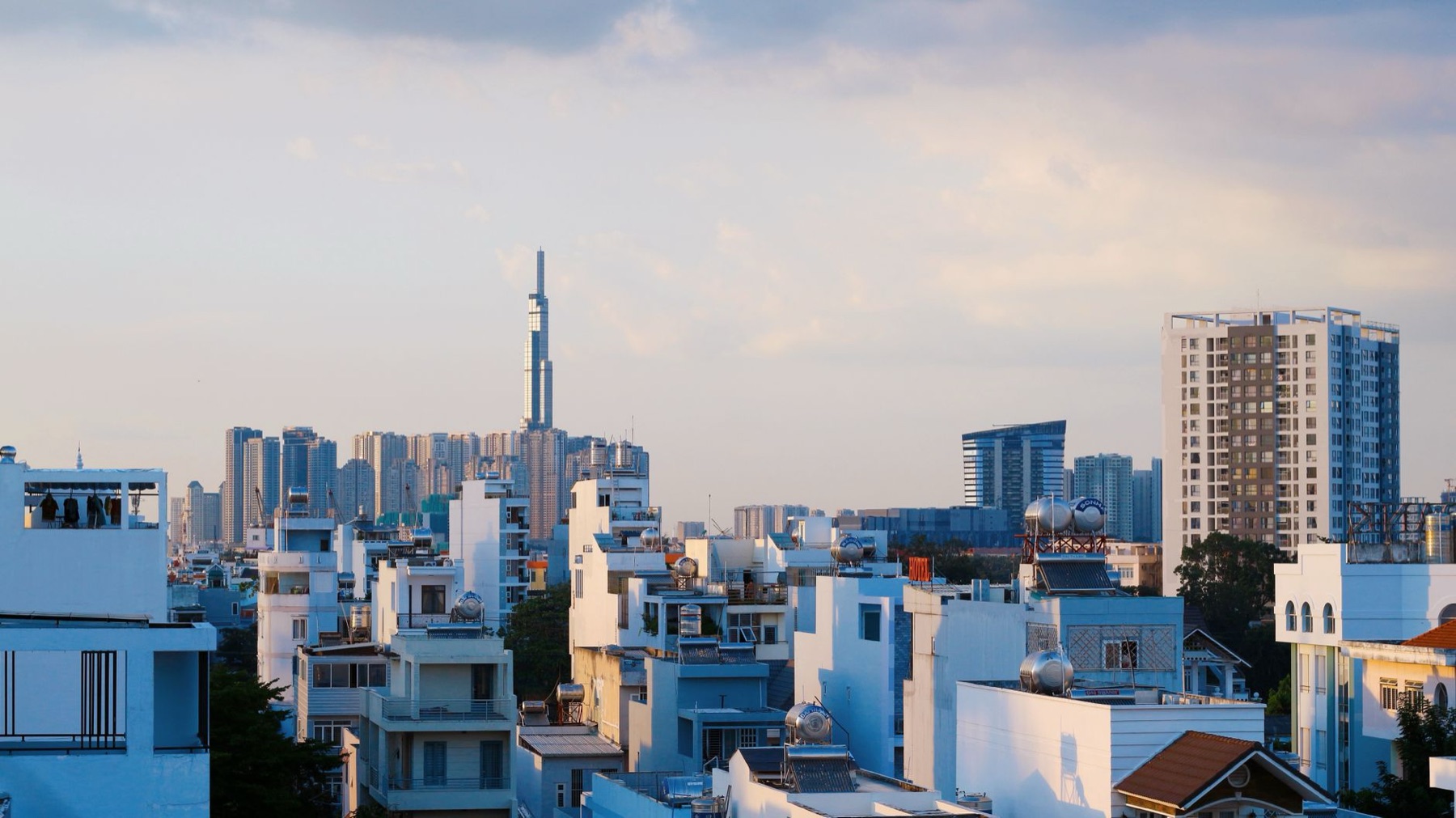
Where do locals actually eat in District 1, and are night markets worth visiting?
Ben Thanh Market (Tan Dinh Ward, District 1) is the most famous—and the most touristed. It's chaotic, loud, fun, and yes, worth a quick walk, but don't expect a "true local experience." It's a working market with silk sellers, tourist-priced trinkets, and a food stall section upstairs that trades on reputation more than consistency. Budget 30 minutes, not a meal.
For real street food, head to:
- Binh Thanh District (crossed by Nguyen Hue and Tran Hung Dao streets): phở joints, bánh mì stalls, and cơm tấm (broken-rice) shops where a full breakfast costs 25,000–40,000 VND (USD $1–1.60). Eat where motorbike riders eat.
- District 4 (Chuong Duong Ward): quieter, riverside-adjacent, with bún riêu (crab-tomato noodle soup) stands that open 6:00 a.m.–9:00 a.m. Around 35,000 VND (USD $1.40) per bowl.
- Night markets (Nguyen Hue Walking Street in District 1, Friday–Sunday evenings): better for atmosphere than value. Food stalls are decent but prices jump 30–50% after dark. Expect 50,000–80,000 VND (USD $2–3.20) for items that cost 30,000 in daylight.
Go early (6:00–9:00 a.m.) for street food. By 11 a.m., the best stalls close; by 2 p.m., everything does. Lunch is 11:30 a.m.–1:30 p.m. (vendors reset); dinner floods 5:30–8:00 p.m.
🎟️ Compare tours & tickets for this place
Is the Mekong Delta worth a full day, and which tour operator is trustworthy?
Yes—if you book honestly and set realistic expectations. The Mekong is not pristine wilderness; it's a working agricultural region with narrow canals, floating markets, coconut groves, and family fruit farms. A day tour exposes you to that reality in a way a guidebook can't.
What you'll see:
- Cai Rang or Cai Be floating market (crowded, touristy, real)
- Coconut candy-making demonstrations (kitschy but educational)
- Rowing through narrower canals (peaceful, brief)
- Lunch at a family restaurant (mediocre food, generous portions, around 100,000–150,000 VND / USD $4–6)
How to book without getting fleeced:
- Avoid hotel concierge markups (they add 40–60%). Book directly with tour operators in District 1 (Ben Nghe Ward) or District 3 (Tan Dinh Ward). Walking into an office and asking for their own itinerary (not pre-printed hotel packages) reveals honesty.
- Cost range: 400,000–700,000 VND (USD $16–28) per person for a 10-hour day (pickup, boat, lunch, transport back). If quoted over 800,000 VND, you're in a markup trap.
- Depart early (6:00 a.m.) to beat the main tourist pulse. Mid-morning departures mean crowded boats and rushed logistics.
Real issue: Most tours hit the same two markets. If you want a deeper Mekong experience—staying overnight in a rural homestay, joining a harvest, eating with a rice-farming family—book a 2-day itinerary (around 1,200,000–1,600,000 VND / USD $48–64). 🗺️ Plan your route: Vietnam itinerary will help structure a longer delta stay.
What happens along Saigon River in the evening, and where do locals go?
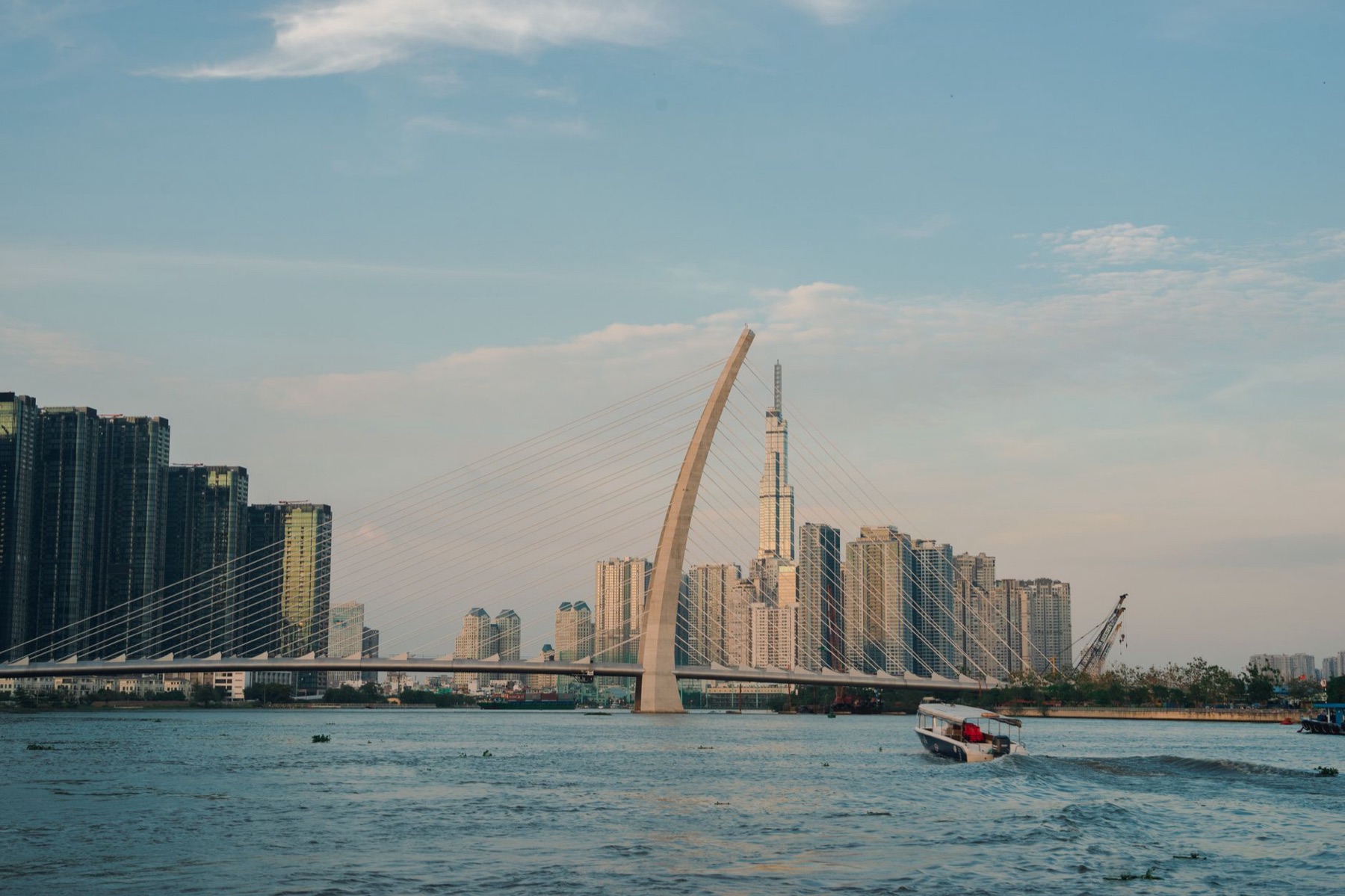
Saigon River's banks have been semi-reclaimed as a walk zone. The eastern side (District 1, from Binh Quoi Ward northward) has a loose promenade with riverside restaurants, cafés, and a bike path. Sunset (around 5:45–6:15 p.m. year-round) draws crowds—locals, expats, tourists, families on motorbikes—but it doesn't feel manufactured.
Where to go:
- Saigon Skydeck (Bitexco Financial Tower, 2 Ham Nghi, District 1): rooftop bar at 49 floors. Entry around 150,000–200,000 VND (USD $6–8) if you order a drink (300,000+ VND / USD $12+). Honest view; packed 5:00–7:30 p.m.
- Riverside cafés in District 3 (Nguyen Hue street, closer to Tao Đàn Park): quieter, cheaper (coffee 30,000–50,000 VND / USD $1.20–2), local-leaning.
- District 4 embankment (Chuong Duong area): barely touristed, motorbike-vendor energy, no Instagram angle, real.
Walk the river after dinner (8:00 p.m. onward) if you want solitude. The "golden hour" tourists thin out by 7:30 p.m., and local joggers and couples take over.
Are the old quarter and neighbouring districts worth a full day, and what's genuinely different about each?
The Old Quarter (District 1, Hoan Kiem Lake surrounds) is a noun everyone uses without precision. It's actually Hoan Kiem District and part of central District 1—both are condensed, labyrinthine, full of narrow streets named after goods they historically sold (Silver Street, Silk Street). It's touristic, yes, but it's also real: old families still live above shops; monks chant in temples wedged between tourist cafés; the energy is dense and unhurried compared to the wider city.
A realistic itinerary for 4–5 hours:
- Hoan Kiem Lake circuit (free, 30 min): walk the lake perimeter. The Turtle Tower is symbolic, the water smells of city, the north shore has street food stalls and local joggers. Real.
- Ngoc Son Temple (Dinh Tien Hoang, Hoan Kiem Ward): 20,000 VND (USD $0.80), 15 min. Cramped, touristy, but it's an 18th-century shrine; worth the brevity.
- Hanoi stroll into Hoan Kiem Market (Hang Dao, just north of the lake): 20–30 min. Textiles, housewares, locals bartering. Mornings (7:00–9:00 a.m.) are best.
- Lunch or pho in a side alley (Duck Street has decent phở joints, 30,000–45,000 VND / USD $1.20–1.80).
- Old-town café (Ba Trang Pottery, Thu Ta Coffee, smaller names)—not chains. Spend 1–2 hours with a drink (40,000–60,000 VND / USD $1.60–2.40), observe foot traffic.
Difference from other districts:
- District 3 (Tan Dinh Ward): leafier, colonial-building-dense, café culture, younger expat hangout. Less chaos; more coffee.
- District 4: riverside, quieter, working-class energy, local-food-first. Almost no tourists.
- Binh Thanh: grid streets, office towers, locals-only restaurants, genuine.
Avoid the hype: the "walking tour" or "street art tour" marketed in hostels. You'll pay 300,000–500,000 VND (USD $12–20) for an English speaker to point out painted walls and tell pre-written stories. Walk solo with a phone map and you'll see more.
📸 Book an ao dai photoshoot in Hanoi or Saigon (Cáo Studio)
How do I build a 2–3 day itinerary that doesn't feel rushed or repetitive?
The mistake most visitors make is trying to "do" Ho Chi Minh City in one tour-shaped day. The city doesn't reward that. It rewards lingering.
| Day | Focus | Time | Why It Works |
|---|---|---|---|
| Day 1 | History + central | Morning: War Remnants Museum (2.5 hrs); Lunch: Binh Thanh street food (1 hr); Afternoon: Reunification Palace (1.5 hrs) + walk District 1 + Saigon River walk (2 hrs) | Consolidates central history, no backtracking |
| Day 2 | Food + neighbourhoods | Early: Ben Thanh or Binh Thanh market tour (1.5 hrs); Mid-morning: District 4 or 3 café walk (2 hrs); Afternoon: Mekong day trip or local temple walk (5–6 hrs total) | Tests your appetite and pace; Mekong is optional |
| Day 3 | Escape or detail | Option A: Mekong if skipped; Option B: Cu Chi Tunnels (1.5 hrs north, full-day with transport); Option C: Slow morning, lunch at a local restaurant nobody named, pack. | Flexibility. Cu Chi is heavy; not always necessary. |
Transport notes:
- Grab (the Uber equivalent) is reliable and costs 30,000–80,000 VND (USD $1.20–3.20) for most central trips.
- Motorbike taxis (Grab Bike) cost half; risky if unfamiliar with traffic.
- Walking + occasional Grab is faster than tour buses, cheaper than taxis.
🗺️ Plan your route: Vietnam itinerary for multi-city scheduling beyond Ho Chi Minh City.
What to Check Before You Go
- Visa: Most visitors need a Vietnam e-visa or arrival visa. Check e-visa requirements if staying longer than 30 days.
- eSIM or local SIM: Grab works better with data. Get a prepaid Vietnam eSIM before landing, or buy a Viettel SIM at the airport (100,000 VND / USD $4 with data).
- Season: November–April is cooler and dry (ideal). May–September is hot, humid, monsoon-prone. Expect 35°C+ (95°F+) and 80–90% humidity.
- Scams to avoid: overpriced taxis from airport (use Grab), inflated market prices if you don't speak Vietnamese, "cyclo drivers" who quote 500,000 VND (USD $20) for a 10-minute ride (real price: 50,000–80,000 VND / USD $2–3.20).
- Pocket pick-pocketing is real in crowded markets and motorbike taxis. Keep phones/wallets front-side.
---
Want to capture this moment on film? Hire a professional photoshoot in Saigon—áo dài portraits, street portraits, sunrise series. Cáo Studio (makeup, styling, photography) creates keepsakes that outlast any guidebook visit. 📸 Book an ao dai photoshoot in Hanoi or Saigon (Cáo Studio)
---
If you're expanding beyond Ho Chi Minh City, explore Hanoi's hidden temples, Hoi An's lantern-lit old town, Ha Long Bay's limestone karsts, or the limestone pinnacles of Ninh Binh. Sapa is the mountain escape most visitors miss—worth a 2-day addition to any Vietnam loop.
FAQ
Is it worth hiring a private guide for Ho Chi Minh City, or can I navigate alone?
Navigate solo using a phone map and Grab—you'll see more and spend less. Hire a guide only for War Remnants Museum (adds context) or a full-day Mekong tour (logistics matter). Private guides cost 500,000–800,000 VND (USD $20–32) for half-days, often unnecessary.
What's the best time to visit, and how many days is realistic?
November–April (cool, dry) is ideal; avoid May–September (heat, monsoon). A realistic stay is 2–3 days minimum: Day 1 for central history, Day 2 for food + neighbourhoods, Day 3 for Mekong or neighbouring provinces. Four days allows for depth without frenzy.
Are group tours or independent exploration better?
Independent (Grab + phone map) works for central areas. Use group tours only for Mekong Delta (logistics) or Cu Chi Tunnels (distance, mandatory guide). Self-guided saves 30–50% and feels less scripted.
How much should I budget daily, and where do money-saving traps hide?
Budget 800,000–1,200,000 VND (USD $32–48) daily: meals 200,000 VND (USD $8), activities 300,000 VND (USD $12), transport 100,000 VND (USD $4), café/drinks 100,000 VND (USD $4). Avoid hotel restaurant markups (3x street food prices), airport taxis (use Grab), and packaged tours (book directly, not through hotels).
Should I skip Cu Chi Tunnels, or is it essential?
Cu Chi is historically significant but heavy—claustrophobic tunnel crawls, war imagery, 1.5+ hours north. Essential only if you're interested in Vietnam War sites beyond War Remnants Museum. Otherwise, spend that day slower or on Mekong.
What's the safest way to move around—Grab, cyclo, motorbike taxi, or walking?
Grab car is safest. Grab Bike (motorbike taxi) is risky if unfamiliar with traffic. Cyclos are slow and touristy (avoid quote-less agreements). Walking + occasional Grab is the smart middle ground. Never accept unmarked taxis.
FAQ
Is it worth hiring a private guide for Ho Chi Minh City, or can I navigate alone?
Navigate solo using a phone map and Grab—you'll see more and spend less. Hire a guide only for War Remnants Museum (adds context) or a full-day Mekong tour (logistics matter). Private guides cost 500,000–800,000 VND (USD $20–32) for half-days, often unnecessary.
What's the best time to visit, and how many days is realistic?
November–April (cool, dry) is ideal; avoid May–September (heat, monsoon). A realistic stay is 2–3 days minimum: Day 1 for central history, Day 2 for food + neighbourhoods, Day 3 for Mekong or neighbouring provinces. Four days allows for depth without frenzy.
Are group tours or independent exploration better?
Independent (Grab + phone map) works for central areas. Use group tours only for Mekong Delta (logistics) or Cu Chi Tunnels (distance, mandatory guide). Self-guided saves 30–50% and feels less scripted.
How much should I budget daily, and where do money-saving traps hide?
Budget 800,000–1,200,000 VND (USD $32–48) daily: meals 200,000 VND (USD $8), activities 300,000 VND (USD $12), transport 100,000 VND (USD $4), café/drinks 100,000 VND (USD $4). Avoid hotel restaurant markups (3x street food prices), airport taxis (use Grab), and packaged tours (book directly, not through hotels).
Should I skip Cu Chi Tunnels, or is it essential?
Cu Chi is historically significant but heavy—claustrophobic tunnel crawls, war imagery, 1.5+ hours north. Essential only if you're interested in Vietnam War sites beyond War Remnants Museum. Otherwise, spend that day slower or on Mekong.
What's the safest way to move around—Grab, cyclo, motorbike taxi, or walking?
Grab car is safest. Grab Bike (motorbike taxi) is risky if unfamiliar with traffic. Cyclos are slow and touristy (avoid quote-less agreements). Walking + occasional Grab is the smart middle ground. Never accept unmarked taxis.
More: Ho Chi Minh City guide · Things to do in Ho Chi Minh City