Hanoi · Things to do
Best Things to Do in Hanoi Vietnam: Local Insider Guide 2026
By Wander in Vietnam editorial team · Hanoi, Vietnam
Hanoi rewards early risers and slow travelers. The capital rewards visitors who step outside guidebook loops—joining locals at tai chi by the lake, eating pho at family stalls, climbing narrow stairwells to hidden rooftop bars. We've tested the hype and documented what actually delivers.
What should I see at Hoan Kiem Lake and why does timing matter?
Hoan Kiem (Sword Lake) is Hanoi's spiritual centre. Dawn crowds thin by 8 a.m.; crowds thicken after 10 a.m. The Turtle Tower sits on a small island—no entry, view from shore only. Ngoc Son Temple opens around 8:00 a.m. (entry around 30,000 VND / $1.20 USD). The red bridge is photogenic but crowded by 9 a.m. Walk the perimeter (3 km, 45 minutes) when locals do tai chi and practitioners fish. Sunset is overrated—crowds suffocate the lakeside by 5 p.m.
Early morning is non-negotiable. Most visitors arrive mid-morning and see packed paths, loud tour groups, and poor photos. Arrive before 7:30 a.m., walk the full loop, grab coffee at a street stall facing the water, and leave before 9 a.m. Return in evening only if you want the Instagram shot; locals avoid it.
How do you eat your way through the Old Quarter without food-poisoning risk?
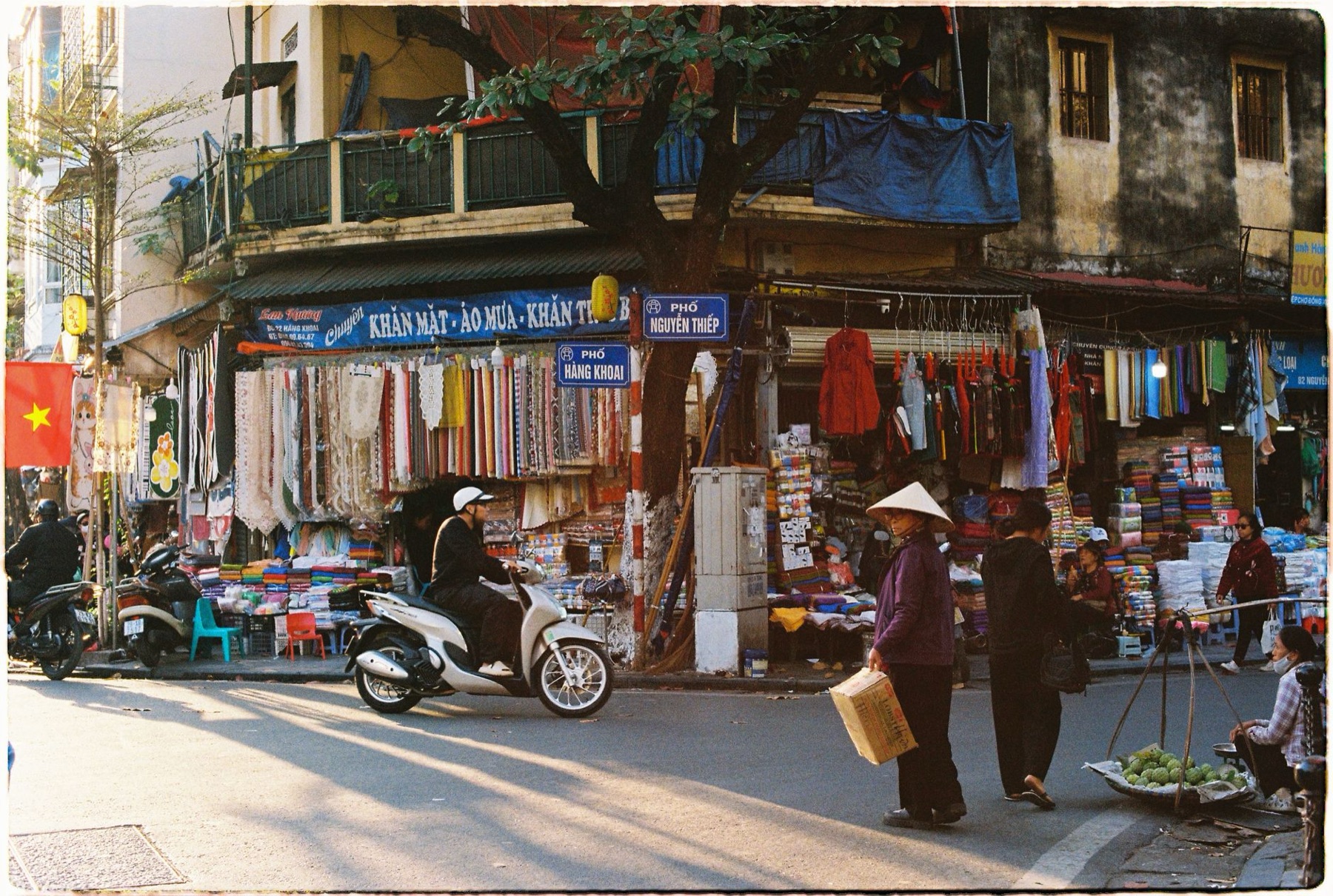
The Old Quarter (36 streets, each historically named by trade—Hang Bac for silver, Hang Gai for silk) is Hanoi's oldest neighbourhood. Street food here is safe if you follow one rule: eat where locals eat, in high turnover, during peak hours.
Safe stall hierarchy:
- Peak-hours stalls (11–1 p.m., 5–7 p.m.): Food rotates fast. Cooking in front of you. Crowds guarantee freshness.
- Mid-afternoon stalls (2–4 p.m.): Avoid. Food has sat for hours.
- Early-morning (6–9 a.m.): Coffee and sticky rice—safer. Pho (around 40,000 VND / $1.60 USD) is low-risk; herbs come fresh.
Join a small group street-food tour (not a 15-person bus tour) led by a local who speaks English. Tours cost around 500,000–800,000 VND / $20–$32 USD for 3 hours, usually 8–11 people max. They know which vendors restocked this morning. Avoid tour operators in hotel lobbies; book directly at reputable walking-tour operators in the Old Quarter or via established platforms.
What to eat (and why it's safe):
- Pho: Broth simmers for hours (kills pathogens). Base ingredient is cooked.
- Banh mi: Bread is baked fresh. Fillings are cooked or pickled.
- Cha ca: Grilled fish (Cha Ca La Thanh Street is the dedicated alley). Cooked in front of you.
- Egg coffee: Hanoi's signature. Raw egg yolks in sweetened condensed milk, topped with espresso. Reputable cafés use pasteurised eggs or heat-treat them. Risk is low; ask "egg tao or egg ga?" (quail or chicken). Reputable stalls use quail from reliable suppliers.
Scam alert: Vendors who approach you on the street offering "authentic local food" tours often push overpriced restaurants they own or partner with. Politely decline. Book tours beforehand.
Which temples are worth your time versus tourist checkboxes?
Hanoi has 40+ temples. Most visitors hit the famous three: Tran Temple, Confucius Temple, and One Pillar Pagoda. Honest assessment:
| Temple | What it is | Crowds | Best for | Entry (VND) |
|---|---|---|---|---|
| Tran Temple (Tran Quoc, West Lake) | Ancient, peaceful, lakeside | Low–medium | Sunrise photos, silence | 30,000 |
| Confucius Temple (Van Mieu-Quoc Tu Giam) | Scholarly, courtyard gardens, steles | High | Architecture, history | 35,000 |
| One Pillar Pagoda (Mot Cot) | Single column, compact, famous photo | Very high | Photo only, 10 min max | 25,000 |
| Thay Pagoda (Thay, 30 km west) | Water puppet shows, hillside, serene | Low | Full-day excursion, theatre | 50,000 entry + show |
| Tay Phuong Pagoda (30 km west, Thu Thiem) | Timber architecture, 3-tier roofs | Low | Art history, quiet | 30,000 |
Our honest take: Skip One Pillar Pagoda. It's a 2-minute stop—not worth the entry fee. Hit Tran Temple early (6:30–7:30 a.m.) before crowds. Confucius Temple is worth 1.5 hours if you care about history; otherwise it's a photoshoot with no soul. Day-trip to Thay Pagoda (60 km south-west, 1.5 hours by minibus around 100,000 VND / $4 USD return) for a full experience—includes a water-puppet show at midday (around 150,000 VND / $6 USD).
Temples open 8:00 a.m.–5:00 p.m. typically. Avoid midday (11 a.m.–2 p.m.) when tour buses arrive. Many close for lunch 11:30 a.m.–1:00 p.m.
Is West Lake cycling and the 'expat belt' worth a half-day?
Ho Tay (West Lake) is Hanoi's second-largest lake. The 13 km perimeter has become gentrified—cafés, luxury apartments, and expat hangouts line the north shore. The cycling loop is pleasant but not exceptional.
What works: Rent a bike around 50,000–100,000 VND / $2–$4 USD for 3 hours from a shop near Tran Temple. Cycle counter-clockwise from Tran Temple through quieter residential roads on the south side. Stop at a lakeside pho stall (around 45,000 VND / $1.80 USD). Loop back via the north shore cafés if you want to people-watch expats. Total time: 2–3 hours.
Skip: The upscale floating restaurants and "sunset boat cruises" (often overpriced, mediocre food, rushed groups). Your time is better spent elsewhere.
Alternative: If cycling bores you, take a motorbike taxi (around 100,000 VND / $4 USD for 30 minutes) to explore the quieter north-west neighbourhoods—Tay Ho ward has narrow streets, local noodle shops, and minimal tourists.
What makes water puppet theatre authentic versus a tourist show?
Water puppet theatre (múa rối nước) originated in the Red River Delta during the 11th century. Shows are performed on a shallow water stage—puppeteers hide behind a screen, manipulating wooden figures with poles and strings.
Two venues in Hanoi:
- Thang Long Water Puppet Theatre (Dinh Le Street, Hoan Kiem District): The main "official" venue. Performances 3–4 times daily (typically 8:00 p.m., 9:15 p.m.). Tickets around 100,000 VND / $4 USD (standard), 150,000 VND / $6 USD (better seats). Holds 400+. Professional, polished, but feels touristy—mostly international visitors.
- Thay Pagoda Water Puppet Show (30 km south-west, day-trip): Performed outdoors on a pond during midday. Smaller, more intimate (50 spectators max). Tickets included in temple admission + show (around 150,000 VND total / $6 USD). Feels more "authentic" because it's in its original setting.
Honest take: Both are staged performances, not folk events. Thay is more atmospheric (outdoor setting, smaller crowds, reflects historical context). Thang Long is convenient (city-centre, reliable schedule). Choose Thay if you have a half-day; choose Thang Long if you're time-constrained.
📸 Book an ao dai photoshoot in Hanoi or Saigon (Cáo Studio)
---
What are Hanoi's overrated attractions, and what should you do instead?
Overrated:
- Hoan Kiem Lake sunset: Packed, mediocre views, crowds ruin photos.
- Old Quarter night-market crawl: Most stalls sell identical trinkets. Prices inflated 3–5×. Real markets are Dong Xuan (wholesale, chaotic, better prices) and Hang Da (less touristy, more local).
- French Quarter colonial walk: Photogenic but not unique—colonial architecture exists across Vietnam. Better uses of time: Hoi An (actual preserved town) or Da Lat (colonial villas in context).
- Cyclo tours: Slow, rickety, tourist-priced (around 300,000 VND / $12 USD for 1 hour). Use motorbike taxis or rental bikes instead.
Do this instead:
- Visit during shoulder season (Sept–Oct, March–April): Fewer tourists, better weather than summer (hot, humid) or winter (cold, drizzly).
- Eat at a local pho joint (not a restaurant): Grab a plastic stool at a hole-in-the-wall, order in Vietnamese, pay 40,000–50,000 VND / $1.60–$2 USD. Infinitely better than a touristy "pho restaurant."
- Hire a local guide (via Viator or Airbnb Experiences) for a half-day: 300,000–500,000 VND / $12–$20 USD. They'll take you to neighbourhoods tourists never see.
- Take a day-trip to Ninh Binh (100 km south, 1.5 hours by bus around 100,000 VND / $4 USD) or Ha Long Bay (160 km east, 2.5 hours, overnight boat tours from 500,000 VND / $20 USD all-inclusive).
🗺️ Plan your route: Vietnam itinerary
---
How to avoid scams and respect local culture while exploring
Scams to watch for:
- Fake cyclo drivers: Agree on price in advance (should be 80,000–150,000 VND / $3–$6 USD for 45 minutes). Many quote inflated prices. Use Grab Bike (app-based, meter, safe) instead.
- Overpriced restaurants: A server approaches you offering "authentic local food." They lead you to a partnered restaurant charging 3–4× normal prices. Politely decline. Walk away.
- Xuan Phuong 'pottery village' tours: Marketed as artisan village. It's a factory outlet. Pottery is mass-made elsewhere. Real pottery villages are Bat Trang (easier access) and Ngu Xa (further out, more authentic).
- Fake eSIM/SIM card vendors: Buy at official shops (Viettel, Vina, Mobi kiosks in malls) or request a eSIM for Vietnam before arriving. Street vendors sell inactive cards or worse.
Cultural respect:
- Dress modestly at temples: Cover shoulders, knees. Remove shoes before entering inner sanctums.
- Ask before photographing: Especially monks, street vendors, locals.
- Learn basic Vietnamese: "Xin chao" (hello), "Cam on" (thank you), "Bao nhieu tien?" (how much?). Effort wins smiles.
- Eat with right hand (or left if left-handed; avoid crossing cultures unnecessarily).
- Don't touch Buddha statues or religious objects unless invited.
---
When should you visit Hanoi, and how long is enough?
Best time: September–October, March–April (mild weather, low humidity, fewer tourists).
Avoid: June–August (40°C / 104°F, extreme humidity). December–February (cold, drizzle, though rare frost).
Duration:
- 2 days: Hoan Kiem, Old Quarter, one temple, water puppets. Rushed.
- 3–4 days (recommended): Above + West Lake, a day-trip (Ninh Binh or Thay Pagoda), local food tours, evening street exploration.
- 5+ days: Add Sapa (3-hour train north), Hoi An (3-hour flight south), or Ha Long Bay overnight cruise.
Logistics:
- Stay in Old Quarter (for walkability, night life) or around Hoan Kiem Lake (quieter, central).
- Book accommodation 1–2 months ahead for March–April.
- Use Grab app for motorbike/car transport (safer, cheaper than negotiated taxis).
- Get a Vietnam e-visa before arrival (online, 25–35 USD, issued same-day).
---
🎟️ Compare tours & tickets for this place
---
Capture memories that last: Gift ideas tied to Hanoi experiences
After you've walked the temples and tasted the pho, consider a keepsake that holds the moment. If you've done an ao dai photoshoot in Hanoi with professional makeup and styling, a personalized photo keepsake or framed star map (linked to the date and location of your shoot) transforms the experience into something lasting.
Browse our keepsake collections for options like engraved boxes, custom prints, or travel maps marked with the places you've been. For those returning home, personalized gift collections let you send something thoughtful to friends—a Hanoi souvenir that isn't mass-produced trinkets.
If you're planning a group trip or honeymoon, a couple or group gift collection pairs well with a professional photoshoot memory.
---
What to check before you buy (or book) anything in Hanoi
- Verify opening hours: Call ahead or check Google Maps. Many temples close for lunch or seasonal festivals.
- Confirm tour group size: Small groups (6–10 people) beat large buses. Ask the operator directly.
- Book tours 24 hours ahead: This avoids no-shows and ensures guides are prepped.
- Bring cash: Many street stalls and small temples don't accept cards. ATMs are abundant (withdrawal fees around 20,000 VND / $0.80 USD).
- Check weather: Hanoi can flood during Sept–Oct rains. Avoid low-lying areas on heavy rain days.
- Use Grab app: Safer, transparent pricing, no negotiation stress. Motorbike rides 15,000–50,000 VND / $0.60–$2 USD.
- Insure your trip: Travel insurance covers medical emergencies, flight cancellations, trip delays. Budget around 200,000–300,000 VND / $8–$12 USD for 10-day coverage.
---
🗺️ Plan your route: Vietnam itinerary
Learn about our sister guides: Hanoi in detail, Ho Chi Minh City, Hoi An, Ha Long Bay, Ninh Binh, Sapa.
More logistics: Vietnam e-visa | eSIM for Vietnam
---
FAQ
Is tap water safe to drink in Hanoi?
No. Drink bottled water (20,000 VND / $0.80 USD per 1.5L bottle, sold everywhere). Ice in drinks is typically made from purified water at restaurants; street stalls vary. Brush teeth with bottled water or local mint-tea (safe).
How much cash should I carry daily?
Carry 500,000–1,000,000 VND / $20–$40 USD daily. Street food, temple entries, taxis use cash. Cards work at restaurants, hotels, malls. Keep money in a money belt or hotel safe.
Is it safe to travel solo (or for women) in Hanoi?
Yes. Hanoi is safe for solo and female travelers. Avoid poorly-lit streets alone after 10 p.m. Use Grab instead of flagging taxis. Street harassment is minimal. Dress modestly (shoulders, knees) reduces unwanted attention.
How do I get around Hanoi cheaply?
Motorbike taxis (Grab Bike, 15,000–50,000 VND / $0.60–$2 USD), local buses (5,000–10,000 VND / $0.20–$0.40 USD), or rent a bicycle (50,000 VND / $2 USD for a day). Avoid taxis (meter or pre-negotiated).
What should I eat that's uniquely Hanoi?
Pho (noodle soup), banh mi (sandwich), cha ca (grilled fish), egg coffee, bun cha (grilled pork with noodles), and cha lua (Vietnamese sausage). All under 80,000 VND / $3.20 USD. Thang Long Water Puppet Theatre area has good street stalls.
Can I extend my visa in Hanoi?
Yes, via travel agencies (1–2 million VND / $40–$80 USD for 1–2 month extensions, 5–7 days processing). Avoid tourist-trap agencies; use ones in the Old Quarter with consistent Google reviews. Easier: exit Vietnam and re-enter on a new visa.
Do I need a VPN in Hanoi?
Not legally required for tourists. Facebook, Google, Instagram work. Some VPNs may flag as unusual; stick to major providers. Avoid VPNs only to bypass laws; use them for privacy/security on public WiFi.
FAQ
Is tap water safe to drink in Hanoi?
No. Drink bottled water (20,000 VND / $0.80 USD per 1.5L bottle, sold everywhere). Ice in drinks is typically made from purified water at restaurants; street stalls vary. Brush teeth with bottled water or local mint-tea (safe).
How much cash should I carry daily?
Carry 500,000–1,000,000 VND / $20–$40 USD daily. Street food, temple entries, taxis use cash. Cards work at restaurants, hotels, malls. Keep money in a money belt or hotel safe.
Is it safe to travel solo (or for women) in Hanoi?
Yes. Hanoi is safe for solo and female travelers. Avoid poorly-lit streets alone after 10 p.m. Use Grab instead of flagging taxis. Street harassment is minimal. Dress modestly (shoulders, knees) reduces unwanted attention.
How do I get around Hanoi cheaply?
Motorbike taxis (Grab Bike, 15,000–50,000 VND / $0.60–$2 USD), local buses (5,000–10,000 VND / $0.20–$0.40 USD), or rent a bicycle (50,000 VND / $2 USD for a day). Avoid taxis (meter or pre-negotiated).
What should I eat that's uniquely Hanoi?
Pho (noodle soup), banh mi (sandwich), cha ca (grilled fish), egg coffee, bun cha (grilled pork with noodles), and cha lua (Vietnamese sausage). All under 80,000 VND / $3.20 USD. Thang Long Water Puppet Theatre area has good street stalls.
Can I extend my visa in Hanoi?
Yes, via travel agencies (1–2 million VND / $40–$80 USD for 1–2 month extensions, 5–7 days processing). Avoid tourist-trap agencies; use ones in the Old Quarter with consistent Google reviews. Easier: exit Vietnam and re-enter on a new visa.
Do I need a VPN in Hanoi?
Not legally required for tourists. Facebook, Google, Instagram work. Some VPNs may flag as unusual; stick to major providers. Avoid VPNs only to bypass laws; use them for privacy/security on public WiFi.
More: Hanoi guide · Things to do in Hanoi