Hoi An
Best Things to Do in Hoi An: Museums, Markets & Craft Trails
By Wander in Vietnam editorial team · Hanoi, Vietnam
Hoi An rewards slow exploration over checklist tourism. The core worthwhile experiences cluster in two areas: the Old Town (Trần Phú, Nguyễn Duy Hiệu, Phan Bội Châu) where you'll visit temples, embroidery workshops, and ceramic museums on foot within 2–3 hours; and the night market (Chợ Đêm, Nguyễn Hoàng) for lantern-lit street food and local weaving. Most paid attractions cost around 50,000–120,000 VND ($2–5 USD). Skip generic "cooking classes for tourists"—instead watch artisans at work for free. We recommend anchoring a full day: morning temple visits, midday craft studio exploration, afternoon museum time, evening market stroll. Hoi An entry fees (all-in combined ticket) run around 100,000–150,000 VND ($4–6); individual sites charge less if visited separately. Book an ao dai photoshoot if you want professional portraits in traditional dress before exploring temples and galleries. 📸 Book an ao dai photoshoot in Hanoi or Saigon (Cáo Studio) ---
What's worth paying entry for vs. free exploration?
The Old Town's official attractions (Chùa Cầu, Bảo tàng Hội An, Precious Heritage Art Gallery Museum) justify entry fees for first-timers—they contextualize the town's fabric trade history. Chùa Cầu (the 16th-century covered bridge at the edge of Old Town) costs around 30,000 VND ($1.20) and is genuinely iconic; the craftsmanship in its roof tiles and beam carvings cannot be replicated. Bảo tàng Hội An (10B, Trần Hưng Đạo) offers chronological context on merchant guilds and port commerce, worth 50,000 VND ($2). Precious Heritage Art Gallery Museum (26, Phan Bội Châu) spotlights textile arts; entry around 80,000 VND ($3.20). The merchant halls—Hội quán Triều Châu (157, Nguyễn Duy Hiệu), Hội Quán Phước Kiến, and Hội Quán Quảng Triệu (176, Trần Phú)—each cost 20,000–30,000 VND ($0.80–1.20) and reveal guild power structures. Free wins: street-level observation of lantern makers, casual crowd-watching at market stalls, and walking the cloth vendors' row (Chợ vải Hội An near Nguyễn Hoàng).
What to check before you visit: Arrive before 10 a.m. or after 4 p.m. to dodge tour groups. Wear comfortable walking shoes—the stone lanes are uneven.
Which museums suit your interests and budget?
| Museum / Gallery | Best for | Entry Cost | Time Needed | Why Pick It |
|---|---|---|---|---|
| Bảo tàng Hội An (10B, Trần Hưng Đạo) | History buffs, first-timers | ~50,000 VND ($2) | 45 min | Chronological overview: harbor trade, guild politics |
| Precious Heritage Art Gallery (26, Phan Bội Châu) | Textile lovers, artisans | ~80,000 VND ($3.20) | 1 hour | In-depth weaving, dyeing, embroidery techniques + gallery sales |
| Ceramic Museum (80, Trần Phú) | Pottery enthusiasts, collectors | ~40,000 VND ($1.60) | 30 min | Vietnamese celadon history; pieces available for purchase |
| Hoi An Museum of Traditional Medicine | Alternative medicine curious | ~60,000 VND ($2.40) | 40 min | Herb jars, acupuncture displays, apothecary setups |
| Merchant Halls (Triều Châu, Phước Kiến, Quảng Triệu) | Architecture fans, historians | ~25,000 VND each ($1) | 20 min each | Ornate woodwork, ancestral altars, guild power display |
The most overhyped: "tourist-trap" embroidery shops on Trần Phú charging 500,000+ VND ($20+) for mass-produced pieces. Authentic work happens at Sô.Va Art Hand Embroidery (111, Trần Phú)—smaller pieces start around 200,000 VND ($8) and take weeks to complete; watch stitchers work before buying.
🗺️ Plan your route: Vietnam itinerary
Where are the best artisan studios and what can you actually buy there?
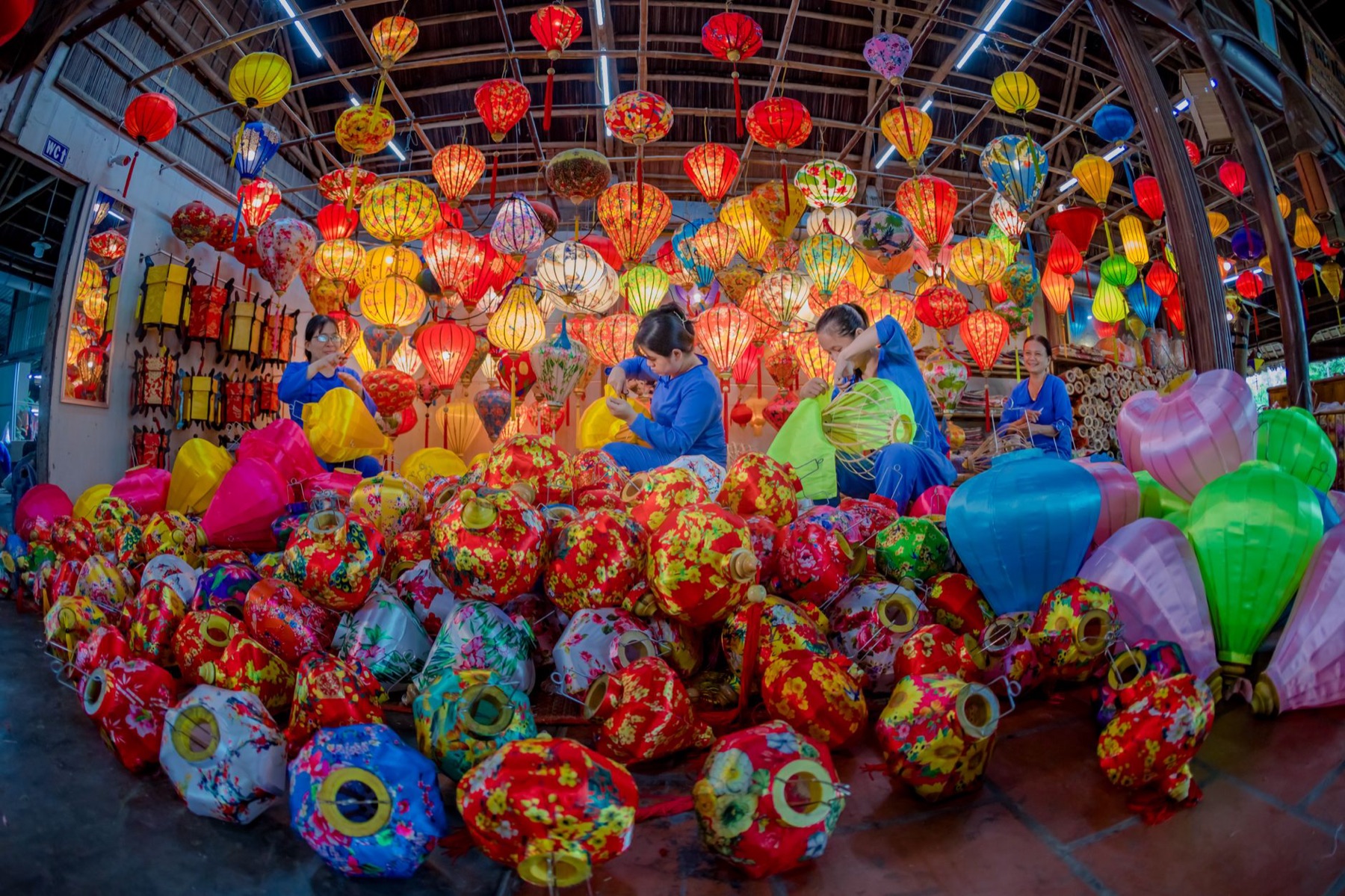
Hoi An's real charm is watching craftspeople work in real time. Sô.Va Art Hand Embroidery (111, Trần Phú) employs local women doing fine silk work—you can observe the process and commission custom pieces. Smaller wall hangings cost from 150,000 VND ($6), but quality custom orders run 2–4 weeks. Casa Tan My (101, Nguyễn Thái Học) is a woodcarver's studio; handcrafted items (boxes, frames, small sculptures) start around 100,000 VND ($4). The ceramic workshop (80, Trần Phú) sells studio seconds at fair prices—expect 80,000–300,000 VND ($3.20–12) for functional bowls and vases. Diep Dong Nguyen (58, Nguyễn Thái Học) specializes in lantern-making; watching artisans assemble silk and bamboo frames is free; finished pieces range 50,000–250,000 VND ($2–10). All these are family-run operations with inconsistent hours—most open 8 a.m.–5 p.m., but close for lunch 12–2 p.m. or randomly when owners travel. Avoid "artist studios" in tour-group zones; they're storefronts, not working spaces. The best finds are pieces under 200,000 VND ($8) where you've watched part of the creation.
What's the real story behind the Hoi An night market?
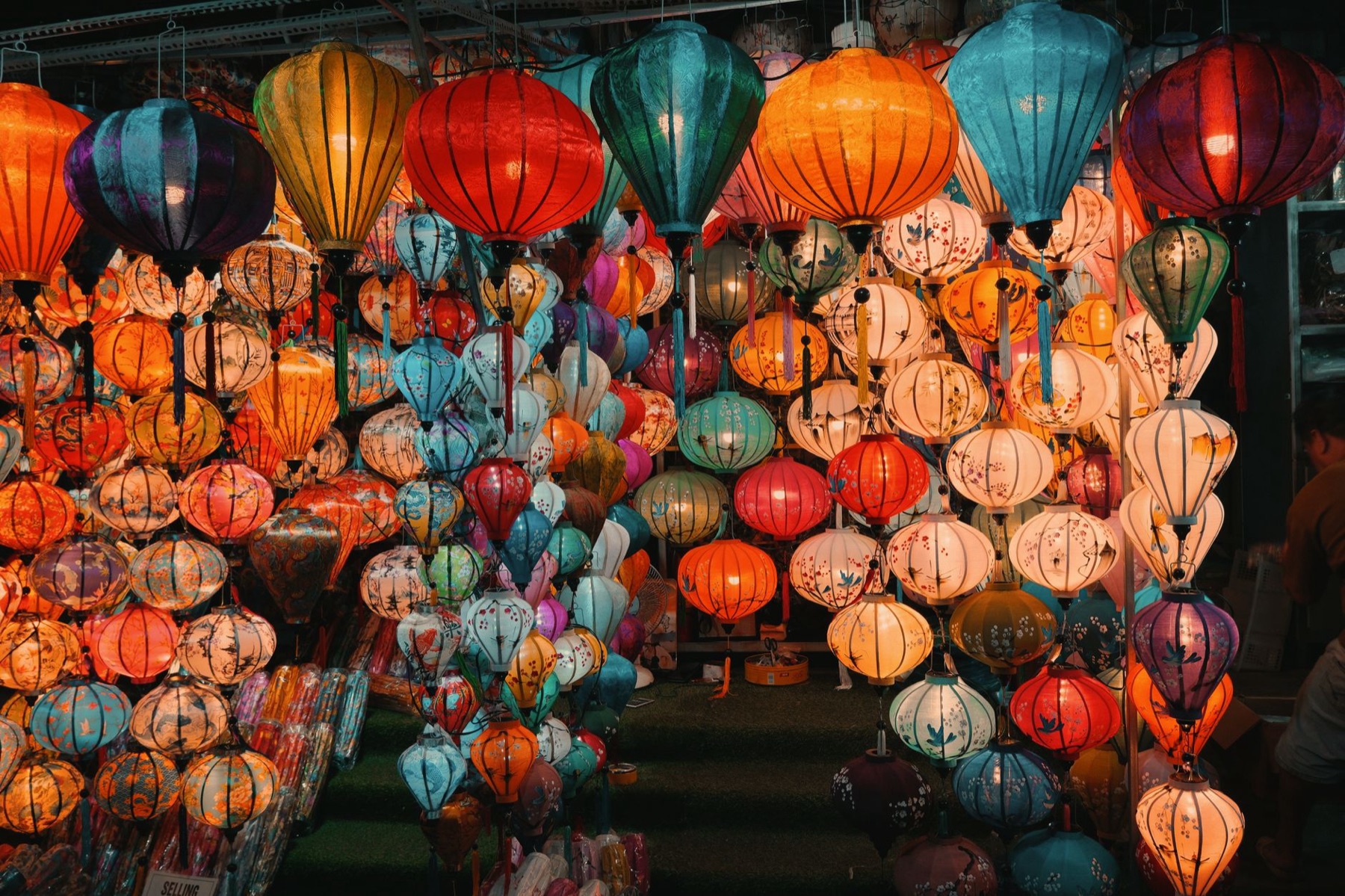
Chợ Đêm (Night Market, Nguyễn Hoàng area) opens around 5–6 p.m. and thrums until 11 p.m. It's NOT a tourist trap—locals actually eat here. You'll find grilled seafood skewers (30,000–50,000 VND / $1.20–2), bánh mì variations (20,000–40,000 VND / $0.80–1.60), and fresh spring rolls (15,000–25,000 VND / $0.60–1). The textile vendors display fabric by lantern light—silks, linens, and cotton from 50,000–150,000 VND per meter ($2–6). This is where Hoi An residents buy dinner and cloth, not where they perform tourism. Arrive after 7 p.m. when office workers crowd the stalls; the energy and food quality peak then. Bring cash (many vendors don't take cards) and expect to haggle gently on bulk fabric purchases. Avoid the vendors closest to the main road entrance—they mark prices up for outsiders; move deeper into the rows where locals shop.
🎟️ Compare tours & tickets for this place
How do the merchant guild halls reveal Hoi An's real economy?
Five centuries ago, Hoi An was a Southeast Asian trading post where Chinese, Japanese, and Indian merchants competed. The Hội quán (guild halls) are where they settled disputes and controlled prices. Hội quán Triều Châu (157, Nguyễn Duy Hiệu) served Teochew merchants; Hội Quán Quảng Triệu (176, Trần Phú) served Cantonese traders; Hội quán Hải Nam (10, Trần Phú) housed Hainanese merchants. Each charges 20,000–30,000 VND ($0.80–1.20) entry and displays period furniture, ancestral tablets, and carved wooden plaques naming guild members. The architectural details—roof dragons, intricate beams, red lacquered doors—show which guilds had wealth. Hội Quán Phước Kiến follows the same pattern. Walk all five in sequence; you'll notice how identical the layouts are (ancestral altar at the rear, meeting room in the center, storage beneath). This uniformity reveals how tightly regulated the merchant system was. Most visitors skip these; they're less photogenic than temples, but architecturally richer and historically essential to understanding why Hoi An existed at all.
Is Chùa Cầu (the Japanese Covered Bridge) worth the hype?
Chùa Cầu's 30,000 VND ($1.20) entry fee stings at first, but the 16th-century bridge is genuinely irreplaceable—not a replica, not a reconstruction, the actual structure. The Japanese built it to link their merchant quarter to the Chinese quarter; the covered design protected goods and people from sun and rain during negotiations. Inside, intricate wooden joinery, a small altar, and carved roof elements show craftsmanship that cannot be recreated today. The view of the Thu Bồn River at sunset justifies the cost. Visit early (before 9 a.m.) or late (after 5 p.m.) to avoid 200-person photo queues. The bridge's design influenced later Vietnamese architecture—understanding it explains why so many Hanoi and Ho Chi Minh temples have similar proportions. Do not skip this one; it's the anchor of Hoi An's identity.
---
What to check before you buy or visit
- Hours shift with seasons. Many studios close 12–2 p.m. for lunch; some shut entirely on quiet days (mid-week in low season). Call ahead or ask your hotel.
- "Combined entry ticket" vs. individual sites. If you're visiting 3+ attractions, the all-in pass (~100,000–150,000 VND / $4–6) may save 10–15%. Compare at the entrance or ask at your hotel.
- Embroidery and ceramics take time to craft. Don't expect to buy custom work the same day. Reputable studios quote 2–4 weeks for commissions.
- Fabric vendors mix machine-made with handwoven. Ask "Cái này bao lâu dệt?" (How long is this woven?). Handwoven pieces cost 2–3× more and are more durable.
- Cash is safer than cards at markets and small studios; ATMs cluster near the town center but sometimes run out.
- Photography inside temples and merchant halls is generally allowed but ask first (say "Chụp ảnh được không?" – May I take a photo?).
---
Cross-reference & continue planning
Plan a full Vietnam itinerary if Hoi An is one stop. If you're combining Hoi An with beach time, consider Da Nang (30 km south, 1 hour by taxi). Extend to Ninh Binh (4 hours north) for cave temples and karst scenery, or Ha Long Bay (6 hours) for limestone cruises. If you arrived in Ho Chi Minh City, allow 1–2 stops before Hoi An. Check Vietnam e-visa and eSIM requirements before arrival.
---
FAQ
Can I visit all the museums in one day?
Yes, but it's rushed. Hit Chùa Cầu, Bảo tàng Hội An, and two merchant halls in 4–5 hours, then rest. Save ceramics and textile galleries for day two or pick 3 max.
Are the embroidery prices at Sô.Va Art fair compared to shops selling mass-produced pieces?
Completely different categories. Studio pieces are handstitched by the artist in front of you; tourist shops mass-produce overseas. You're paying for authenticity and direct support to artisans, not a markup.
What's the difference between Hội quán Triều Châu and Hội Quán Quảng Triệu?
Both are merchant guild halls with identical layouts. Triều Châu served Teochew traders; Quảng Triệu served Cantonese. Visit both if interested in guild politics; one suffices if you want the architectural idea.
Is crowd-watching at Hoi An Old Town really a worthwhile activity?
Yes. Sit at a café and observe lantern makers, fabric vendors, and the flow of motorbikes and pedestrians. It reveals how locals actually live amid tourism, not as backdrop.
When is the Chợ Đêm night market least crowded?
5–6:30 p.m. and 9:30–11 p.m. Peak crowds are 7–9 p.m. Go early if you want to photograph; go late for authentic local energy and better food.
Do I need to book the merchant halls or artisan studios in advance?
No. Walk in during posted hours (usually 8 a.m.–5 p.m., closed 12–2 p.m.). Custom embroidery or carving requires discussion, not a formal booking—arrive, show a photo or describe your idea.
FAQ
Can I visit all the museums in one day?
Yes, but it's rushed. Hit Chùa Cầu, Bảo tàng Hội An, and two merchant halls in 4–5 hours, then rest. Save ceramics and textile galleries for day two or pick 3 max.
Are the embroidery prices at Sô.Va Art fair compared to shops selling mass-produced pieces?
Completely different categories. Studio pieces are handstitched by the artist in front of you; tourist shops mass-produce overseas. You're paying for authenticity and direct support to artisans, not a markup.
What's the difference between Hội quán Triều Châu and Hội Quán Quảng Triệu?
Both are merchant guild halls with identical layouts. Triều Châu served Teochew traders; Quảng Triệu served Cantonese. Visit both if interested in guild politics; one suffices if you want the architectural idea.
Is crowd-watching at Hoi An Old Town really a worthwhile activity?
Yes. Sit at a café and observe lantern makers, fabric vendors, and the flow of motorbikes and pedestrians. It reveals how locals actually live amid tourism, not as backdrop.
When is the Chợ Đêm night market least crowded?
5–6:30 p.m. and 9:30–11 p.m. Peak crowds are 7–9 p.m. Go early if you want to photograph; go late for authentic local energy and better food.
Do I need to book the merchant halls or artisan studios in advance?
No. Walk in during posted hours (usually 8 a.m.–5 p.m., closed 12–2 p.m.). Custom embroidery or carving requires discussion, not a formal booking—arrive, show a photo or describe your idea.
More: Hoi An travel guide