Hanoi
Common Scams in Hanoi and How to Avoid Them
By Wander in Vietnam editorial team · Hanoi, Vietnam
Hanoi's most frequent scams target visitors at Ben Thanh Market, in Hoan Kiem district, and at taxi stands near hotels. Overcharging (fake meter/unofficial cabs), counterfeit goods, and inflated bar bills are the top three. You avoid them by using Grab or registered taxis only (white/red livery, lit meter), carrying a phone with offline maps, speaking Vietnamese numbers aloud before payment, and eating where locals eat—not neon-lit tourist traps on Hang Dau or Ta Hien streets. Wander in Vietnam recommends arriving with a charged eSIM, verified hotel contact, and zero cash above 500,000 VND (around $20 USD). Most scams evaporate when you move slowly, ask twice, and trust your instinct to walk away.
Why do taxi drivers in Hanoi overcharge tourists?
Hanoi's unlicensed taxis (unmarked or with faded livery) prey on arrivals at Noi Bai Airport and hotels in Old Quarter. They either keep the meter off or jam it on the highest rate. Registered cabs (Mai Linh, Taxi CP, Hanoi Taxi) start at a fixed flag-fall of around 13,000 VND (under $1 USD) and run transparently. Use Grab (the Uber of Vietnam) instead—price is locked before you ride, no surprises, and the driver's name and plate are shown. Your only real protection is refusing any cab that won't show a working meter or give a quoted fare upfront.
🗺️ Plan your route: Vietnam itinerary
How do market vendors trick you into overpaying?
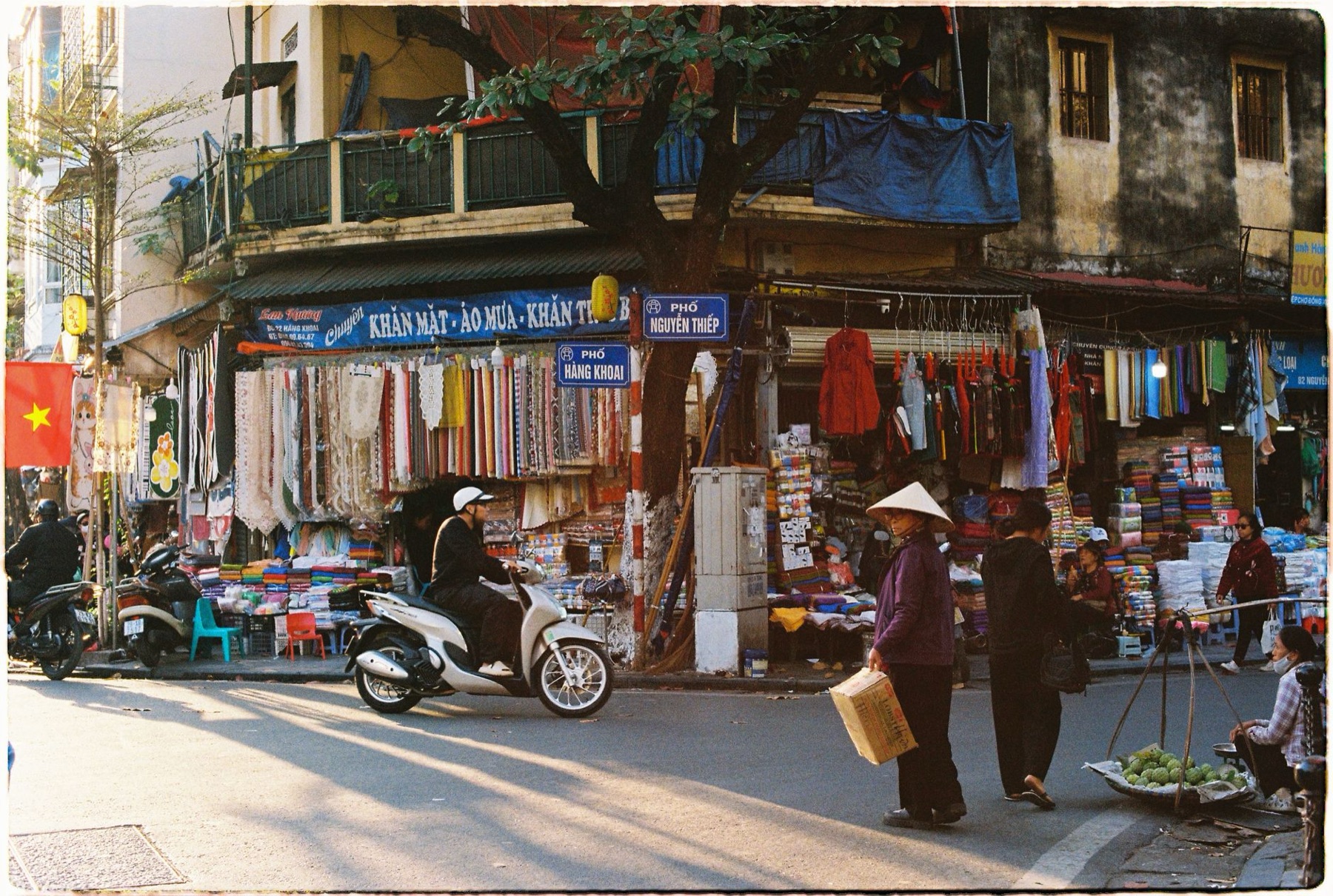
Ben Thanh Market (central Hanoi, 1 Tran Hung Dao) and the Old Quarter's tourist zones (Hang Dau, Ta Hien, Cau Go streets) use the same playbook: show you one price verbally, ring up a different number at the till, or claim an item is "rare silk" when it's polyester from a factory bin. Silk scarves marked 500,000 VND (around $20 USD) will cost 800,000 VND (around $32 USD) if you don't watch the register. Carry a calculator app (works offline), ask the total in writing before handing money, and buy from shop-fronts with signage, not cart vendors. If the price seems three times higher than it does one street over, it probably is.
Are food scams real in Hanoi's tourist bars?
Yes. Ta Hien Street and the lanes around Hoan Kiem Lake host bars with printed menus showing 50,000 VND (~$2 USD) beers that arrive as 150,000 VND (~$6 USD) charges. Staff claim "the price changed" or "you ordered whiskey, not beer." Locals never eat or drink on these streets; they cross the Red River to Tay Ho or walk to Nguyen Huu Huong for pho and ca phe sua. Stick to restaurants where diners are working-age Vietnamese, menus display prices beside the till photo, and no one approaches you on the street offering "special prices" for meals. Use Google Maps reviews—filter by recent, read the photos carefully, and skip places with zero Vietnamese-language comments.
What's the flower-seller scam and how do you spot it?
Older women approach you on Hang Ngang or Trang Tien streets with bunches of fresh flowers, quoting 50,000 VND (around $2 USD). Once you hand over cash, they demand 200,000–300,000 VND (around $8–12 USD), claim the flowers are for a funeral or wedding, and create a scene. The rule is simple: never accept flowers on the street. If you want to send flowers to a friend in Hanoi, order online through a registered florist like Hoa Lang Thang, which delivers same-day with a real receipt. If you want flowers for yourself, buy them at Flower Street (Hang Trong district, real shops with windows and prices on display).
Should you use ATMs in Hanoi or exchange money at hotels?
ATMs are safe if they're inside banks or malls (Vinmart, Aeon, Techo Mart). Standalone street ATMs in Old Quarter sometimes have card-skimming devices fitted by scammers—your card details are stolen, then used remotely. Exchange money at your hotel (rates are 1–2% worse than the market but honest) or Vietcombank branches (legitimate, no hidden fees). Carry a Vietnam eSIM loaded with a data plan so you can check current exchange rates on your phone before any transaction. Never change money with street touts, even if they quote a "better" rate—they either short-change you or hand you counterfeit notes.
Real vs. Fake: Gift Scams and How to Spot Them
| Item Type | Real Source | Fake Red Flags | Price (approx.) | Where to Buy Honestly |
|---|---|---|---|---|
| Silk scarf | Dyed in Hoi An, smooth weave, certificate | Polyester feel, no label, "special price for you" | 150–300k VND (~$6–12 USD) | Registered shops, named brands |
| Lacquerware | 15+ layers, wood base, artisan signature | Plastic shine, dents, peeling | 500k–2M VND (~$20–80 USD) | Craft markets, artist studios |
| Star map print (custom souvenir) | Personalized with your date/location | Blurry, generic stock image, no cert | From collection pages | Wander in Vietnam collections |
| Coffee (ca phe) | Whole beans, roasted in Vietnam, sealed | Grounds in baggy, stale smell, unmarked | 80–200k VND (~$3–8 USD) per bag | Supermarkets, named roasters |
🎟️ Compare tours & tickets for this place
When you travel to Hanoi, what should you check before trusting a business?
Before booking a tour, guide, or paying for an experience:
- Ask your hotel reception to recommend it (they lose reputation if it goes wrong).
- Search the business name + "scam" in Google; read the last 6 months of reviews.
- Confirm price in writing, including what's included and what costs extra.
- If paying upfront, use your credit card (chargeback protection), not cash.
- Check if guides are licensed; official Hanoi tour guides wear ID badges.
- Call the business number yourself; don't use a number given by a street tout.
- Ask locals (baristas, hotel staff) which neighborhoods to avoid after dark.
Before you buy an ao dai for a photoshoot or memory:
Cáo Studio provides makeup, hair, and styled photography in Hanoi and Saigon; they issue a real contract and show you preview images before final payment. This avoids the common trap of paying upfront to a street "photographer" who disappears or delivers blurry, over-filtered images.
Before buying handmade souvenirs (especially personalized gifts):
Wander in Vietnam's collections include star map prints, engraved keepsakes, and custom art. Each ships with a certificate and a 30-day guarantee—if it doesn't match the photo, you get your money back, no questions asked. Street vendors and night-market stalls offer no recourse.
---
Common Scam Comparison: Hanoi vs. Other Vietnam Cities
Hanoi (Old Quarter, Hoan Kiem): taxi fraud, flower vendors, market overcharging, counterfeit goods. Ho Chi Minh City (read the full guide): Ben Thanh Market tourists traps, fake designer bags, ride-share apps occasionally hacked. Hoi An (see guide): tailors overselling, fabric quality switcheroos, inflated restaurant bills for non-locals. Ha Long Bay (full guide): cruise operators overcharging for upgrades, unofficial boat vendors at Tuan Chau. Sapa (guide here): guide agencies doubling commissions, homestay hosts overcharging for meals, fake hill-tribe crafts. Ninh Binh (see Ninh Binh guide): rickshaw drivers abandoning you mid-tour for a "better offer," fake grottoes marketed as "Mua Cave."
The pattern is everywhere: unofficial providers, no written contract, pressure to decide fast. Our rule works across Vietnam: slow down, verify in writing, use official channels.
---
📸 Book an ao dai photoshoot in Hanoi or Saigon (Cáo Studio)
---
What to check before you buy (from any source)
- Receipt: Always ask for one, even for small items. It's proof and protection.
- Packaging: Real goods come in boxes or bags with labels. Street plastic means zero warranty.
- Return policy: If a shop won't take it back within 48 hours, walk out.
- Price comparison: Ask the cost at two other shops before committing.
- Your gut: If the seller seems pushy, the deal isn't real.
For souvenirs and personalized gifts you want to trust, Wander in Vietnam's collections pages let you preview and order with a full guarantee. No haggling, no surprises, no regret.
---
FAQ
Is Hanoi actually dangerous for tourists?
Hanoi ranks low for violent crime. The threat is financial fraud, not assault. Stay aware of your bag in crowds and use common sense—same as any city. After dark, use Grab taxis or ask your hotel for transport.
Can I use my credit card at ATMs in Hanoi without risk?
Yes, but only at ATMs inside banks or shopping malls (Vinmart, Aeon). Standalone street ATMs can have skimmers. Withdraw during business hours and check your statement within 48 hours.
What's the safest way to carry money in Hanoi?
Carry under 500,000 VND (around $20 USD) in a money belt and the rest on a card. Split cash into two pockets so if one is pickpocketed, you're not stranded. Don't show cash publicly.
Are tours booked on the street cheaper than pre-booked ones?
Street tours cost the same, but operators vanish if something goes wrong. Book through your hotel or Viator. You pay a deposit upfront, but they're licensed and insured.
How do I know if a silk item is real?
Real silk feels smooth, cool to touch, and wrinkles slightly. Polyester feels plastic-y and pilling is visible. Ask the shop to show you a bolt or sample; if they refuse, it's fake. Check the label for "100% silk."
What should I do if I think I've been scammed?
Report it to your hotel immediately. For significant losses, contact the Hanoi police tourism unit (1800-1800-1800) or visit your embassy. Credit card disputes take 30–60 days but usually succeed if you have a receipt.
FAQ
Is Hanoi actually dangerous for tourists?
Hanoi ranks low for violent crime. The threat is financial fraud, not assault. Stay aware of your bag in crowds and use common sense—same as any city. After dark, use Grab taxis or ask your hotel for transport.
Can I use my credit card at ATMs in Hanoi without risk?
Yes, but only at ATMs inside banks or shopping malls (Vinmart, Aeon). Standalone street ATMs can have skimmers. Withdraw during business hours and check your statement within 48 hours.
What's the safest way to carry money in Hanoi?
Carry under 500,000 VND (around $20 USD) in a money belt and the rest on a card. Split cash into two pockets so if one is pickpocketed, you're not stranded. Don't show cash publicly.
Are tours booked on the street cheaper than pre-booked ones?
Street tours cost the same, but operators vanish if something goes wrong. Book through your hotel or Viator. You pay a deposit upfront, but they're licensed and insured.
How do I know if a silk item is real?
Real silk feels smooth, cool to touch, and wrinkles slightly. Polyester feels plastic-y and pilling is visible. Ask the shop to show you a bolt or sample; if they refuse, it's fake. Check the label for "100% silk."
What should I do if I think I've been scammed?
Report it to your hotel immediately. For significant losses, contact the Hanoi police tourism unit (1800-1800-1800) or visit your embassy. Credit card disputes take 30–60 days but usually succeed if you have a receipt.
More: Hanoi travel guide