Da Nang
Da Nang itinerary for first-timers: 3 days, beaches & food
By Wander in Vietnam editorial team · Hanoi, Vietnam
Da Nang offers first-timers a compact, walkable beach escape centered on My Khe Beach (10 km of golden sand) and the riverside My An district. A realistic 3–4 day itinerary covers My Khe swimming, Dragon Bridge at night, the Marble Mountains for altitude views and pagodas, Hoi An's Old Town day trip (30 km south, 45 minutes by taxi), and street food crawls in the city core around Tran Phu and Bach Dang streets. Budget roughly 800,000–1,200,000 VND daily (USD ~32–48) for mid-range meals, local transport, and beach entry; beaches are free. Skip overpriced seafood restaurants on the beachfront and avoid the scam of inflated taxi meters—use Grab (ride-hailing app) instead. Wander in Vietnam recommends starting beachside to shake off travel fatigue, then pivoting inland midway through. ---
What should I do on day one: arrival and acclimatization?
Land at Da Nang International Airport (south of the city center), grab a Grab car to your accommodation around My An or the city core, and resist swimming until your next morning. Spend afternoon and evening on low-pressure tasks: walk Bach Dang Street (riverside) at sunset, grab street-side pho or banh mi from any stall (25,000–40,000 VND, ~USD 1–1.60), and explore the central market (Con Market, open roughly 5am–8pm) without buying—just orientate yourself. Eat dinner at a local com tam (broken-rice) spot near Tran Phu Street; expect queues after 6pm and costs of 30,000–50,000 VND (~USD 1.20–2.00). By bedtime, you'll know the street layout and won't feel like a lost tourist on day two.
How do I maximize My Khe Beach without the tourist trap crowds?
My Khe runs 10 km from the city center to Non Nuoc (the southern end). Arrive before 8am if you want uncrowded sand; by 10am the beach is packed. Swim in the flagged zones (lifeguards patrol roughly 7am–5pm); rip currents do occur, so don't venture past your depth or the flags. Rent loungers and umbrellas directly from vendors on the beach (150,000–200,000 VND for a day, ~USD 6–8) rather than through hotels—you'll pay half. Skip the beachfront seafood shacks unless you're with a Vietnamese speaker who can negotiate; tourists are typically charged 2–3× market price. Shower and change at your hotel, then return to the beach at 4:30pm for sunset—fewer crowds, softer light. Eat dinner inland afterward.
Which day trip makes sense: Hoi An, Marble Mountains, or both?
Hoi An vs. Marble Mountains: a first-timer's choice
| Destination | Distance | Time needed | Cost (transport + entry) | Best for |
|---|---|---|---|---|
| Hoi An Old Town | 30 km south | 4–5 hours return | ~150,000 VND taxi (~USD 6) | Photo lovers, lantern city, street food, tailoring |
| Marble Mountains | 12 km south | 2–3 hours | Free entry | Pagodas, cave temples, sea views, quick escape |
| Both in one day | 45 km total | 7–8 hours | ~250,000 VND total | Ambitious first-timers with energy |
Most first-timers choose Hoi An alone on day 2 or 3: hire a Grab car (around 150,000–200,000 VND, ~USD 6–8) and spend 3–4 hours wandering the lantern-lit Old Town, eating cao lau (local rice noodle dish, 40,000–60,000 VND, ~USD 1.60–2.40) and white rose dumplings, browsing fabric shops, and photographing the Japanese Bridge. Return to Da Nang by sunset. Marble Mountains works as a half-day add-on if you're energetic: climb the 150 stone steps, explore the Huyen Khong cave pagoda (free), buy mineral water at the summit (20,000 VND, ~USD 0.80), and descend by early afternoon. Combine both only if you're up at 6:30am and don't mind fast-paced sightseeing.
🗺️ Plan your route: Vietnam itinerary
What street-food route delivers the best food without tourist markups?
The core eating zone is Tran Phu Street (north–south, riverside) and Bach Dang Street (parallel, one block inland). Start mornings at any com tam stall (broken rice with grilled pork, egg, sardines) between 6–9am; vendors open early, close by 10am. Lunch: bánh hóa (Da Nang's signature cake, savory rice flour) from street carts around Nguyen Chi Thanh Market, roughly 20,000–30,000 VND (~USD 0.80–1.20). Dinner: find a crowded (good sign) banh hoai stall around the central market or Tran Phu; locals eat standing, pay cash, spend 30,000–50,000 VND (~USD 1.20–2.00). Avoid restaurants with English menus and photos on the window—they inflate prices 150–200%. Instead, eat where you see only Vietnamese customers, no signage in English, and a queue. Bring a translation app for the menu.
Why is Dragon Bridge the evening highlight and what should I know?
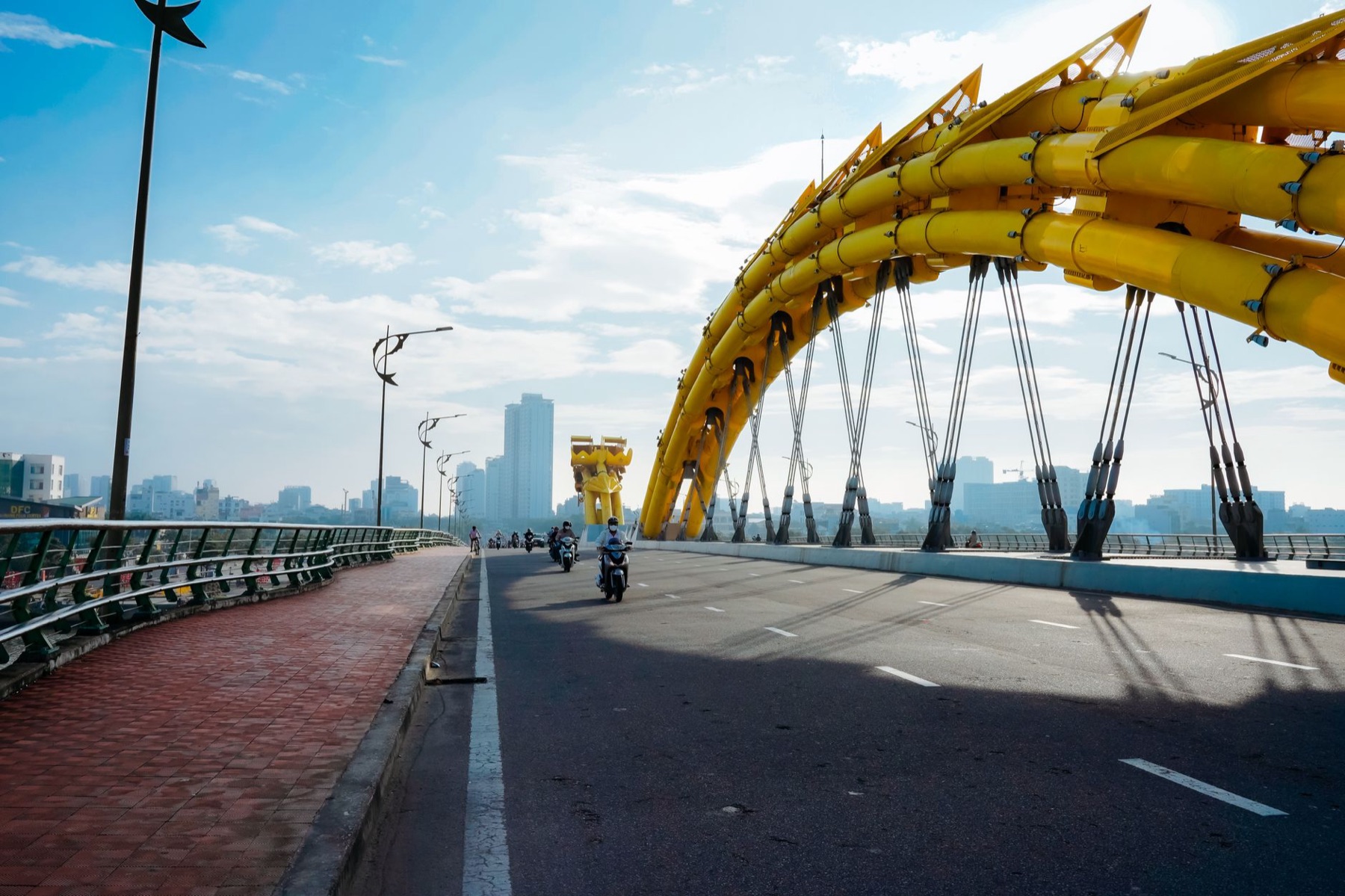
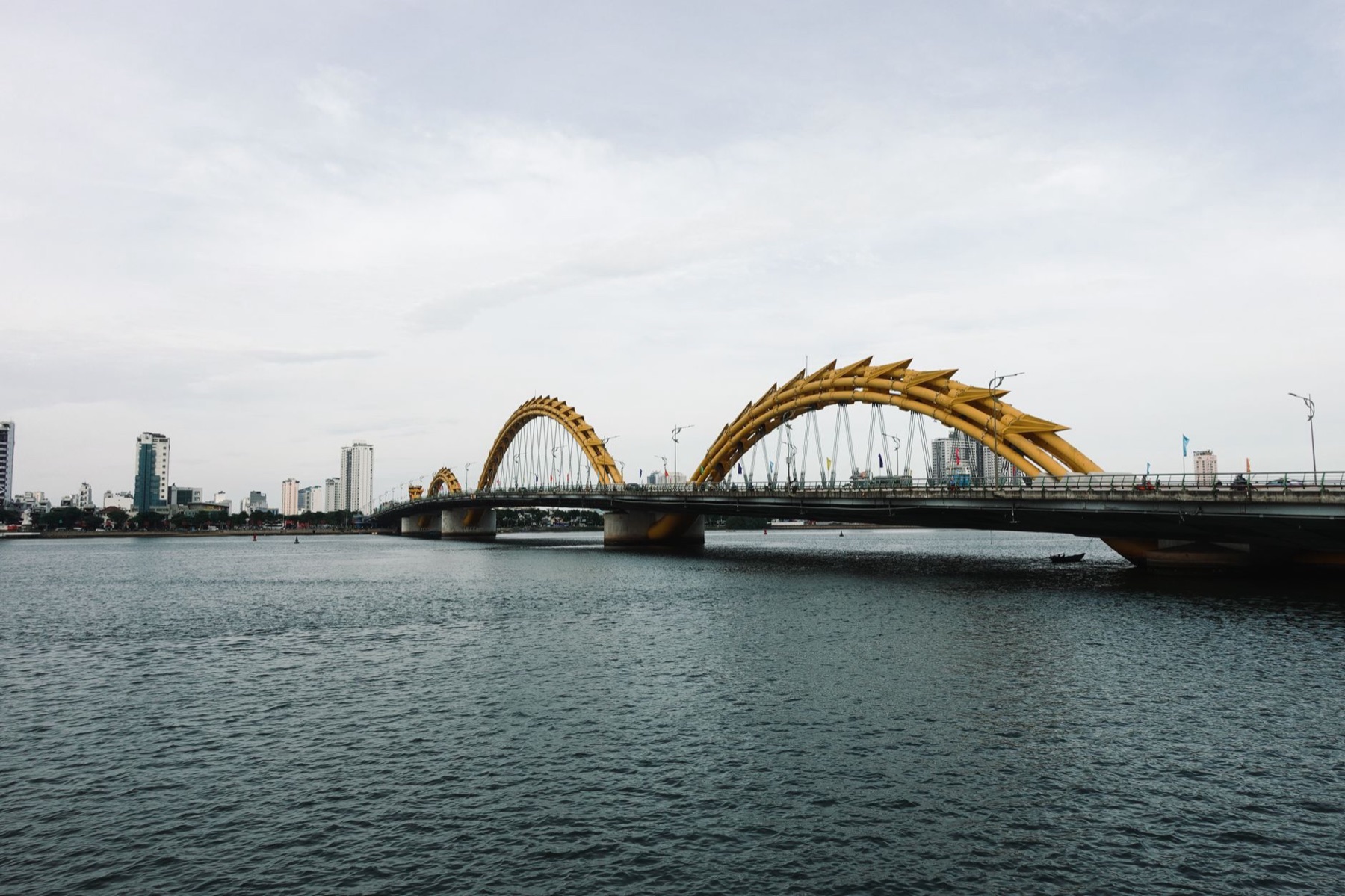
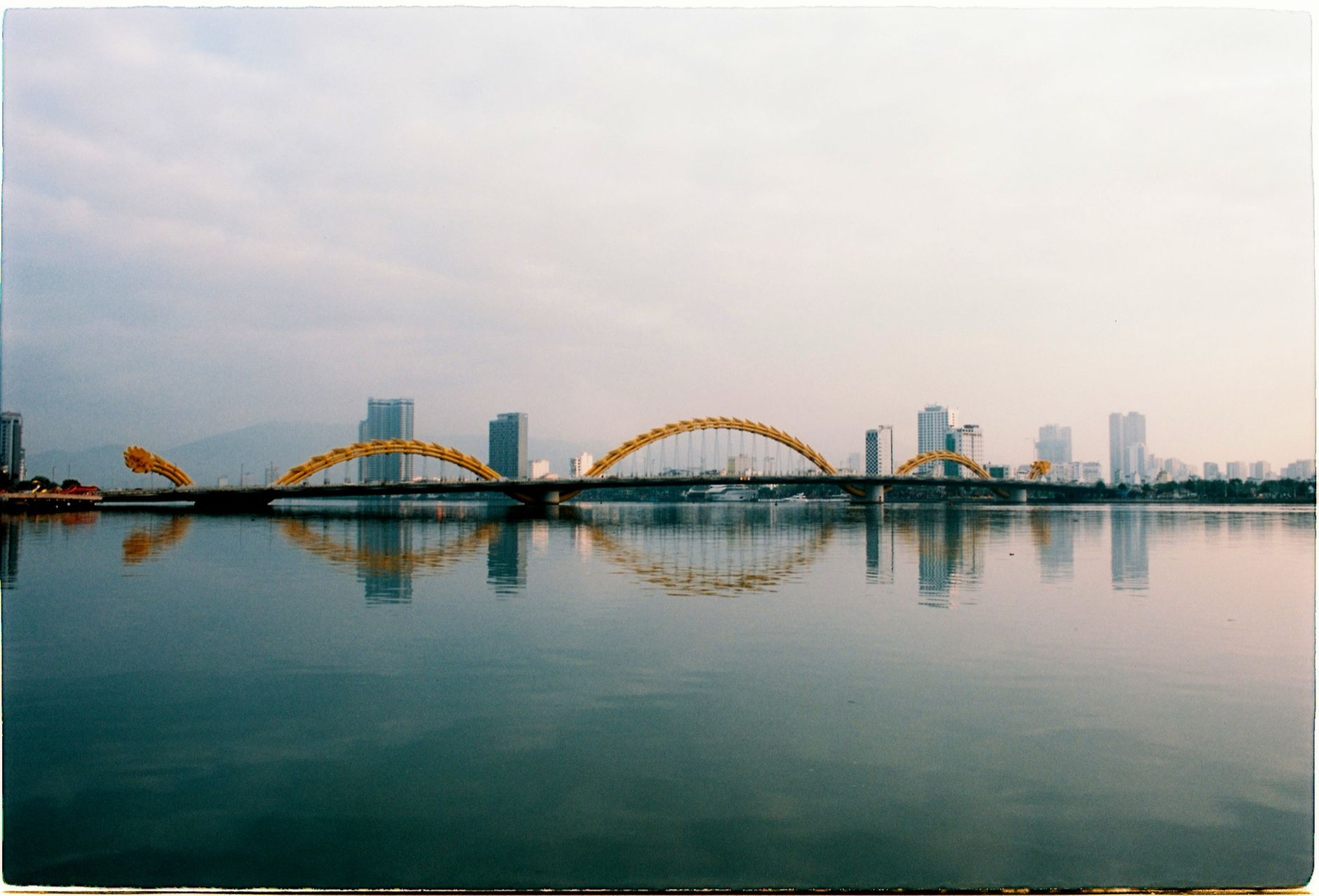
The Dragon Bridge (Cau Rong) illuminates nightly at 9pm with synchronized LED colors cycling every few seconds; free to walk or drive across. Arrive by 8:45pm to find a parking spot or Grab pickup point (Bach Dang Street near the bridge is congested; try the northern approach from Le Duan Street). The light show runs roughly 9–10pm, and crowds build after 9:15pm. Don't expect crowds to clear—thousands gather. Walk to the center at 9pm, watch for 10–15 minutes, then retreat to a nearby café (Bach Dang riverside has budget coffee spots open until late, 15,000–25,000 VND, ~USD 0.60–1.00). The bridge's iconic dragon head and tail are lit separately, and the effect is genuinely striking against the night sky—not overrated, but neither requires a 2-hour wait. Visit early in your stay so you're not too tired to enjoy it.
📸 Book an ao dai photoshoot in Hanoi or Saigon (Cáo Studio)
How do I avoid common first-timer mistakes and when should I leave Da Nang?
First-timer gotchas:
- Taxi meters: Grab app only; avoid street taxis (drivers can reset meters or negotiate inflated "fixed prices" afterward). Grab shows the fare before you book.
- Beach vendors: Politely decline offers to braid hair, sell jewelry, or book tours. Prices are always negotiable, but persistence is annoying.
- Seafood restaurants on My Khe: A grilled fish that costs 250,000 VND (~USD 10) inland costs 700,000+ on the beach. Eat seafood in the city center instead.
- Sunburn: UV is intense year-round. Reef-safe sunscreen (available at pharmacies) is mandatory even on cloudy days.
- Motorbike rental: Don't rent one as a first-timer unless you're an experienced rider in Vietnam; traffic is chaotic and insurance claims are nightmares.
When to leave: Most first-timers feel "done" by day 4 morning. If you've seen My Khe, eaten your fill, visited Hoi An or Marble Mountains, and walked Dragon Bridge, you've done Da Nang. Staying longer means repeating beach time or day-tripping to distant spots (Phong Nha, Ha Tien) that deserve their own 2–3 day visits. Check our Ha Long Bay guide or Hoi An guide for natural extensions. Flying out on morning of day 4 is the most logical move for first-timers.
---
What to check before you book accommodation
- Beachfront vs. city center: Beachfront is prettier but farther from food markets and Grab pickup points. City center (Hoan Kiem area) is 10–15 minutes from My Khe by car and puts you near restaurants.
- Water pressure and hot water: Verify reviews mention functional showers; older budget hotels sometimes have weak pressure or inconsistent heating.
- Grab availability: Check if your neighborhood shows Grab cars within 2–5 minutes on the app before booking. Isolated spots far from the center will have long wait times.
- Noise levels: Riverside and beachfront hotels can have barking dogs or construction noise early morning. Ask the hotel or check recent reviews for specifics.
- Included breakfast quality: Budget hotels often include mediocre breakfast; eat street instead (better food, lower cost, local experience).
🎟️ Compare tours & tickets for this place
---
Useful links for your Da Nang trip
Considering adding Vietnam's other highlights to your itinerary? Start with our Vietnam itinerary planner to map your full route. Heading north afterward? Check Hanoi guide, Ha Long Bay guide, or Ninh Binh guide. Heading south? See Ho Chi Minh City guide or Sapa guide. You'll also need a Vietnam e-visa and a local eSIM for internet on the go.
---
FAQ
How many days should a first-timer spend in Da Nang?
Three to four days is ideal. This covers one full beach day, one day trip (Hoi An or Marble Mountains), eating at street spots, and Dragon Bridge. By day 4 morning, most first-timers have seen the essentials and are ready to move on.
Is Da Nang safe for solo travelers?
Yes, very safe. Petty theft from unattended bags on the beach does happen; use hotel safes and don't leave valuables visible. Street crime is rare. Women traveling alone report no harassment issues beyond standard vendor persistence.
What's the best time of year to visit Da Nang?
May–September is hot and humid (32–35°C) with occasional rain. October–April is cooler and drier, ideal for beach days and walking. Typhoon season (August–October) can bring sudden storms. June–August are the busiest tourist months.
Can I reach Da Nang without flying?
Yes. The coastal train runs Hanoi–Da Nang (16–20 hours, seats start ~450,000 VND, ~USD 18, or sleeper berths from ~900,000 VND, ~USD 36) and Ho Chi Minh–Da Nang (8–10 hours). Buses are cheaper but slower and less comfortable. For most first-timers, a 1-hour flight from Hanoi or 2-hour flight from Ho Chi Minh City saves fatigue.
Should I rent a motorbike in Da Nang?
Not recommended for first-timers. Grab and taxi are safer and only marginally more expensive. If you do rent, carry an international driving permit and expect high insurance liability if you crash.
FAQ
How many days should a first-timer spend in Da Nang?
Three to four days is ideal. This covers one full beach day, one day trip (Hoi An or Marble Mountains), eating at street spots, and Dragon Bridge. By day 4 morning, most first-timers have seen the essentials and are ready to move on.
Is Da Nang safe for solo travelers?
Yes, very safe. Petty theft from unattended bags on the beach does happen; use hotel safes and don't leave valuables visible. Street crime is rare. Women traveling alone report no harassment issues beyond standard vendor persistence.
What's the best time of year to visit Da Nang?
May–September is hot and humid (32–35°C) with occasional rain. October–April is cooler and drier, ideal for beach days and walking. Typhoon season (August–October) can bring sudden storms. June–August are the busiest tourist months.
Can I reach Da Nang without flying?
Yes. The coastal train runs Hanoi–Da Nang (16–20 hours, seats start ~450,000 VND, ~USD 18, or sleeper berths from ~900,000 VND, ~USD 36) and Ho Chi Minh–Da Nang (8–10 hours). Buses are cheaper but slower and less comfortable. For most first-timers, a 1-hour flight from Hanoi or 2-hour flight from Ho Chi Minh City saves fatigue.
Should I rent a motorbike in Da Nang?
Not recommended for first-timers. Grab and taxi are safer and only marginally more expensive. If you do rent, carry an international driving permit and expect high insurance liability if you crash.
More: Da Nang travel guide