Ha Long Bay · Things to do
Ha Long Bag: What to Buy as a Souvenir Before You Leave
By Wander in Vietnam editorial team · Hanoi, Vietnam
A Ha Long bag is a woven or embroidered textile tote sold throughout Ha Long City and cruise terminals, typically featuring local motifs or boat designs. Prices range widely depending on material and maker. At Wander in Vietnam, we recommend buying from cooperatives or night markets rather than resort shops to avoid steep tourist premiums.
What exactly is a Ha Long bag, and does it make sense to buy one?
Ha Long bags aren't a single product—they're a category. Most are practical carry-alls: woven water hyacinth, jute, or cotton with simple stitching, sometimes hand-dyed. Quality varies enormously. A genuine artisan-made bag from a women's cooperative might last years; a terminal kiosk version may fray after one week. Buy if you want a functional, lightweight souvenir. Skip if you're after luxury or durability that rivals an actual travel backpack.

Where do locals and savvy travelers actually buy them?
Night markets in Ha Long City (typically 17:00–21:00 near the harbor) stock the widest range and lowest markups. Vendors often make them on-site or source from local weaving groups. You'll see genuine water hyacinth bags here—lightweight, breathable, true to region.
Women's craft cooperatives in nearby communes (ask your hotel or tour guide for "cooperative" links) sell direct; prices are transparent and support producers fairly.
Cruise ship terminals and resort gift shops charge 2–3× the night-market price for identical designs. Avoid unless you're desperate.
Da Nang or Hanoi airport shops stock Ha Long–style bags but at premium airport markups. Only buy if you've left Ha Long with empty hands.
Department stores in central Ha Long City (near Hoang Vu area) offer middle-ground pricing and standardized quality.
How much should you expect to pay, and what changes the price?
| Bag type | Material | Typical price range | Best for | Where to buy |
|---|---|---|---|---|
| Basic woven tote | Water hyacinth or jute | Around $8–15 USD | Day trips, lightweight packing | Night markets, local stalls |
| Hand-embroidered cotton | Cotton with local stitching | Around $15–30 USD | Photo-worthy keepsake, modest durability | Cooperatives, artisan markets |
| Reinforced travel tote | Thick cotton or canvas blend | Around $20–35 USD | Actual luggage substitute, multi-trip durability | Cooperatives, department stores |
| Designer/boutique blend | Upcycled or premium textiles | Around $35–60+ USD | Instagram moment, ethical sourcing claim | Independent artisan shops, upscale hotels |
Key factors that affect price:
- Hand-stitching vs. machine: hand-embroidery adds $5–10 but often looks amateur; machine work is invisible and reliable.
- Material weight: thicker jute costs more but won't give out mid-trip.
- Seller reputation: cooperatives price fairly; tourists shops inflate 50–100%.
- Size: oversized beach bags cost 30–50% more than standard totes.
- Design complexity: simple one-color prints cost less; multi-layer or wax-resist dyes push prices up.
Realistic scenario: a genuine, nicely made 30-liter cotton-jute blend with modest hand-stitching costs around $18–25 USD from a night market vendor. The same bag at a cruise terminal costs $45–60 USD.
What to check before you buy—a practical checklist
- Smell it. New, slightly earthy smell = fresh natural fibers. Chemical or plasticky smell suggests synthetic dyes or poor storage. Walk away.
- Squeeze the bottom seams. Run your thumb along interior stitching. Loose, gapped stitches = it will split under weight. Tight, even stitching suggests durability.
- Test weight distribution. Ask the vendor to let you hold it loaded (they often have stones or fabric to test). Handles should not dig in or slip. Seams at handle attachment should not buckle.
- Check for stains or wear. Even new stock sometimes sits in humid conditions. Look for mold spots, discoloration, or fabric pilling.
- Ask about water resistance. Most natural-fiber Ha Long bags are not waterproof. If you'll pack electronics, ask if the maker treats them or whether you need a packing cube inside.
- Negotiate gently at night markets only. Vendors expect a 10–15% haggle. Offer 80% of asking price, meet in the middle. Cooperatives have fixed prices—don't haggle there.
- Request a small gift bag. Reliable vendors throw in a smaller drawstring pouch for free. Signals they expect repeat customers.
📸 Book an ao dai photoshoot in Hanoi or Saigon (Cáo Studio)

How do you compare a Ha Long bag to similar bags from other Vietnam regions?
| Region | Bag type | Typical price | Durability | Best features |
|---|---|---|---|---|
| Ha Long | Water hyacinth or embroidered cotton | $8–30 USD | 1–3 years (day-use) | Lightweight, nautical or local motifs, iconic |
| Hoi An (see Hoi An guide) | Silk or brocade totes, tailor-made | $15–50+ USD | 2–5 years | Customizable, vibrant colors, craft heritage |
| Hanoi (see Hanoi guide) | Canvas or cotton, often monogrammed | $12–28 USD | 2–4 years | Minimalist, political/cultural prints, urban flair |
| Ninh Binh (see Ninh Binh guide) | Rattan or woven grass blend | $10–25 USD | 1–2 years | Rustic aesthetic, eco-conscious, lightweight |
| Sapa (see Sapa guide) | Indigo-dyed cotton or hemp | $20–40 USD | 3–5 years | Deep artisan quality, ethnic-minority patterns |
Quick comparison: Ha Long bags are cheaper and lighter; Hoi An offers customization; Sapa delivers the most durability and cultural depth. If you're on a Vietnam itinerary hitting multiple regions, buy a Ha Long bag in Ha Long for casual use and a Sapa bag as your keepsake.
What are the biggest scams and how do you avoid them?
Scam 1: "Hand-embroidered" by machine. Vendors claim embroidery is hand-done; it's not. Look at the back. Hand-embroidery shows thread knots and irregular tension. Machine work is perfectly uniform. Ask, "Can I see the back?" Honest vendors will show you.
Scam 2: Synthetic dye marketed as "natural" or "organic." No way to verify on the spot. If the price is suspiciously low ($5 for an "organic cotton" bag), assume synthetic dyes. Natural dyes cost more.
Scam 3: Cruise passengers upsold at terminal. Captive audience. Prices are double. Skip entirely unless you have no time left.
Scam 4: "Charity" bags at hostels or tour pickup points. "Buy this bag; proceeds go to local orphans." Rarely true. Donate directly to a registered NGO instead.
Scam 5: Counterfeit artisan labels. Some vendors attach fake "women's cooperative" tags to mass-produced bags. Ask the vendor, "Where is this made?" and "Who made it?" Vague answers = skip.
How to avoid it all: buy at night markets where foot traffic is high and reviews are live. Pay in cash (you can negotiate). Talk to other travelers; they'll point you to reliable stalls.
🗺️ Plan your route: Vietnam itinerary
Where should Ha Long bags fit into your overall Vietnam trip?
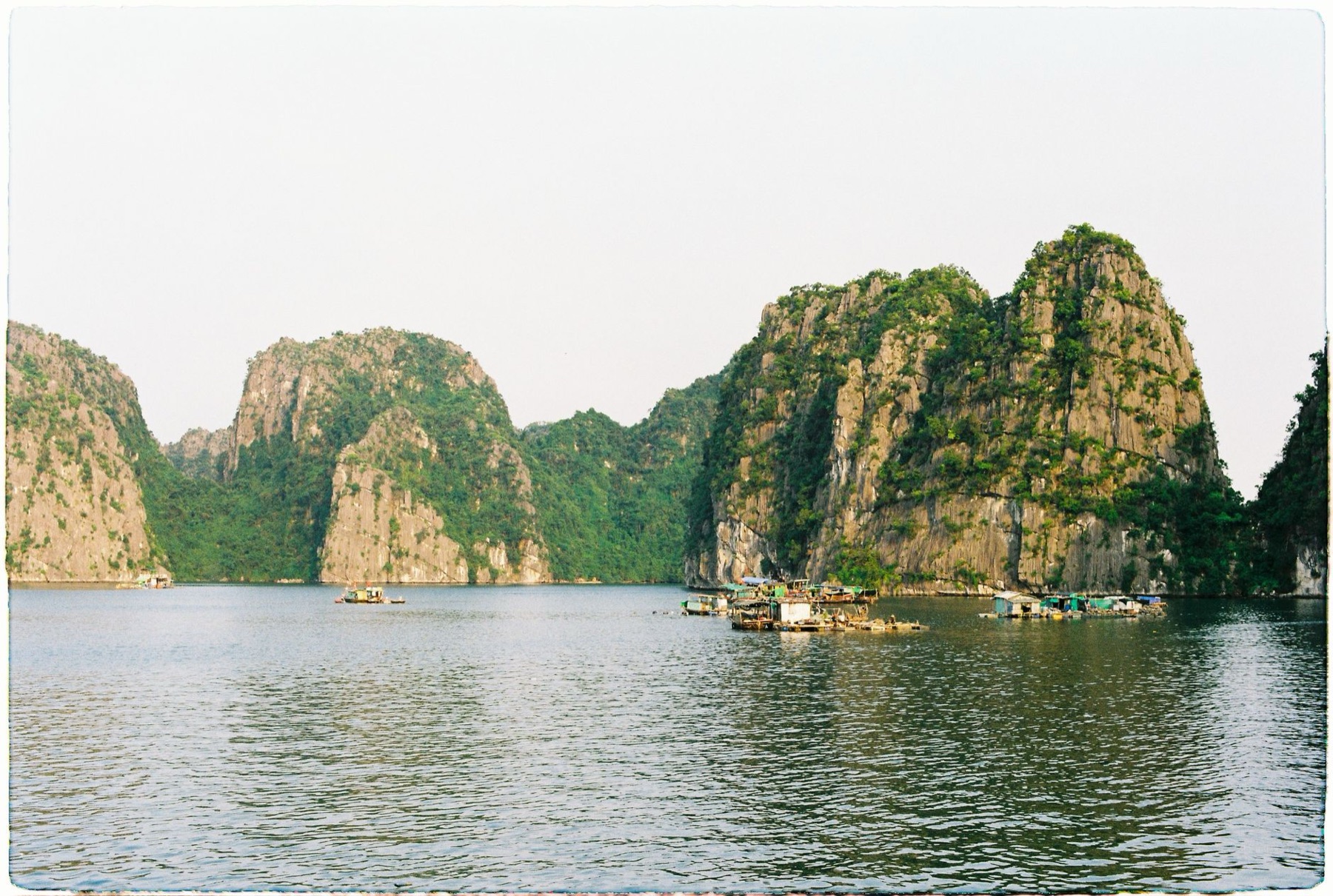
A Ha Long bag works best if you're already visiting Ha Long Bay (2–3 days typical). Cruise excursions take you to limestone karsts, floating villages, and caves; a lightweight tote is practical for day packs and snacks. It's also a conversation starter and genuine functional souvenir—unlike decorative keepsakes, you'll use it.
If you're also visiting Ho Chi Minh City, Hanoi, or other regions, compare regional bags. A Hanoi canvas tote might suit urban style better; a Sapa indigo bag offers deeper cultural richness. Budget $20–40 USD total for a quality souvenir bag from any region.
Pro tip: buy your Ha Long bag on your last day in the bay, not on arrival. You'll know your trip better and pick something you'll actually carry home and use. Pack it empty in your luggage or wear it as a day bag on your outbound flight.
If you want professional photos in a traditional ao dai with your new Ha Long bag, consider booking a photoshoot through Cáo Studio in Hanoi or Saigon before or after your Ha Long trip.
🎟️ Compare tours & tickets for this place
FAQ
Can I wash a Ha Long woven bag, and will it shrink?
Hand-wash in cool water with mild soap; air-dry flat. Natural fibers like water hyacinth and jute rarely shrink but may soften and lose shape if machine-dried or heated. Cotton-blend bags tolerate gentle machine wash on delicate cycle.
What's the difference between a Ha Long bag and a regular Vietnamese souvenir tote?
A Ha Long bag is typically tied to the region—woven from local materials or featuring nautical/karst motifs. A generic Vietnamese tote could be from anywhere. Ha Long bags often carry cultural weight and support local weavers; generic ones are mass-produced imports. Pricing reflects this.
Should I buy a Ha Long bag if I'm not actually taking a cruise?
Yes, if you're visiting Ha Long City proper or staying in hostels/hotels nearby. The bag works as a lightweight day-pack souvenir and practical carry-all. Skip if you're only passing through airport—not worth the hassle or premium markup.
How do I know if a Ha Long bag is actually made by the vendor or imported wholesale?
Ask directly: "Where is this made?" and "Do you make these here?" Honest vendors admit if they source from a cooperative or workshop. Vague answers, changing stories, or pressure to buy = wholesale imported reseller. Trustworthy vendors are proud of their source and tell you unprompted.
Can I bring a Ha Long bag on a cruise ship or airplane as carry-on?
Yes. An empty Ha Long tote is under 500g and easily folds into a personal item. Airlines don't restrict natural-fiber bags. On cruise ships, carry-on rules vary by line; check your cruise documentation. A Ha Long bag's softness makes it ideal for stuffing into tight overhead bins.
Are there any eco-friendly Ha Long bags I should prioritize?
Water hyacinth and jute are naturally biodegradable and locally grown. Avoid bags marketed vaguely as "eco" without specifics. Cooperatives often disclose their materials and dye processes—ask. If sustainability matters, buy from a cooperative (higher transparency) rather than a tourist shop (no accountability).
FAQ
Can I wash a Ha Long woven bag, and will it shrink?
Hand-wash in cool water with mild soap; air-dry flat. Natural fibers like water hyacinth and jute rarely shrink but may soften and lose shape if machine-dried or heated. Cotton-blend bags tolerate gentle machine wash on delicate cycle.
What's the difference between a Ha Long bag and a regular Vietnamese souvenir tote?
A Ha Long bag is typically tied to the region—woven from local materials or featuring nautical/karst motifs. A generic Vietnamese tote could be from anywhere. Ha Long bags often carry cultural weight and support local weavers; generic ones are mass-produced imports. Pricing reflects this.
Should I buy a Ha Long bag if I'm not actually taking a cruise?
Yes, if you're visiting Ha Long City proper or staying in hostels/hotels nearby. The bag works as a lightweight day-pack souvenir and practical carry-all. Skip if you're only passing through airport—not worth the hassle or premium markup.
How do I know if a Ha Long bag is actually made by the vendor or imported wholesale?
Ask directly: "Where is this made?" and "Do you make these here?" Honest vendors admit if they source from a cooperative or workshop. Vague answers, changing stories, or pressure to buy = wholesale imported reseller. Trustworthy vendors are proud of their source and tell you unprompted.
Can I bring a Ha Long bag on a cruise ship or airplane as carry-on?
Yes. An empty Ha Long tote is under 500g and easily folds into a personal item. Airlines don't restrict natural-fiber bags. On cruise ships, carry-on rules vary by line; check your cruise documentation. A Ha Long bag's softness makes it ideal for stuffing into tight overhead bins.
Are there any eco-friendly Ha Long bags I should prioritize?
Water hyacinth and jute are naturally biodegradable and locally grown. Avoid bags marketed vaguely as "eco" without specifics. Cooperatives often disclose their materials and dye processes—ask. If sustainability matters, buy from a cooperative (higher transparency) rather than a tourist shop (no accountability).