Ha Long Bay · Food
Ha Long Bay Menu: What to Eat & How to Choose Right
By Wander in Vietnam editorial team · Hanoi, Vietnam
Ha Long Bay draws millions, yet most visitors eat on cruise ships where quality ranges from adequate to forgettable. The bay itself—a UNESCO site in Quang Ninh Province—has no "downtown" with famous restaurants; instead, food clusters around Bai Chay (the resort and port area), Ha Long City's markets, and aboard overnight junks. Understanding these three channels cuts waste, saves money and delivers genuine flavour.
We've watched travellers spend 2 million VND (around $80 USD) on a cruise buffet, then regret the rubbery squid, while others spend half that at a harbourside stall and taste fish landed that morning. The gap isn't just price—it's freshness, intention and control. This guide separates fact from marketing.
What's Actually Fresh in Ha Long Bay?
Fresh seafood arrives daily from dawn to mid-morning, landed by local fishing boats in Bai Chay harbour. Squid (mực), crab (cua), grouper (cá mero), and sea urchin (sứa) dominate. By noon, many restaurants have cycled through their best stock. Markets like Bai Chay Market (open 5:30am–2pm) and smaller fish stalls near the waterfront move inventory fast; what sits in a buffet warmer for four hours is not the same fish.
Red flags: pre-cut seafood in ice buckets, cloudy or milky eyes on whole fish, ammonia smell, and overly soft squid flesh. Good signs: bright gills, firm bodies, minimal ice, crowded Vietnamese tables (not tour groups). Ask your guide or restaurant staff when seafood arrived—honest vendors answer; evasive ones don't. Shellfish spoils fastest; avoid raw or undercooked offerings unless you trust the vendor's hygiene.
Seasonal peaks shift: summer (May–August) sees calmer seas and more abundant squid; winter (November–February) brings firmer, fattier fish due to cold water. Spring and autumn are balanced. If a vendor claims year-round identical supply, walk.
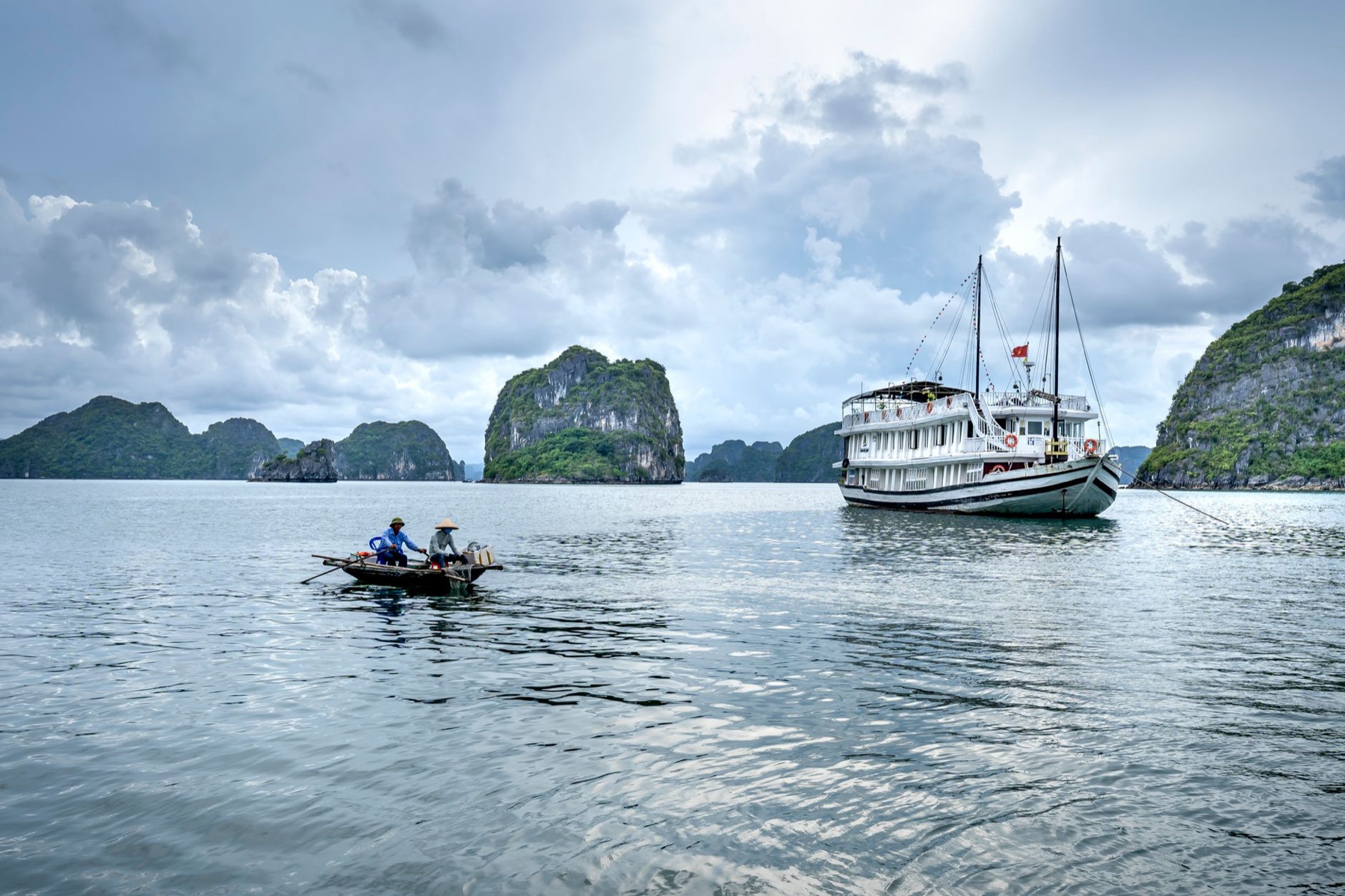
Cruise Ship Buffets vs. Harbourside Restaurants
This is the biggest spend decision. Cruises (half-day or overnight) bundle transport, sightseeing, and meals. Overnight cruises range around 1.5–4 million VND (roughly $60–$160) per person depending on vessel tier; half-day cruises around 800,000–1.5 million VND ($32–$60). Food is included but not the draw.
Harbourside restaurants in Bai Chay cost more per dish but let you order one perfect plate instead of eight mediocre ones. A grilled squid might cost 300,000–600,000 VND ($12–$24) at a mid-range spot; on a cruise it's "free" but one of twelve buffet items, most of which you'll skip. Time is the hidden cost—cruises move fast; restaurants let you linger.
| Dining Type | Who It's For | Approx. Cost (per person) | Pros | Cons |
|---|---|---|---|---|
| Cruise buffet (half-day) | Time-poor, first-timers, families | $32–$60 AUD/850k–1.5M VND | All-in; boat + food + sightseeing; no decisions | Crowded; mediocre; rushed; limited seafood choice |
| Overnight cruise | Adventurers, sunset seekers | $60–$160 / 1.5M–4M VND | Sleeps on water; sunrise over karst; better (not good) meals | Cabin quality varies; seasickness risk; pricey for food quality |
| Harbourside restaurant | Foodies, flexible schedule | $12–$40 per dish / 300k–1M VND each | Fresh daily; order what you want; local vibe | No transport; you choose what/when; costlier if you eat lots |
| Market stall | Budget travellers, adventurous eaters | $4–$12 / 100k–300k VND per dish | Cheapest; most local; fastest turnover (freshest) | Language barrier; no ambiance; hygiene on you; standing room |
Overnight cruises often improve food quality versus half-day because captains source better for longer voyages; still, tempering expectations matters. Many overnight vessels are mid-range; luxury cruises (5+ million VND / $200+) offer better cooking but remain in-ship, not shore-to-table.
🗺️ Plan your route: Vietnam itinerary
When to Eat & Where to Position Yourself
Timing drives freshness and crowd avoidance. Bai Chay restaurants open breakfast (7am–9am), lunch (11:30am–2pm), and dinner (5pm–10pm). Markets peak 5:30am–8am and 4pm–7pm; by 10am most are half-closed. If you're on a cruise that includes meals, eat at the set time; the kitchen preps once daily for maximum control.
If you're a free agent, eat lunch 11:30am–12:30pm at a harbourside spot—fishmongers just landed stock, kitchens are fresh, and tourists are still on boats. Dinner 6pm–7:30pm is crowded and competitive. Breakfast is underrated—many harbourside stalls serve congee, crab omelette and fresh rolls; you avoid crowds and eat like locals.
Positioning: Bai Chay waterfront is the only walkable restaurant cluster. Tuan Chau Island (accessed by cable car or ferry) has a few resort-style restaurants; food is less fresh and pricier because supply is boat-dependent. Ha Long City centre is 20–30 minutes from the bay and not worth the detour for food alone. Stay waterfront.
How to Order Without Speaking Vietnamese
Most Bai Chay restaurants catering to tourists have picture menus or English translations; some don't. Learn four phrases:
- "Cá tươi hôm nay là gì?" (What fresh fish do you have today?)
- "Mực nướng, vui lòng." (Grilled squid, please.)
- "Không cay." (Not spicy.)
- "Bao nhiêu tiền?" (How much?)
Point at fish in the display tank or on ice. Most restaurants will show you options and quote a price per kilogram; confirm total before cooking. Portion sizes: 300g squid feeds one; 500g grouper feeds two sharing. Cooking methods: nướng (grilled), nấu canh (soup), xào (stir-fried). Grilled and soup are safest for freshness; stir-fry can mask age.
Avoid "catch of the day" if you don't see it landed that morning. Favour seafood over meat (fresher supply). Skip raw preparations (sashimi, ceviche) unless the restaurant has obvious Japanese or Latin American training; most bay vendors lack cold-chain discipline for raw fish.
📸 Book an ao dai photoshoot in Hanoi or Saigon (Cáo Studio)
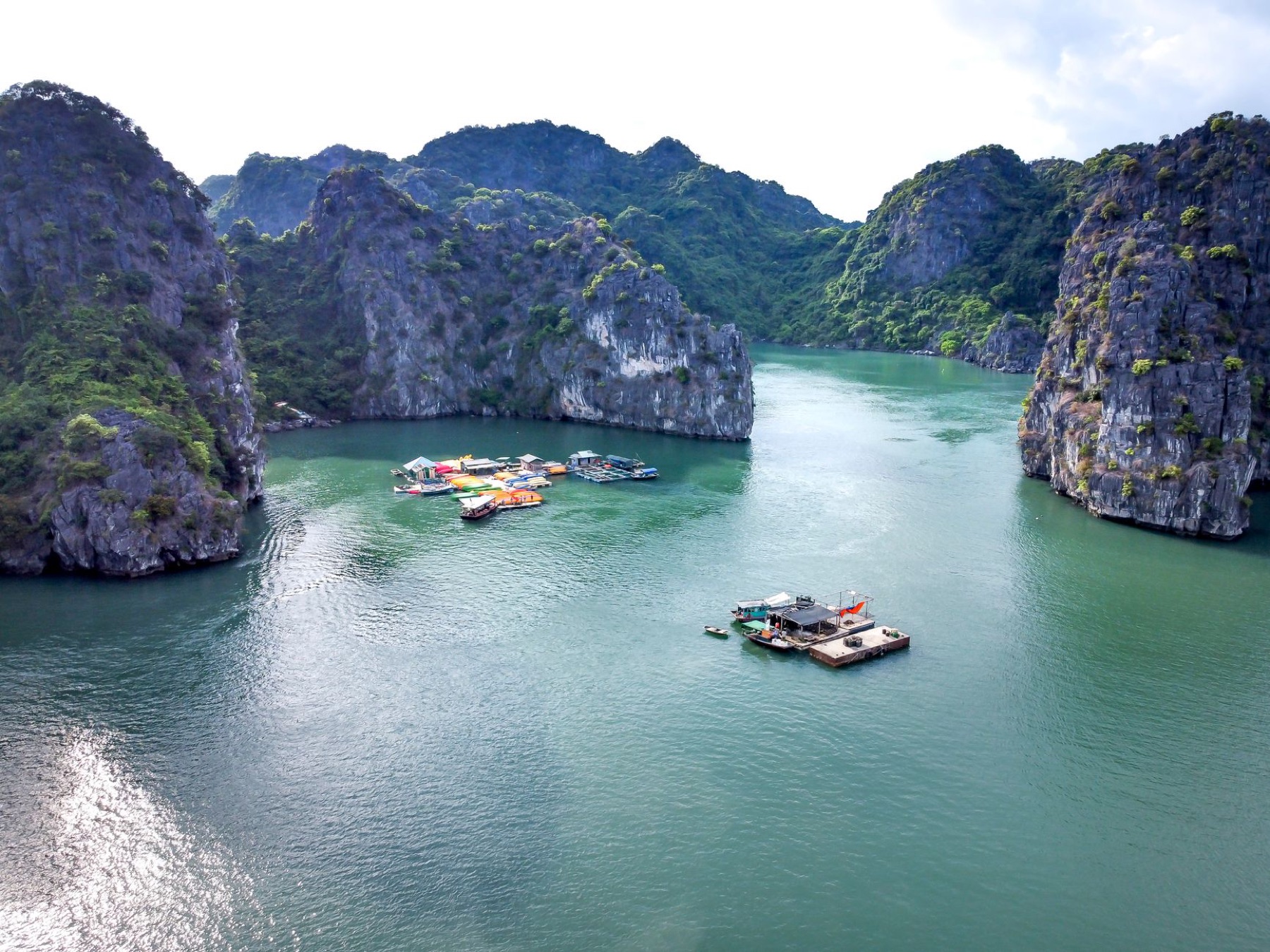
What to Avoid & Budget Traps
- Pre-packaged cruise meals in branded containers: Often prepared 12+ hours ahead; texture suffers. Choose à la carte if your cruise allows.
- "Tourist special" signs: Premium markup for group crowds; locals never order it.
- Hostels or hotels adding meal premiums: A bowl of crab soup costs 50,000–100,000 VND ($2–$4) street-side but 200,000 VND ($8) in your hotel. Eat out.
- Seafood "platters for two" priced under 500,000 VND ($20): Likely farmed or previously frozen, padded with filler. Good fresh seafood for two starts around 800,000 VND ($32).
- Alcohol upsells on boats: Beer on a cruise costs 2–3× what you'd pay on land. Bring your own or skip.
Most scams are passive (mediocrity, not fraud). Active ones are rare but exist: requesting payment before serving, or substituting species (claiming farmed catfish is wild sea bass). Eat at busy, visibly Vietnamese-filled spots. Tour groups and white tourists get lower priority intentionally—it's not rudeness, it's market segmentation. Reverse it by eating alone or with a local guide who's known.
How to Build Your Ha Long Bay Menu Strategy
- Confirm your accommodation includes meals. Many bay hotels offer breakfast buffets or crab soup vouchers; use them.
- Research your cruise operator. Budget cruises (under 1 million VND / $40) serve reheated frozen fare; mid-range (1.5–2.5M VND / $60–$100) improve noticeably; luxury (3M+ VND / $120+) add small touches but portion size doesn't change.
- Book a market visit or cooking class. Many operators offer morning market tours + lunch prep; you learn, eat fresh, and spend 500,000–1 million VND ($20–$40). See our Ha Long Bay guide for operator links.
- Eat one meal ashore. If cruising, budget one lunch at a Bai Chay restaurant (around 600,000–1 million VND / $24–$40 for a quality dish + drink). It breaks the routine and guarantees one excellent taste.
- Skip theme restaurants. Ha Long Bay has no Michelin stars or famous chef outposts; any "fine dining" claim is marketing. Eat where fishmongers shop.
🎟️ Compare tours & tickets for this place
For deeper Ha Long Bay context—geology, history, cave tours—visit our main Ha Long Bay guide. For broader Vietnam eating strategy, explore Hanoi's food scene or Ho Chi Minh City markets for comparison. If planning a multi-region trip, our Vietnam itinerary planner helps balance coastal (Ha Long), northern mountains (Sapa guide, Ninh Binh guide), and central coast (Hoi An guide) food experiences.
What to Check Before You Order
- Is the fish whole or fileted? Whole = fresh; fileted + stored = oxidation, dullness.
- Does the tank look clean? Murky water, dead fish = poor rotation.
- Is the restaurant busy with local customers right now, or mostly tour groups? Locals vote with their wallet daily.
- Can you see the kitchen? Open concept = accountability.
- Are prices quoted per dish or per kilogram? Per kg can surprise; confirm total weight before cooking.
- Is there a printed menu with prices, or verbal quotes only? Written = protection against inflation mid-meal.
Fresh seafood in Ha Long Bay is cheap by Western standards and available; mediocrity is the real trap. Choose your channel (cruise for convenience, restaurant for control, market for intimacy and savings), eat early to catch supply, and ask locals. Your meal will improve immediately.
FAQ
Is it safe to eat seafood in Ha Long Bay?
Yes, if sourced and cooked same-day. Shellfish (raw oysters, clams) carries risk; grilled squid, soup and stir-fry are safer. Eat where Vietnamese locals eat. Avoid street stalls with no refrigeration or visible cleanliness gaps. Tap water isn't for drinking; restaurants use filtered or bottled water for cooking.
How much should I budget for food in Ha Long Bay per day?
Cruise-inclusive: $60–$160 covers transport + all meals. Independent: $30–$50 per day if eating market stalls + one harbourside meal. Comfortable eating (one nice meal daily + casual ones): $50–$80. Luxury or repeated mid-range restaurants: $100+.
What's the best seafood dish in Ha Long Bay?
No single "best"—quality varies by catch. Grilled squid (mực nướng) and crab soup (canh cua) are year-round reliable; grouper (cá mero) in winter is firmer. Ask your restaurant what arrived that morning and order it. Local preference shifts daily; follow the crowd, not guidebooks.
Should I book a cruise or eat independently?
Cruise if time-limited, first-time, or solo (social buffet environment). Eat independently if you have 2+ days, enjoy wandering, or speak basic Vietnamese. Best: book a half-day cruise for sightseeing + one ashore meal for control. Overnight cruises work if the operator is mid-range or better and you value the experience, not just food.
Can I eat vegetarian in Ha Long Bay?
Difficult but possible. Most restaurants default seafood. Request vegetable stir-fries (rau xào), spring rolls (cuốn chay), and rice; freshness is lower because supply is smaller. Bring protein powder or nuts as backup. Overnight cruises rarely accommodate vegan/vegetarian; ask before booking. Bai Chay has a few tourist-aware restaurants that cater to plant-based diets; ask your hotel concierge.
FAQ
Is it safe to eat seafood in Ha Long Bay?
Yes, if sourced and cooked same-day. Shellfish (raw oysters, clams) carries risk; grilled squid, soup and stir-fry are safer. Eat where Vietnamese locals eat. Avoid street stalls with no refrigeration or visible cleanliness gaps. Tap water isn't for drinking; restaurants use filtered or bottled water for cooking.
How much should I budget for food in Ha Long Bay per day?
Cruise-inclusive: $60–$160 covers transport + all meals. Independent: $30–$50 per day if eating market stalls + one harbourside meal. Comfortable eating (one nice meal daily + casual ones): $50–$80. Luxury or repeated mid-range restaurants: $100+.
What's the best seafood dish in Ha Long Bay?
No single "best"—quality varies by catch. Grilled squid (mực nướng) and crab soup (canh cua) are year-round reliable; grouper (cá mero) in winter is firmer. Ask your restaurant what arrived that morning and order it. Local preference shifts daily; follow the crowd, not guidebooks.
Should I book a cruise or eat independently?
Cruise if time-limited, first-time, or solo (social buffet environment). Eat independently if you have 2+ days, enjoy wandering, or speak basic Vietnamese. Best: book a half-day cruise for sightseeing + one ashore meal for control. Overnight cruises work if the operator is mid-range or better and you value the experience, not just food.
Can I eat vegetarian in Ha Long Bay?
Difficult but possible. Most restaurants default seafood. Request vegetable stir-fries (rau xào), spring rolls (cuốn chay), and rice; freshness is lower because supply is smaller. Bring protein powder or nuts as backup. Overnight cruises rarely accommodate vegan/vegetarian; ask before booking. Bai Chay has a few tourist-aware restaurants that cater to plant-based diets; ask your hotel concierge.