Hanoi · Things to do
Hanoi Vietnam Souvenirs: What to Buy & Where to Shop
By Wander in Vietnam editorial team · Hanoi, Vietnam
Hanoi's souvenir landscape divides sharply between tourist-trap fakes and genuine artisan work. The city hosts centuries-old craft villages within easy day trips, and the Old Quarter itself shelters countless makers selling directly to visitors. The key is knowing which neighbourhoods, which types of items actually represent Hanoi craft heritage, and what prices to expect without getting cheated.
Most visitors default to shopping malls or overpriced street stalls. That approach costs double and delivers mass-produced imports labeled "Made in Vietnam." Instead, we navigate specific craft zones—Bat Trang pottery just 20 km southeast, Dong Ho woodblock printing 30 km northeast, and lacquer workshops near Trang Tien Plaza in central Hanoi—where you meet makers and pay maker prices.
What are Hanoi's most authentic souvenir types?
The city claims five heritage craft traditions worth purchasing: ceramic pottery, hand-embroidered silk, lacquerware, conical hats (nón lá), and woodblock prints. Ceramics and embroidery dominate tourist spending because they're portable, fragile enough to feel special, and genuinely made here. Lacquerware commands higher prices ($50–600 USD per piece) but improves with age and tells a story. Woodblock prints and conical hats suit travelers on tighter budgets or looking for wall art that won't break in luggage.
Our research across Old Quarter stalls, Trang Tien shops, and Bat Trang village workshops reveals honest makers price small ceramics (bowls, cups, tiles) from 80,000–300,000 VND ($3–12 USD) depending on size and complexity. Embroidered silk scarves run 200,000–800,000 VND ($8–32 USD). Hand-painted decorative boxes start around 150,000 VND ($6 USD). None of these require negotiation if you buy direct; the markup only appears in malls or tourist-heavy cafés near Hoan Kiem Lake.
Which craft villages deliver the best value?
Bat Trang pottery village (Gia Lam district, 20 km southeast) is the single most efficient day trip from central Hanoi. The 500-year-old village contains 600+ active kilns. Visit between 7 a.m.–5 p.m. any day; no appointment needed. Prices: small painted bowls from 100,000 VND ($4 USD), dinner sets 500,000–2 million VND ($20–80 USD). Watch potters at work before buying—you're funding families who've made ceramics here for generations.
Dong Ho village (Bac Ninh province, 30 km northeast) specializes in traditional woodblock prints using natural pigments. This craft peaked centuries ago and nearly died; visiting funds its revival. Woodblock prints sell for 50,000–300,000 VND ($2–12 USD) per piece, depending on size and complexity. Opening hours are informal (9 a.m.–4 p.m., closed Mondays). The village is less polished than Bat Trang but more intimate; you'll often meet the printmakers themselves.
Lacquer workshops near Trang Tien Plaza sit in central Hanoi (Hoan Kiem district). Artisans hand-paint and hand-finish each piece—a process taking 2–4 weeks for museum-quality work. Prices: coasters and small boxes 200,000–500,000 VND ($8–20 USD), larger decorative boxes or trays 1–5 million VND ($40–200 USD), wall panels 2–15 million VND ($80–600 USD). Quality varies; cheap lacquer cracks and peels within months. Ask the maker how many layers of paint and resin they've applied; genuine pieces have 10+.
Conical hat (nón lá) workshops line Hang Gai Street in the Old Quarter. A hand-woven nón lá takes 3–5 days to make; prices reflect that labor: 150,000–600,000 VND ($6–24 USD) for tourist-quality hats, 800,000–2 million VND ($32–80 USD) for museum-grade pieces with silk linings. Don't buy pre-painted versions in stalls—those are mass-produced imports. Seek out workshops with looms visible and workers actively stitching.
🗺️ Plan your route: Vietnam itinerary
How do souvenir prices compare across shops vs. makers?
| Souvenir Type | Direct Maker Price (VND) | Tourist Shop Price (VND) | Difference | Who It's For |
|---|---|---|---|---|
| Small ceramic bowl | 100,000–150,000 | 250,000–400,000 | +150–250% | Budget travelers, active use |
| Silk hand-embroidered scarf | 250,000–400,000 | 600,000–1.2M | +100–200% | Gift givers, personal keepsake |
| Lacquer coaster set | 200,000–300,000 | 500,000–800,000 | +100–200% | Home décor, lasting quality |
| Woodblock print (framed) | 100,000–250,000 | 350,000–700,000 | +150–250% | Wall art, lightweight luggage |
| Hand-woven conical hat | 180,000–300,000 | 450,000–900,000 | +100–200% | Novelty, photo prop, display |
The markup exists because tourist shops pay rent, staff, and middlemen. Buying from makers—especially in villages—bypasses all three costs. A ceramic set that costs 1.2 million VND ($48 USD) in a Trang Tien Plaza shop might cost 500,000 VND ($20 USD) directly from the potter in Bat Trang. The quality is identical; you're paying for location convenience, not craft.
What should you check before ordering or buying?
For ceramics: Hold the piece and listen for cracks when tapped gently. Real ceramic has a clear ring; inferior clay sounds dull. Check the glaze for bubbles or rough spots—those indicate low-firing temperatures and durability problems. Ask if it's food-safe and dishwasher-safe; many decorative ceramics aren't.
For lacquerware: Run your finger over the surface—it should be smooth, not sticky. Ask the maker how many layers. Genuine lacquer pieces weigh more than plastic lookalikes. Ask about repair: authentic lacquer can be re-coated if damaged; cheap versions cannot. Inspect seams; hand-painted pieces show brush strokes; mass-produced ones look sprayed and uniform.
For embroidered silk: Check thread quality by pulling gently (it shouldn't unravel). Look at the back—hand-embroidery shows uneven knots; machine work is perfect and plastic-looking. Silk should feel smooth, not waxy. Ask about colorfast dyes; traditional indigo and natural pigments last decades; synthetic dyes fade in sunlight within 2–3 years.
For woodblock prints: Touch the paper—it should feel slightly textured, never glossy. Real woodblock prints show ink variation and slight misalignments (the charm of hand-carving). Ask what pigments were used; natural mineral or vegetable pigments outlast chemical inks by centuries. Inspect the wood block itself if visible; hand-carved blocks show tool marks.
For conical hats: Check the bamboo structure by flexing gently—it should bend without cracking. Inspect the weaving for gaps or loose strands. Silk linings should be hand-stitched, not glued. Try it on; sizing is crucial for wearing comfort.
📸 Book an ao dai photoshoot in Hanoi or Saigon (Cáo Studio)
Where do tourists overpay the most?
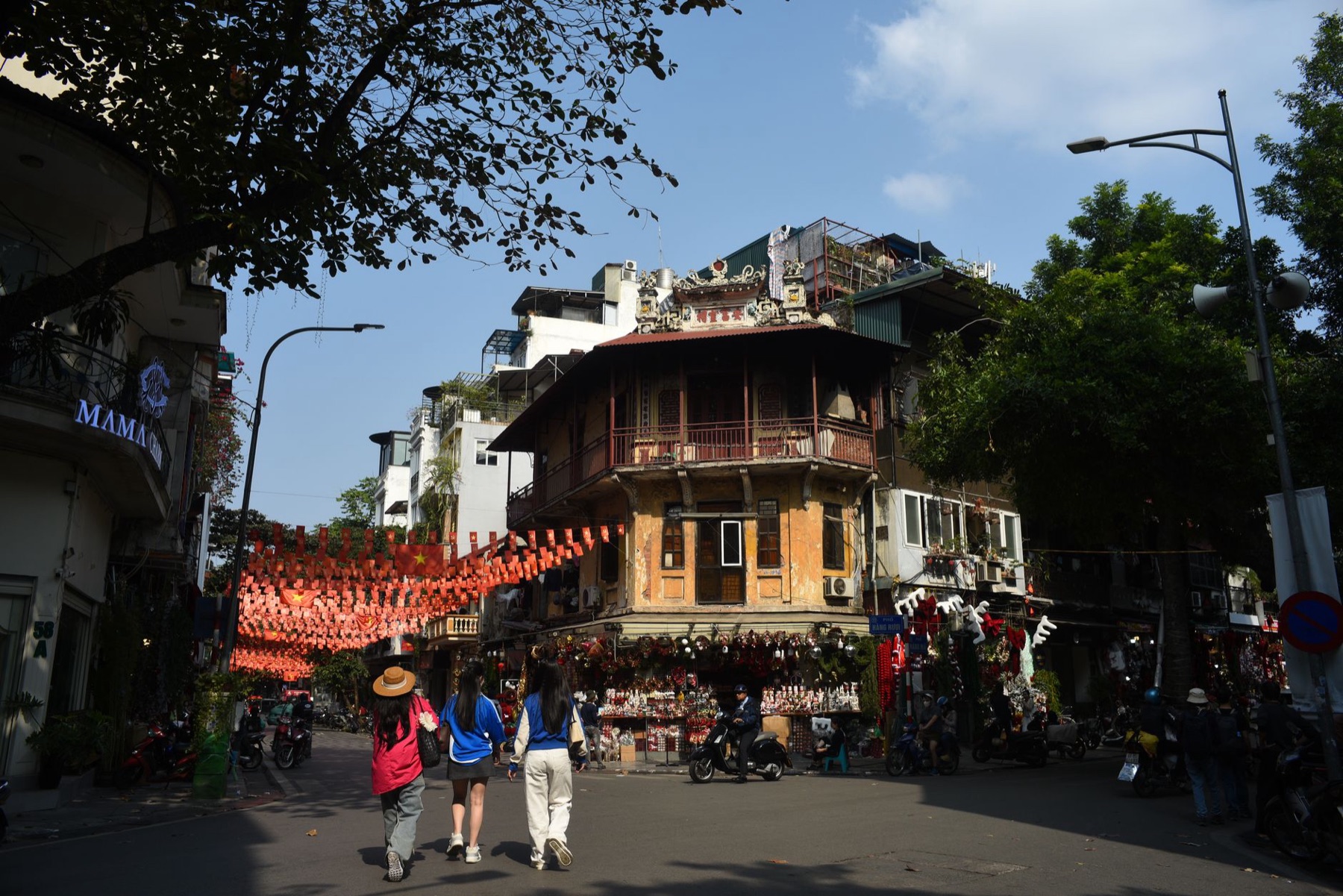
The Old Quarter gift shops near Hoan Kiem Lake charge 200–400% markups for identical items sold in villages. A ceramic bowl costs 100,000 VND in Bat Trang, 400,000 VND on Hang Gai Street. The difference isn't quality—it's foot traffic and rent.
Airport and hotel lobby shops are worst: same bowl might cost 600,000 VND ($24 USD) with a "duty-free" label that means nothing for souvenirs. Avoid entirely.
Night markets (like ones near Long Bien Bridge) stock a mix: genuine sellers mixed with wholesalers unloading factory imports. Negotiate, inspect closely, and buy only if you'd buy it from a maker at the stated price.
Chain malls (Trang Tien Plaza, Vincom) offer convenience and air conditioning but zero authenticity. Prices are high and fixed. Only visit if you lack time for village trips.
The honest approach: spend 1–2 days in craft villages or direct-maker workshops. Transport costs 100,000–200,000 VND ($4–8 USD) by taxi or bus. You'll save 50–70% on purchases and fund actual artisans instead of retail middlemen.
How should you pack and ship souvenirs home?
Ceramics and lacquerware are fragile. Wrap each piece in bubble wrap or clothing (clean socks work), then pack into boxes with crumpled newspaper or foam. Soft items (scarves, hats) compress easily; place them in compression bags to save luggage space. Most pieces fit in carry-on bags if wrapped well.
If purchasing large quantities or heavy pieces (lacquer panels, ceramic dinner sets), shipping is cheaper than excess baggage fees. Makers in Bat Trang and lacquer workshops offer domestic shipping to Hanoi hotels (usually 50,000–200,000 VND, or $2–8 USD). International shipping from Vietnam typically takes 5–10 days to the US, UK, Australia, or Europe for around $15–50 USD depending on weight and destination. Check whether the seller offers this before buying.
Don't buy items claiming to be "antique" or "museum-grade" without authentication. Modern pieces labeled as centuries-old are either fakes or genuinely old but illegally exported (a legal risk for you). Stick to contemporary artisan work, clearly labeled as such.
🎟️ Compare tours & tickets for this place
Where do Hanoi's top souvenir collections live online?
Several collections of hand-painted ceramics are available through dedicated artisan retailers, offering verified maker backgrounds and international shipping. Embroidered silk collections range from scarves to wall hangings, with descriptions of stitching techniques. Lacquerware selections include detailed care instructions so pieces last decades.
Before committing to an online purchase, visit the craft villages in person if possible—you'll understand quality grades and maker stories, then confidently order from curated collections knowing what you're choosing.
For a deeper Hanoi city guide, including food, temples, and nightlife beyond souvenirs, we've mapped neighborhoods, opening hours, and honest pricing. If you're building a larger Vietnam trip, souvenirs from Hanoi pair well with silk from Hoi An and gemstones from Ho Chi Minh City. Regional trips to Ha Long Bay, Ninh Binh, and Sapa each have their own craft traditions—woodcarving, natural dyes, and embroidered textiles respectively.
Traveling longer-term? A Vietnam e-visa covers most stays, and a local eSIM for Vietnam keeps you connected while shopping offline in villages.
For a personal keepsake, consider commissioning an ao dai photoshoot in Hanoi via Cáo Studio—professional makeup, hair, and photography in traditional dress makes a lasting souvenir no shop can replicate. Or arrange flower delivery in Hanoi via Hoa Lang Thang to gift someone at home.
FAQ
Is it safe to buy ceramics and lacquerware in Hanoi, or should I wait until craft villages?
Villages offer better prices and direct maker contact, but central Hanoi shops (Trang Tien Plaza, Hang Gai Street) stock genuine items if you inspect closely and negotiate. Village visits teach you quality grades, so you shop confidently in the city. Both are safe if you verify construction and ask about materials. Village makers appreciate visits; it funds their work directly.
How much does it cost to ship a ceramic dinner set from Bat Trang to the US or UK?
A typical dinner set (12 pieces, roughly 3–4 kg) costs 500,000–1.2 million VND ($20–48 USD) for domestic Hanoi delivery via maker connections, then approximately $40–80 USD for international shipping (5–10 days to US, UK, Australia, Europe). Excess baggage fees often exceed shipping costs, so for multiple sets, shipping is smarter. Ask the maker; many handle it.
What's the difference between hand-painted and stenciled ceramics in Hanoi shops?
Hand-painted pieces show brush strokes, color variation, and slight unevenness—these are the marks of human work and are priced $8–20 USD for small bowls. Stenciled items are faster (cost $3–6 USD) but less detailed. Both are real ceramics; hand-painted is worth the premium if you want uniqueness. Stenciled is fine for gifts or everyday use. Ask the maker to show you the painting process; if they hesitate, it's mass-produced.
Can I negotiate prices with artisans in Bat Trang or Dong Ho villages?
Prices are already discounted compared to shops, so negotiation is discouraged and considered rude. Makers are pricing fairly for their labor. Small purchases (1–2 bowls) are non-negotiable. Bulk orders (10+ pieces for a business or wedding) can be discussed; many artisans offer discounts on volume. Respectfully ask—don't assume haggling applies.
Which souvenir is least likely to break during long flights: ceramics, lacquerware, or silk?
Silk and conical hats are safest—they compress and don't shatter. Lacquerware ranks second if wrapped in bubble wrap and padded carefully; lacquer is durable but scratches. Ceramics are fragile but travel fine with proper wrapping. Pack heaviest items (lacquerware) at the bottom of your suitcase, ceramics in the middle, silk on top. Avoid checking large fragile pieces; carry them on if possible. A ceramic bowl wrapped in clothing takes minimal space and rarely breaks.
Are lacquer pieces from Hanoi workshops safe for food use, or are they decorative only?
Most decorative lacquerware is not food-safe; the resins and pigments aren't designed for mouth contact. Ask the maker directly—some produce food-grade lacquered wooden bowls or trays (safe for serving fruit or bread, not hot liquids or acidic foods). Lacquer coasters, boxes, and wall panels are decorative. If food use matters to you, buy ceramics instead; they're food-safe, dishwasher-safe, and similarly priced.
FAQ
Is it safe to buy ceramics and lacquerware in Hanoi, or should I wait until craft villages?
Villages offer better prices and direct maker contact, but central Hanoi shops (Trang Tien Plaza, Hang Gai Street) stock genuine items if you inspect closely and negotiate. Village visits teach you quality grades, so you shop confidently in the city. Both are safe if you verify construction and ask about materials. Village makers appreciate visits; it funds their work directly.
How much does it cost to ship a ceramic dinner set from Bat Trang to the US or UK?
A typical dinner set (12 pieces, roughly 3–4 kg) costs 500,000–1.2 million VND ($20–48 USD) for domestic Hanoi delivery via maker connections, then approximately $40–80 USD for international shipping (5–10 days to US, UK, Australia, Europe). Excess baggage fees often exceed shipping costs, so for multiple sets, shipping is smarter. Ask the maker; many handle it.
What's the difference between hand-painted and stenciled ceramics in Hanoi shops?
Hand-painted pieces show brush strokes, color variation, and slight unevenness—these are the marks of human work and are priced $8–20 USD for small bowls. Stenciled items are faster (cost $3–6 USD) but less detailed. Both are real ceramics; hand-painted is worth the premium if you want uniqueness. Stenciled is fine for gifts or everyday use. Ask the maker to show you the painting process; if they hesitate, it's mass-produced.
Can I negotiate prices with artisans in Bat Trang or Dong Ho villages?
Prices are already discounted compared to shops, so negotiation is discouraged and considered rude. Makers are pricing fairly for their labor. Small purchases (1–2 bowls) are non-negotiable. Bulk orders (10+ pieces for a business or wedding) can be discussed; many artisans offer discounts on volume. Respectfully ask—don't assume haggling applies.
Which souvenir is least likely to break during long flights: ceramics, lacquerware, or silk?
Silk and conical hats are safest—they compress and don't shatter. Lacquerware ranks second if wrapped in bubble wrap and padded carefully; lacquer is durable but scratches. Ceramics are fragile but travel fine with proper wrapping. Pack heaviest items (lacquerware) at the bottom of your suitcase, ceramics in the middle, silk on top. Avoid checking large fragile pieces; carry them on if possible. A ceramic bowl wrapped in clothing takes minimal space and rarely breaks.
Are lacquer pieces from Hanoi workshops safe for food use, or are they decorative only?
Most decorative lacquerware is not food-safe; the resins and pigments aren't designed for mouth contact. Ask the maker directly—some produce food-grade lacquered wooden bowls or trays (safe for serving fruit or bread, not hot liquids or acidic foods). Lacquer coasters, boxes, and wall panels are decorative. If food use matters to you, buy ceramics instead; they're food-safe, dishwasher-safe, and similarly priced.
More: Hanoi guide · Things to do in Hanoi