Ho Chi Minh City · Where to stay
Ho Chi Minh Accommodation: Where to Stay by Budget & Style
By Wander in Vietnam editorial team · Hanoi, Vietnam
Ho Chi Minh City sprawls across 24 districts; where you sleep shapes your entire experience. Budget travelers cluster in one alley. Families prefer quiet tree-lined streets. Digital nomads rent studio apartments by the month. Each zone has different infrastructure, pricing, noise levels, and access to food and transport. We'll walk you through the main neighborhoods, what to realistically expect, and honest red flags before you book.
Which neighborhood should you choose for a first visit?
First-time visitors usually land in District 1 (central), specifically the Pham Ngu Lao / Bui Vien area. Dorm beds run around $8–15 per night; private rooms $25–45. Hotels cluster on narrow lanes. Pros: 5-minute walk to Ben Thanh Market, Saigon River, restaurants. Cons: neon bar signs, noise until 1 a.m., backpacker-bubble feel. You'll meet dozens of travelers but rarely experience local Saigon.
District 3 (north of District 1) feels quieter: fewer bars, more local coffee shops, tree-lined streets. Mid-range hotels around $35–70. Better for solo travelers wanting both infrastructure and breathing room.
District 2 (Thao Dien) is newer, wealthier, 30–40 minutes across the river by taxi (around 50,000–80,000 VND / $2–3). Apartments and villas start $60–150. Expats, long-term workers, and couples choosing calm over nightlife book here.
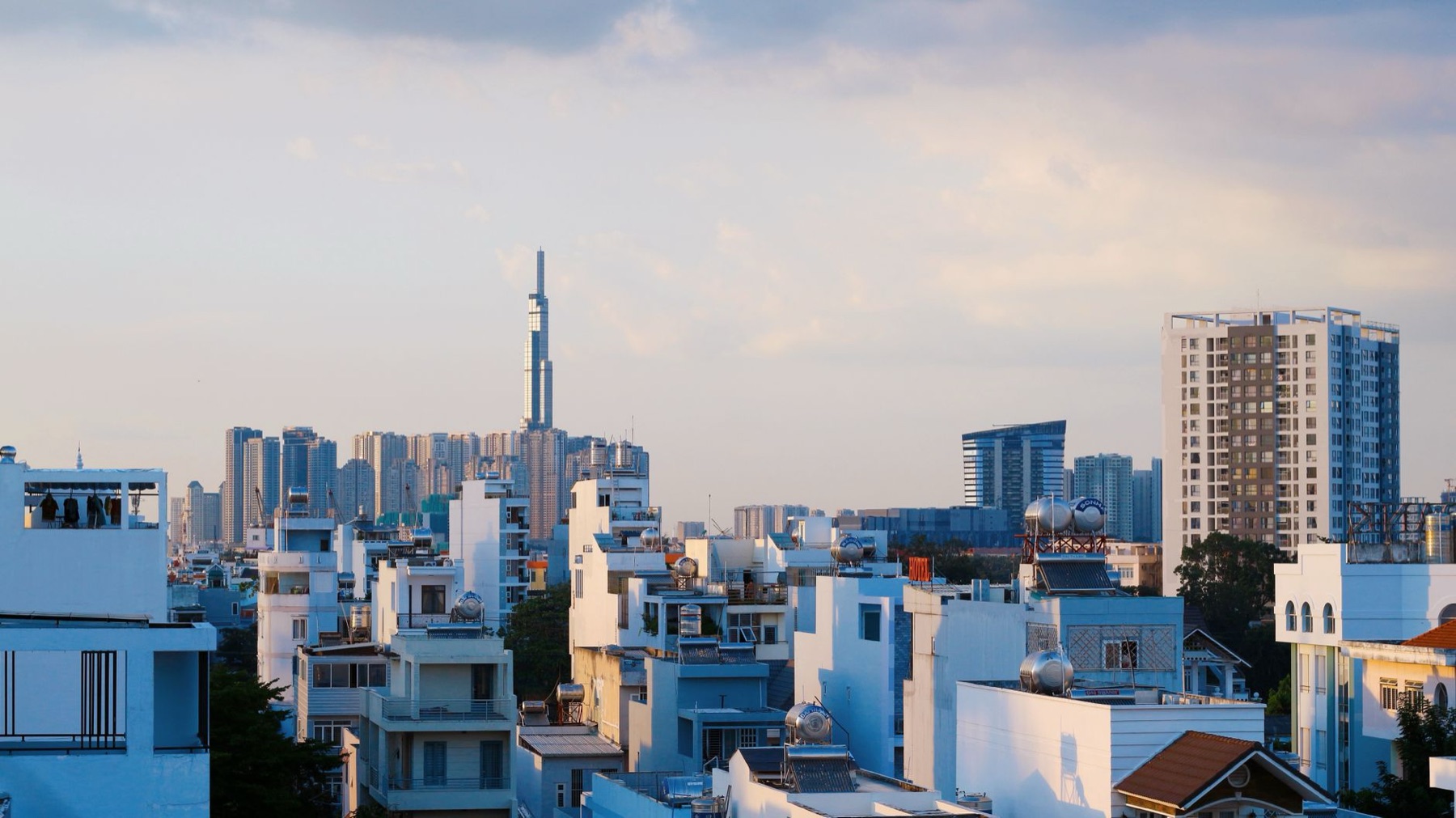
Binh Thanh District (Thong Nhat Park area) offers mid-range comfort 15–20 minutes by taxi from Dong Khoi. Around $40–100. Good compromise: authentic neighborhood, not touristy, decent transport links.
🗺️ Plan your route: Vietnam itinerary
What's the real difference between hostel, mid-range, and upscale properties?
Hostels (budget): Shared dorm rooms or private rooms, paper-thin walls, often no elevators, tiny showers, squat toilets possible, enthusiastic staff, social common areas. Expect $8–20 per bed. Fan rooms cheaper than AC. Many advertise "free breakfast" (instant noodles + toast). Check if your bed has a light and outlet before handing over cash. Noise is guaranteed—group bookings, late-night arrivals.
Mid-range hotels ($40–120 per night): Private room, real bathroom, AC, elevator, TV, sometimes mini-fridge. Breakfast usually included (banh mi cart, fried eggs, fruit). Staff may not speak fluent English; bring Google Translate. Hot water reliability varies; pressure sometimes weak. Front desk closes around 11 p.m., so plan accordingly.
Upscale hotels ($150+): English-speaking concierge, 24-hour room service, gym, pool, rooftop bar, business center. Breakfast buffet elaborate. Reliable hot water and pressure. Tour booking desk downstairs. Breakfast sometimes not included—ask during booking. These properties often negotiate with corporate clients, so "rack rate" vs. actual walk-in price can differ.
| Tier | Nightly cost | Best for | Reality check |
|---|---|---|---|
| Hostel dorm | $8–15 | Solo backpackers, first-timers | Noise after midnight; security safes helpful |
| Hostel private | $20–35 | Couples on tight budget | Often no window; small shower |
| Mid-range | $40–100 | Families, groups, longer stays | Breakfast basic; WiFi sometimes slow |
| Upscale | $150–300+ | Remote workers, couples, business | Worth it if you plan daytime activities; avoid "all-day" room checkout |
How much should you actually budget for accommodation in Ho Chi Minh City?
If you're backpacking, assume $8–20 per night for dorm, $25–50 for private room. Mid-budget travelers (couples, small groups) typically spend $50–120 per night. For families or longer stays (30+ days), short-term rentals (studios, 1-bed apartments) via local agents or Facebook groups run $500–1500 per month—often cheaper per night than hotels once fees factor in.
Prices spike during Tet (lunar new year, late Jan–early Feb), Christmas, and school holidays. Book 6–8 weeks ahead if traveling Dec–Jan or late Jan–early Feb. Shoulder seasons (May, Sept–Oct) offer discounts; single nights sometimes 20–30% cheaper.
Don't rely on online booking sites' lowest prices as availability. Call the hotel directly (ask your guesthouse staff to dial if language is a barrier); local rates are often 15–25% lower than Agoda or Booking.com quotes.
🎟️ Compare tours & tickets for this place
What are the most common booking mistakes—and how do you avoid them?
Mistake 1: Assuming proximity to Ben Thanh Market = walkable. Pham Ngu Lao is walkable; Tao Đàn Park area looks close on Google Maps but feels unsafe for solo travelers after dark.
Fix: Book on streets with foot traffic: Bui Vien, De Tham, Co Giang (District 1). Ask the guesthouse staff which nearby streets are safe at 10 p.m.
Mistake 2: "Includes breakfast" doesn't mean nice breakfast. Many budget hotels pair your room cost with a generic cart of white bread and eggs.
Fix: Ask "Do you have a breakfast buffet?" If they say yes, ask what's included—usually rolls, jam, fruit, instant coffee. If not listed, assume minimal.
Mistake 3: Booking a "riverside" hotel assuming you'll have a view. "Riverside" often means within 1 km of the Saigon River. The actual view may be a car park.
Fix: On the booking site, scroll through all photos. Zoom into the "view from room" shot. If they only show lobby/bathroom photos, email and ask for a room-view photo. Legitimate hotels reply.
Mistake 4: Ignoring checkout policy. Many Vietnamese hotels have 11 a.m. checkout, not noon. Requesting late checkout morning-of costs an extra $10–20.
Fix: During booking confirmation email, ask: "What is your standard checkout time? Can I arrange a 1 p.m. checkout in advance?" If traveling onward, pre-arrange or book a locker for luggage.
Mistake 5: Not checking if WiFi is actually included. Some budget hotels charge 50,000 VND (~$2) per day for "fast" WiFi.
Fix: Ask the booking platform's question feature: "Is WiFi free in rooms and common areas?" Confirm before payment.
Are apartment rentals worth it for stays longer than one week?
If staying 10+ days, a studio or 1-bed apartment often beats consecutive hotel nights. Daily rates drop to $30–60 in quieter neighborhoods (Binh Thanh, Go Vap) versus $50–100 for a mid-range hotel. You gain a kitchen, washing machine, living space.
Vietnamese property agents and Facebook groups (search "Ho Chi Minh apartments for rent") offer furnished units. Lease periods often start 1 month; short-term (7–14 days) negotiable with a 20–30% premium.
Realistic red flags:
- "Stunning apartment" with 1 photo and no address = scam. Demand Google Maps pin + full address.
- Requests for payment to an overseas bank before viewing = scam.
- "Manager will meet you at the airport" without a specific time/contact = vague.
Safe process: Find a reputable agent (ask your current guesthouse; they know local agents), visit the apartment in person, pay half deposit with a rental agreement (even basic WhatsApp message counts as documentation), sign a receipt for final payment on arrival.
📸 Book an ao dai photoshoot in Hanoi or Saigon (Cáo Studio)
What should you check before you finalize a booking?
- Room photos. Scroll every image. If only lobby shots exist, don't book—the room will disappoint.
- Checkout time + luggage storage. Text the hotel's WhatsApp (most provide contact on booking site). Ask checkout, late checkout fee, and luggage-storage policy if you're leaving after 11 a.m. but can't enter your next hotel until 2 p.m.
- Noise level. Read reviews mentioning "noise." If multiple recent reviews say "noisy until 2 a.m.", trust them. Call the hotel and ask for a higher floor, back-facing room, or earplugs.
- WiFi speed. If working remotely, ask the hotel's booking chat: "What is typical internet speed in rooms during peak hours (7–9 p.m.)?" Expect 5–15 Mbps in budget hotels, 15–30 Mbps in mid-range.
- Breakfast timing. Budget hostels serve breakfast 6:30–8 a.m. only. If you sleep late, confirm a late-breakfast option or plan to buy coffee from a street cart.
- Transport to/from the airport. Most hotels offer airport pickups (200,000–400,000 VND / $8–16 one-way). Confirm included or charged separately. Grab (app-based taxi) costs 100,000–150,000 VND (~$4–6) depending on traffic.
- Currency & payment. Confirm whether the quoted price is VND or USD, and whether they accept card or cash only. Many mid-range hotels default to cash for walkups.
Where to book: direct hotel website, Agoda, or Booking.com?
Direct websites (if the hotel has one): Sometimes 10–15% cheaper, especially for mid-range and upscale. Easier to contact the hotel to ask questions. Cancellation policies often more flexible.
Agoda: Competitive for budget hotels and apartments. Agoda often lists exclusive "Agoda-only" rates. PayLater option available for some users. Customer service in English available but slow (12–24-hour response). The visual layout is streamlined—easier for first-time bookers.
Booking.com: Broader inventory (includes homestays, villas, apartments). Flexible cancellation on most listings (confirm on each listing). Free cancellation up to date of stay is common. Likely more expensive for budget hotels but better for apartment rentals.
Reality: For 1–3 nights, use Agoda or Booking.com (convenience, cancellation flexibility). For 7+ nights or apartment rentals, email the property directly and negotiate—you'll often save 15–25%.
---
Honest comparison: what's the best neighborhood for different travelers?
- Backpackers (budget, nightlife): Pham Ngu Lao (District 1). Noisy, fun, no surprises.
- Couples (quiet, dining): District 3 (Nguyen Hue area) or Thao Dien (District 2). Calmer, better restaurants, tree-lined.
- Remote workers (WiFi, coworking): Thao Dien (District 2) or Ben Nghe (District 1 premium). Higher lodging cost but reliable internet.
- Families (space, pools, markets): Binh Thanh District or Go Vap (quieter, more local). Short taxi ride to attractions, cheaper.
- First-timers (walkability, sights): Dong Khoi area or Tao Dан Park zone (District 1 / District 3 border). Proximity to museums, river, food.
---
For longer trips through Vietnam, also check our guides to Hanoi, Hoi An, Ha Long Bay, Ninh Binh, and Sapa. If arriving by air, arrange an eSIM for Vietnam and confirm your visa requirements in advance.
Back to Ho Chi Minh hotels guide
---
FAQ
How far in advance should I book accommodation in Ho Chi Minh City?
For shoulder season (May, Sept–Oct), 2–3 weeks ahead is fine. For Dec–Feb (peak + Tet), book 6–8 weeks ahead. Dorm beds in popular hostels fill 3–4 weeks early. Short-term apartments (1–4 weeks) often require 2 weeks' notice for manager confirmation.
Is it safe to walk back to Pham Ngu Lao at night?
Pham Ngu Lao itself is busy and lit until midnight. Side alleys (like Co Giang) are safe until 11 p.m. After 1 a.m., avoid walking alone; grab a Grab taxi (50,000–80,000 VND / $2–3). The area is not dangerous, just crowded and noisy, with occasional scams (fake taxis, inflated bar bills). Use official Grab app, not street taxis.
Do I need to pay a deposit to hold a room?
Most online bookings require full prepayment or a deposit (refundable per the cancellation policy). Walk-up bookings (arriving without reservation) typically need no deposit—pay on arrival. Always ask cancellation terms via chat before confirming payment.
Can I negotiate a price if I'm staying longer than 7 days?
Yes, especially for mid-range and apartment rentals. For hotels, email and mention "I'm interested in a 10-night stay. Do you offer a discounted rate?" Expect 10–20% off listed nightly rates. Hostels rarely negotiate.
Should I book a hotel with AC or fan-only room to save money?
Book AC. Fan-only rooms are uncomfortable for most travelers; nighttime temperatures in Ho Chi Minh City are 25–28°C (77–82°F) year-round, so you'll sweat. AC adds $5–10 per night but saves sleep quality. Not worth saving $2/night for a miserable stay.
FAQ
How far in advance should I book accommodation in Ho Chi Minh City?
For shoulder season (May, Sept–Oct), 2–3 weeks ahead is fine. For Dec–Feb (peak + Tet), book 6–8 weeks ahead. Dorm beds in popular hostels fill 3–4 weeks early. Short-term apartments (1–4 weeks) often require 2 weeks' notice for manager confirmation.
Is it safe to walk back to Pham Ngu Lao at night?
Pham Ngu Lao itself is busy and lit until midnight. Side alleys (like Co Giang) are safe until 11 p.m. After 1 a.m., avoid walking alone; grab a Grab taxi (50,000–80,000 VND / $2–3). The area is not dangerous, just crowded and noisy, with occasional scams (fake taxis, inflated bar bills). Use official Grab app, not street taxis.
Do I need to pay a deposit to hold a room?
Most online bookings require full prepayment or a deposit (refundable per the cancellation policy). Walk-up bookings (arriving without reservation) typically need no deposit—pay on arrival. Always ask cancellation terms via chat before confirming payment.
Can I negotiate a price if I'm staying longer than 7 days?
Yes, especially for mid-range and apartment rentals. For hotels, email and mention "I'm interested in a 10-night stay. Do you offer a discounted rate?" Expect 10–20% off listed nightly rates. Hostels rarely negotiate.
Should I book a hotel with AC or fan-only room to save money?
Book AC. Fan-only rooms are uncomfortable for most travelers; nighttime temperatures in Ho Chi Minh City are 25–28°C (77–82°F) year-round, so you'll sweat. AC adds $5–10 per night but saves sleep quality. Not worth saving $2/night for a miserable stay.
More: Ho Chi Minh City travel guide · Where to stay in Ho Chi Minh City