Ho Chi Minh City · Itinerary
Ho Chi Minh City 2-Day Itinerary: Markets, War History & Street Food
By Wander in Vietnam editorial team · Hanoi, Vietnam
Two days is barely enough to feel Ho Chi Minh City's rhythm, but it's enough to hit the essentials: colonial architecture, war history, and the street-food energy that defines the south. We've written this from someone who moves through these neighbourhoods regularly, not as a tourist checklist but as someone living here who knows which streets get unbearably crowded at 3pm, where to eat before crowds arrive, and what genuinely justifies your time.
🗺️ Plan your route: Vietnam itinerary
What should I see on Day 1 (downtown & colonial zone)?
Day 1 stays in District 1—the historic core. Start at Ben Thanh Market (corner of Tran Hung Dao and Le Thanh Ton streets, opens around 6:30am, closes 6pm). Arrive by 8am to see traders unpacking goods; by 10am it's tourist-clogged. The market sells souvenirs, textiles, and local snacks. Grab breakfast from stalls inside (around 40,000–80,000 VND / $1.60–$3.20 USD for phó or bánh mì). Exit and walk north on Nguyen Hue to the pedestrian walking street (Nguyen Hue Walking Street, open daily 5pm–11pm, though shops open earlier). Spend the afternoon visiting the Saigon Notre-Dame Cathedral (1 Cong Xa Paris St., District 1, free entry, opens around 7am–6pm but crowded midday) and the Central Post Office (2 Cong Xa Paris St., across the square, 7am–7pm, free to enter, small fee ~10,000 VND / $0.40 to mail a postcard). Both are architectural masterpieces from the French colonial era and stand side-by-side. Lunch near here at any com tam (broken rice) stall on side streets—count on 25,000–50,000 VND / $1–$2 USD. Afternoon: explore the Reunification Palace (135 Nguyen Hue, District 1, entry ~100,000 VND / $4 USD, guided tours 7:30–11am & 1–4pm; English tours run roughly every hour but book ahead via their website or hotel). Walk back down Dong Khoi Street (pronounced "dong khoy"), the main shopping artery lined with cafés and galleries. Stop at a coffee shop (ca phe sua da, iced coffee with sweetened condensed milk) around 30,000–40,000 VND / $1.20–$1.60. Evening: return to Nguyen Hue Walking Street around 6pm for the pedestrian zone to open. Eat pho or banh mi from street vendors here; join the crowds for the atmosphere. Sleep in District 1 or District 3 to stay central.
📸 Book an ao dai photoshoot in Hanoi or Saigon (Cáo Studio)
What's the best route for Day 2 (war history & skyline)?
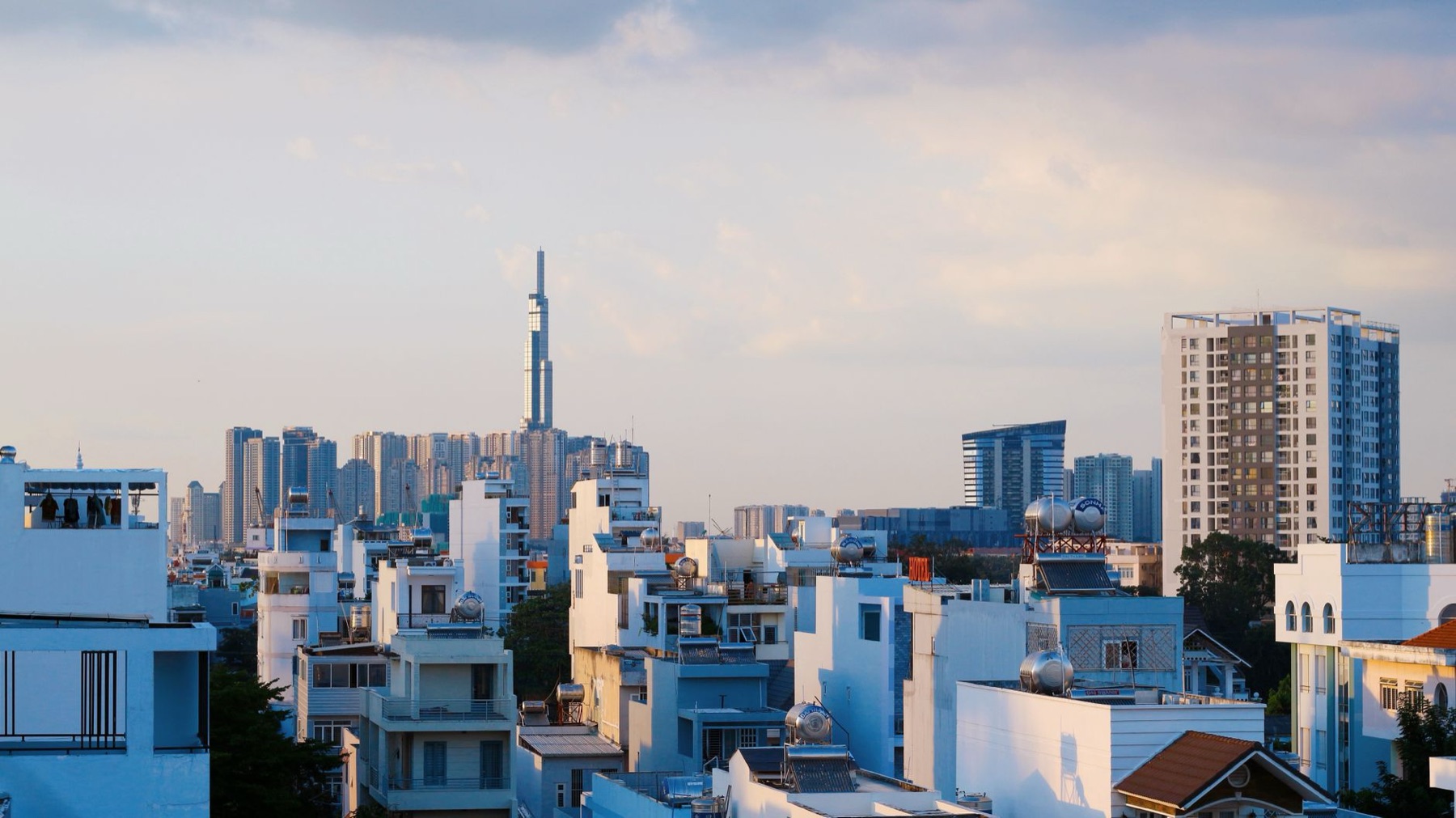
Start Day 2 at the War Remnants Museum (28 Vo Van Tan St., District 3, entry ~100,000 VND / $4 USD, opens 7:30am–noon & 1–5:30pm, closed Mondays). Take a Grab taxi from District 1 (around 50,000–100,000 VND / $2–$4 depending on traffic). Arrive early; it fills fast after 10am. The exhibits are confronting, factual, and heavy—allow 2–3 hours. The museum details the American War from a Vietnamese perspective; not sensationalized but direct. Exit and walk 10 minutes southeast to the Bitexco Financial Tower (2 Hai Trung St., District 1, Sky Garden entry ~100,000 VND / $4 USD, opens 9:30am–9:30pm). The 49th-floor observation deck gives 360° views of the city and is genuinely worthwhile on a clear day—not overrated. Have lunch in District 1 or District 3; we recommend Com tam (broken rice restaurants) on Vo Van Tan or Nguyen Binh Khiem streets near the museum. Count ~40,000–80,000 VND / $1.60–$3.20 per person. Afternoon option 1: visit the Jade Emperor Temple (73 Mai Thi Luu St., District 1, free entry, 6am–6pm). The temple is atmospheric, ornate, and almost empty compared to northern temples—locals still worship here daily. Option 2: explore the Bitexco neighborhood or take a Grab to Thu Thiem (District 2) to see the ultra-modern riverside development and riverside parks if you want a contrast to colonial architecture. Evening: walk Pasteur Street (Duong Pasteur, District 1) for colonial-era buildings and cafés, then eat dinner on one of the side streets in District 1 (Com Hen—clam rice—or bun oc—snail noodle soup—are HCMC specialties unavailable up north). Count 50,000–100,000 VND / $2–$4 per meal.
How do I avoid crowds and common scams?
Timing matters. Ben Thanh Market is quietest 6:30–8am and after 5pm. The War Remnants Museum is calmest 7:30–9am. Nguyen Hue Walking Street is for evening atmosphere, not morning. Museums close 11:30am–1pm for lunch; don't arrive then.
Taxi scams: Always use Grab (ride-hail app, book in advance), not street taxis. Grab is metered, transparent, and logged. Street taxis have been known to take longer routes or claim broken meters. Download the app before arrival or use your hotel WiFi.
Market tipping: Ben Thanh traders may pressure you to "help them" by buying multiple items or overpaying. Set your budget beforehand. Prices are negotiable only for handicrafts, not food. If a stall quotes 200,000 VND, expect to walk away—they'll call you back at 120,000.
Temple etiquette: Remove shoes before entering the Jade Emperor Temple or any shrine room. Don't photograph altars or monks without permission.
Fake-ticket sellers: Buy museum tickets at the gate or website, not from people outside. War Remnants Museum tickets sold by "touts" near the entrance are often counterfeit.
| Scam type | Where it happens | Red flag | What to do |
|---|---|---|---|
| Inflated taxi fare | Street-hailed taxis | Driver says meter is "broken" | Use Grab instead |
| Market pressure-selling | Ben Thanh, souvenir stalls | Vendor insists you "must buy three" | Politely decline, don't make eye contact |
| Fake museum tickets | War Remnants Museum entrance | Seller claims official ticket counter is "closed" | Walk past, buy at gate |
| Drink overcharge | Rooftop bars, Dong Khoi St | No menu shown; bill appears inflated | Ask price before ordering |
What gifts capture the trip home?
Consider souvenirs that reflect HCMC's character: lacquerware (traditional craft, lightweight), hand-painted ceramics (district 1 galleries), or custom ao dai photoshoots (capture yourself in traditional dress before departure). If you're short on time, buy travel-friendly gifts like engraved keepsake boxes (compact, meaningful), star map prints (mark your travel dates), or leather journals to record street-food discoveries. Ben Thanh Market sells souvenirs but quality varies; better to buy from galleries on Dong Khoi Street or through curated online collections. For gifts that tell a story, book an ao dai photoshoot in Saigon through Cáo Studio before you leave—you'll have custom photos, not just generic souvenir merchandise.
🎟️ Compare tours & tickets for this place
What food must I try, and where?
Pho: Any stall in Districts 1 or 3. Arrive 7–9am for the queue. ~40,000–60,000 VND / $1.60–$2.40 per bowl.
Banh mi: Corner stalls, any district. 20,000–40,000 VND / $0.80–$1.60. Bánh mì Nguyen Hue or any vendor on Pasteur Street.
Com tam (broken rice): A southern speciality. Cheap, filling, made with com tam (rice grains that break during milling), grilled pork, egg, and pickled vegetables. ~40,000–80,000 VND / $1.60–$3.20. Try Vo Van Tan St., District 3.
Bun oc (snail noodle soup): Pungent, addictive, Saigon's signature. 50,000–80,000 VND / $2–$3.20. Most com tam stalls serve it. Not for the faint-hearted.
Com hen (clam rice): Small freshwater clams, rice, liver, fatty sauce. Southern classic. ~60,000–100,000 VND / $2.40–$4. District 1 side streets.
Saigon beer (Saigon Lager, ~30,000 VND / $1.20 per 330ml bottle): Cold, light, perfect in heat.
Avoid Western chains. The food here is cheap, real, and everywhere. Eat where locals eat. If you're unsure, follow the crowd and the smell.
How do I link this into a longer Vietnam trip?
If you have more time, HCMC is the southern hub. Ho Chi Minh City guides offer deeper dives into specific districts. Consider extending to Mekong Delta day tours (5–6 hours by car from HCMC) or heading north via domestic flight or bus to Hanoi (2 hours flight, 30+ hours sleeper bus), Hoi An (1.5-hour flight, 24-hour bus), or Ha Long Bay (1.5-hour flight). For a structured multi-city route, use the Vietnam itinerary planner to customize a 5–7–10 day loop. Most visitors land HCMC, spend 2–3 days here, then move north or to the Mekong. Don't skip HCMC entirely—the war history and street-food culture are irreplaceable.
Before you book your trip: what to check
- Internet: Buy a Vietnam eSIM or local SIM at the airport. Mobile data is cheap (~100,000 VND / $4 for 1–2 weeks) and essential for Grab, Google Maps, and booking.
- Visa: Check Vietnam visa requirements before arrival. Most Western nationals get 90 days visa-free; some nationalities need e-visas (processed online in 3–5 days).
- Cash: ATMs are everywhere. Draw cash in District 1 (safer). Exchange rates at banks beat tourist-area money changers by ~5%.
- Weather: HCMC is hot year-round. November–April is driest; May–September is monsoon (humid, afternoon rain). Bring light clothing, sunscreen, and an umbrella.
- Accommodation: Book in District 1 or 3 to walk between Day 1 and Day 2 sites. Avoid District 7 (Bitexco area) if budget is tight—it's pricey and you'll taxi everywhere.
- Travel insurance: Medical care is good but get coverage anyway. Heat exhaustion and food-related issues are common for first-timers.
---
FAQ
Can I really do Ho Chi Minh City in 2 days?
Yes, if you stay downtown and move efficiently. You'll hit the major sites but miss Mekong Delta, Cu Chi Tunnels, and slower experiences. Two days is "essential HCMC," not "know HCMC." Three–four days is ideal.
What's the cheapest way to move between sites?
Grab taxi (ride-hail app) is cheaper and safer than street taxis or tours. Motorbike taxis (Grab Bike) are fastest but require confidence. Walking between District 1 sites is free but slow in heat.
Is the War Remnants Museum worth it if it's heavy subject matter?
Yes, it's essential for understanding Vietnam and HCMC's identity. It's graphic but factual and respectful. Not propaganda. Allow 2–3 hours. Many skip Cu Chi Tunnels and go here instead.
Why not do Cu Chi Tunnels on Day 2?
Cu Chi is 1.5–2 hours outside the city. A proper visit takes 4–5 hours with travel. It's a half-day minimum, not a "fit it in" addition to War Remnants Museum and Bitexco. Better to add it as Day 3 or skip if truly tight.
Are rooftop bars worth the markup?
Some (Bitexco's Sky Garden has 360° views and is entry-fee based, not drink-priced). Others on Dong Khoi overcharge tourists by 3–4x. Ask locals or eat street-level instead—you'll taste better food and spend a quarter the price.
FAQ
Can I really do Ho Chi Minh City in 2 days?
Yes, if you stay downtown and move efficiently. You'll hit the major sites but miss Mekong Delta, Cu Chi Tunnels, and slower experiences. Two days is "essential HCMC," not "know HCMC." Three–four days is ideal.
What's the cheapest way to move between sites?
Grab taxi (ride-hail app) is cheaper and safer than street taxis or tours. Motorbike taxis (Grab Bike) are fastest but require confidence. Walking between District 1 sites is free but slow in heat.
Is the War Remnants Museum worth it if it's heavy subject matter?
Yes, it's essential for understanding Vietnam and HCMC's identity. It's graphic but factual and respectful. Not propaganda. Allow 2–3 hours. Many skip Cu Chi Tunnels and go here instead.
Why not do Cu Chi Tunnels on Day 2?
Cu Chi is 1.5–2 hours outside the city. A proper visit takes 4–5 hours with travel. It's a half-day minimum, not a "fit it in" addition to War Remnants Museum and Bitexco. Better to add it as Day 3 or skip if truly tight.
Are rooftop bars worth the markup?
Some (Bitexco's Sky Garden has 360° views and is entry-fee based, not drink-priced). Others on Dong Khoi overcharge tourists by 3–4x. Ask locals or eat street-level instead—you'll taste better food and spend a quarter the price.
More: Ho Chi Minh City guide · Ho Chi Minh City itinerary: 1, 2, 3 days