Ho Chi Minh City · Itinerary
Ho Chi Minh City 3-Day Itinerary: Real Routes & What to Skip
By Wander in Vietnam editorial team · Hanoi, Vietnam
A three-day Ho Chi Minh City itinerary hits the War Remnants Museum and Independence Palace on Day 1, Ben Thanh Market and District 1's French colonial streets on Day 2, and a Mekong Delta day trip or Binh Quoi riverside village on Day 3. Wander in Vietnam recommends arriving with an offline map and a VND top-up to avoid commission traps.
Most travel guides stretch Saigon into a week. That's because they haven't walked the neighbourhoods. You can cover the essential sights in 72 hours if you move efficiently—and still eat well, sleep decently, and leave without a fake tour or overpriced cyclo ride.
The temptation is to cram: Bitexco, Reunification Palace, Tan Dinh Church, and three markets into one afternoon. Don't. You'll spend more time in taxis than temples. Instead, cluster by geography. Pick one afternoon for riverside walks. One morning for war history. One full day for the Delta or quieter villages. Eat nearby. Rest at midday (Saigon heat peaks 11 a.m.–3 p.m.). Move on.
This itinerary assumes you've booked a Vietnam e-visa already and have a working SIM or eSIM for Vietnam before arrival.
🗺️ Plan your route: Vietnam itinerary
Which Day Should You Visit War History & Independence Palace?
Day 1: War Remnants Museum (morning, 2–3 hours) → Independence Palace (midday tour, 45 min) → lunch in District 1 → Bitexco Financial Tower or Ben Thanh Market (late afternoon). The museum is heavy; do it first when your mind is fresh. Book a timed ticket online at the gate to skip queues. Independence Palace tours fill fast mid-morning.
The museum occupies four floors of Vietnam War photography, weapons, and historical context. Allow time. It's not a quick walk-through; the roof-level helicopter display alone requires 20 minutes. Bring water. Don't photograph the photographs (guides enforce this).
Independence Palace (Reunification Palace) is across the street, five minutes' walk. Tours run every 20 minutes. You can't wander solo; all visitors join a group. The audio guide is optional and costs extra. The palace rooms are striking but repetitive if you're into colonial architecture; the gardens are the highlight.
Eat lunch at a pho restaurant in the backstreets of District 1 (near Pasteur Street) rather than on main roads. A proper bowl costs around 35,000–50,000 VND ($1.40–$2.00). Skip Bitexco at sunset—it's crowded and the views are no better than ground level. If you've energy, walk to Ben Thanh Market at 4 p.m. (before the crush) and scout a dinner stall. Return at 6 p.m. to eat.
How Do You Navigate Ben Thanh Market Without Getting Ripped Off?
Ben Thanh is a chaotic colonial-era market in central District 1. Entrance has a landmark clock tower. Locals shop there; tourists clog the souvenir aisles. The trick: go for lunch or an early snack, not shopping. Textile vendors on the south side and spice stalls in the rear are genuine; the "antique" lacquer trays near the main gate are mass-produced.
Scams to avoid:
- Taxi drivers outside: ignore them; walk to Nguyen Hue Street and hail from a queue.
- Gem sellers offering "free appraisals": they're commission setups.
- Vendors who follow you and claim their stall is "better than the rest": it isn't.
Eat bánh mì from a cart vendor in the market (around 20,000–30,000 VND / $0.80–$1.20). Grab an iced coffee (cà phê đen đá, 15,000–20,000 VND / $0.60–$0.80). Buy a souvenir only if you know the real price of the item in your home country.
What Does a Realistic Day 2 Look Like in District 1?
Day 2: breakfast in a café → walk French colonial streets (Tran Hung Dao, Nguyen Hue, Pasteur) → Saigon Notre-Dame Cathedral (exterior, 15 min) → Central Post Office (interior tour or café, 30 min) → lunch at a pho stall or rice-paper restaurant → afternoon coffee and rest → dinner in Binh Thanh or Tan Dinh district.
Start before 8 a.m. with a Vietnamese coffee and a croissant at a local café in District 1. The pastry culture here is genuine (colonial legacy). Expect to pay around 25,000–40,000 VND ($1.00–$1.60) for coffee and a pastry.
Walk the grid of streets between Dong Khoi Street and the Saigon River. The architecture is a mix of French villas, Chinese shophouses, and 1960s concrete blocks. No single "landmark walk"—the pleasure is in random alleyways and corner shops. Stop when something catches your eye.
Saigon Notre-Dame Cathedral is free to enter but no longer has Mass on weekday mornings; the exterior is the real draw (neo-Romanesque, pink-brick, 1880s). Photos from the front steps are iconic but staged; the side view from Nguyen Du Street is calmer.
The Central Post Office (Bưu Điện Thành Phố) is a working postal building with a stunning interior (wrought iron, cream tiles, a portrait of Ho Chi Minh). Entry is free. You can buy stamps or sit in the café. It's a tourist spot but worth 30 minutes; the architecture is genuinely striking.
Lunch at a rice-paper wrapper stall (bánh tráng nướng, grilled on charcoal with fish sauce and salt, around 30,000–45,000 VND / $1.20–$1.80) or a proper phở restaurant away from main streets. Avoid chain pho places on Pasteur Street; walk two blocks east or west and eat where locals queue.
Afternoon: return to your hotel, nap, shower. Saigon heat after midday is brutal. Use 2–3 p.m. to rest.
Dinner: explore Binh Thanh or Tan Dinh district (small, residential neighbourhoods east and northeast of District 1). Find a family-run cơm tấm stall (broken-rice plates with pork and a fried egg, around 35,000–50,000 VND / $1.40–$2.00). These areas are where Saigon residents actually eat.
📸 Book an ao dai photoshoot in Hanoi or Saigon (Cáo Studio)
Should You Take a Mekong Delta Day Trip or Stay in the City?
This is the Day 3 fork. The Mekong trip is popular but has real downsides: 2 hours each way by minibus or car, boat time often wasted on orchid farms and fake honey producers (tourist revenue-share scams), and you're back in Saigon by 6 p.m. exhausted.
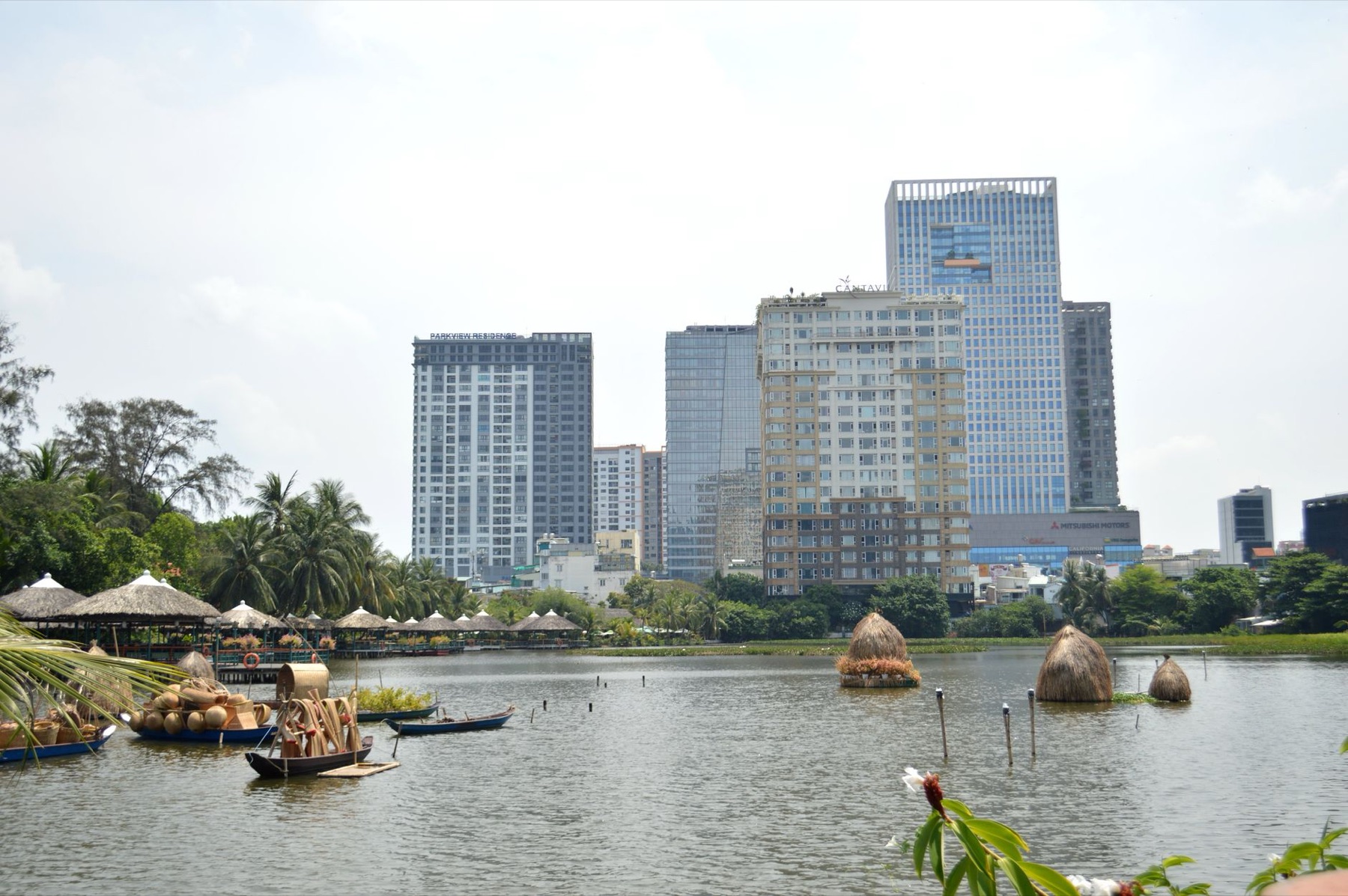
A better Day 3 option: Binh Quoi riverside village (30–45 min by taxi from District 1, around 150,000–200,000 VND / $6.00–$8.00 for a shared taxi). It's a traditional village built on stilts along a tributary. No tour bus crowds. You can hire a sampan (small wooden boat) for 2–3 hours with a local boatman, row through narrow channels, watch coconut candy makers, and eat lunch at a family restaurant. Total cost (boat + lunch) around 400,000–600,000 VND ($16.00–$24.00) for two people.
Alternatively: skip a full-day trip and spend Day 3 on slower exploration. Visit Jade Emperor Pagoda (a Chinese-Vietnamese temple in District 1, chaotic and colourful, 30 min). Walk to Tan Dinh Church (pink Art Deco structure). Browse art galleries in District 3 (smaller, quieter than District 1). Eat dinner in Phu Nhuan district (north of District 1, residential, good bánh canh stalls). Catch a sunset drink on a rooftop bar on Cong Truong Me Linh Square, then fly out or move to your next destination.
🎟️ Compare tours & tickets for this place
| Option | Best for | Time | Cost | Pros | Cons |
|---|---|---|---|---|---|
| Mekong Delta tour | packaged experience | 10–12 hrs | $25–$40 | classic, organized | touristy, rushed, scams |
| Binh Quoi village | slow travel | 4–5 hrs | $15–$25 | intimate, local, quiet | less "famous" |
| City Day 3 (temples + walk) | local flavour | flexible | $5–$15 | your pace, real neighbourhoods | no countryside |
How Do You Pack a Three-Day Trip Thoughtfully?
A small carry-on backpack or roller bag is enough. Ho Chi Minh City is hot and humid (28–34°C / 82–93°F year-round). Pack:
- Two light pairs of trousers or lightweight shorts (not micro-shorts: temples require covered knees).
- One long skirt or lightweight trousers (for temples and conservative areas).
- Three cotton T-shirts.
- One long-sleeve shirt (sun protection).
- Undergarments and socks.
- Comfortable walking shoes (streets are uneven; sandals are risky).
- Sunscreen (SPF 50+), sunglasses, hat.
- A small crossbody bag for daily walks.
- Phone charger and power bank.
- Any medications.
- A light scarf or shawl (temples and some restaurants enforce dress codes).
Don't overpack. Laundry is cheap and fast (around 20,000 VND / $0.80 per kg). Most hotels will wash a shirt overnight.
If you're traveling to Vietnam beyond Saigon, our Hanoi guide, Hoi An guide, Ha Long Bay guide, and Ninh Binh guide cover the key northern and central routes. For a full country overview, see the Vietnam itinerary planner.
What to Check Before You Book a Tour or Eat Anywhere
Before booking a tour:
- Confirm the itinerary and price in writing (email, not WhatsApp).
- Ask if lunch and transport are included; if not, know the cost upfront.
- Check if your hotel concierge can recommend a local operator (avoid touts on the street).
- Verify the meeting point is the hotel, not a street corner.
Before eating:
- Ask the price before ordering, especially for seafood or meat dishes. Menus at tourist-heavy restaurants sometimes omit prices.
- Avoid restaurants where staff stand outside waving menus.
- Eat where you see locals eating (or where the stall has a queue of locals).
- Bring small cash; many small stalls don't accept cards, and ATM fees can be high (around 20,000–30,000 VND / $0.80–$1.20 per withdrawal).
Before taking a taxi:
- Use Grab (ride-hailing app) instead of street hails. Rates are metered and non-negotiable.
- If you must hail a taxi, use major companies (Vinasun, Mai Linh) and insist on the meter.
- Never agree to a flat rate with a taxi driver at the airport; use Grab.
Before taking a cyclo (three-wheeled bike taxi):
- Cyclos are tourist attractions, not transport. Agree on the price before boarding (usually 100,000–200,000 VND / $4.00–$8.00 for 20–30 minutes).
- They're slow and exhaust-filled; use them for short iconic rides only, not daily commutes.
A memorable three-day visit hinges on doing fewer things, eating well, and knowing when to say no to a vendor. Rest at midday. Move geographically. Confirm prices. The itinerary above is doable solo, with a partner, or with a small group. Each person's pace differs—adjust the times to your energy.
Planning a longer Vietnam stay? Compare the Sapa guide and other regional itineraries to build a longer route.
---
FAQ
Is three days enough to see Ho Chi Minh City?
Yes, if you prioritize. Focus on war history (Day 1), French architecture and markets (Day 2), and either a Mekong day trip or local village walk (Day 3). Three days covers the major sights without feeling rushed, unlike many popular guides that stretch it to five.
What's the best time to visit Ho Chi Minh City?
November to February (cool, dry season, 20–28°C / 68–82°F). Avoid May to September (hot, wet, 32–35°C / 90–95°F and flooding in some areas). March to April and October can be humid but manageable if you plan indoor time at midday.
How do I get around the city?
Use Grab (ride-hailing app downloaded before arrival). Taxis are cheaper (around 10,000–15,000 VND / $0.40–$0.60 per km if metered) but meters are often tampered with. Avoid cyclos except for short tourist rides. Do not rent a motorbike unless you have experience with dense traffic and a valid Vietnamese permit.
Is it safe to eat street food in Saigon?
Yes. Street vendors who have high turnover (busy queues, fresh prep) are safer than tourist restaurants. Look for crowds. Check that meat is cooked in front of you. Avoid raw salads unless you trust the water. Most travellers eat street food without issue if they use common sense.
What should I budget for a three-day trip?
Budget around $50–$100/day for budget travel (guesthouse $10–$20, meals $10–$20, sights $5–$15, transport $5–$10). Mid-range stays (hotel $30–$60) increase this to $80–$150/day. Luxury ($100+/night hotels) easily reaches $200+/day. These are individual estimates; couples sharing a room spend less per person.
Do I need a tour guide for the three days?
No, but a half-day guide for war history (War Remnants Museum + Independence Palace) is worth $20–$30 and saves confusion. For street food or village trips, a local guide adds real value and reduces scam risk. Book through your hotel or a verified platform, not street touts.
FAQ
Is three days enough to see Ho Chi Minh City?
Yes, if you prioritize. Focus on war history (Day 1), French architecture and markets (Day 2), and either a Mekong day trip or local village walk (Day 3). Three days covers the major sights without feeling rushed, unlike many popular guides that stretch it to five.
What's the best time to visit Ho Chi Minh City?
November to February (cool, dry season, 20–28°C / 68–82°F). Avoid May to September (hot, wet, 32–35°C / 90–95°F and flooding in some areas). March to April and October can be humid but manageable if you plan indoor time at midday.
How do I get around the city?
Use Grab (ride-hailing app downloaded before arrival). Taxis are cheaper (around 10,000–15,000 VND / $0.40–$0.60 per km if metered) but meters are often tampered with. Avoid cyclos except for short tourist rides. Do not rent a motorbike unless you have experience with dense traffic and a valid Vietnamese permit.
Is it safe to eat street food in Saigon?
Yes. Street vendors who have high turnover (busy queues, fresh prep) are safer than tourist restaurants. Look for crowds. Check that meat is cooked in front of you. Avoid raw salads unless you trust the water. Most travellers eat street food without issue if they use common sense.
What should I budget for a three-day trip?
Budget around $50–$100/day for budget travel (guesthouse $10–$20, meals $10–$20, sights $5–$15, transport $5–$10). Mid-range stays (hotel $30–$60) increase this to $80–$150/day. Luxury ($100+/night hotels) easily reaches $200+/day. These are individual estimates; couples sharing a room spend less per person.
Do I need a tour guide for the three days?
No, but a half-day guide for war history (War Remnants Museum + Independence Palace) is worth $20–$30 and saves confusion. For street food or village trips, a local guide adds real value and reduces scam risk. Book through your hotel or a verified platform, not street touts.
More: Ho Chi Minh City guide · Ho Chi Minh City itinerary: 1, 2, 3 days