Ho Chi Minh City · Itinerary
Ho Chi Minh City one-day itinerary: real neighborhoods, costs & timing
By Wander in Vietnam editorial team · Hanoi, Vietnam
A realistic one-day loop in Ho Chi Minh City starts at the War Remnants Museum (District 1, morning), moves through Ben Thanh Market (midday street-food stop), explores the Reunification Palace grounds, then walks riverside and catches sunset on Nguyen Hue Walking Street. Budget around 300,000–500,000 VND ($12–20 USD) for entry fees and meals if you eat local; allow 6–8 hours on foot with 2–3 food breaks.
This isn't a "see everything" day—that's impossible in one visit. Instead, we've built a route that shows you the city's bones: colonial architecture, real market chaos, honest war history, and the rhythm of how Saigonese actually move through their neighborhood at dusk. It avoids the Saigon Skydeck (expensive, crowded, overrated), the floating markets (require a 2-hour round trip better spent elsewhere), and the tourist-trap cyclo rides.
Why start at the War Remnants Museum, not a pagoda or temple?
The War Remnants Museum (23 Vo Van Tan Street, District 1) opens at 7:30 a.m., so arriving by 8:00 a.m. means a quieter first hour before tour groups arrive. Entry is around 100,000 VND ($4 USD). The museum is brutal, unflinching, and Vietnamese-curated—not a sanitized Western history lesson. You'll spend 90 minutes here if you read the captions; 45 minutes if you don't. The ground floor covers US involvement and chemical weapons; upper floors tackle the broader war and reunification. Bring water. Photography is allowed in most rooms but feels wrong in some. Finish by 10:00 a.m. and you've seen the city's most important political building without the heat of midday.
🗺️ Plan your route: Vietnam itinerary
How do you move from War Remnants to Ben Thanh without wasting time?
Exit onto Vo Van Tan, turn left, walk 200 meters to Nguyen Thi Minh Khai Street, then take a Grab (Southeast Asia's Uber) or walk 10 minutes to Ben Thanh Market. Cost: 30,000–50,000 VND ($1.20–2 USD) by Grab. Walking takes 20 minutes and shows you District 1's residential side—less polished than Le Duan Boulevard, more honest. Arrive at Ben Thanh by 11:00 a.m. Avoid the souvenir stalls at the front; go straight to the food section at the back-right corner where locals sit. Order bánh mì from a stall (around 20,000–30,000 VND / $0.80–1.20 USD), or cơm tấm (broken-rice bowls with grilled pork, around 30,000–40,000 VND / $1.20–1.60 USD). Sit at a plastic stool. This is breakfast-lunch, and it's cheaper and more real than any cafe in the tourist zone. Budget 45 minutes here including eating.
Which pagoda or temple is worth 30 minutes, and which should you skip?
Jade Emperor Pagoda (73 Mai Thi Luu Street, District 1, about 10 minutes from Ben Thanh by Grab) is worth a stop. Entry is free. It's packed with carved wood, gilt Buddhas, and smell of incense—genuinely atmospheric and not a tourist stage set. You'll see actual worshippers, not just sightseers. Spend 20 minutes here. Skip the Binh Tay Market in District 5 (Cholon); it's older than Ben Thanh but farther out and less walkable into your afternoon. If you want a second cultural stop, walk to Reunification Palace instead (see next section).
How much time at Reunification Palace, and is it worth the entry fee?
Reunification Palace (135 Nguyen Hue Boulevard, District 1) entry is around 40,000 VND ($1.60 USD). Open 8:00 a.m.–11:00 a.m., then 1:00 p.m.–4:00 p.m. Don't enter the building (it's closed to independent visitors; only tours go inside). Instead, walk the exterior grounds at lunch, around 12:00 p.m., and take photos of the 1960s architecture and gardens from the street. It's free, takes 15 minutes, and teaches you how power was physically arranged in colonial Saigon. The lawn is lined with bougainvillea and old palms. This is a photographer's pause, not a museum visit. If you want the actual palace interior experience, book a tour operator in advance (most hotels can arrange one, cost around 200,000–300,000 VND / $8–12 USD including transport).
What's the best walk and meal before sunset?
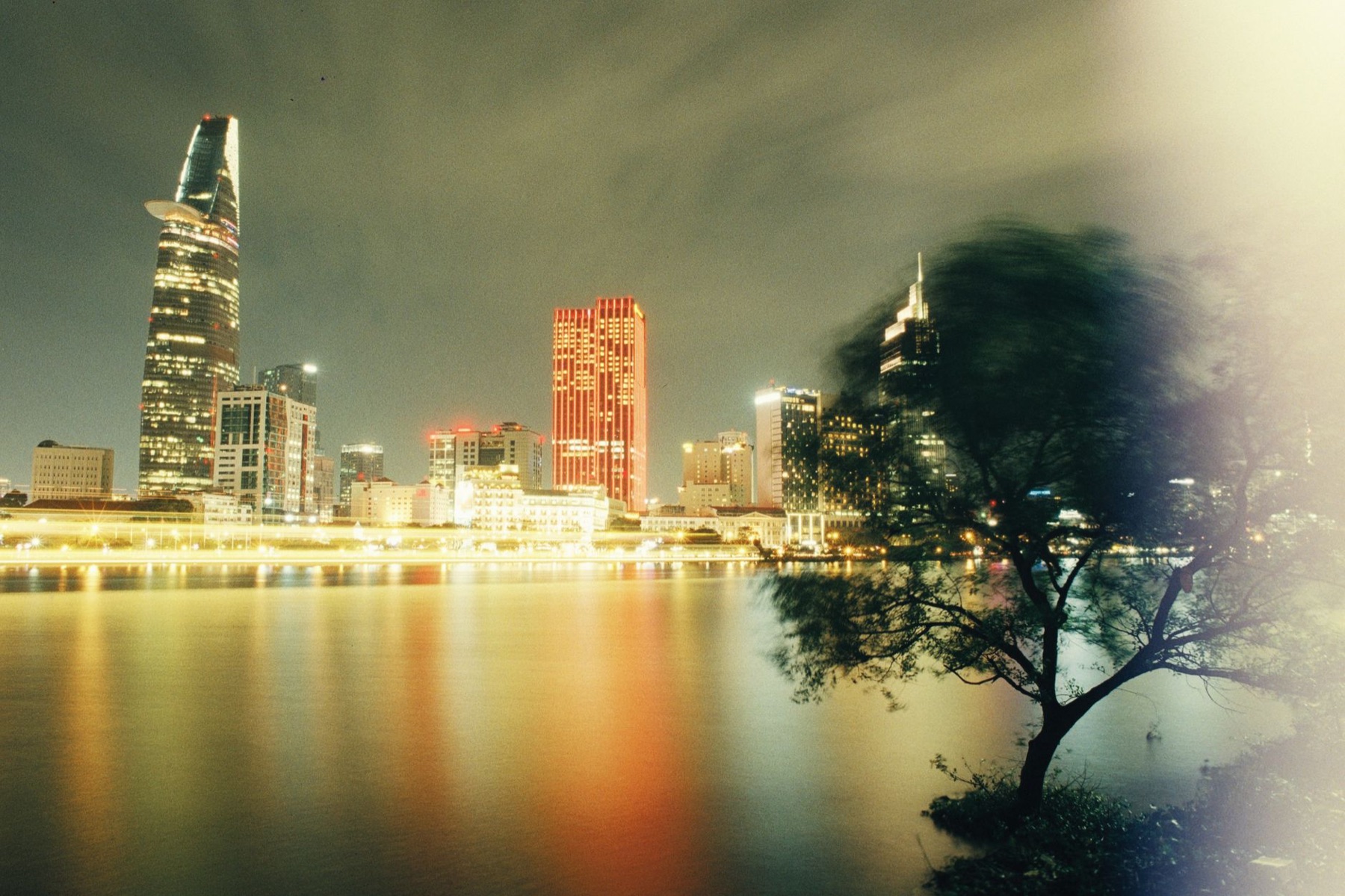
Lunch at a small bánh canh spot or rice-paper roll stand near Reunification Palace (many family-run shops line Nguyen Hue Boulevard, meals around 40,000–60,000 VND / $1.60–2.40 USD). By 2:00 p.m., walk north on Nguyen Hue Boulevard toward the river. This street transforms to a pedestrian zone in late afternoon—locals call it Nguyen Hue Walking Street. Stop at a coffee stand around 3:00 p.m. (cà phê đen, black coffee, around 15,000–20,000 VND / $0.60–0.80 USD) and sit on a plastic stool. Watch traffic, motorbikes, delivery runners. By 4:30 p.m., the street fills with teenagers, families, and couples. The Saigon River is now visible to your north. Walk to the river's edge (Ben Nha Rong / Dragon's Wharf, a free waterfront park with benches and views of the river and Bitexco Financial Tower). Stay until 6:00 p.m. and watch the light soften. This is the best free hour of the day.
Decision table: one-day Ho Chi Minh itinerary vs. guided tour
| Choice | Cost (VND) | Flexibility | Depth | Best for |
|---|---|---|---|---|
| Solo walk (this itinerary) | 180,000–250,000 | High | Moderate | Independent travelers, photographers, repeat visitors |
| Half-day guided tour | 400,000–800,000 | Low | High | First-timers, history context, avoiding navigation stress |
| Full-day tour (8+ hours) | 800,000–1,500,000 | Very low | Very high | Travelers on one visa run, languages barriers, luxury comfort |
Most travelers regret the full-day tour. You stop at too many shops (commission payouts), eat at tour-operator restaurants (overpriced), and lose rhythm. A guided half-day (4 hours) on War Remnants + Reunification Palace is useful; a full day is exhausting.
Where to eat dinner and how late can you stay out?
By 6:30 p.m., head to Nguyen Hue Walking Street or walk 5 minutes east to Tao Đàn Park (District 1, free entry, open until late). Street vendors set up carts with grilled squid (mực nướng, around 50,000–80,000 VND / $2–3.20 USD for a skewer), roasted corn, and sugarcane juice. Sit and eat standing or on a curb. If you want a sit-down dinner, walk back to Vo Thi Sau Street or Le Thanh Ton Street (both in District 1) where mid-range restaurants serve cơm, bánh, phở, and cơm chiên (fried rice). Budget 80,000–150,000 VND ($3.20–6 USD) per person for a full meal. Most close by 9:30 p.m.; street vendors stay open until 10:00 p.m. or midnight. By 8:00 p.m., you've been walking 9–10 hours. A Grab back to your hotel costs 40,000–100,000 VND ($1.60–4 USD) depending on traffic.
📸 Book an ao dai photoshoot in Hanoi or Saigon (Cáo Studio)
How to document and preserve this day
Take photos and video, but consider booking a professional 1–2 hour ao dai photoshoot in Saigon to capture your itinerary in period costume. Cáo Studio offers makeup, hair, and photography in Saigon with Vietnamese traditional dress, combining your day's experiences into keepsake images. Alternatively, collect small printed keepsakes—a Ben Thanh Market receipt, a bus ticket, a flyer from Reunification Palace. When you return home, pair these with a personalized destination memento from our collections—a star map of Saigon printed for the date you visited, an engraved wooden box for tickets and receipts, or a framed map of District 1 routes you walked. These shift a good day into a remembered one.
What to check before you go: timing, transport, and safety
- eSIM or data plan: Download offline maps of District 1 before you start; most streets don't have English signage. Get a Vietnam eSIM here if you're coming from abroad.
- Comfortable shoes: You'll walk 8–10 km. Rubber-soled sneakers work; avoid sandals for Ben Thanh (it's crowded and slippery).
- Small bills: Vendors prefer exact change. Bring 500,000 VND cash; most stalls don't take cards.
- Visa in advance: Check Vietnam visa requirements 30 days before travel. See visa options here.
- Scams to avoid: Cyclo drivers offering "custom tours" (they take you to gem shops for commission); "special prices" on silk or lacquerware at Ben Thanh (buy only what you'd buy at a home store); fake taxis (use Grab, not street hails).
- Heat management: It's hot and humid year-round. Drink 2–3 liters of water. The museum and Jade Emperor Pagoda have air conditioning; use the 11:00 a.m.–1:00 p.m. window to rest indoors.
🎟️ Compare tours & tickets for this place
How does a one-day Ho Chi Minh itinerary fit into a longer Vietnam trip?
If you're in Ho Chi Minh City for only 24 hours (a visa run or short stopover), this itinerary is complete. If you have 2–3 days, add a second day to Hoi An (1-hour flight) or stay in Ho Chi Minh City and explore District 3 (Pham Ngu Lao Street, backpacker zone, budget hotels and cafes) or District 5 (Binh Tay Market, Cholon, older Chinese quarter). If you're building a broader Vietnam itinerary, most travelers pair Ho Chi Minh City with Ha Long Bay (8-hour drive/bus) or Sapa (2-hour flight + 1.5-hour drive). For first-timers, the classic loop is Ho Chi Minh City → Hoi An → Hanoi, which takes 7–10 days.
FAQ
Is one day really enough to "see" Ho Chi Minh City?
One day shows you the city's heart—War Remnants Museum, French architecture, markets, and riverside rhythm—but not neighborhoods like District 2 (expat zone), District 7 (Binh Thanh, university area), or the Mekong Delta. Two days let you breathe; three days let you understand. Think of this as a "taste," not a full experience.
What's the best month to do this itinerary?
November–January (cool and dry). April–May (hot, humid, pre-monsoon crowds). June–September (monsoon; less crowded, cheaper hotels, but unpredictable rain). October is changeable. Avoid Lunar New Year (late January–early February) when most restaurants close and prices spike.
Can you do this itinerary with kids (age 4–8)?
Partially. War Remnants Museum has graphic war photography—skip it or prepare them emotionally. Ben Thanh Market is loud and crowded; kids get overwhelmed. Reunification Palace grounds and Jade Emperor Pagoda work fine. Swap afternoon museum time for a water puppet show or a quiet hour at Tao Dàn Park. Budget extra Grab rides; walking 8+ hours with small kids is unrealistic.
Do you need a guide for War Remnants Museum, or can you go solo?
Solo works fine; captions are in English, French, Vietnamese. A guide ($15–30 USD, 1.5 hours) adds political context and human perspective but isn't mandatory. Many travelers regret skipping the captions—read them; they're not generic.
What's the best souvenir from Ben Thanh Market that isn't a tourist trap?
Dried seafood (shrimp, squid), fresh herbs (basil, mint, coriander in season), coffee beans (labeled by origin), or a hand-woven conical hat (nón lá) from a vendor outside the front gate. Skip silk, lacquerware, and "authentic" painted reproductions (often made in China). Pair your finds with a personalized travel keepsake to make the memory last. ===
FAQ
Is one day really enough to "see" Ho Chi Minh City?
One day shows you the city's heart—War Remnants Museum, French architecture, markets, and riverside rhythm—but not neighborhoods like District 2 (expat zone), District 7 (Binh Thanh, university area), or the Mekong Delta. Two days let you breathe; three days let you understand. Think of this as a "taste," not a full experience.
What's the best month to do this itinerary?
November–January (cool and dry). April–May (hot, humid, pre-monsoon crowds). June–September (monsoon; less crowded, cheaper hotels, but unpredictable rain). October is changeable. Avoid Lunar New Year (late January–early February) when most restaurants close and prices spike.
Can you do this itinerary with kids (age 4–8)?
Partially. War Remnants Museum has graphic war photography—skip it or prepare them emotionally. Ben Thanh Market is loud and crowded; kids get overwhelmed. Reunification Palace grounds and Jade Emperor Pagoda work fine. Swap afternoon museum time for a water puppet show or a quiet hour at Tao Dàn Park. Budget extra Grab rides; walking 8+ hours with small kids is unrealistic.
Do you need a guide for War Remnants Museum, or can you go solo?
Solo works fine; captions are in English, French, Vietnamese. A guide ($15–30 USD, 1.5 hours) adds political context and human perspective but isn't mandatory. Many travelers regret skipping the captions—read them; they're not generic.
What's the best souvenir from Ben Thanh Market that isn't a tourist trap?
Dried seafood (shrimp, squid), fresh herbs (basil, mint, coriander in season), coffee beans (labeled by origin), or a hand-woven conical hat (*nón lá*) from a vendor outside the front gate. Skip silk, lacquerware, and "authentic" painted reproductions (often made in China). [Pair your finds with a personalized travel keepsake](/collections/vietnam-gifts) to make the memory last. ===
More: Ho Chi Minh City guide · Ho Chi Minh City itinerary: 1, 2, 3 days