Hanoi · Things to do
Things to Do and See in Hanoi: Real Neighborhoods & Honest Tips
By Wander in Vietnam editorial team · Hanoi, Vietnam
Hanoi isn't a single experience—it's a series of distinct zones that demand different rhythms. The Old Quarter throbs differently at 7 AM than 7 PM. Hoan Kiem Lake feels sacred at dawn, hectic by noon. Temple opening hours cluster around early morning (6–8 AM) and late afternoon (4–6 PM). Most locals avoid the center 10 AM–3 PM. Timing matters more than speed.
We've spent countless mornings navigating these neighborhoods, eating where no English menus exist, learning which "guides" are scammers, and discovering which widely promoted sites deserve the hype. This guide skips clichés—no "must-see" lists that treat Hanoi like a checklist. Instead, we've organized by genuine decision points: What suits your pace? Which neighborhood fits your energy? How do you avoid the traps?
Which Lake Should I Actually Visit?
Hoan Kiem Lake (Returned Sword Lake) sits at Hanoi's heart. It's genuinely beautiful at 6–7 AM when locals do tai chi and the Turtle Tower gleams gold. By 9 AM, tour groups clog the paths. Entry is free. The Ngoc Son Temple (inside the lake, accessed via the red bridge) opens around 8 AM and costs around 30,000 VND ($1.20 USD). Skip it if you're pressed—the lake views are free and better.
West Lake (Tay Ho) sprawls northwest, quieter and less polished. The shoreline mixes upscale cafés, local noodle joints, and meditation temples. Tran Quoc Pagoda, Hanoi's oldest pagoda (dating to the 6th century), sits on a peninsula and opens early morning around 7 AM. No entry fee. The light here is softer. Crowds thinner. We prefer it for solitude.
Truc Bach Lake, west of the center, appeals to cyclists. Locals circle it for exercise, not selfies. Cheap pho and banh mi shops cluster at the southern end. Free to explore.
Decision framework: Arrive at any lake before 8 AM if you seek authenticity and light. After 10 AM, they're mainly for tourists. West Lake suits longer stays; Hoan Kiem suits central location.
Where Do Locals Actually Eat?
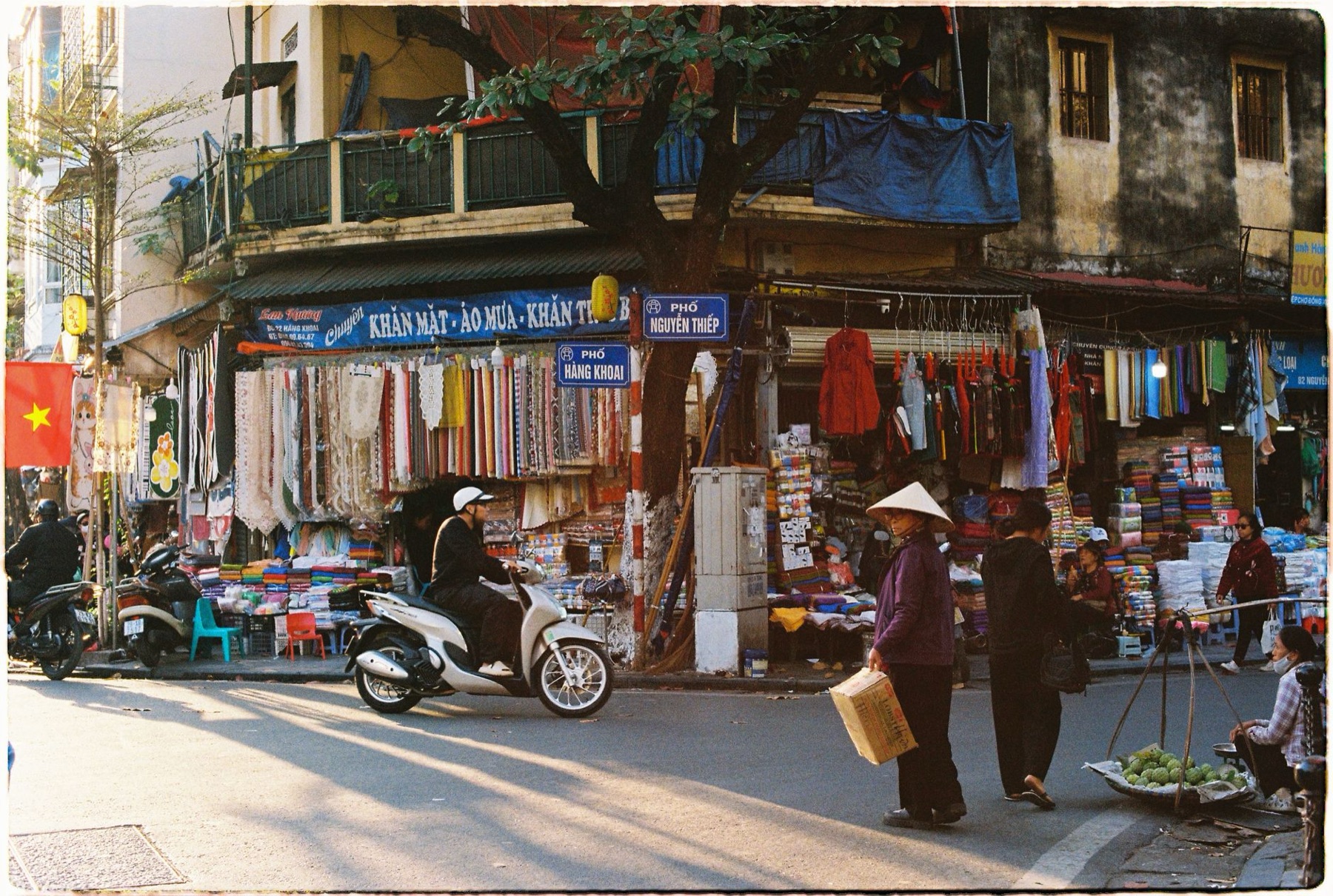
The Old Quarter (Hoan Kiem district, streets like Hang Manh, Hang Ga, Hang Bac) thrives on tiny family-run stalls and hole-in-the-wall restaurants. Expect plastic stools, zero English, and prices around 25,000–50,000 VND ($1–2 USD) per dish. Scam risk: medium. Tourists are occasionally overcharged. Safeguard: eat where locals queue; let them order first; point at what others eat; agree on price before sitting.
Street names reference the goods they once sold: Hang (meaning "shop") Ga (chickens), Hang Bac (silver), Hang Manh (silk). This history feels genuine when you walk it.
Hang Manh Street stays lively morning to evening. Pho shops open 6–10 AM; bánh mì stalls open 11 AM–1 PM; grilled meat skewer vendors emerge 4–8 PM. One meal, multiple stops. Cost: 30,000–60,000 VND ($1.20–$2.40 USD) total.
Dong Xuan Market (the largest covered market, Hoan Kiem district) opens 6 AM, peaks 7–11 AM, quiets after 2 PM. Ground floor: fresh produce, poultry, fish. Upper floors: textiles, housewares. It's loud, chaotic, and real—not staged. Bring small bills (10,000 VND notes). Bargaining is expected for fabrics; food prices are fixed.
Hang Bong Street (Hoan Kiem district) specializes in silk shops and textile sellers. Dozens cluster here, many family-owned for decades. Prices vary wildly—compare 3–4 shops before buying. A silk scarf: 50,000–150,000 VND ($2–6 USD) depending on weight and weave.
| Meal Type | Where | Time | Price (VND) | Why It Works |
|---|---|---|---|---|
| Pho | Hang Manh stalls | 6–10 AM | 30,000–40,000 | Peak freshness, locals eating |
| Bánh mì | Street carts | 11 AM–1 PM | 20,000–30,000 | Quick, affordable, seasonal fillings |
| Grilled skewers | Evening vendors | 5–8 PM | 15,000–25,000 per skewer | Smoke aroma signals quality |
| Bun cha | Hang Buom area | 11 AM–2 PM | 40,000–60,000 | Pork patties, noodles, fresh herbs |
🎟️ Compare tours & tickets for this place
What Temples Are Worth the Early Morning?
Jade Mountain Pagoda (Tran Quoc Pagoda, as mentioned, on Truc Bach Lake's peninsula) requires a walk but rewards you with silence and genuine prayer. Opens 7 AM. Free. Climb to the top; the city view is uncrowded.
Temple of Literature (Van Mieu, in Ba Dinh district, some distance north of the center) is Hanoi's most significant cultural site. Built in 1070, it served as Vietnam's first university. It genuinely deserves the attention—the architecture, the courtyards, the stone turtle steles engraved with scholar names. Opens 8 AM. Costs around 30,000 VND ($1.20 USD). Go at 8:15 AM. By 10 AM, tour groups flood it. Spend 90 minutes minimum. The site is large; rushing wastes the entry fee.
Quan Su Pagoda (Ba Dinh district, near the Hanoi Citadel) is active and working—monks live here. It's not a museum. Opening times: roughly 7–11 AM and 2–5 PM. Free. Wear shoulders and knees covered (long pants or skirts, light layers). Shoes off. If monks are chanting, stand quietly; don't photograph them. This isn't a tourist sight; it's a place of worship.
Hanoi Citadel (Ba Dinh district) is less visited than temples but architecturally significant. French colonial and pre-colonial walls merge. Opens 8 AM. Costs around 40,000 VND ($1.60 USD). The eastern gate is best preserved. Bring water. Tours cluster 9–11 AM; go after 2 PM for solitude.
Scam alert: Street touts around temples offer "free" monastery visits that pivot to souvenir shops and donations. Politely decline. Official temple entrances have clearer signage and fixed fees.
Which Neighborhoods Capture Real Hanoi?
Ba Dinh District houses the Citadel, temples, and the Mausoleum (Ho Chi Minh's resting place, free entry, but strict dress code—no shorts, sleeveless shirts, hats; it opens 8–11 AM and 1–4 PM on Tues–Thurs, closed Mon and Fri–Sun; times vary). The area feels administrative but holds weight. Walking from Tran Quoc Pagoda to Ba Dinh's quieter streets (especially Hang Bong's southern extension) reveals residential Hanoi.
Hoang Mai District spreads east. It's where families live, where street vendors sell seasonal fruit, where kids play after school. No tourist infrastructure. Perfect if you want to observe rather than perform tourism. Costs are lower; English is rarer; interactions are genuine.
Taу Ho (West Lake Ward) suits longer stays. The shoreline offers cafés with lake views (20,000–40,000 VND/$0.80–$1.60 for coffee), noodle shops, and temples. It's affluent but not sterile. Rent a bike and loop the perimeter (roughly 5 km). Morning is best; afternoons get warm.
Hoan Kiem's Eastern Edge (streets east of Hoan Kiem Lake toward To Tich) feels less groomed. Narrow lanes, local shops, fewer foreigners. A solo 2-hour walk here (no agenda, no map obsession) reveals how the city actually functions.
📸 Book an ao dai photoshoot in Hanoi or Saigon (Cáo Studio)
How Do I Experience Hanoi Crafts Without Tourist Traps?
Craft Villages cluster on Hanoi's outskirts. They're real production centers, not theme parks. But access matters—you'll need a guide or strong local navigation.
Bat Trang Pottery Village (20 km southeast, Gia Lam district) is the most accessible. Kilns operate mornings. Prices are direct from makers: ceramic bowls start around 30,000 VND ($1.20 USD); larger pieces 80,000–200,000 VND ($3.20–$8 USD). Shipping exists but is unreliable for breakables. Buy small, hand-carry, or order through a trusted shop in the Old Quarter if you're serious.
Silk Weaving in Van Phuc (west bank of the Red River, Ha Dong district) is intimate if you find a working family workshop. Prices undercut retail shops by 30–40%. Scam risk: very high. Use a trusted guide or skip it. Tourist buses arrive 1–3 PM; go early morning if possible.
Hat Crafts (conical palm-leaf hats) are made in villages north of Hanoi. Hats cost 20,000–80,000 VND ($0.80–$3.20) depending on quality and decoration. They're fragile to carry.
Honest take: Most craft village tourism is packaged now. Real makers rarely wait for drop-in visits. Book through your hotel or a reputable local guide if you want genuine access. Individual wandering often nets you tourist-oriented stalls, not working artisans.
What Should I Skip or Do Differently?
Hoan Kiem Lake after 9 AM—the beauty gets obscured by crowds and selfie sticks.
Water Puppet Theater—popular but often overhyped. The performance is 45 minutes, dialogue is in Vietnamese, and seats in budget tiers lack sightlines. Tickets: around 100,000–200,000 VND ($4–$8 USD). If you go, book online to bypass touts. Go to matinees; evening shows fill with tours.
"Cyclo Rides"—marketed heavily to tourists. A 30-minute ride: 100,000–150,000 VND ($4–6 USD). The experience is interesting once; the exhaust and heat make it unpleasant in summer. Skip if you're heat-sensitive.
Hanoi Hilton (Hoa Lo Prison Museum)—it's real history but the site is small, translations are sparse, and it fills quickly with tour groups. Go right at opening (8 AM), skip afternoon. Entry: around 30,000 VND ($1.20 USD).
Night Street Markets (Hang Dao, Hang Buom at dusk)—marketed as "authentic after-dark Hanoi." They exist, but tourist crowds have altered the vibe. Visit them for energy, not discovery. The goods and food are the same as daytime; prices spike slightly.
Motorbike Tours—vendors approach tourists offering "local food and motorbike rides." Some are legitimate guides; many are not. Scam red flags: vague itineraries, pressure for upfront payment, operators without clear contact info. If you're interested, book through your hotel with a named company, not a street tout.
---
What to Check Before You Book or Buy
- Temple times: Call ahead or ask your hotel—openings shift seasonally and for ceremonies.
- Street vendor cash: Carry 10,000 and 20,000 VND notes; few accept cards or larger bills.
- Language: Learn 5–6 key phrases (hello, thank you, how much, delicious). It unlocks better service.
- Fragile items: Don't expect reliable postal service for ceramics or silk. Buy light, carry hand luggage.
- Bargaining: Normal in markets and craft shops; abnormal in restaurants and stalls with price boards.
- Scam confirmation: If someone approaches you on the street with an unsolicited offer (tour, guide, shop), assume it's tilted toward their commission.
---
🗺️ Plan your route: Vietnam itinerary
For a broader sense of how Hanoi fits into Vietnam travel, explore our Vietnam guide and consider day trips to Ninh Binh or Ha Long Bay, both 2–3 hours away. If you're extending to the south, we've mapped Ho Chi Minh City and Hoi An with similar detail. For connectivity, grab a Vietnam eSIM so offline navigation and messaging work throughout your stay.
If you'd like a keepsake of your Hanoi visit, consider personalized gifts—custom star maps or engraved boxes make thoughtful reminders of places and moments. And if you'd like professional photography in traditional áo dài, book an ao dai photoshoot with Cáo Studio in Hanoi; makeup and styling are included, and photos arrive within two weeks.
---
FAQ
Is Hanoi safe for solo travelers?
Yes, Hanoi is very safe for solo travelers. Violent crime against tourists is rare. Petty theft (phone snatches from café tables, bag dips in crowded markets) happens. Keep valuables secured, avoid dark alleys alone after 11 PM, and trust your instincts on people approaching with unsolicited offers. Most muggings involve distraction; stay aware.
How much does a week in Hanoi typically cost?
Budget travelers: 500,000–800,000 VND/day ($20–32), includes guesthouse, street food, and free/cheap sites. Mid-range: 1,000,000–1,500,000 VND/day ($40–60), includes modest hotels, restaurant meals, paid tours. Costs scale rapidly with alcohol, Western restaurants, and paid activities. Street food and temples are cheap; tours and taxis add up.
What's the best time to visit Hanoi?
October–November and March–April (spring and autumn) offer mild temperatures (18–25°C), low humidity, and clear skies. Summer (May–September) is hot, humid, and rainy. Winter (December–February) can be cool and occasionally drizzly. April and November are ideal; June–August are physically punishing for walking.
Do I need a guide to explore the Old Quarter?
No. It's compact, walkable, and well-signed in English. A map (paper or offline app) suffices. Guides are useful if you want history depth, craft village access, or language help. Solo wandering works fine if you're comfortable with occasional wrong turns and basic negotiation.
How do I get from Hanoi to Ha Long Bay or Sapa?
Ha Long Bay (180 km east): buses depart central stations 7–8 AM, arrive mid-afternoon (4–5 hours, around 100,000–150,000 VND/$4–6). Book through hotels or operators. Sapa (380 km northwest): overnight train or early-morning bus (8+ hours). Buses are cheaper (200,000–300,000 VND/$8–12) but slower and more uncomfortable than trains. Book in advance during Oct–Nov and March–April.
What gifts are lightweight to carry home?
Silk scarves (easily folded), conical hats (flattens), small ceramics (wrap well), coffee (vaccuum-sealed packs), lacquerware coasters, and custom star maps or engraved keepsake boxes capture Hanoi memories without excessive weight or fragility risk.
FAQ
Is Hanoi safe for solo travelers?
Yes, Hanoi is very safe for solo travelers. Violent crime against tourists is rare. Petty theft (phone snatches from café tables, bag dips in crowded markets) happens. Keep valuables secured, avoid dark alleys alone after 11 PM, and trust your instincts on people approaching with unsolicited offers. Most muggings involve distraction; stay aware.
How much does a week in Hanoi typically cost?
Budget travelers: 500,000–800,000 VND/day ($20–32), includes guesthouse, street food, and free/cheap sites. Mid-range: 1,000,000–1,500,000 VND/day ($40–60), includes modest hotels, restaurant meals, paid tours. Costs scale rapidly with alcohol, Western restaurants, and paid activities. Street food and temples are cheap; tours and taxis add up.
What's the best time to visit Hanoi?
October–November and March–April (spring and autumn) offer mild temperatures (18–25°C), low humidity, and clear skies. Summer (May–September) is hot, humid, and rainy. Winter (December–February) can be cool and occasionally drizzly. April and November are ideal; June–August are physically punishing for walking.
Do I need a guide to explore the Old Quarter?
No. It's compact, walkable, and well-signed in English. A map (paper or offline app) suffices. Guides are useful if you want history depth, craft village access, or language help. Solo wandering works fine if you're comfortable with occasional wrong turns and basic negotiation.
How do I get from Hanoi to Ha Long Bay or Sapa?
Ha Long Bay (180 km east): buses depart central stations 7–8 AM, arrive mid-afternoon (4–5 hours, around 100,000–150,000 VND/$4–6). Book through hotels or operators. Sapa (380 km northwest): overnight train or early-morning bus (8+ hours). Buses are cheaper (200,000–300,000 VND/$8–12) but slower and more uncomfortable than trains. Book in advance during Oct–Nov and March–April.
What gifts are lightweight to carry home?
Silk scarves (easily folded), conical hats (flattens), small ceramics (wrap well), coffee (vaccuum-sealed packs), lacquerware coasters, and custom star maps or engraved keepsake boxes capture Hanoi memories without excessive weight or fragility risk.
More: Hanoi guide · Things to do in Hanoi