Ho Chi Minh City · Things to do
Things to Do and See in Ho Chi Minh City: Local Guide
By Wander in Vietnam editorial team · Hanoi, Vietnam
Ho Chi Minh City overwhelms first-time visitors—17 million people, motorbikes honking at 6 a.m., and every hotel concierge pushing the same five restaurants. After years of guiding travelers through its chaos, we've identified what actually matters and what's pure tourist theater.
The city splits roughly into two selves: the colonial core (District 1, along the Saigon River), and the sprawling local neighborhoods where you'll eat better, pay less, and remember why you came to Vietnam.
🗺️ Plan your route: Vietnam itinerary
What makes Ho Chi Minh City worth visiting at all?
Ho Chi Minh City isn't Hanoi's gentle, thousand-year-old soul. It's younger, louder, more obsessed with money and motorbikes. That rawness is the point. You come for street food that tastes like risk, markets where chaos is the currency, and neighborhoods that don't perform for tourists—they just exist.
The weather matters: November to February is bearable. March to May is a sauna with humidity. June to October is monsoon season; expect sudden afternoon downpours but fewer crowds. Bring light clothes, sunscreen, and a realistic attitude about comfort. Expect sweat, noise, and near-misses on crossings.
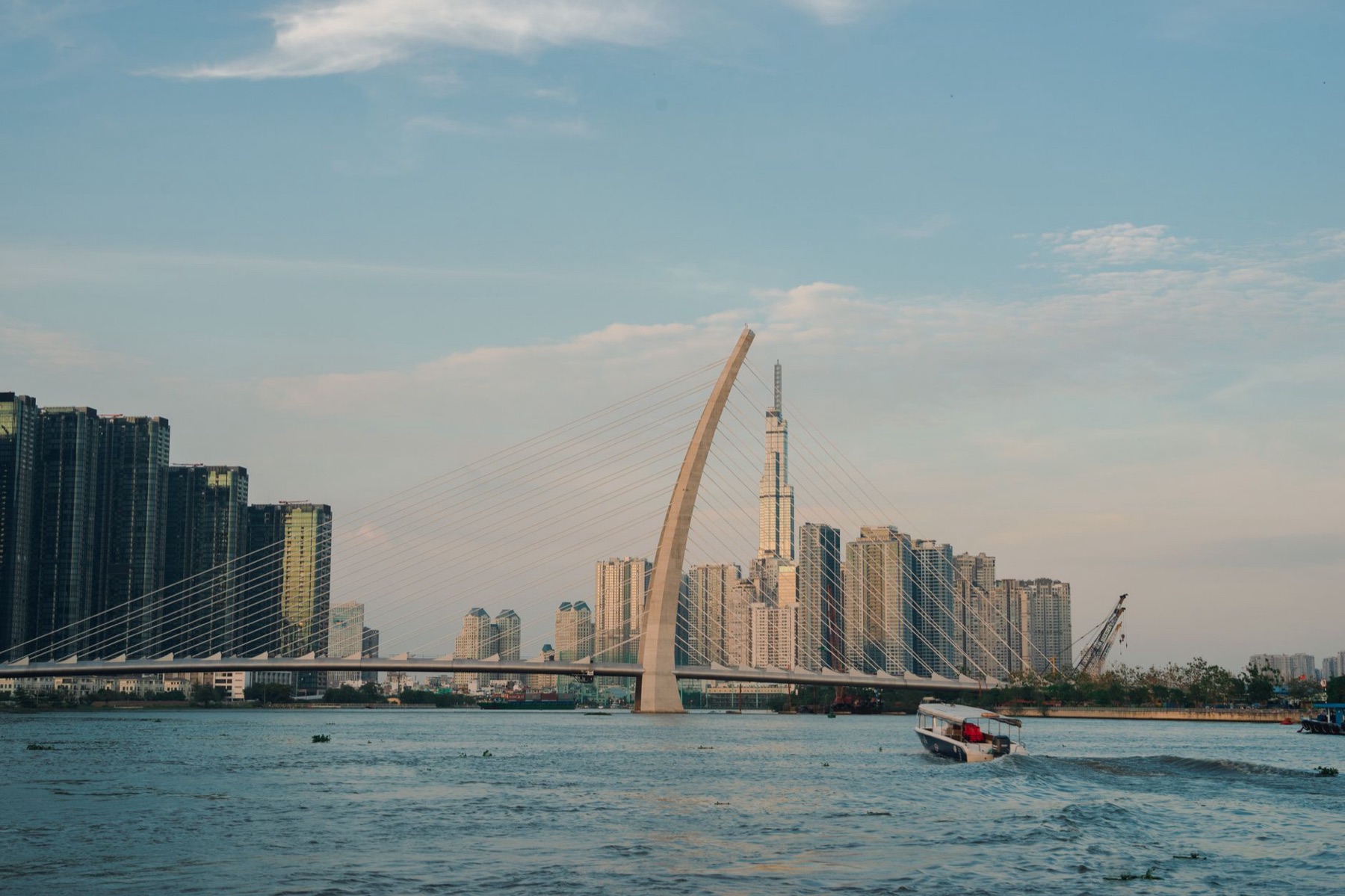
Which neighborhoods should you actually walk around in?
District 1 (Quan 1): The colonial spine. Dong Khoi Street runs north-south, lined with French-era shophouses, cafés, and enough tourists to confirm you're in the right place but not so many you feel herded. The War Remnants Museum (Bao Tang Chung Tich Chien Tranh) sits here; go early or late to avoid school groups. Entry is around 40,000 VND (~$1.60 USD).
Ben Thanh Market (Cho Ben Thanh), the iron-roofed structure at the southern edge, is overhyped but useful. Go before 9 a.m. for actual vendors, not selfie-stick crowds. Souvenirs are aggressively marked up; clothes, spices, and coffee are reasonable if you haggle. Expect 20–30% above street prices anyway.
District 3 (Quan 3): Residential, tree-lined, feels like an actual neighborhood. Thien Hau Temple (Chua Thien Hau) sits in Cholon (the Chinatown area, which bleeds into District 5 and 6) about 3 km west. The temple is ornate, free to enter, and genuinely used by worshippers—not a museum. Go mid-morning or after 4 p.m. to avoid tour groups.
District 5/6 (Cholon): Ho Chi Minh City's authentic Chinese quarter. Fewer tourists, real markets, narrow alleys where you'll get genuinely lost (good thing). Binh Tay Market (Cho Lon) is working-class crazy: spice sellers, fabric stalls, produce mountains. Prices here are 15–20% lower than Ben Thanh and less aggressive. A motorbike taxi (Grab) from District 1 costs around 25,000–40,000 VND (~$1–$1.60 USD).
District 7 (Quan 7): Modern, shiny, where expats live. Skip it unless you need Western food or banking.
📸 Book an ao dai photoshoot in Hanoi or Saigon (Cáo Studio)
What temples and historical sites are worth the trip?
The War Remnants Museum is honest and heavy. Expect graphic war photography and captured American military equipment. It's not balanced—it's Vietnamese perspective—but it's historically vital and not gratuitously sensationalized. Plan 2–3 hours. Around 40,000 VND (~$1.60 USD) entry.
Jade Emperor Pagoda (Chua Ngoc Hoang, District 1) is smaller, quieter, and more atmospheric than tourist guidebooks suggest. Incense smoke, narrow stairs, worshippers leaving offerings. Free entry, open dawn to dusk. Go when your feet need quiet.
Notre-Dame Cathedral (Nha Tho Duc Ba, District 1) is closed to tourists for ongoing restoration. From outside, it's photogenic Romanesque brick—good for a walking-by pause, not a destination.
Thien Hau Temple in Cholon (District 5) is ornate, busy with actual devotees, and free. The craftsmanship is worth the detour. Grab over (~25,000–40,000 VND or ~$1–$1.60 USD).
Skip: The Bitexco Financial Tower. It's sold as "Saigon's tallest" and "must-visit." Reality: the viewing floor is indoors behind glass. The view is broad but hazy, and you'll wait 30 minutes with tourists from three tour groups. Around 90,000–120,000 VND (~$3.60–$4.80 USD) entry. A motorbike ride to the top of any District 1 hotel roof and a street-level drink is honestly better.
Where should you eat and how do you find the real stuff?
Don't book a "dinner cruise" or "street food tour with guide." Both mark you as a target; vendors triple prices.
Early morning (6–9 a.m.): Bánh mì carts line Nguyen Hue Street (the pedestrian zone in District 1). Around 25,000–35,000 VND (~$1–$1.40 USD) for a loaded one. The classic has pâté, Vietnamese cold cuts, pickled vegetables, cilantro, and chili on a crispy baguette. Eat standing up, watch traffic, blend in.
Pho and comfort food: Any narrow shop with plastic stools, hand-written menu, and no English is your place. Bowl of pho: 30,000–50,000 VND (~$1.20–$2 USD). Sit at 6:30 a.m., not 11 a.m.
Mid-market (sit-down but affordable): Look for small Vietnamese restaurants in District 1 along Nguyen Du or Ton That Dam streets. Canh chua (sour soup with tamarind and fish), banh tom (shrimp toast), and cua xao me (stir-fried crab with cashews) cost 80,000–150,000 VND (~$3.20–$6 USD) per dish. Share plates with someone; portions are large.
Avoid: Rooftop bars claiming "best sunset views." They cost 150,000–250,000 VND (~$6–$10 USD) for a beer, the sunset is obliterated by haze and other crowds, and you'll feel swindled after.
Scam warning: If a friendly local on the street offers to show you a restaurant, you'll end up at a place that pays them commission. Quality tanks, prices spike 50–100%. Decline politely.
How do you move around without getting hit?
Traffic is the first honest conversation about Ho Chi Minh City. Crossings are not suicide—they're a flow. Walk at a steady pace, don't stop, and accept that a motorbike will come close. It will not hit you; the driver has done this ten thousand times.
Use Grab (like Uber, but works better here) for longer distances. A ride from District 1 to Cholon costs around 30,000–50,000 VND (~$1.20–$2 USD). Always request the price before confirming; it's transparent and non-negotiable, unlike taxis.
Walk in District 1 and parts of District 3. Beyond that, use Grab. Taxis are legal but negotiation is expected; Grab removes that friction.
Rent a motorbike only if you've ridden one in Vietnam before. The insurance doesn't cover tourists, and an accident means negotiating a payout on the street. Not worth it.
What should you buy and bring home?
Coffee, lacquerware, and ceramic pieces are honest, lightweight souvenirs. Avoid silk scarves marked "100% pure"—they're polyester 80% of the time.
| Item | Where to Buy | Honest Price | Why It Works |
|---|---|---|---|
| Robusta coffee beans (1 kg) | Ben Thanh or Binh Tay Market | 120,000–180,000 VND (~$4.80–$7.20 USD) | Freshly roasted, no middleman markup; taste is sharp, full-bodied |
| Lacquerware bowl or tray | Artisan shops in District 1 | 400,000–800,000 VND (~$16–$32 USD) | Handmade, takes weeks; beautiful if you like that aesthetic, breakable if you don't |
| Ceramic plates or cups | Ben Thanh ceramics section | 80,000–200,000 VND (~$3.20–$8 USD) | Local clay, hand-painted; sturdy enough for daily use |
| Printed áo dài fabric | Cholon markets (District 5/6) | 150,000–300,000 VND (~$6–$12 USD per meter) | Material for tailoring; tailor cost is separate and adds 400,000+ VND (~$16+ USD) |
We recommend buying experiences instead of objects. A professional áo dài photoshoot (traditional Vietnamese tunic with makeup and hair styling) costs around 1,500,000–2,500,000 VND (~$60–$100 USD) and lasts half a day. You leave with photos, not dust-gathering souvenirs.
🎟️ Compare tours & tickets for this place
If you're already in Hanoi, visit our partner Cáo Studio for áo dài photoshoots in Hanoi. In Saigon, book the same service here—it includes a makeup artist and stylist.
What to check before you buy or book anything
Street food vendors: Look for places with a queue and no English menu. Busy is clean. Slow is stale.
Temple entry: Temples are free, but donations are expected (10,000–50,000 VND or ~$0.40–$2 USD). No one will chase you, but it's respectful.
Grab pricing: Confirm the fare estimate on the app before confirming. Prices fluctuate by traffic and demand; pre-book if you're time-sensitive.
Market haggling: Start at 60–70% of the asking price. Meet at 80–85%. Don't haggle for anything under 50,000 VND (~$2 USD); you look petty.
Tourist trap telltale signs: Laminated menus with photos, staff aggressively waving you in, prices in USD or written in chalk outside, nearby ATM with sketchy logos.
Motorbike safety: Wear a helmet. Police enforce this and will fine you 160,000 VND (~$6.40 USD). You'll also reduce your chance of serious injury from 95% to something survivable.
---
Ho Chi Minh City rewards the patient and punishes the hurried. Stay 3–4 days minimum. Sleep in an unfamiliar neighborhood, eat where you don't recognize anyone, and miss half the landmarks. That's how you actually see it.
For a broader sense of Vietnam's geography and what else you should prioritize, review our full itinerary planner. If you're building a national trip, we also have guides to Hanoi, Hoi An, Ha Long Bay, Ninh Binh, and Sapa. And consider getting an eSIM for reliable data and checking e-visa requirements before you book flights.
FAQ
Is Ho Chi Minh City safe for solo travelers?
Yes. Petty theft and scams exist, but violent crime against tourists is rare. Keep valuables in a hotel safe, avoid walking alone after midnight in unfamiliar areas, and trust your instincts. The biggest risk is trusting a stranger offering to guide you to a restaurant.
How many days should I spend in Ho Chi Minh City?
Three days minimum: one for War Remnants Museum and District 1 walks, one for Cholon and temple exploration, one for neighborhood wandering and repeat meals. Many travelers stay 5–7 days and regret leaving, not arriving.
What's the best time to visit Ho Chi Minh City?
November to February (cool and dry). March to May is hot and humid but manageable if you nap 2–4 p.m. June to October brings monsoons—shorter rainfall bursts, fewer tourists, and lower prices. Avoid September to early October if possible.
Do I need a tour guide or can I explore alone?
Explore alone. You'll eat better, spend less, and see neighborhoods tourists miss. A guide is useful only for the War Remnants Museum if you want context, but the museum's placards are thorough enough in English.
Is the street food actually safe to eat?
Yes. If a vendor serves the same dish all day to locals, it's safe. Avoid food sitting under sun for hours or reheated in sketchy oil. Your gut bacteria will protest for a day or two regardless; that's normal, not an infection.
FAQ
Is Ho Chi Minh City safe for solo travelers?
Yes. Petty theft and scams exist, but violent crime against tourists is rare. Keep valuables in a hotel safe, avoid walking alone after midnight in unfamiliar areas, and trust your instincts. The biggest risk is trusting a stranger offering to guide you to a restaurant.
How many days should I spend in Ho Chi Minh City?
Three days minimum: one for War Remnants Museum and District 1 walks, one for Cholon and temple exploration, one for neighborhood wandering and repeat meals. Many travelers stay 5–7 days and regret leaving, not arriving.
What's the best time to visit Ho Chi Minh City?
November to February (cool and dry). March to May is hot and humid but manageable if you nap 2–4 p.m. June to October brings monsoons—shorter rainfall bursts, fewer tourists, and lower prices. Avoid September to early October if possible.
Do I need a tour guide or can I explore alone?
Explore alone. You'll eat better, spend less, and see neighborhoods tourists miss. A guide is useful only for the War Remnants Museum if you want context, but the museum's placards are thorough enough in English.
Is the street food actually safe to eat?
Yes. If a vendor serves the same dish all day to locals, it's safe. Avoid food sitting under sun for hours or reheated in sketchy oil. Your gut bacteria will protest for a day or two regardless; that's normal, not an infection.
More: Ho Chi Minh City guide · Things to do in Ho Chi Minh City