Ho Chi Minh City · Things to do
Things to Do in District 1 Ho Chi Minh City: Sights, Eats, Tips
By Wander in Vietnam editorial team · Hanoi, Vietnam
District 1 (Quận 1) is where most visitors spend their time, and for good reason: the neighborhood's compact enough to explore on foot, dense enough to avoid boredom, and chaotic enough to feel like real Saigon. But it's also where tourism dollars cluster, so prices climb and scams idle at tourist spots. We'll walk you through the honest geography, the eats worth stopping for, and the sights that actually deliver.
What Are the Must-See Landmarks in District 1?
The Reunification Palace (Dinh Độc Lập) sits at the district's heart—a 1960s yellow mansion where the last war ended. Tours run hourly; allow 45 minutes inside. The nearby Notre-Dame Cathedral (Nhà Thờ Đức Bà) is photogenic and free to enter outside mass times. Walking Street (Đường Bộ Hàng Hóa), a pedestrian zone running parallel to Dong Khoi, fills nightly with vendors and buskers—worth a stroll but skip the overpriced cocktail bars lining it.
The War Remnants Museum is the district's most serious attraction. Plan two to three hours and expect emotional impact. Entry around 40,000 VND (~$1.60 USD). Bitexco Financial Tower's viewing deck costs roughly 200,000 VND (~$8 USD) and offers 360-degree city views—skip it if you're not into heights or have limited time.
Where Should You Eat in District 1?
Ben Thanh Market (Chợ Bến Thành) dominates the southeast. It's 90% tourist at stall level but genuinely serves lunch crowds from nearby offices. Pho, bánh mì, cơm tấm (broken-rice plates), and fresh fruit shake stalls pack the ground floor. Expect to spend 30,000–60,000 VND (~$1.20–$2.40 USD) for a bowl and drink. Go hungry and early (11:30 a.m.) to beat tour groups.
Skip the rooftop restaurant mall inside Ben Thanh—it's all upscale tourist chains. Instead, walk two blocks south toward Le Loi Street; a row of standing-room-only pho places crank out identical bowls at 30,000 VND (~$1.20 USD) each. The locals-to-tourists ratio here is why they taste better.
For coffee, the proliferation of specialty chains (Cộc Cà Phê, Cà Phê Trinh, etc.) covers every corner. A traditional Vietnamese iced coffee runs 25,000–40,000 VND (~$1–$1.60 USD); flat whites at imported-bean shops hit 60,000–90,000 VND (~$2.40–$3.60 USD). Sitdown cafés near Tao Đàn Park (west of the Palace) offer quieter vibes than the Walking Street crush.
🎟️ Compare tours & tickets for this place
Dinner? Nguyen Hue pedestrian area has family-run crab restaurants and fish hotpot places; menus often show photo cards, lowering the language barrier. A crab dinner for two runs 200,000–400,000 VND (~$8–$16 USD). Ask locals in your hotel for specific addresses—they change and guides age fast.
How Do You Avoid Scams and Overpriced Traps?
Taxis and Grab are your friends. Street taxis without meters prey on tourists; always use Grab (Vietnam's ride-app, similar to Uber) or ask your hotel to book a metered cab. A typical short ride costs 40,000–80,000 VND (~$1.60–$3.20 USD).
Ben Thanh vendors may quote inflated prices if they sense a foreigner. Watch what locals pay before ordering. The fruit-shake stall owner won't negotiate, but the guy selling "authentic war memorabilia" outside will—because it's fake. Politely walk away.
Fake tour operators cluster near the Palace entrance. Book through your hotel or established agencies; many are legitimate, but solo street vendors offering "private tours" often double-cross or abandon you mid-day.
Pickpocketing peaks at Ben Thanh and on Walking Street after dark. Keep cash split across pockets, use a crossbody bag, and don't flash expensive phones. Violent crime is rare but petty theft is routine.
What's Worth a Half-Day Trip Outside District 1?
If you've cleared District 1 in a morning, consider nearby neighborhoods. District 3 (Quận 3), just north, has the War Remnants Museum and quieter residential pockets. District 4 (Quận 4), across the Saigon River on the east bank, offers parks, the Saigon Skydeck at Landmark 81, and food markets locals actually frequent.
For a longer morning or afternoon: the Cho Lon (Chinatown) sprawl occupies Districts 5, 6, and 10—a chaotic, older marketplace where tourists thin out fast. Gold, spices, and textiles pack the lanes. It's a 20-minute Grab ride from District 1; allow two hours minimum.
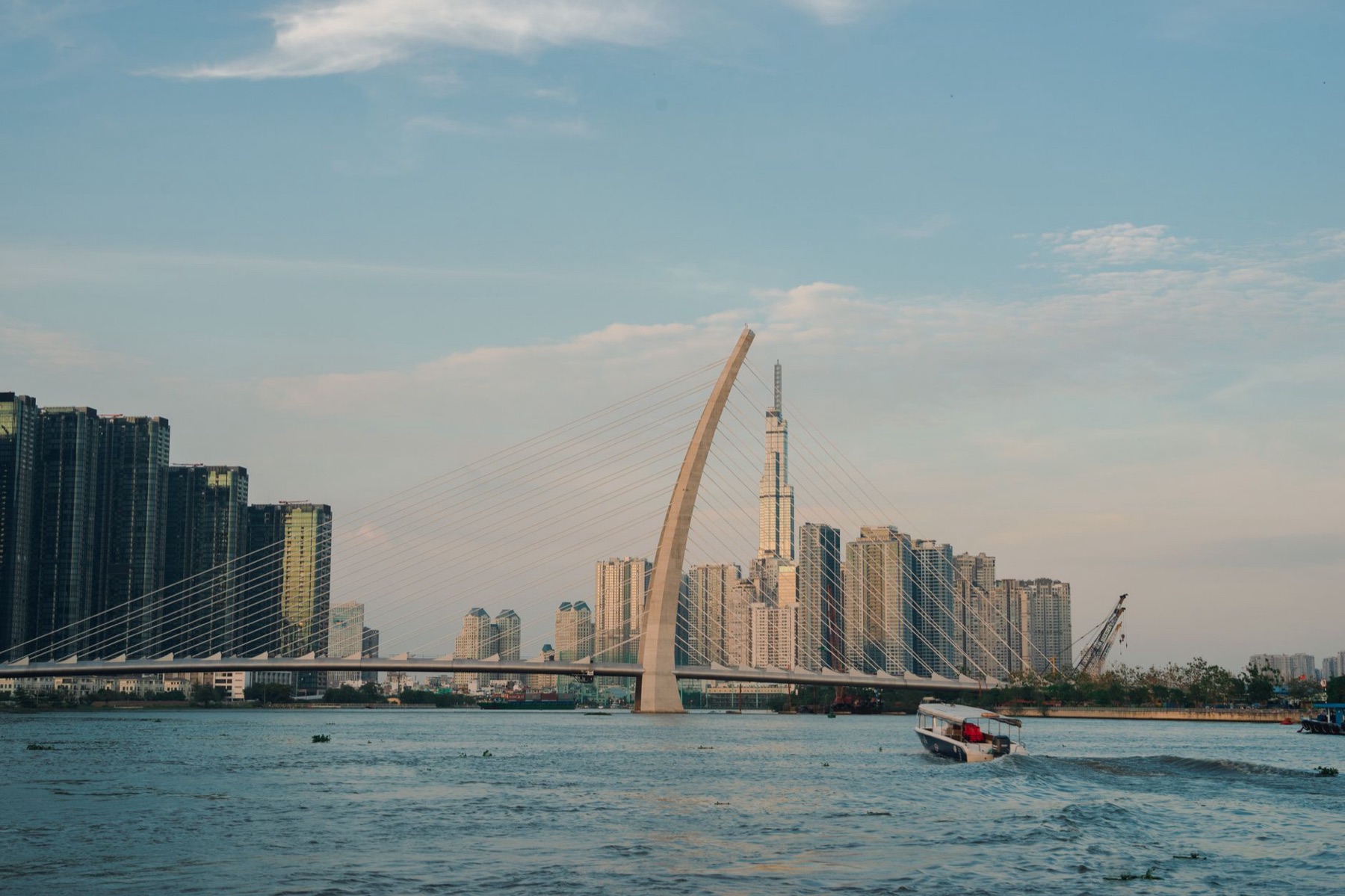
Nha Rong Wharf (Dragon House Wharf) on the Saigon River marks Ho Chi Minh's departure point to Paris in 1911—a symbolic spot with a museum. Entry around 50,000 VND (~$2 USD).
How Long Should You Actually Spend in District 1?
A full day covers the big sights: Reunification Palace (1 hour tour), a walk through Ben Thanh (45 minutes), Notre-Dame Cathedral (20 minutes), War Remnants Museum (2 hours), lunch, and a riverfront café session. That's roughly 5–6 hours of active time. Most travelers stick one night, some two.
If District 1 feels repetitive (it will by day two), move to other Vietnam destinations like Hoi An, Sapa, or Ninh Binh for mountain air and different architecture.
| Activity | Duration | Cost (VND) | Cost (USD) | Why It Works |
|---|---|---|---|---|
| Reunification Palace tour | 1 hour | 40,000 | $1.60 | Historic, walkable, central |
| Ben Thanh Market lunch | 45 min | 50,000–80,000 | $2–3.20 | Authentic street food, packed |
| Notre-Dame Cathedral | 20 min | Free (donation) | Free | Iconic photo, no queue off-hours |
| War Remnants Museum | 2–3 hours | 40,000 | $1.60 | Deep history, moving exhibits |
| Saigon River café | 1 hour | 60,000–100,000 | $2.40–4 | Views, local vibe, wifi |
| Bitexco Tower | 45 min | 200,000 | $8 | 360 views (skip if rushed) |
🗺️ Plan your route: Vietnam itinerary
Remembering Your Trip: Thoughtful Keepsakes
Souvenirs from District 1 tend toward tourist-trap silk scarves and plastic pagodas. Instead, consider bringing home something tied to your actual experience—a photo from your visit, a handwritten note, or a curated gift that captures the moment rather than a mass-made trinket.
Personalized photo gifts like custom acrylic blocks or star maps let you embed a date, location, or actual image from your District 1 exploration—your river café table, the palace courtyard, a street-food moment. These work well as thank-you gifts if you traveled with friends or as keepsakes for yourself.
Travel-themed collections include items designed for adventurers: waterproof packing lists, custom maps of Vietnam, and journaling cards. Pair any of these with a local coffee-table book on Saigon (available at Ben Thanh or large bookstores) for a complete memory set.
For a unique souvenir from Vietnam itself, consider an ao dai photoshoot experience (the traditional Vietnamese dress captured professionally). Many travelers book a session in HCMC before or after District 1 exploration—you'll have images that prove you were there, styled in the country's iconic garment. Cáo Studio offers makeup, hair, and photography in Saigon, turning a cultural moment into lasting visuals.
📸 Book an ao dai photoshoot in Hanoi or Saigon (Cáo Studio)
What to Check Before You Book or Buy
- Timing: Visit Ben Thanh before 10 a.m. or after 5 p.m. to dodge tour buses.
- Weather: March–May is hot and humid; November–February is cooler. Midday naps are normal.
- Currency: ATMs dot District 1; exchange rates at banks beat street money changers.
- Transport: Download Grab now; your phone number and email suffice to sign up.
- Language: English works at major sites and restaurants. Memorize "cảm ơn" (thank you) and "bao nhiêu?" (how much?).
- Connectivity: Get a local eSIM for Vietnam ($5–15 for 30-day data) instead of roaming—calls, texts, and maps become painless.
- Visa: Confirm your Vietnam e-visa status before arrival (most Westerners qualify for online approval in 3–5 days).
District 1 delivers what guidebooks promise—but only if you move fast, eat where locals queue, and skip the obvious tourist eateries. Spend a day here, soak in the riverside chaos, then head north to Hanoi or outward to Ha Long Bay for variety. The real Saigon lives outside the colonial bubble anyway.
---
FAQ
Is District 1 safe for solo travelers at night?
Yes, broadly. Petty theft (phone snatching, bag cutting) peaks on Walking Street and Ben Thanh after 10 p.m. Use Grab instead of street taxis, avoid dark alleys, and don't flash cash or jewelry. Violent crime targeting tourists is rare. Thousands of solo travelers navigate it nightly without incident.
How much should I budget per day in District 1?
Budget 300,000–600,000 VND (~$12–$24 USD) per person for meals, entry fees, and transport if you eat street food and skip expensive hotels/bars. Add 150,000 VND (~$6 USD) if you want a nicer restaurant dinner and museum visits. Accommodation costs vary widely.
Can I walk most of District 1, or do I need Grab/taxi?
You can walk the core (Palace to Ben Thanh to Notre-Dame) in 2–3 hours. Beyond that—Bitexco, Nha Rong, quieter residential blocks—use Grab. Sidewalks are narrow, motorcycles are aggressive, and heat exhaustion sets in fast midday.
Which museum in District 1 is worth the time: War Remnants or FITO?
War Remnants wins for depth and emotional weight. Plan 2–3 hours. FITO (Folk Medicine Museum, smaller, northwest of the Palace) suits those wanting lighter, shorter visits. Both cost around 40,000 VND (~$1.60 USD).
What's the best time of year to visit District 1?
November to February (cool and dry, 20–25°C or 68–77°F). Avoid May–September (monsoon season, 35°C+ or 95°F+, humidity at 80%+). Tourism peaks December–January; April and October offer moderate crowds and decent weather.
Are the restaurants on Walking Street legit or all tourist traps?
Mixed. Some are owned by foreigners and overcharge (entrees 200,000+ VND or $8+ USD for mediocre food). A few offer quality. Safer bet: eat at street stalls (30,000–80,000 VND or $1.20–$3.20 USD) or restaurants one block off Walking Street, where locals intermix with tourists.
Do I need to book Reunification Palace tours in advance?
No. Tours depart every 15–30 minutes, 7:30 a.m.–11 a.m. and 1–4 p.m. daily. Show up with passport 30 minutes early. English guides are standard. Peak times (9–10 a.m., 2–3 p.m.) draw crowds; 8 a.m. or 3:30 p.m. slots move faster.
FAQ
Is District 1 safe for solo travelers at night?
Yes, broadly. Petty theft (phone snatching, bag cutting) peaks on Walking Street and Ben Thanh after 10 p.m. Use Grab instead of street taxis, avoid dark alleys, and don't flash cash or jewelry. Violent crime targeting tourists is rare. Thousands of solo travelers navigate it nightly without incident.
How much should I budget per day in District 1?
Budget 300,000–600,000 VND (~$12–$24 USD) per person for meals, entry fees, and transport if you eat street food and skip expensive hotels/bars. Add 150,000 VND (~$6 USD) if you want a nicer restaurant dinner and museum visits. Accommodation costs vary widely.
Can I walk most of District 1, or do I need Grab/taxi?
You can walk the core (Palace to Ben Thanh to Notre-Dame) in 2–3 hours. Beyond that—Bitexco, Nha Rong, quieter residential blocks—use Grab. Sidewalks are narrow, motorcycles are aggressive, and heat exhaustion sets in fast midday.
Which museum in District 1 is worth the time: War Remnants or FITO?
War Remnants wins for depth and emotional weight. Plan 2–3 hours. FITO (Folk Medicine Museum, smaller, northwest of the Palace) suits those wanting lighter, shorter visits. Both cost around 40,000 VND (~$1.60 USD).
What's the best time of year to visit District 1?
November to February (cool and dry, 20–25°C or 68–77°F). Avoid May–September (monsoon season, 35°C+ or 95°F+, humidity at 80%+). Tourism peaks December–January; April and October offer moderate crowds and decent weather.
Are the restaurants on Walking Street legit or all tourist traps?
Mixed. Some are owned by foreigners and overcharge (entrees 200,000+ VND or $8+ USD for mediocre food). A few offer quality. Safer bet: eat at street stalls (30,000–80,000 VND or $1.20–$3.20 USD) or restaurants one block off Walking Street, where locals intermix with tourists.
Do I need to book Reunification Palace tours in advance?
No. Tours depart every 15–30 minutes, 7:30 a.m.–11 a.m. and 1–4 p.m. daily. Show up with passport 30 minutes early. English guides are standard. Peak times (9–10 a.m., 2–3 p.m.) draw crowds; 8 a.m. or 3:30 p.m. slots move faster.
More: Ho Chi Minh City guide · Things to do in Ho Chi Minh City