Ho Chi Minh City · Things to do
Things to Do in Ho Chi Minh City District 1: Local's Guide 2026
By Wander in Vietnam editorial team · Hanoi, Vietnam
District 1 (Quận 1) is central Ho Chi Minh City's beating heart—where French architecture meets street food stalls, and the Saigon River divides districts with lazy ferry crossings. Most sites cluster within walking distance; plan 2–3 days to absorb it properly without rushing.
What's the honest draw of Reunification Palace?
Reunification Palace (Dinh Độc Lập, 106 Nguyen Hue Boulevard) is worth one visit if architecture or 1975 history interests you. Entry is around 40,000 VND (~$1.60 USD) for a guided tour in English; independent visits run shorter. Go mid-morning (9:00–11:00 a.m.) to skip tour-group congestion. The 1960s modernist design and preserved war-era rooms tell the story directly; don't expect pristine grandeur—it's austere, which is the point. Budget 45 minutes inside. Skip if you're short on time; it's more atmospheric than thrilling.
🗺️ Plan your route: Vietnam itinerary
How do you navigate Ben Thanh Market without overpaying?
Ben Thanh Market (Chợ Bến Thành, corner of Le Loi & Tran Hung Dao) is Ho Chi Minh City's oldest market—chaotic, humid, and full of tourists. Souvenirs (ao dai keepsakes, silk scarves, t-shirts) are marked up 30–50% for foreigners. Visit 7:00–9:00 a.m. when locals still shop and prices feel fairer. Bring small bills; vendors push for crisp new notes. The food section is genuinely good: fresh fruit, dried fish, coffee beans. Avoid handbags and knockoff goods unless you enjoy haggling for 20 minutes over 20,000 VND (~$0.80 USD). Eat early breakfast there instead; bánh mì stalls serve at 6:30 a.m. and charge 15,000–25,000 VND (~$0.60–$1.00 USD) for quality.
📸 Book an ao dai photoshoot in Hanoi or Saigon (Cáo Studio)
Are the riverside walks actually worth time?
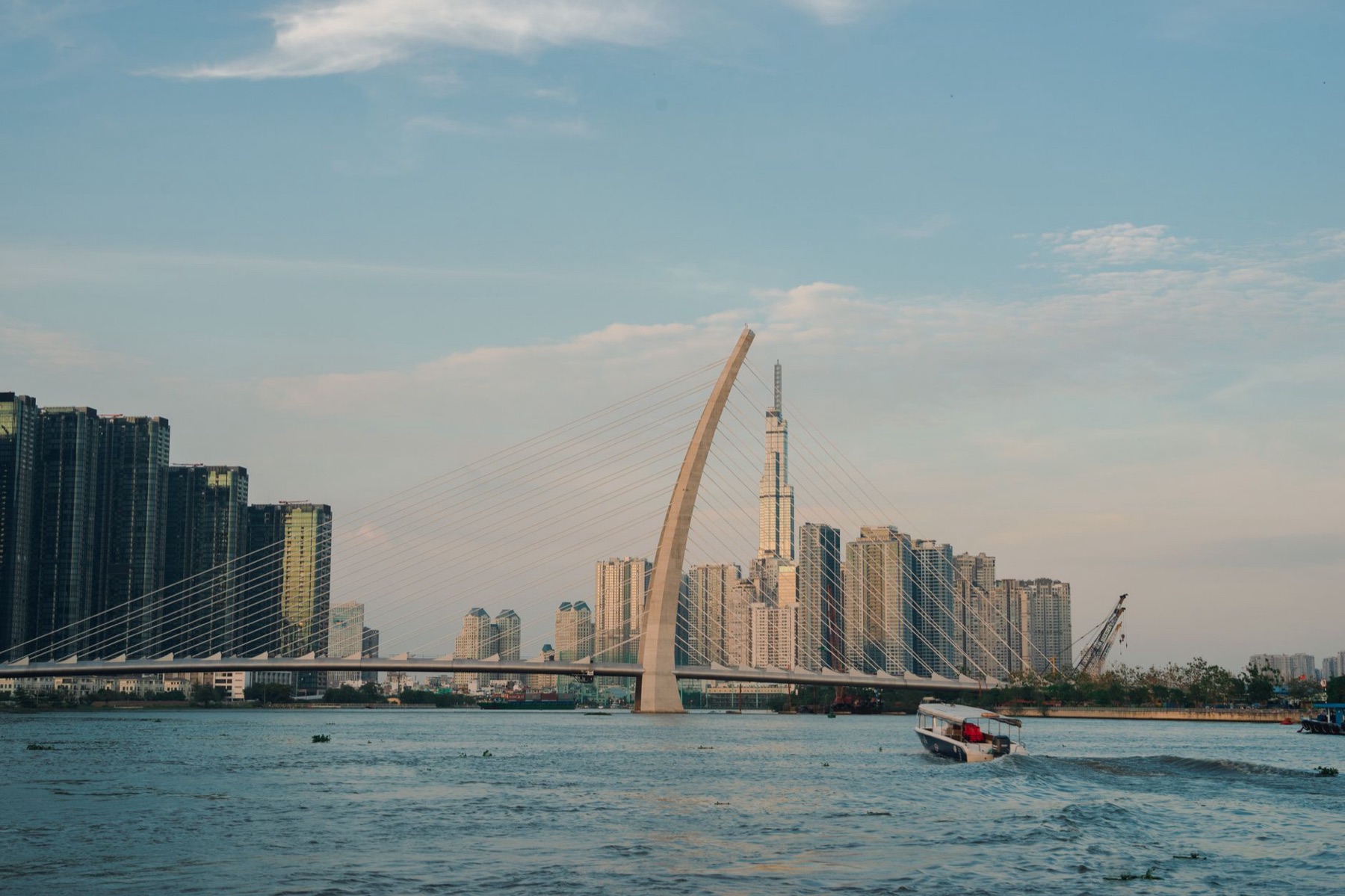
The Saigon River waterfront (Bên Cạnh Sông Sài Gòn) runs the entire east edge of District 1—paved promenade, street vendors, sunset views. It's worth 1–2 hours if you like slow walking and people-watching. Bitexco Financial Tower overlooks it (no need to pay for the top; the base area is free). Cycle paths exist but are chaotic; walk instead. Evening (5:00–7:00 p.m.) brings locals jogging, couples, and food carts. Coffee and sugarcane juice cost around 10,000–15,000 VND (~$0.40–$0.60 USD). The air is better than central streets. If heat is extreme, skip and return after dark.
Which temples and pagodas justify a visit?
Jade Emperor Pagoda (Chùa Ngọc Hoàng, 73 Mai Thi Luu, District 1) is the most atmospheric—tightly packed incense smoke, elderly worshippers, carved wooden screens, and a green jade statue dominating a back room. Entry is free; a small donation (10,000–20,000 VND / ~$0.40–$0.80 USD) is appreciated. Open 8:00 a.m.–6:00 p.m. daily.
Notre-Dame Cathedral (Nhà Thờ Đức Bà, 1 Công Xã Paris) is stunning 1880s French architecture—cream-colored, imposing, photo-friendly. It's an active church, not a museum, so visit outside Mass times (check hours beforehand; typically 10:00 a.m. and 5:00 p.m. Sundays are crowded). Entry is free but quiet respect is essential. Photography inside is restricted during services.
Skip "War Remnants Museum" if you dislike confrontational war photography; it's powerful but emotionally heavy. Allocate 2–3 hours if you do go.
| Site | Entry Cost | Time Needed | Best For | Why Visit |
|---|---|---|---|---|
| Reunification Palace | ~40,000 VND ($1.60) | 45 min–1 hr | History buffs | Architecture + preserved interiors |
| Jade Emperor Pagoda | Free (donation optional) | 20–30 min | Atmosphere seekers | Incense, statues, local worship |
| Notre-Dame Cathedral | Free | 20–30 min | Photography lovers | Colonial landmark, iconic |
| Ben Thanh Market | Free to enter | 1–2 hrs | Bargain shoppers | Souvenirs, street food |
| Saigon River walk | Free | 1–2 hrs | Relaxation | Sunset, vendors, breeze |
What's the street food strategy for District 1?
Street food is everywhere; the trick is eating where locals eat at peak hours. Alley off Nguyen Hue Walking Street (between Landmark 81 and the opera house) fills with bánh mì, bánh bao, and cơm tấm carts by 6:30 a.m. A full breakfast costs 30,000–50,000 VND (~$1.20–$2.00 USD). Pham Ngu Lao Street (backpacker hub, slightly south) has reliable phở and cơm tấm vendors; go 7:00–9:00 a.m. for quality control. Pasteur Street (Đường Pasteur, central, near Cathedral) has older, quieter spots—fewer tourists, more regulars.
Avoid stall food if you have a sensitive stomach; eat at places with high turnover and visible cleanliness. Tap water is not safe; drink bottled water (5,000 VND / ~$0.20 USD for 500ml). Ice is generally fine at busy stalls but risky at quiet ones.
🎟️ Compare tours & tickets for this place
How do you avoid tourist scams in District 1?
Cyclo rides: Agree on price before boarding, not after. Typical 15–20 minute rides cost around 50,000–100,000 VND (~$2.00–$4.00 USD) depending on negotiation skill; tourist quotes start at 200,000+ VND (~$8.00+). Use Grab instead if unsure.
Overpriced restaurants on Nguyen Hue: Avoid sit-down tourist spots with laminated menus and English-speaking touts. A rice dish there costs 100,000+ VND (~$4.00+); the same dish two blocks away costs 40,000 VND (~$1.60 USD).
Fake tour operators: Book city tours through your hotel or a known operator (like Saigon Xuan or similar established names), not street touts offering "special prices." Deposit via hotel booking, not cash-in-hand.
Tailors rushing you: Custom ao dai tailors will pressure you to decide fabric on day one and pay 50% upfront. Take time, compare shops, and never pay cash before final fitting.
Money changing: Use ATMs or official money-change desks at banks; street changers may skim notes or use old bills.
What to Check Before You Go
- Visa: Most international visitors need an e-visa (90 days). Apply at vietnam e-visa portal.
- eSIM or local SIM: Buy a Viettel or Vinaphone SIM at Ben Thanh or Tan Son Nhat Airport; data is around 50,000 VND (~$2.00 USD) for 30 days unlimited. Alternatively, grab a Vietnam eSIM before arrival.
- Comfortable shoes: Pavements are uneven; wear walking shoes, not flip-flops.
- Cash & small bills: ATMs dispense 500,000 VND notes; have small denominations for market vendors.
- Early starts: Beat heat and crowds by walking 7:00–11:00 a.m.
- Humidity: Light, moisture-wicking clothes. Peak heat is April–May; monsoon is September–October.
Gifts & Mementos from District 1
If you want a keepsake beyond generic market souvenirs, consider:
- Silk scarves or fabric items: Buy at Ben Thanh from reputable stalls (ask locals which), not from touts. Custom silk orders take 3–5 days and cost from 200,000 VND (~$8.00 USD) for simple designs.
- Vietnamese coffee: Real robusta or arabica beans from local roasters, not tourist-marked bags. A 200g bag costs around 60,000–100,000 VND (~$2.40–$4.00 USD) for decent quality.
- Ao dai keepsake or custom portrait: Commission a local photographer or artist. Many offer custom star map prints or personalized watercolor sketches tied to your trip. Browse personalized keepsake collections for inspiration before arrival and order upon return for quality peace of mind.
- Wooden or ceramic souvenirs: Pagodas sell small carved pieces and pottery; donate 10,000–30,000 VND (~$0.40–$1.20 USD) and choose pieces directly from monks or gift tables.
For lasting memories beyond goods, book an ao dai photoshoot in Saigon with professional makeup and hair—Cáo Studio offers sessions in central locations. Pictures outlast souvenirs.
Linking District 1 to the bigger picture
District 1 can fill 2–3 days comfortably, but Ho Chi Minh City sprawls. Branch out to Tan Dinh Market (District 1, smaller, fewer tourists), War Remnants Museum (District 3, 15-minute taxi ride), or Cu Chi Tunnels (Tay Ninh Province, day trip). Before committing time, check the broader ho-chi-minh-city guide for side-trip priorities.
If Ho Chi Minh City is your base for a longer Vietnam trip, pair it with Ha Long Bay (UNESCO kayaking & caves), Hanoi (capital culture & street food), Hoi An (ancient town & lanterns), or Ninh Binh (limestone valleys). Use the Vietnam itinerary planner to sequence stops logically.
FAQ
How many days do I need in District 1?
Two full days covers major sites (palace, pagodas, market, river walk, street food) without rushing. Add a third if you want to linger in cafés or explore back alleys. First-time visitors often spend 1 day and regret it.
Is District 1 safe to walk at night?
Main streets (Nguyen Hue, Le Loi, Dong Khoi) are well-lit and busy until 10:00 p.m.; safety is fine. Avoid dark alleys and wandering alone after midnight. Petty theft (pickpocketing) happens in crowds; watch bags and phones.
Can I use credit cards in District 1?
Yes, at restaurants, hotels, and some shops. Markets and street food require cash only. ATMs are plentiful; withdraw 2–3 million VND (~$80–$120 USD) for a 2–3 day visit.
What's the best time to visit District 1?
November–February (cool, dry season, 20–25°C / 68–77°F) is ideal. April–May is scorching (35°C+ / 95°F+). Monsoon (September–October) brings humidity and occasional flooding in low areas but fewer tourists.
Do I need to book tours in advance for District 1?
No; most sites are walk-up. Book a Saigon River cruise or Cu Chi Tunnels tour a day ahead through your hotel to avoid scams. City walking tours can be arranged same-day if you prefer guidance.
Is an ao dai worth buying or renting in Ho Chi Minh City?
Renting from a tailor for a photoshoot (1–2 hours, around 200,000–300,000 VND / ~$8.00–$12.00 USD) is better value than buying unless you plan to wear it again. Many tailors offer custom fitting; allow 5–7 days. For professional photos, book a Saigon ao dai photoshoot session with styling included.
FAQ
How many days do I need in District 1?
Two full days covers major sites (palace, pagodas, market, river walk, street food) without rushing. Add a third if you want to linger in cafés or explore back alleys. First-time visitors often spend 1 day and regret it.
Is District 1 safe to walk at night?
Main streets (Nguyen Hue, Le Loi, Dong Khoi) are well-lit and busy until 10:00 p.m.; safety is fine. Avoid dark alleys and wandering alone after midnight. Petty theft (pickpocketing) happens in crowds; watch bags and phones.
Can I use credit cards in District 1?
Yes, at restaurants, hotels, and some shops. Markets and street food require cash only. ATMs are plentiful; withdraw 2–3 million VND (~$80–$120 USD) for a 2–3 day visit.
What's the best time to visit District 1?
November–February (cool, dry season, 20–25°C / 68–77°F) is ideal. April–May is scorching (35°C+ / 95°F+). Monsoon (September–October) brings humidity and occasional flooding in low areas but fewer tourists.
Do I need to book tours in advance for District 1?
No; most sites are walk-up. Book a Saigon River cruise or Cu Chi Tunnels tour a day ahead through your hotel to avoid scams. City walking tours can be arranged same-day if you prefer guidance.
Is an ao dai worth buying or renting in Ho Chi Minh City?
Renting from a tailor for a photoshoot (1–2 hours, around 200,000–300,000 VND / ~$8.00–$12.00 USD) is better value than buying unless you plan to wear it again. Many tailors offer custom fitting; allow 5–7 days. For professional photos, book a [Saigon ao dai photoshoot session](https://vietnamphotoshoot.com/saigon) with styling included.
More: Ho Chi Minh City travel guide · Things to do in Ho Chi Minh City