Ninh Binh · Things to do
Top Things to Do in Ninh Binh Vietnam: Day Trips & Essentials
By Wander in Vietnam editorial team · Hanoi, Vietnam
Ninh Binh sits 100 km south of Hanoi in Ninh Binh Province and feels like a secret the tour-bus crowd hasn't fully swallowed yet. Limestone karst formations rise from flat rice fields, creating a landscape that inspired Vietnamese poets and, more recently, Hollywood cinematographers. Unlike ha-long-bay, which charges steep mooring fees and motion-sickness risk, Ninh Binh is walkable, affordable, and genuinely offers day-tripper value. We've visited every major site here across seasons and sorted the must-do from the tourist-trap.
What Makes Tam Coc the Most Popular Cave Boat Trip?
Tam Coc ("three caves") is the signature Ninh Binh experience: a two-to-three-hour rowboat journey through three limestone tunnels past rice fields and karst walls. Boats launch from Tam Coc dock on the Van Long Wetland Reserve edge. Oarsmen propel wooden boats with their feet—a photo moment every visitor wants. The three caves themselves are short, low-ceiling passages; the real magic is the valley scenery.
Honest reality: Peak season (October–November, March–April) means shared boats and queues. Early morning (before 07:00) or late afternoon (after 16:00) feels less crowded. The caves are dark; bring a phone torch. Water levels drop April–August, making navigation choppy and less scenic. Cost runs around 300,000–400,000 VND per person (USD ~14–19) for a three-hour shared boat; private boats cost 1.2–1.5 million VND (USD ~58–72) for up to four people. It's worth the premium if you're traveling as a pair or group.
What to check before you go: Avoid mid-summer (June–August) if water levels matter to you. Wear non-slip shoes and sun cream; caves drip on you and sun reflects off water. Boatmen accept small tips in dong; USD change is rare.

Should You Climb Mua Mountain for the Viewpoint?
Mua Mountain ascends 500 meters in Hang Mua area, a 30-minute drive from Tam Coc. The steep stone staircase (486 steps, officially, though locals count differently) zig-zags upward through limestone scrub. The summit flat offers 360° valley views: karst peaks, rice paddies, and on clear days, the Red River plain. A TV crew famously shot scenes here for a Hollywood film; the Vietnamese government installed railings and lighting afterward.
Should you do it? Yes, if you have decent fitness and start early. The climb takes 45–60 minutes up, and the same down. Handrails are solid. The viewpoint is genuinely worth the sweat; sunrise or late-afternoon light flatters photos. Entrance fee is around 100,000 VND (USD ~5) paid at a small booth. Bathrooms and water vendors operate at the base.
What to skip: The cluster of souvenir shacks at the summit is overpriced and sells nothing unique. Skip the "rest houses" halfway up—they're dark and add no value.
Why Visit Bai Dinh Pagoda Instead of Smaller Temples?
Bai Dinh Pagoda Complex lies 15 km north of Tam Coc and ranks among Southeast Asia's largest active Buddhist temple grounds. Built over a former cave system, it features outdoor gilded Buddha statues, underground meditation halls, and a maze of stone staircases climbing the hillside. The main bronze Buddha sits in an air-conditioned hall; older carved Buddhas occupy cave chapels below.
Who goes here: Pilgrims, curious tourists, and photographers. The site is crowded on weekends and lunar festival dates; weekday mornings are quieter. Entrance is around 150,000 VND (USD ~7), with helmet rentals (for scooter visitors) around 50,000 VND. Bring water—the site is exposed limestone with little shade.
Honest take: It's impressive in scale but can feel tourist-processed. The uphill staircase sections are steep and uneven; if you're not mobile or have young children, the payoff shrinks. The gift shop is aggressive; budget time to politely decline trinkets. Go early or avoid lunch hours (11:30–13:30 when tour groups peak).

How Does Trang An Compare to Tam Coc?
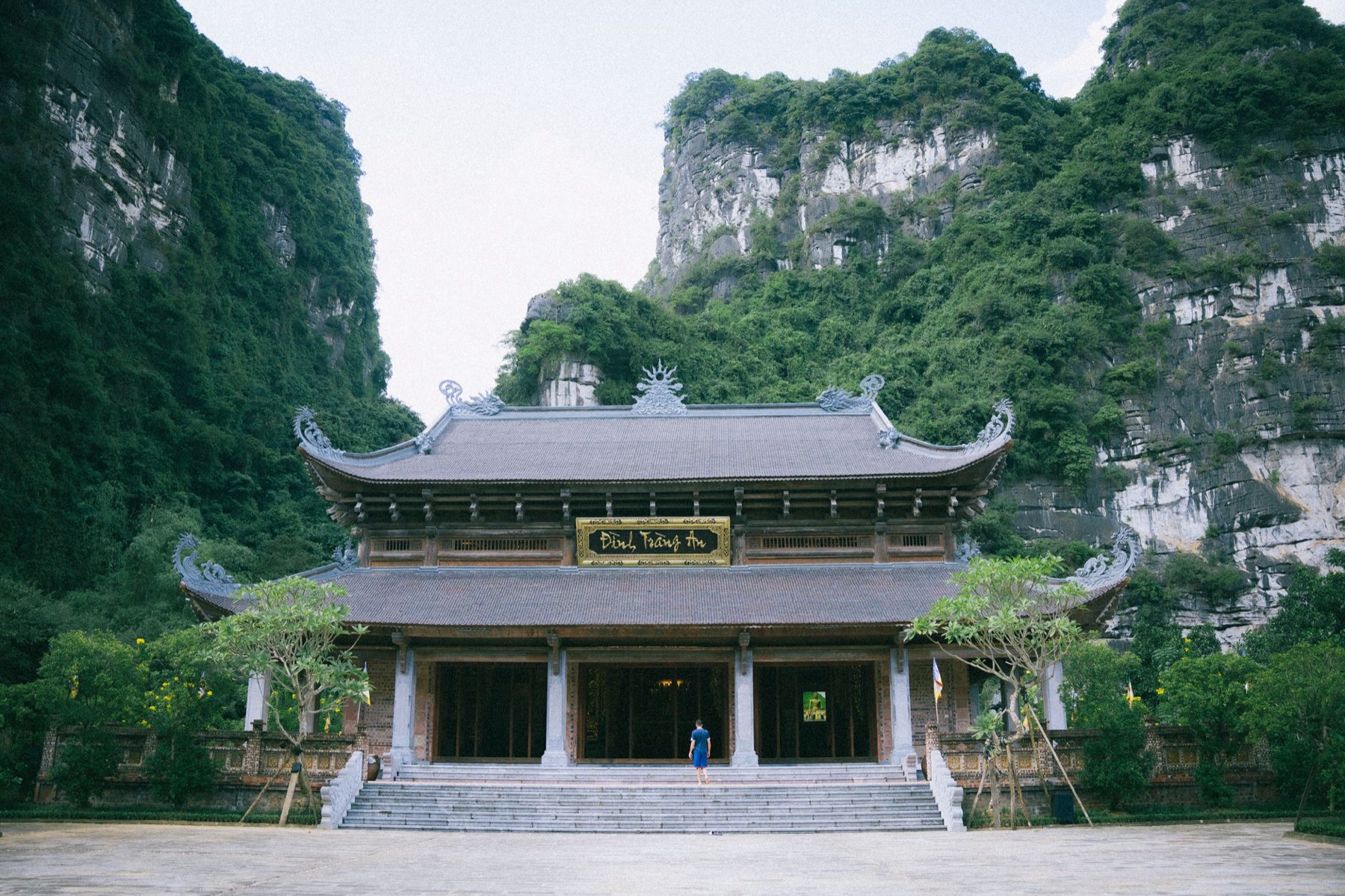
Trang An is a UNESCO-protected scenic area (designated 2014) with a longer, quieter boat loop than Tam Coc. Three to four hours of poling through karst valleys, past fewer crowds and more wildlife (herons, occasionally monkeys). Boats are sturdier and less crowded than Tam Coc's.
| Factor | Tam Coc | Trang An |
|---|---|---|
| Boat type | Wooden, cramped | Larger, wood or fiberglass |
| Duration | 2–3 hours | 3–4 hours |
| Crowds | High (peak season) | Moderate |
| Cave count | 3 short tunnels | 13+ intermittent passages |
| Estimated cost | 300–400k VND (~USD 14–19/person) | 450–550k VND (~USD 21–26/person) |
| Landscape | Rice fields, karst walls | Valley forest, more wildlife |
| Best for | Quick visit, photography | Nature immersion, solitude |
Real recommendation: If you have only one day, Tam Coc is more efficient. If you're spending a full day trip to Ninh Binh, combine Tam Coc (early morning) with Mua Mountain or Bai Dinh (afternoon). If you're doing two full days in the region, dedicate one to Trang An.
What's the Best Way to Day-Trip from Hanoi?
Most visitors rent a motorbike scooter or join a group tour. Hanoi city center to Ninh Binh is 100 km; by road, allow two to two-and-a-half hours. Solo scooter: You'll need an international driving permit (IDP) and Vietnamese helmet law compliance. Cost of renting a manual scooter runs around 150,000–200,000 VND (USD ~7–10) per day. Group tours cost 500,000–800,000 VND (USD ~24–38) and include hotel pickups, boat fees, and a guide. Organized tours skip logistics stress but lock you into group timing—boats launch at fixed hours, and lunch isn't always to taste.
Scooter or tour trade-off: Scooter rental = freedom and cost savings, but you navigate Vietnamese traffic on unfamiliar roads (drink-and-ride culture exists; road discipline is low). Tours = safety net and social time, but less flexible. If you're staying more than one night in Ninh Binh, rent a scooter. For a single-day dash from Hanoi, a tour removes decision-making and gets you back by evening.
Getting an eSIM before you travel ensures you can use GPS and call drivers. Check Vietnam eSIM options so you're not reliant on hotel wifi.
---
🗺️ Plan your route: Vietnam itinerary
What to Check Before You Book Your Ninh Binh Trip
- Season: October–November and March–April offer mild weather, clear skies, and optimal water levels. Avoid June–August (heat, low water, flooding risk).
- Booking boat tours: Reserve at hotels or through local tourism offices day-of for better rates than online platforms. Cash (VND) is preferred; bring a mix of notes.
- Fitness: Mua Mountain requires genuine climbing fitness; don't underestimate the return journey. Bai Dinh's staircase is uneven stone; wear supportive shoes.
- Transportation: If renting a scooter, check helmet condition and insurance coverage. Highway 1 traffic is heavy; stay right, use horn, and respect local speed norms (40–60 km/h in towns).
- Guides: English-speaking local guides add real value (around 300,000 VND USD ~14 for a half-day). They know quiet entry times and can negotiate boat fees.
---
📸 Book an ao dai photoshoot in Hanoi or Saigon (Cáo Studio)
If you're planning a longer Vietnam journey, start with our Hanoi guide and Ho Chi Minh City overview to place Ninh Binh in context. Heading northeast afterward? Ha Long Bay and Sapa are natural next stops. Heading south, Hoi An offers similar karst coastal beauty with stronger heritage architecture.
---
🎟️ Compare tours & tickets for this place
FAQ
Is Ninh Binh better than Ha Long Bay?
Ninh Binh offers more intimate, less-crowded scenery and avoids seasickness risk. Ha Long Bay is grander in scale and offers overnight cruises. For a Hanoi day trip, Ninh Binh wins. For multi-day exploration, Ha Long Bay justifies the cost and travel time.
Can I visit Ninh Binh as a day trip from Hanoi?
Yes. Depart 05:30–06:00, do boat tour and mountain climb, return by 19:00–20:00. It's exhausting but doable. Overnight stays (one night) in Ninh Binh town let you see two sites properly and enjoy local food.
What's the cheapest way to get around Ninh Binh?
Rent a scooter (around 150,000–200,000 VND per day) or hire a local guide with motorbike transport (300,000–500,000 VND). Public minibuses exist but run infrequently. Grab and Xaxi (local taxi apps) operate in town but don't venture into cave areas.
Which site should I skip if I'm short on time?
If you have only four to five hours on-site, skip Bai Dinh Pagoda and do Tam Coc + Mua Mountain instead. Bai Dinh is impressive but takes a full morning or afternoon. Mua Mountain offers quicker impact (90 minutes total, including entrance).
When is the worst time to visit Ninh Binh?
June–August (monsoon, heat above 35°C, water levels low, humidity oppressive). Mid-week is quieter than weekends. Avoid Lunar New Year (late January–early February) when prices spike 30–50% and sites overflow.
FAQ
Is Ninh Binh better than Ha Long Bay?
Ninh Binh offers more intimate, less-crowded scenery and avoids seasickness risk. Ha Long Bay is grander in scale and offers overnight cruises. For a Hanoi day trip, Ninh Binh wins. For multi-day exploration, Ha Long Bay justifies the cost and travel time.
Can I visit Ninh Binh as a day trip from Hanoi?
Yes. Depart 05:30–06:00, do boat tour and mountain climb, return by 19:00–20:00. It's exhausting but doable. Overnight stays (one night) in Ninh Binh town let you see two sites properly and enjoy local food.
What's the cheapest way to get around Ninh Binh?
Rent a scooter (around 150,000–200,000 VND per day) or hire a local guide with motorbike transport (300,000–500,000 VND). Public minibuses exist but run infrequently. Grab and Xaxi (local taxi apps) operate in town but don't venture into cave areas.
Which site should I skip if I'm short on time?
If you have only four to five hours on-site, skip Bai Dinh Pagoda and do Tam Coc + Mua Mountain instead. Bai Dinh is impressive but takes a full morning or afternoon. Mua Mountain offers quicker impact (90 minutes total, including entrance).
When is the worst time to visit Ninh Binh?
June–August (monsoon, heat above 35°C, water levels low, humidity oppressive). Mid-week is quieter than weekends. Avoid Lunar New Year (late January–early February) when prices spike 30–50% and sites overflow.