Ho Chi Minh City · Food
Vietnamese Food Ho Chi Minh City: Types, Prices & Where to Order
By Wander in Vietnam editorial team · Hanoi, Vietnam
Vietnamese food in Ho Chi Minh City spans pho, bánh mì, cơm tấm, and regional specialities. Wander in Vietnam recommends starting with iconic street dishes (around $1–3 USD), then exploring neighbourhood restaurants (around $5–10 USD) in Districts 1, 3, and 10 before committing to upscale venues.
What's the cheapest authentic Vietnamese meal in Ho Chi Minh City?
Street pho, bánh mì, and cơm tấm cost around $1–2 USD per bowl or sandwich. Hunt for unmarked stalls in Bến Thành Market or along Nguyễn Huệ Walking Street early morning. Verify the stall is busy and cooking fresh; quiet spots often mean poor turnover and older broth.
🗺️ Plan your route: Vietnam itinerary
How do you pick between pho, bánh mì, and cơm tấm?
| Dish | Best for | Typical cost | Why choose it |
|---|---|---|---|
| Phở | Full breakfast/lunch; beef or chicken broth | ~$1.50 USD | Warming, complete, easy on digestion |
| Bánh mì | Lunch walk-around; mixed protein & pickles | ~$1.50 USD | Portable, flavour contrast, quick |
| Cơm tấm | Lunch when hungry; broken rice + grilled meat | ~$2–3 USD | Hearty, cheaper rice base, filling |
| Bún chả | Dinner (northern style); grilled pork + noodles | ~$2.50 USD | Hot broth, aromatic, regional authenticity |
Pick pho if you want warmth and simplicity. Choose bánh mì for flavour and portability. Go cơm tấm when price and hunger align. Bún chả suits diners who like grilled char and dipping sauce interplay.
Which neighbourhoods have the best street food without tourist markup?
District 3 (Thảo Điền ward near Bến Thanh's quieter perimeter): Pho stalls line small alleys. Hunt for numbered addresses rather than tourist maps. Costs stay around $1–1.50 USD per bowl.
District 10 (Phú Nhuận area, Nguyễn Gia Thiều Street): Fewer expats; locals queue at lunch 11 a.m.–1 p.m. Bánh mì and cơm tấm vendors often run out by 2 p.m., confirming freshness.
Chợ Bến Thành (Central Market, District 1): Entry-level stall prices; beware pickpockets and inflated "tourist menu" boards. Eat at the stall's counter, not at the tables by the main exit.
Nguyễn Hué Walking Street (District 1, weekends): Evening food carts appear after 5 p.m. Prices double at night; go early morning for street price parity.
📸 Book an ao dai photoshoot in Hanoi or Saigon (Cáo Studio)
What meals work best when ordering delivery or sitting down?
Delivery (via Grab Food, Baemin, or restaurant apps):
- Pho and bún chả travel poorly; arrive soggy in 20–30 minutes.
- Bánh mì must be ordered fresh; avoid pre-made stacks.
- Cơm tấm and grilled dishes hold texture well.
- Typical cost: around $4–8 USD including app markup and delivery fee.
Sit-down restaurants (District 1, 3, or 10 casual spots):
- Portions double when eating on-site; budget around $3–5 USD per person.
- Broth stays hot and noodles firm.
- Pickles and sauces are served fresh beside the bowl.
- Iced tea or lemonade included or around $0.50 USD extra.
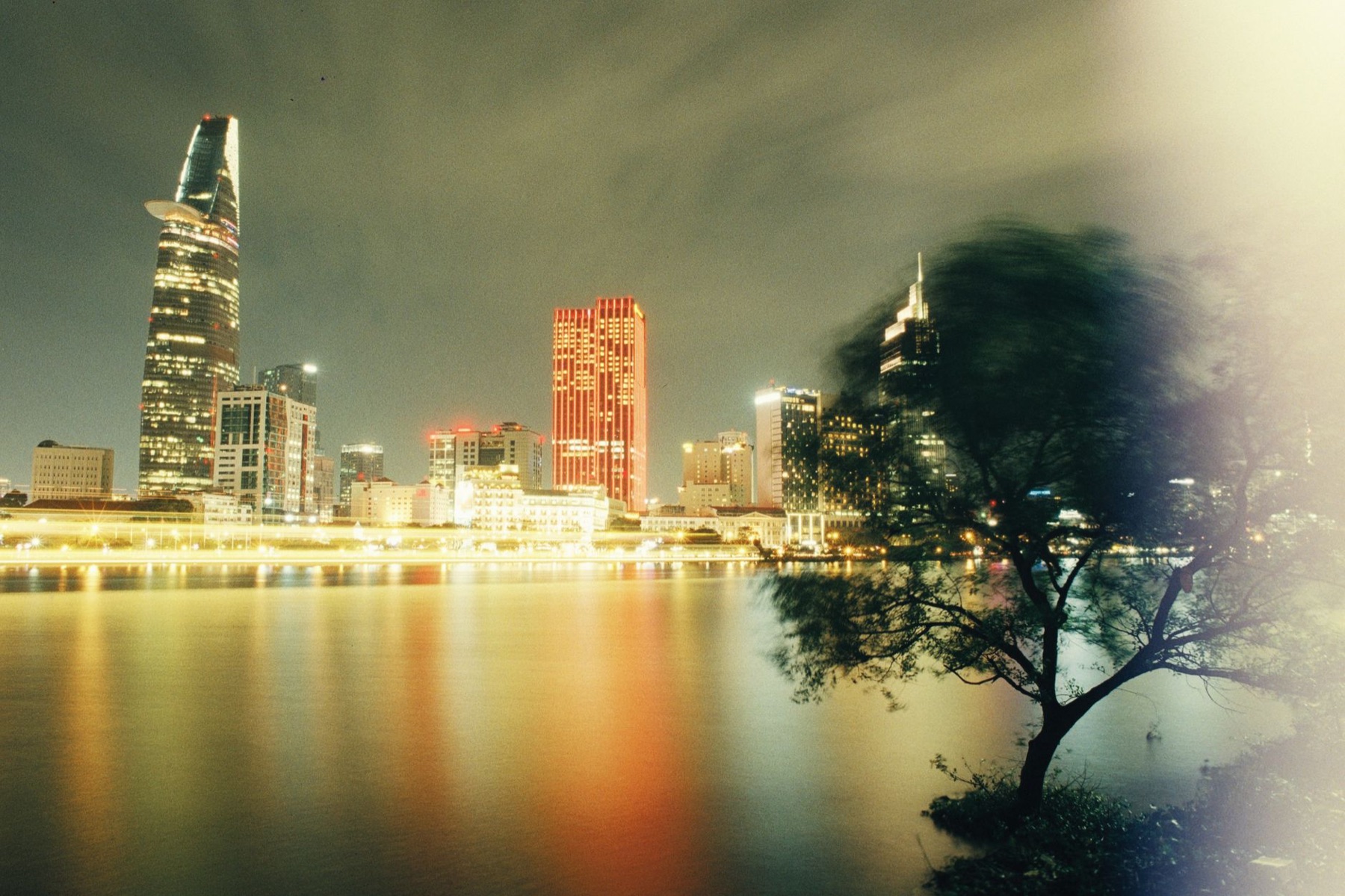
Fine-dining (Saigon Centre, Bitexco Financial Tower areas):
- Set menus around $12–20 USD; à la carte mains $8–15 USD.
- Expect plated presentation and wine lists.
- Service charge often 5–10% added to bill; tipping not mandatory but 5–10% appreciated.
Most travellers order one street meal for experience, then eat sit-down for value and comfort on subsequent days.
What should you actually check before ordering Vietnamese food?
Before you buy:
- Stall turnover: Watch for restocking. High volume = fresh ingredients.
- Broth colour: Pho and bún chả broth should be clear or golden, never cloudy.
- Meat appearance: Grilled proteins should glisten; dull surfaces suggest older stock.
- Vendor hands: Observe hygiene (clean utensils, gloved handling or frequent hand-washing).
- Price board visibility: If the menu isn't posted or numbers don't match verbal quotes, walk.
- Timing: Lunch 11 a.m.–1 p.m. and dinner 5–7 p.m. guarantee fresh batches.
- Change verification: Count change in hand; coin counterfeits are rare but bill mix-ups happen.
Common scams to avoid:
- Unmarked restaurant bills at tourist zones (always ask for written menu with prices).
- "Fresh import" markup at Bến Thành Market (street price is the real price).
- Tap water served as complimentary; ask for bottled or "nước đóng chai" to confirm.
- Tourist-menu bánh mì with inflated fillings and double the price (compare at three stalls first).
How to order confidently:
- Point at the dish other diners are eating if language is a barrier.
- Say "không cay" (no spice) or "cay it" (mild) before the server adds chilli.
- Confirm total price in VND (around 25,000–50,000 VND for street food, ~150,000–250,000 for restaurants) before eating.
- Sit at counter or high stool seating; table service costs more.
🎟️ Compare tours & tickets for this place
How does Ho Chi Minh City food compare to regional styles across Vietnam?
Ho Chi Minh City draws influence from north (Hanoi pho purists), central regions (Huế spice complexity), and local southern creativity (sweeter broths, coconut milk additions). A single street often has northern-style (lighter, herbier) and southern-style (richer, sweeter) pho stalls side-by-side.
Northern influence (Hanoi-trained vendors):
- Thinner noodles, clearer broth, minimal garnish.
- Phở tái (rare beef) is paramount; well-done versions dismissed as inferior.
- Around $1–1.50 USD.
Central influence (Huế, Đà Nẵng heritage):
- Bún chả and bánh khoái (crispy turmeric pancakes) with pungent shrimp paste.
- Darker broths; heavier spice and herb use.
- Around $2–3 USD.
Southern interpretation (Saigon-born):
- Cơm tấm, hu tiếu (clear tapioca noodle soup), and bánh hỏi (thin rice noodle rolls).
- Sweeter nuances; coconut cream in some broths.
- Around $1.50–2.50 USD.
Touring food geographically (link to Vietnam itinerary planner):
- Start Ho Chi Minh City (southern purity).
- Move to Hoi An (central coastal) for cao lầu and bánh hoài.
- End Hanoi (northern minimalism) for pho authenticity.
This progression reveals how regionalisms build rather than mix carelessly.
---
What to Check Before You Order
| Question | Red flag | Safe choice |
|---|---|---|
| Is the price written down? | Verbal quote only | Menu board or written bill |
| Is the stall crowded at lunch? | Empty seats at 12 p.m. | Queue forming by 11:30 a.m. |
| Does the vendor touch ready-to-eat food with bare hands? | Yes, routinely | Gloved or spoon-handled plating |
| Does the broth smell sour or stale? | Yes, off-putting | Aromatic, herbaceous steam |
| Are the chopsticks/spoons wrapped? | Loose pile, unwashed | Sealed or visibly hot-water rinsed |
---
We've tested delivery apps (Grab Food and Baemin add 20–40% markup but handle complaints better than walk-up vendors) and neighbourhood joints across Districts 1, 3, and 10 many times. Sitdown restaurants near Bitexco (District 1) are safer for first-timers unsure of language; street stalls reward confidence and observation.
Most visitors overestimate costs. Budget around $15–20 USD per day for three proper meals (street breakfast, sit-down lunch, evening stall dinner) without feeling deprived. Premium restaurants double or triple this; street-only diets cut it to $6–8 USD.
📸 Book an ao dai photoshoot in Hanoi or Saigon (Cáo Studio)
For deeper exploration of the city beyond food, see our Ho Chi Minh City guide. Also discover culinary stops in Ha Long Bay, Ninh Binh, and Sapa on your full trip. Stay connected with a Vietnam eSIM to use translation apps and delivery platforms seamlessly; check visa requirements before departure.
FAQ
Is street food in Ho Chi Minh City safe to eat?
Yes, if stalls show high turnover and clean utensils. Avoid wet, discoloured meat and cloudy broth. Eat where locals queue at lunch hours. Street food causes fewer issues than unrefrigerated hotel buffets.
Why does pho cost $1 at a street stall and $6 at a tourist restaurant?
Tourist venues add rent, table service, and imported beef markup. Street vendors rent small carts (lower overhead) and sell volume at slim margins. Quality is often identical; ambiance and convenience justify the gap.
Can you get food allergies accommodated in Ho Chi Minh City?
Partially. Learn allergy names in Vietnamese ("tôi dị ứng [ingredient]"). Street vendors cannot isolate allergens; sit-down restaurants (especially mid-range, Districts 1–3) can exclude peanuts, shellfish, or seafood if asked clearly. Always verify twice.
What's the best time of day to eat Vietnamese food in Ho Chi Minh City?
Lunch 11 a.m.–1 p.m. (peak freshness, crowds = turnover proof). Dinner 5–7 p.m. (secondary fresh batches). Avoid 2–4 p.m. (broth reheated, stalls closed for rest). Breakfast 6–9 a.m. works for pho/bánh mì only.
Do you need cash for Vietnamese food, or can you card-pay?
Street stalls and small sit-down places require cash (VND). Larger restaurants (mid-range and above) accept cards and Momo/ZaloPay apps. Carry around 200,000–500,000 VND ($8–20 USD equivalent) daily for street eating. ATMs common in Districts 1, 3, 10.
Is tipping expected at Vietnamese restaurants in Ho Chi Minh City?
No. Tipping is not customary for street food or casual eateries. Fine-dining (5-star hotels, Western chains) may include 5–10% service charge on the bill; additional tipping is optional and uncommon. Rounding up a few thousand VND is kind but never required.
How do delivery apps handle orders in Ho Chi Minh City?
Grab Food and Baemin operate citywide. Set language to English; rider photos and live tracking appear. Delivery takes 20–40 minutes. Costs add around 15,000–30,000 VND ($0.60–1.20 USD) plus 5–10% commission to menu price. Cash or app pay both work.
FAQ
Is street food in Ho Chi Minh City safe to eat?
Yes, if stalls show high turnover and clean utensils. Avoid wet, discoloured meat and cloudy broth. Eat where locals queue at lunch hours. Street food causes fewer issues than unrefrigerated hotel buffets.
Why does pho cost $1 at a street stall and $6 at a tourist restaurant?
Tourist venues add rent, table service, and imported beef markup. Street vendors rent small carts (lower overhead) and sell volume at slim margins. Quality is often identical; ambiance and convenience justify the gap.
Can you get food allergies accommodated in Ho Chi Minh City?
Partially. Learn allergy names in Vietnamese ("tôi dị ứng [ingredient]"). Street vendors cannot isolate allergens; sit-down restaurants (especially mid-range, Districts 1–3) can exclude peanuts, shellfish, or seafood if asked clearly. Always verify twice.
What's the best time of day to eat Vietnamese food in Ho Chi Minh City?
Lunch 11 a.m.–1 p.m. (peak freshness, crowds = turnover proof). Dinner 5–7 p.m. (secondary fresh batches). Avoid 2–4 p.m. (broth reheated, stalls closed for rest). Breakfast 6–9 a.m. works for pho/bánh mì only.
Do you need cash for Vietnamese food, or can you card-pay?
Street stalls and small sit-down places require cash (VND). Larger restaurants (mid-range and above) accept cards and Momo/ZaloPay apps. Carry around 200,000–500,000 VND ($8–20 USD equivalent) daily for street eating. ATMs common in Districts 1, 3, 10.
Is tipping expected at Vietnamese restaurants in Ho Chi Minh City?
No. Tipping is not customary for street food or casual eateries. Fine-dining (5-star hotels, Western chains) may include 5–10% service charge on the bill; additional tipping is optional and uncommon. Rounding up a few thousand VND is kind but never required.
How do delivery apps handle orders in Ho Chi Minh City?
Grab Food and Baemin operate citywide. Set language to English; rider photos and live tracking appear. Delivery takes 20–40 minutes. Costs add around 15,000–30,000 VND ($0.60–1.20 USD) plus 5–10% commission to menu price. Cash or app pay both work.
More: Ho Chi Minh City travel guide · What to eat in Ho Chi Minh City