Hanoi · Itinerary
Visit Hanoi: What to See, Do & Buy (2026 Guide)
By Wander in Vietnam editorial team · Hanoi, Vietnam
Hanoi doesn't rush, and neither should you. The city unfolds in layers: cramped colonial storefronts in the Old Quarter, French villas in Ba Dinh, lake-edge cafés in Tay Ho, and limestone cliffs an hour away. We've moved through these streets, booked the tours that stick, and spotted the traps that catch first-timers. This guide walks you through choosing your route, what to budget, and which keepsakes matter.
What should you see on your first three days in Hanoi?
Day one anchors in the Old Quarter (Hoàn Kiếm district, around Hàng Bạc and Hàng Ngang streets). Wake early, eat pho at a street stall (around 30,000–50,000 VND / $1.20–$2 USD) before the crowds, then walk: Silver Street, Silk Street, Bamboo Street—each specializes in one trade, a holdover from 15th-century guild zones. The names stick because the goods do: hammered tin, hand-embroidered fabrics, bamboo furniture. By noon, heat forces a break; sit in a ground-floor café, order cà phê trứng (egg coffee, around 40,000–60,000 VND / $1.60–$2.40 USD). Afternoon: Hoan Kiem Lake circuit (free), then Thang Long Water Puppet Theatre (tickets around 100,000–150,000 VND / $4–$6 USD; shows 7:15 & 8:30 PM; book ahead). Evening: dinner in Ta Hien Street (tourist-heavy but lively; mains 60,000–120,000 VND / $2.40–$4.80 USD).
Day two: Temple of Literature (Văn Miếu, Dong Da district; entry around 30,000 VND / $1.20 USD; 8 AM–5 PM, closes 11:30 AM–1 PM for lunch) to understand Vietnam's scholastic roots. Then a motorbike taxi to Tay Ho ward (northwest lakeside), rent a bicycle (around 50,000–80,000 VND / $2–$3.20 USD per day), and loop the shoreline. Stop at one of the small cafés built into trees; order a drink (30,000–50,000 VND / $1.20–$2 USD) and watch rowers. Sunset here beats the Old Quarter. Dinner: find a family-run pho joint in Tay Ho (easy to spot: plastic stools, no English menu, fragrant broth at 6 AM–11 AM open hours). Cost: 35,000–50,000 VND / $1.40–$2 USD.
Day three: choose a day trip. Ha Long Bay (3–4 hour drive; boat tours from 400,000–800,000 VND / $16–$32 USD, overnight cruises much pricier) or Ninh Binh (2 hour train or minibus; cave & river tours 300,000–500,000 VND / $12–$20 USD). Or stay local: Perfume Pagoda (Huong Pagoda, Hanoi outskirts; half-day boat & hike, around 250,000–400,000 VND / $10–$16 USD) or Duong Lam ancient village (motorbike day trip, 1 hour west; homestays & village walks free or 50,000–100,000 VND / $2–$4 USD entry). Book tours through your hotel (often a 10–15% markup) or via walking-tour operators in the Old Quarter (comparison-shop; quality varies widely). Avoid: super-cheap tours bundling 5+ sites; they're exhausting and often skip time at each place.
🗺️ Plan your route: Vietnam itinerary | 🎟️ Compare tours & tickets for this place
How do you move around Hanoi without getting lost or scammed?
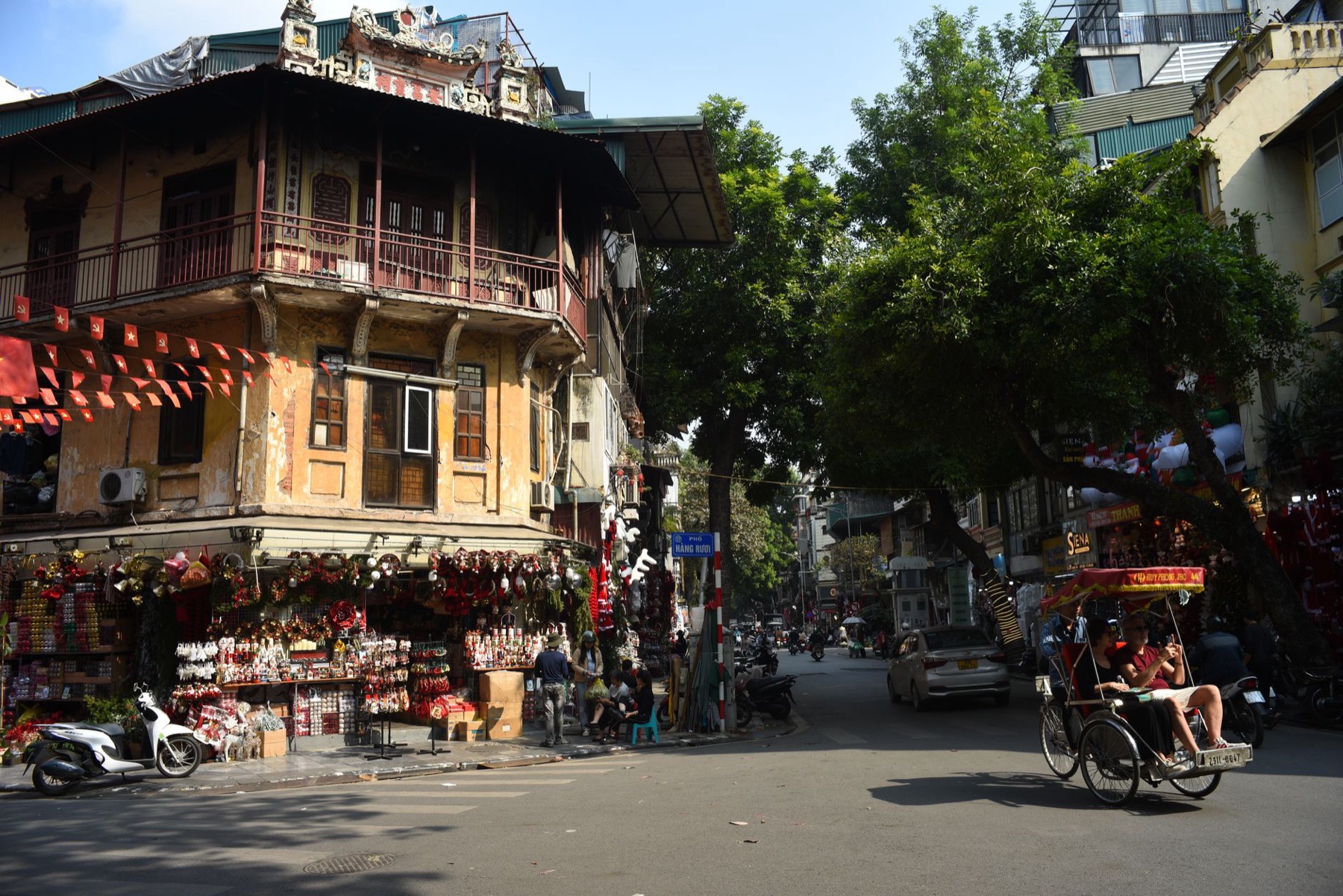
Grab (Southeast Asia's ride-app, like Uber) works reliably in central Hanoi; fares around 20,000–80,000 VND / $0.80–$3.20 USD for short trips. Meter taxis (Mai Linh or Hanoi Taxi, phone dispatch or flagged) also honest if you insist on the meter. Do not take unmarked taxis; drivers often overcharge foreigners 2–3x. Cyclo (three-wheel pedal-cabs) are touristy but fun for 10–15 minute sightseeing loops (agree on price before boarding: 100,000–200,000 VND / $4–$8 USD). Motorbike rental (50cc automatic scooters, around 80,000–150,000 VND / $3.20–$6 USD per day) is legal if you hold an International Driving Permit; Hanoi traffic is chaotic but slower than Ho Chi Minh City, so it's manageable if you stay calm. Helmet mandatory; police check licenses. Never leave a rental bike unattended; park in guarded lots (around 10,000–20,000 VND / $0.40–$0.80 USD per day). Walking the Old Quarter is the best way to stumble on small shops and pho sellers; bring a lightweight scarf to cover shoulders in temples.
What are the real food costs and hidden dining gems?
| Dish/Venue | Cost (VND) | Cost (USD) | Why it works | Location type |
|---|---|---|---|---|
| Pho (beef or chicken) at street stall | 30,000–50,000 | $1.20–$2 | Hot, fresh, local staple | Old Quarter, early morning |
| Bun cha (grilled pork with noodles) | 40,000–70,000 | $1.60–$2.80 | Lunch dish, filling, tangy | Hanoi-wide, 11 AM–2 PM |
| Egg coffee | 40,000–60,000 | $1.60–$2.40 | Iconic, rich, Instagram moment | Cafés, Old Quarter, late morning |
| Com tam (broken rice + grilled meat) | 35,000–60,000 | $1.40–$2.40 | Budget lunch, comfort food | District 1 & 3 side streets |
| Seafood hot pot (2 people) | 200,000–400,000 | $8–$16 | Winter favorite, shared, lively | Tay Ho & Ba Dinh dining zones |
| Street spring rolls (bánh cuốn) | 20,000–35,000 | $0.80–$1.40 | Breakfast/snack, delicate | Early-morning stalls only |
| Pho at mid-range restaurant | 80,000–150,000 | $3.20–$6 | Tourist-friendly, English menu | Ta Hien, Hang Manh |
Street stalls close by 11 AM or 2 PM; don't hunt lunch pho after 2 PM. Pho Bat Dan (a street, not one restaurant) has 5+ hole-in-the-wall pho places; arrive by 10 AM. Avoid restaurants on Ta Hien Street if you want to eat alone without upselling; instead, venture one block west into Hang Manh or Hang Dao for family-run places. Seafood (crab, shrimp) is cheap and fresh at wet markets (Dong Xuan, Hang Be) but risky if you don't speak Vietnamese; buy pre-cooked or eat at a market-edge restaurant. Alcohol: beer (Hanoi, Saigon, Tiger) around 15,000–30,000 VND / $0.60–$1.20 USD at 7-Eleven; 40,000–80,000 VND / $1.60–$3.20 USD at a bar. Water: always bottled (20,000 VND / $0.80 USD for 1.5L).
📸 Book an ao dai photoshoot in Hanoi or Saigon (Cáo Studio)
Which souvenirs actually reflect Hanoi and work as gifts?
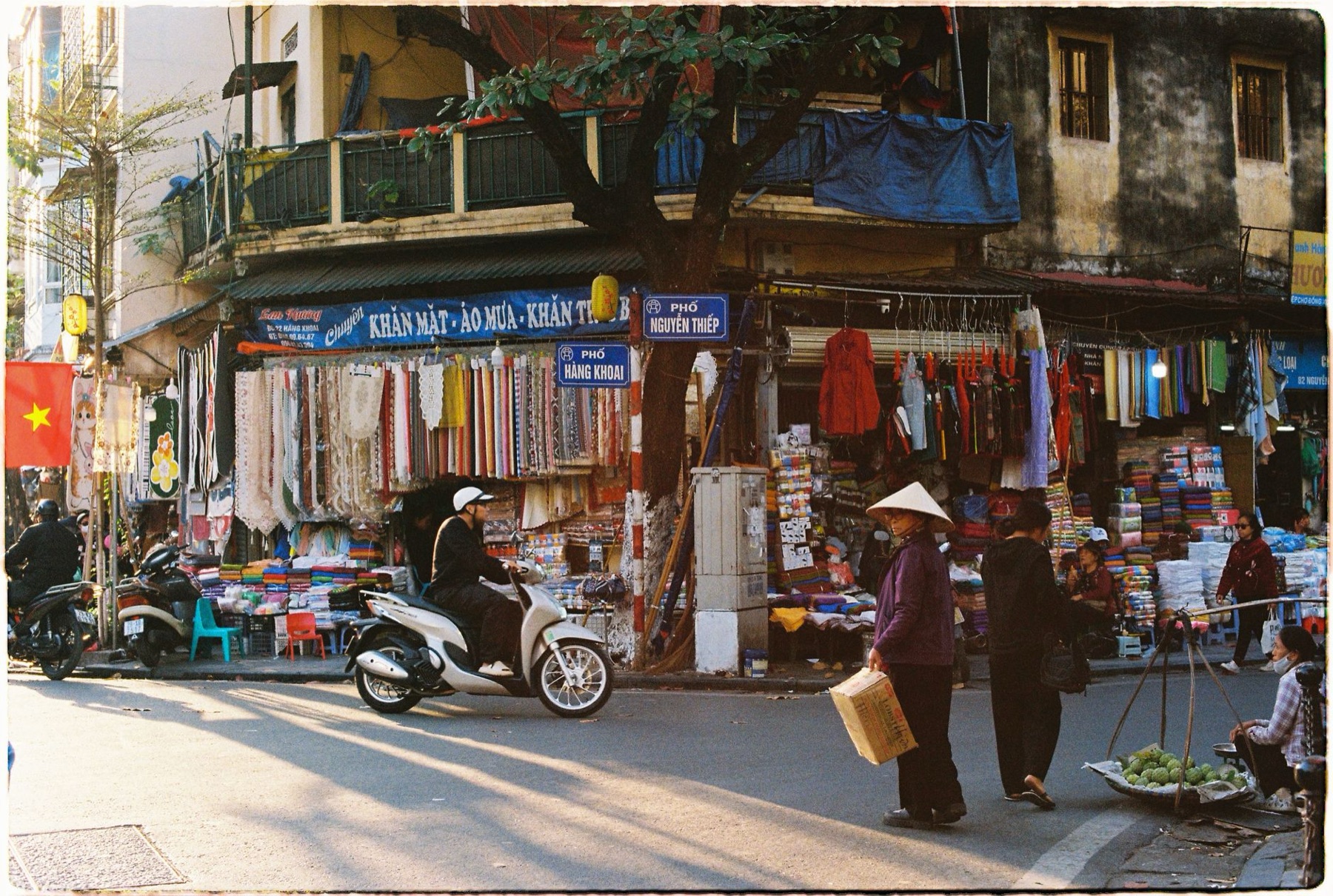
Thoughtful gifts come from observing Hanoi's crafts. Lacquerware (coasters, small boxes, decorative panels) from artisans in the Old Quarter or craft markets (500,000–2,000,000+ VND / $20–$80 USD depending on size; smaller coasters 200,000–400,000 VND / $8–$16 USD) take weeks to make; a hand-painted lacquer tray is more memorable than mass-market silk scarves. Silk scarves (authentic, 100% mulberry, from real weavers, not tourist stalls) run 300,000–800,000 VND / $12–$32 USD; fakes cost 50,000–100,000 VND / $2–$4 USD but pill after three washes. Water puppet figurines (carved wood, 200,000–600,000 VND / $8–$24 USD) come from the craft studios near the Theatre; originals are heavier, painted with natural dyes. Conical hats (nón lá, woven palm leaf, 150,000–400,000 VND / $6–$16 USD) last years if stored dry; tourist versions fall apart. Egg coffee in a can (novelty coffee blend, 150,000–300,000 VND / $6–$12 USD) works for people who loved the café experience. Coffee beans from Dalat (arabica or robusta, 250,000–500,000 VND / $10–$20 USD per 500g bag) beat the Hanoi tourist-shop blends.
What to skip: silk paintings from street vendors (printed, not hand-painted); bamboo placemats (bulky, fragile to ship); generic lacquer boxes without artist signatures. Before buying, ask "handmade by whom?" and "made when?" Vague answers mean factory-mass production.
For custom keepsakes, consider a personalized gift collection—engraved or star-map prints tied to your trip dates work well. Check our collections for options that ship worldwide.
What are the common scams and how do you avoid them?
Unmarked taxis: Always use Grab or a meter taxi (Mai Linh, Hanoi Taxi). Unmarked drivers quote 500,000 VND / $20 USD for a 10-minute ride. Solution: never negotiate; use the app.
Fake tour booking sites: Scammers clone legitimate Hanoi tour pages and offer "cheap" Ha Long cruises. Book directly through your hotel concierge or Viator/ToursByLocals. Check reviews carefully.
Restaurant overcharge (bill padding): Seafood restaurants add items you didn't order (extra dishes, premium sauces). Solution: agree on prices before eating; point at items on a menu.
Gem & silk "workshops": Touts lure you into a gem polishing shop with free tea, then push overpriced items. Skip these entirely. Real silk sellers are in the Old Quarter fabric shops (Hang Gai Street) and won't pressure you.
Motorbike rental deposits: Some agencies claim your scooter was "damaged" and withhold your passport until you pay 2–3 million VND / $80–$120 USD. Rent only from reputable shops (ask your hotel); take a video of the bike's condition before leaving; leave a photocopy of your passport, not the original.
Begging children: Sympathy scams in tourist zones; money often goes to traffickers. Donate to legitimate NGOs instead (e.g., streetkids.org.vn).
Unsolicited tours: If a friendly person on the street offers "free" tours, they'll end at a shop taking 20–30% commission. Walk away politely.
How do you time your trip and what else is nearby?
April–May and September–November are ideal: warm, not oppressively humid, fewer monsoons. December–February is cool and dry but busy (Lunar New Year in Feb closes shops for a week). June–August is hot, humid, and rainy but cheap. Avoid Tet (Lunar New Year) unless you're staying with locals; most restaurants close 2–5 days.
Extend your Hanoi loop: Ha Long Bay (overnight cruise or day trip, 3–5 hours away), Sapa (rice terraces, ethnic minorities, 5 hours by minibus or train), Ninh Binh (Tam Coc caves, ancient temples, 2 hours south), Hoi An (ancient town, tailor capital, 12 hours by train or flight). Get a Vietnam e-visa (single-entry, 90 days, 25 USD) or mobile eSIM (data only, skip SIM-card hassles) before you go. If you're a photography buff, book an ao dai photoshoot in Hanoi with a professional team; they handle styling and makeup.
Before you finalize gifts or tours, we recommend using our Hanoi guide and Vietnam itinerary planner to map your exact route and budget. A day-by-day breakdown saves money and regret.
🎟️ Compare tours & tickets for this place
FAQ
Do I need a visa for Hanoi?
If you're from the US, UK, Australia, or most European countries, you need a Vietnamese visa. Apply online for an e-visa (25 USD, 90 days, single entry) via the official government portal or through your hotel. It arrives via email within 24 hours. Visa exemption applies only to a few nationalities. Check Vietnam e-visa for your country.
How much should I budget per day in Hanoi?
Budget 50–80 USD per day if you stay in a mid-range hotel (400,000–800,000 VND / $16–$32 USD), eat street food (30,000–70,000 VND / $1.20–$2.80 USD per meal), and use Grab taxis. Add 100–300 USD for a day trip (Ha Long cruise, Ninh Binh) or 20–50 USD per person for walking tours. Luxury travelers should budget 150–250+ USD daily.
What's the best souvenir to bring home from Hanoi?
Lacquerware (coasters, boxes, decorative panels), authentic silk scarves from Hang Gai Street, hand-carved water puppet figurines, or specialty coffee beans from Dalat region. Avoid mass-produced silk paintings, cheap bamboo items, and anything labeled "fake" by vendors. Buy from artisan shops in the Old Quarter or craft markets, not tourist stalls.
Can I travel alone in Hanoi safely?
Yes. Use Grab for transport, stay in Old Quarter or Tay Ho hostels with social atmospheres, join group walking tours, and avoid walking alone at night in empty alleys. Petty theft happens; keep valuables in a hotel safe. Hanoi is safer than many Southeast Asian cities for solo travelers.
Is motorbike rental safe for tourists?
Manageable if you're experienced. Hanoi traffic is chaotic but slower than Ho Chi Minh City. Wear a helmet, stay in left lanes, honk before turns, avoid rush hours (7–9 AM, 5–7 PM), and rent from your hotel or a reputable shop. Leave a photocopy of your passport, not the original. If unsure, use Grab or hire a driver instead (around 100,000–150,000 VND / $4–$6 USD per hour for a half-day).
When should I visit Hanoi to avoid crowds and bad weather?
Visit October–November (cool, dry, blue skies, 20–25°C / 68–77°F) or April–May (warm, green, 25–30°C / 77–86°F). Avoid June–August (hot, 30–35°C / 86–95°F, humid, rainy) and Tet/Lunar New Year (late January–February, shops closed, expensive, crowded). December–February is cool and pleasant but busier and pricier.
FAQ
Do I need a visa for Hanoi?
If you're from the US, UK, Australia, or most European countries, you need a Vietnamese visa. Apply online for an e-visa (25 USD, 90 days, single entry) via the official government portal or through your hotel. It arrives via email within 24 hours. Visa exemption applies only to a few nationalities. Check [Vietnam e-visa](/vietnam/visa) for your country.
How much should I budget per day in Hanoi?
Budget 50–80 USD per day if you stay in a mid-range hotel (400,000–800,000 VND / $16–$32 USD), eat street food (30,000–70,000 VND / $1.20–$2.80 USD per meal), and use Grab taxis. Add 100–300 USD for a day trip (Ha Long cruise, Ninh Binh) or 20–50 USD per person for walking tours. Luxury travelers should budget 150–250+ USD daily.
What's the best souvenir to bring home from Hanoi?
Lacquerware (coasters, boxes, decorative panels), authentic silk scarves from Hang Gai Street, hand-carved water puppet figurines, or specialty coffee beans from Dalat region. Avoid mass-produced silk paintings, cheap bamboo items, and anything labeled "fake" by vendors. Buy from artisan shops in the Old Quarter or craft markets, not tourist stalls.
Can I travel alone in Hanoi safely?
Yes. Use Grab for transport, stay in Old Quarter or Tay Ho hostels with social atmospheres, join group walking tours, and avoid walking alone at night in empty alleys. Petty theft happens; keep valuables in a hotel safe. Hanoi is safer than many Southeast Asian cities for solo travelers.
Is motorbike rental safe for tourists?
Manageable if you're experienced. Hanoi traffic is chaotic but slower than Ho Chi Minh City. Wear a helmet, stay in left lanes, honk before turns, avoid rush hours (7–9 AM, 5–7 PM), and rent from your hotel or a reputable shop. Leave a photocopy of your passport, not the original. If unsure, use Grab or hire a driver instead (around 100,000–150,000 VND / $4–$6 USD per hour for a half-day).
When should I visit Hanoi to avoid crowds and bad weather?
Visit October–November (cool, dry, blue skies, 20–25°C / 68–77°F) or April–May (warm, green, 25–30°C / 77–86°F). Avoid June–August (hot, 30–35°C / 86–95°F, humid, rainy) and Tet/Lunar New Year (late January–February, shops closed, expensive, crowded). December–February is cool and pleasant but busier and pricier.