Hanoi · Itinerary
What to Do in Hanoi for 3 Days: Honest Itinerary
By Wander in Vietnam editorial team · Hanoi, Vietnam
Three days in Hanoi is the sweet spot: long enough to shed jet lag and taste real neighborhood life, short enough that you won't exhaust yourself navigating motorbike traffic and humid summers. We've walked this city in every season, and we know what works in 72 hours—and what's a tourist trap you can safely skip.
Most travelers arrive tired and leave frustrated because they bounce between guidebook highlights without rhythm. This itinerary is built around neighborhoods, meal timing, and what you can actually accomplish without rushing or overpaying.
Day 1: Old Quarter immersion & night chaos
Start at Hoan Kiem Lake (Trang Tien–Hang Trong area), around 6:00 am on Day 1. Sunrise isn't magical here—the water is gray and crowded—but the ritual matters: locals do tai chi, joggers pass, and breakfast vendors set up stalls along the eastern bank. Walk the perimeter once (30 minutes). This anchors you geographically and tells you how central the Old Quarter spiral feels.
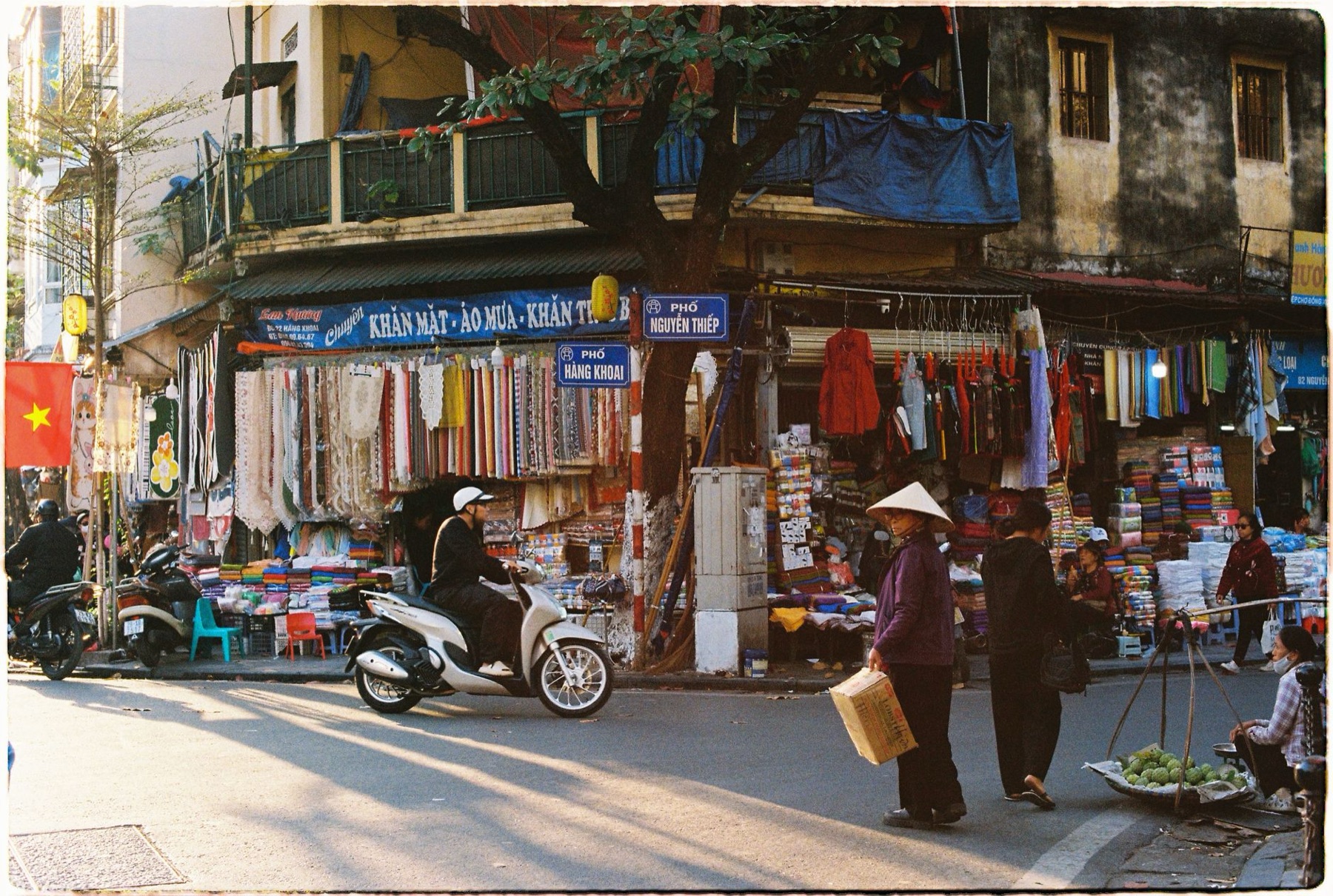
By 7:30 am, head into the Old Quarter proper (streets radiating from the lake: Hang Gai, Hang Dao, Ta Hien). These streets are organized by medieval guild: silverware on one block, silk on another, lacquer on a third. It's not random—it's functional history. Stop at a pho stall (roughly 30,000–50,000 VND / $1.20–$2 USD) or banh mi cart (20,000–30,000 VND / $0.80–$1.20 USD). Don't hunt for the "best" one; the first busy stall is always fine.
Spend late morning walking Hang Gai (silk shops, fabric, some tourist trinkets but real deals if you know what cotton costs), then Hang Dao (hardware, silk, and chaotic density). Avoid the tourist gauntlet on Ta Hien before noon—it's beer-soaked and overpriced even then. Return after 4 pm if you want the backpacker scene; skip it entirely if you prefer quiet.
Lunch: find a com tam stall (broken rice with grilled pork or shrimp, vegetables) around noon. Around 40,000–60,000 VND / $1.60–$2.40 USD. These are cheap, filling, and you'll see locals eating shoulder-to-shoulder.
Afternoon: Visit Dong Xuan Market (the Old Quarter's main covered market, Hang Ngang side, open daily 6 am–6 pm, chaotic and real). This isn't a souvenir market; it's where Hanoians buy clothes, kitchenware, and dried fish. Aim for 2:00–4:00 pm (midday heat keeps tourists away). Don't buy unless you plan to haggle seriously—prices are flexible, especially for textiles.
Late afternoon: walk to St. Joseph Cathedral (Nha Tho Street, open 6:00–8:00 pm daily, free entry). The exterior is Gothic-colonial, incongruous and charming. Interior is modest and usually quiet. Nearby cafés on Nha Tho are tourist-aware but livable (coffee 15,000–25,000 VND / $0.60–$1 USD).
Evening: dinner on Ta Hien Street or Luong Ngoc Quyen (both packed with travelers and locals eating and drinking at plastic tables). Order ca nuong (grilled fish, shared), nem ran (spring rolls), and bia hoi (fresh draught beer, dirt cheap: 5,000–8,000 VND / $0.20–$0.32 USD per glass). A full meal with beer: around 150,000–250,000 VND / $6–$10 USD per person. This street is touristy but the food is honest and the vibe is genuine chaos—experience it once, then decide if you return.
Day 2: Temples, water, and craft neighborhoods
Start at Tran Quoc Pagoda (Thanh Tran, west bank of Red River, open daily 8 am–5 pm, free entry, small donation welcome). This is Hanoi's oldest pagoda (6th century, though rebuilt many times), set on a peninsula surrounded by water. It's quieter than tourist-heavy temples and the views across the Red River are real. Arrive by 8:30 am.
Return to central Hanoi by 10:00 am. Take a cyclo (cycle rickshaw) or taxi to Temple of Literature (Quoc Tu Giam, Thuong Tin Street, open daily 8:00 am–5:00 pm, 30,000 VND / $1.20 USD entry). This is Vietnam's first university (1070), and the courtyard gardens, stone turtle stelae, and student quarters are serene. It's also crowded with school groups—visit early morning or after 3:30 pm.
Lunch nearby: Phan Boi Chau Street has small noodle shops and com tam stalls popular with office workers (40,000–70,000 VND / $1.60–$2.80 USD).
Early afternoon: explore Hang Bac Street (silver street, still active with jewelers and silversmiths). Walk it slowly—you'll see workshops where artisans make rings, bracelets, and chains. No pressure to buy, but the craft is real. Then browse Hang Ngang for lacquerware (tourist-facing, but quality is real; expect to pay 200,000–800,000 VND / $8–$32 USD for a small box).
Late afternoon: cycle or walk to Ho Tay (West Lake, Hanoi's largest freshwater body). The best viewing spot is around Tran Phu Road on the western shore—quieter than central lakeside, with lake-view cafés and noodle shops. Many Hanoians jog or cycle here at dusk. Stop at a small café (coffee or iced tea: 20,000–40,000 VND / $0.80–$1.60 USD) and watch the light change.
Optional: Quan Thanh Temple (Thanh Nien Street, west of Ho Tay, open 8 am–5 pm daily, free) is an 11th-century bronze-bell temple. The bell itself is impressive; the temple grounds are peaceful and far fewer tourists than Tran Quoc.
Evening: dinner in the Tay Ho District lakeside area (Tran Phu, Quang Ba, or Xuan Dieu roads). Restaurants here range from cheap street eats to mid-range sit-down spots. A filling dinner: 100,000–250,000 VND / $4–$10 USD per person. Walk the lakeside afterward—it's cooler and less frenetic than Old Quarter.
Day 3: Choose your escape—day trip framework
You have two honest options on Day 3:
| Destination | Drive time | Best for | Cost (per person) | What to expect |
|---|---|---|---|---|
| Ha Long Bay | 2.5–3 hrs | Limestone karsts, boat cruise, water views | 1,200,000–2,000,000 VND ($48–$80) for tour | Stunning but crowded; boat = seasickness risk |
| Ninh Binh | 1.5–2 hrs | Trang An caves, bike rides, rural landscape | 800,000–1,500,000 VND ($32–$60) for tour | Less touristy, more authentic villages |
| Stay in Hanoi | — | Rest, revisit neighborhoods, photo walk | 0–300,000 VND ($0–$12) | Deeper neighborhood knowledge |
Ha Long Bay is overdone. If you go, book a tour (most guesthouses in Old Quarter sell them; expect multiple pickup pickups, long bathroom stops, and ~5 hours in a minibus round-trip). The actual cruise is 3–4 hours of limestone views—genuinely beautiful but you'll see 100 tour boats doing the same route. Go if you have 4+ days; on Day 3 of Hanoi, it's a lot of sitting.
Ninh Binh is better for 3-day visitors: closer, less touristy, better for cyclists and walkers. Trang An boat tour (guided through cave system and karsts, ~2 hours) costs around 250,000–400,000 VND / $10–$16 USD. Bike tours through Tam Coc rice fields are 300,000–500,000 VND / $12–$20 USD. The towns are quieter. You'll see more locals and fewer selfie sticks.
If you stay in Hanoi, revisit Old Quarter neighborhoods you missed. Go to Thanh Ha Lacquer workshop tour (by appointment, Hang Gai area, free entry, haggling expected on purchases). Walk Hang Bac again for silver shopping. Take a cyclo ride through less touristy streets like Tran Hung Dao or Hang Hanh (hardware, wholesale fabric, totally local). Visit a water puppet theater (evening performance, 6:00–7:00 pm, around 100,000 VND / $4 USD; book in advance). Eat somewhere you haven't yet. This is the option we'd choose if we had only 3 days.
How much does a realistic 3-day Hanoi trip cost?
Budget from $25–$40 USD per day if you eat street food, stay in a basic hostel (250,000–500,000 VND / $10–$20 USD per night), and skip tours. Add $150+ if you do a Ha Long Bay or Ninh Binh tour. Flights aren't included; assume $4–$8 USD for taxis, $2–$5 USD for cyclos, $0–$3 USD for public buses. Water, coffee, and snacks: $3–$5 daily. A souvenir (lacquer box, silk, silver): $10–$50+ if you're serious.
What to skip in 3 days
Don't spend time on Hoan Kiem Lake boat rides (touristy, 15 minutes of nothing, 60,000 VND / $2.40 USD). Skip Jade Island Temple (overhyped, small, crowded). Avoid Water Puppet Theater at the main venue if it's packed—go early or book ahead. Don't stay past 9 pm in Old Quarter drinking zones unless you're into beer tourism.
🗺️ Plan your route: Vietnam itinerary
Why 3 days hits the right rhythm
Fewer than 3 days and you're stuck in Old Quarter eating and drinking without understanding the city. More than 4 days and you'll run out of genuine things to do without repeating neighborhoods. Three days lets you taste Old Quarter chaos, temples, lakes, and decide if you want to stay longer or move to Ha Long Bay, Ninh Binh, or Sapa.
What to bring and how to stay connected
Pack light, breathable clothes (even in winter, Hanoi's humid). Wear good walking shoes—sidewalks are uneven and motorbike-heavy. Get an eSIM for Vietnam or a local SIM card (Viettel, Mobifone shops everywhere, around 50,000 VND / $2 USD for a card + data). This keeps you off tourist WiFi and able to navigate.
Consider a photoshoot if you're staying longer: 📸 Book an ao dai photoshoot in Hanoi or Saigon (Cáo Studio) captures you in traditional silk dress with a local photographer—a keepsake that beats postcards. Cáo Studio handles makeup and hair too.
If you're buying gifts, look for lacquerware, silk scarves, or silver jewelry—real crafts made in-city. A small lacquered keepsake box (10 cm, traditional patterns) runs 200,000–400,000 VND / $8–$16 USD and fits a carry-on. Hand-woven silk scarves: 150,000–400,000 VND / $6–$16 USD.
What to check before you book your trip
Verify your visa status (most nationalities need a visa; apply online here). Check if your phone works on Vietnam's networks (Viettel and Mobifone are the main carriers; eSIM is easiest). Book your accommodation before arrival—Old Quarter fills quickly, especially weekends. Reserve Temple of Literature entry online if possible (it gets crowded). Don't assume you need a tour guide for Day 1–2; Old Quarter is walkable and you'll learn more by getting lost.
If you have 4+ days, explore the full Hanoi guide. If you're building a longer Vietnam trip, check the national itinerary planner to compare Hoi An and Ho Chi Minh City.
🎟️ Compare tours & tickets for this place
---
FAQ
Is 3 days enough to see Hanoi properly?
Yes. Three days covers Old Quarter neighborhoods, temples, lakes, and a day-trip option without rushing. Most visitors see what matters by Day 2; Day 3 is for depth or escape. Fewer than 3 days feels incomplete; more than 4 and you'll repeat yourself unless you day-trip outward.
How much should I budget per day?
Street food, basic hostel, and walking: $20–$30 USD daily. Add $40–$80 USD if you do a tour (Ha Long, Ninh Binh). Meals run $0.80–$3 USD per dish; accommodation 250,000–500,000 VND ($10–$20) for a decent hostel room.
Is Old Quarter worth 2 full days, or should I skip it?
Spend one full day (Day 1) in Old Quarter, one day exploring temples and lakes (Day 2). Skip Old Quarter on Day 3—you'll have seen it, and returning is repetitive unless you're hunting specific crafts or souvenir shopping.
Should I hire a guide for 3 days?
No, unless you want deep cultural context. Old Quarter is walkable, temples have English signage, and getting lost is half the charm. A guide costs 300,000–600,000 VND ($12–$24 USD) daily and speeds you past the texture of real Hanoi. Walk, eat, observe—you'll learn more.
What's the best time of year to visit for 3 days?
October–November (cool, dry, 20–25°C / 68–77°F) or March–April (warm but not oppressive, 20–28°C / 68–82°F). Avoid June–August (hot, humid, 28–32°C / 82–90°F) and December–February (cold, gray, occasional rain). Three days works in any season, but Oct–Nov is safest.
Can I see both Old Quarter and do a day trip in 3 days?
Yes, but it's tight. Spend Day 1 in Old Quarter, Day 2 temples/lakes, Day 3 Ha Long or Ninh Binh. You'll miss neighborhood depth but see variety. Better: stay all 3 days in Hanoi, then day-trip from a Ninh Binh base if you extend.
FAQ
Is 3 days enough to see Hanoi properly?
Yes. Three days covers Old Quarter neighborhoods, temples, lakes, and a day-trip option without rushing. Most visitors see what matters by Day 2; Day 3 is for depth or escape. Fewer than 3 days feels incomplete; more than 4 and you'll repeat yourself unless you day-trip outward.
How much should I budget per day?
Street food, basic hostel, and walking: $20–$30 USD daily. Add $40–$80 USD if you do a tour (Ha Long, Ninh Binh). Meals run $0.80–$3 USD per dish; accommodation 250,000–500,000 VND ($10–$20) for a decent hostel room.
Is Old Quarter worth 2 full days, or should I skip it?
Spend one full day (Day 1) in Old Quarter, one day exploring temples and lakes (Day 2). Skip Old Quarter on Day 3—you'll have seen it, and returning is repetitive unless you're hunting specific crafts or souvenir shopping.
Should I hire a guide for 3 days?
No, unless you want deep cultural context. Old Quarter is walkable, temples have English signage, and getting lost is half the charm. A guide costs 300,000–600,000 VND ($12–$24 USD) daily and speeds you past the texture of real Hanoi. Walk, eat, observe—you'll learn more.
What's the best time of year to visit for 3 days?
October–November (cool, dry, 20–25°C / 68–77°F) or March–April (warm but not oppressive, 20–28°C / 68–82°F). Avoid June–August (hot, humid, 28–32°C / 82–90°F) and December–February (cold, gray, occasional rain). Three days works in any season, but Oct–Nov is safest.
Can I see both Old Quarter and do a day trip in 3 days?
Yes, but it's tight. Spend Day 1 in Old Quarter, Day 2 temples/lakes, Day 3 Ha Long or Ninh Binh. You'll miss neighborhood depth but see variety. Better: stay all 3 days in Hanoi, then day-trip from a [Ninh Binh](/ninh-binh) base if you extend.