Ha Long Bay · Things to do
Where to Stay in Ha Long Bay: Cruise, Resort & Budget Guide
By Wander in Vietnam editorial team · Hanoi, Vietnam
Ha Long Bay attracts 6–8 million visitors annually, but most make the same mistake: choosing accommodation based on reviews alone, ignoring how it shapes your entire trip. We've stayed and worked across all three tiers—cruises, resorts, and budget options—and the honest truth is that no single type suits everyone. Your decision hinges on three things: whether you want to wake up on the water, how many meals you'll eat in one place, and whether you're traveling solo, as a couple, or with family.
Below is the framework we use to recommend where to sleep in Ha Long Bay, plus the real differences between options so you don't waste money or regret your choice.
What's the actual difference between a cruise and a resort stay?
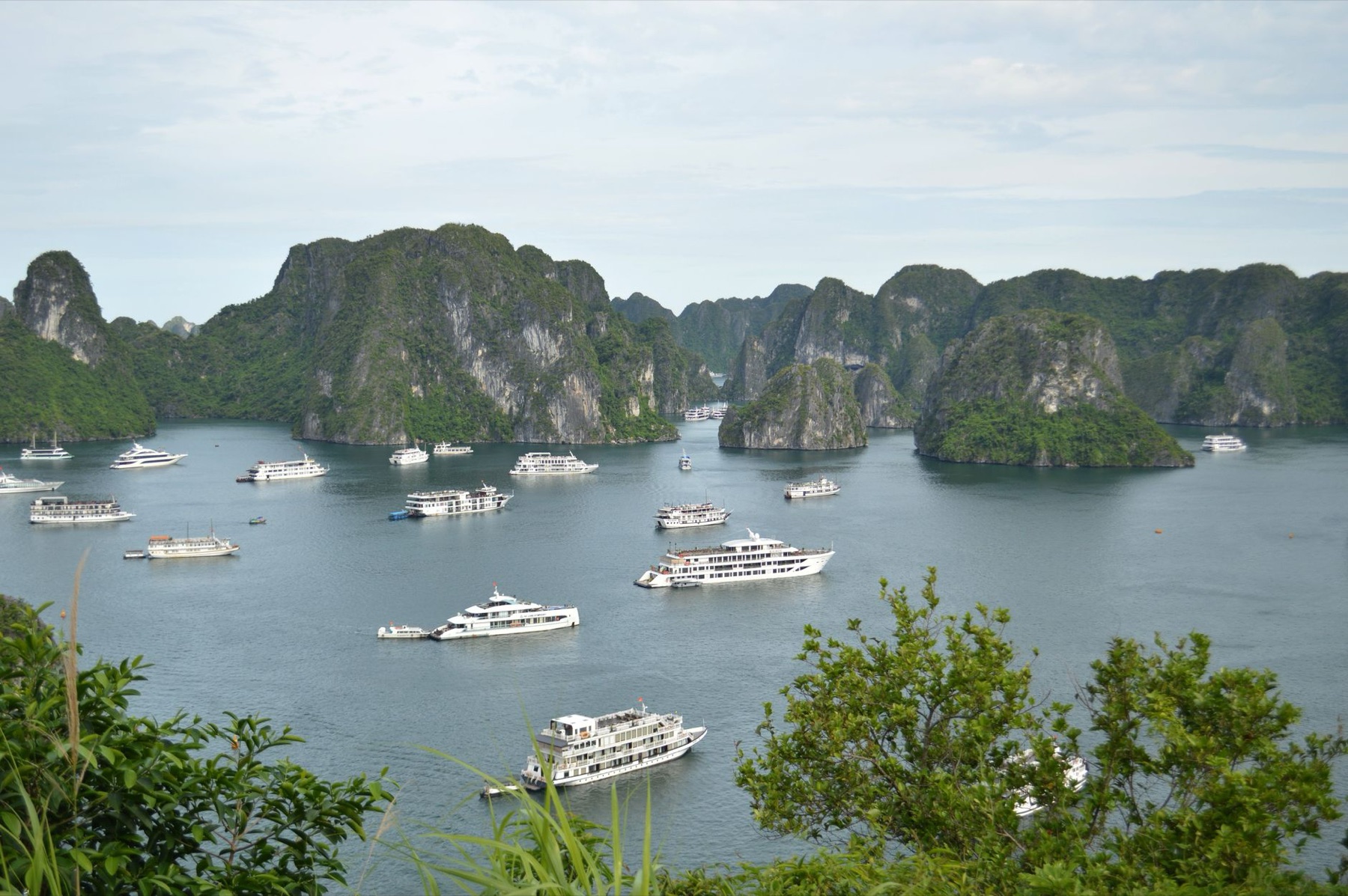
A cruise means you sleep on a boat anchored in the bay; resorts mean you stay on land (usually Halong City waterfront) and do day tours. The core trade-off: cruises give you sunrise over karsts from your cabin window and swimming stops that resorts' group tours can't replicate. You'll pay for that convenience—and for meals bundled in. Resorts offer flexibility: you can eat where you want, skip activities, or take afternoon naps without guilt. Cruises feel like a full package; resorts feel like independence with guided add-ons.
Cruise itineraries typically include two days and one night, with dinner, overnight, and breakfast aboard, plus afternoon and morning bay tours. You meet other travelers, sleep to boat rocking, and wake early for cave visits or kayaking. Resorts let you book tours à la carte—an 8-hour daytime cruise, a 4-hour evening tour, or both. Most resorts partner with tour operators, so you're not locked into their schedule. The downside: you'll see more tourists on group boats, and you'll repeat some landmarks (Sung Sot Cave, Ti Top Island) with overlapping tours.
Cost reality: A 2-night cruise on a mid-range boat runs ₫3–4 million (~$120–160 USD). A 2-night resort stay plus two separate tours costs ₫1.5–2.5 million (~$60–100 USD) for the room plus ₫1–1.5 million for tours (~$40–60 USD)—so about the same total if you book both. The difference: cruise prices are fixed; tour prices vary wildly depending on operator and group size.
Which neighborhoods and towns offer the best value for money?
Halong City (Thành phố Hạ Long) is the main hub—it's where most flights land, ferries depart, and resorts cluster. The downtown waterfront (around Tran Hung Dao Street) has mid-range hotels, restaurants, and tour operators. East of there, Bai Chay Beach area feels more touristy but newer. West of Halong City, the fishing village atmosphere is grittier and cheaper.
Cheaper alternative: Cat Ba Island (about 1 hour by ferry from Halong City) has a younger backpacker vibe, budget hostels, and homestays. Fewer English speakers, but better nightlife and more authentic local food. Many travelers skip the bay itself and just stay on Cat Ba, exploring the island's limestone peaks instead. Ferry costs around ₫80–100k (~$3–4 USD) each way.
For comfort without peak prices: The town of Cam Pha, 45 minutes north, has new mid-range resorts with fewer tourists. It's less famous, so rates are lower, but fewer tour operators work from there—you'll rely on Halong City operators, which adds travel time.
Middle-ground pick: Halong City's waterfront resorts (not downtown) offer sea views, restaurants, and tour access without the chaos of central backpacker zones. Expect ₫1–2 million per night (~$40–80 USD) for a clean double with air-con.
Should you book a cruise in advance or walk-on at the port?
Walk-on deals exist but come with hidden costs. If you show up at Halong City's cruise port without a booking, touts will offer "last-minute discounts"—usually ₫500k–1 million off the advertised rate. Sounds great until you realize you've been assigned a shared quad cabin on a 40-person boat with no breakfast included. The boat also departs later, cutting your bay time.
Book in advance if: You want a private or double cabin, want early-morning departure (and cave access before crowds), or have specific dietary needs (vegetarian, halal, allergy-friendly). Advance bookings lock in those details.
Walk-on makes sense if: You're okay with a shared dorm or quad (younger travelers often prefer this for the social aspect), you're flexible on boat type, or you've already spent your budget and need to save ₫300–400k (~$12–16 USD). Even so, book through a travel agent or hotel, not directly from port touts, to avoid scams (fake receipts, boats that change routes, missing promised activities).
Real pricing comparison:
| Booking method | Cabin type | Approx. cost (₫) | Cost (USD ~) | Best for |
|---|---|---|---|---|
| Online (advance, 7+ days) | Double private | 3–4 million | $120–160 | Couples, comfort |
| Online (3–5 days prior) | Double/twin shared | 2–2.5 million | $80–100 | Budget couples, groups |
| Hotel concierge (day before) | Shared quad | 1.5–2 million | $60–80 | Backpackers, flexibility |
| Port walk-on | Shared quad/dorm | 1–1.5 million | $40–60 | Last-minute, gamble risk |
Honest note: We've had good walk-on experiences and terrible ones. The risk isn't worth the ₫500k savings if you're traveling only once. Book through a Halong City hotel, tour operator, or online platform with a cancellation policy.
What are the common mistakes people make when booking accommodation?
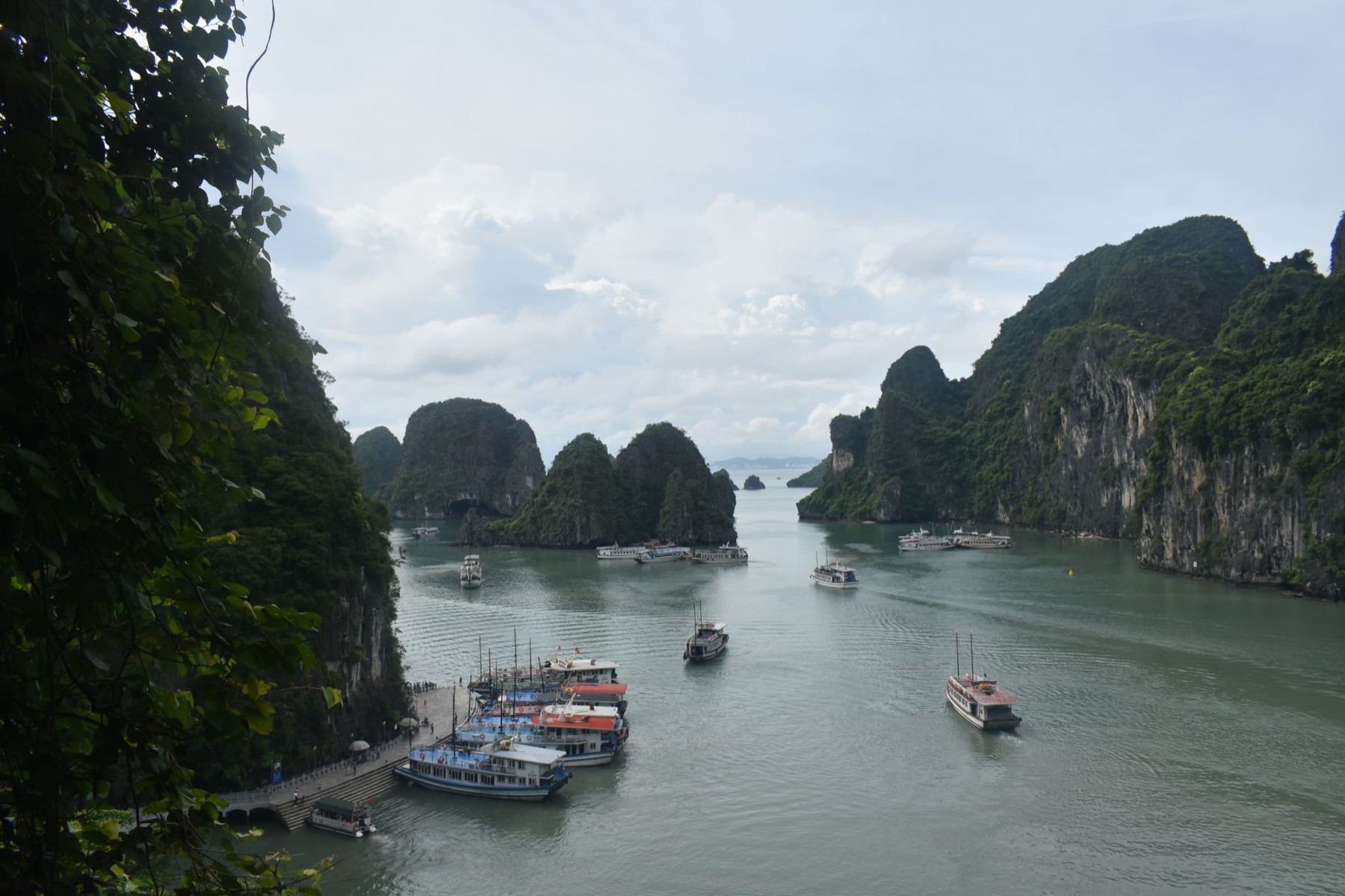
Mistake 1: Confusing "luxury cruise" with "comfortable cruise." Luxury boats cost ₫8–15 million per person for 2 days. They're genuinely better: smaller groups, English-speaking staff, proper airbeds, fresh seafood. Mid-range boats (₫2–4 million) are crowded but fine for one night. Budget boats (₫1–1.5 million) have thin mattresses, no AC in some cabins, and fluorescent lighting. If you're splurging, go top-tier; otherwise, mid-range hits the sweet spot.
Mistake 2: Not checking bathroom type. Shared bathrooms on budget cruises mean queues at sunrise. Some boats have 30 people and one toilet. Ask specifically: "Is this a private ensuite or shared?" Resorts almost always have private bathrooms—another reason some travelers prefer them.
Mistake 3: Assuming longer = better. A 3-day cruise isn't three times better than a 2-day cruise; the third day is often sailing toward port and more time at Ti Top Island (where you've already been). Two days captures the highlights: Sung Sot Cave, Surprise Cave (Thien Cung), swimming, kayaking. A third day is for divers, photographers chasing light, or people who love the sea so much they'll pay for extra.
Mistake 4: Booking based on price alone. The cheapest cruises operate on thin margins—rush tours, no included meals beyond breakfast, staff paid minimally and less attentive. A ₫500k difference between boats often means the difference between a memorable trip and a checkbox. Read reviews mentioning "food," "bathroom condition," and "guide language"—not just star ratings.
Mistake 5: Ignoring seasonal conditions. May–August is hot and humid; typhoons can cancel tours. September–October has clearer skies but rare storms. November–February is dry, sunny, and peak season (prices up 20–30%, crowds doubled). March–April is warm and clear—many rate it the best. If you're budget-conscious, go March–April (shoulder season) or November.
What to check before you book and what to avoid altogether?
Before booking, verify these details:
- Cabin size and bathroom type. Request photos. "View" means porthole-level visibility, not a window.
- Meal inclusions. Are lunches, dinners, and breakfasts included, or just one? Vegetarian options?
- Activity list. Does the itinerary include cave visits, swimming stops, or just cruising? How many hours do you actually spend in the bay (vs. traveling there/back)?
- Cancellation policy. Free cancellation up to how many days before? Some boats charge 50% if you cancel within 48 hours.
- Group size. Cruises carrying 10–15 people feel very different from those with 50+.
- Guide language. Is the tour guide fluent in your language, or just English basics?
Avoid these red flags:
- Operators with no fixed office or phone number (touts-only, no accountability).
- Promises of "private tour" on a boat with 40 other people.
- Prices below ₫1 million for an overnight cruise (quality corner-cutting).
- Boats advertising "luxury" but with photos from 2015.
- No cancellation policy mentioned; when you ask, they say "refund depends on season."
- Reviews mentioning food poisoning, theft, or boats not departing on time.
Check if the tour operator is registered. Halong Bay's licensing system is loose, but legitimate operators have tax IDs and partner with hotels. Ask your hotel to book; they have vendor relationships and recourse if something goes wrong.
---
🗺️ Plan your route: Vietnam itinerary
How does Ha Long Bay accommodation fit into a larger Vietnam trip?
Most travelers visit Ha Long Bay as a 2–3 day detour from Hanoi, located 160 km east (3 hours by car/minibus). Some combine it with Ninh Binh (another karst destination closer to Hanoi, less crowded). A common itinerary: 2 days Hanoi, 2 nights Ha Long Bay, 1 day Ninh Binh on the return.
If you're flying into Ho Chi Minh City or visiting Sapa, Ha Long Bay requires backtracking; it's worth the detour only if you have 5+ days for the north.
For travelers doing a longer journey, we recommend using our Vietnam itinerary planner to map accommodation across all regions and lock in transport sequencing before you book.
Pro tip: If you're staying in Hanoi before or after Ha Long Bay, consider a personalized ao dai photoshoot from Cáo Studio—many travelers book a session to capture their traditional look before heading to the bay. The backdrop (limestone karsts) is stunning for photos taken on a morning bay tour.
---
📸 Book an ao dai photoshoot in Hanoi or Saigon (Cáo Studio)
What else should you do in Ha Long Bay besides sleep and cruise?
Ha Long Bay's main activity is the cruise itself, but the things to do in Ha Long Bay extend beyond boat tours. Most cruises include cave visits (Sung Sot, Thien Cung, Dong Tien), which are spectacular but crowded. Some boats add kayaking, which isn't included in basic packages and costs extra (₫200–300k, ~$8–12 USD per person). Swimming is usually included; water quality depends on season (cooler and clearer in winter).
On land, Cat Ba Island offers hiking, rock climbing, and a night market. Day trips from Halong City include Bai Tu Long Bay (quieter, fewer tourists) or Yen Phong Island for fishing-village homestays.
Most visitors exhaust Ha Long's highlights in 2 days. If you're staying longer, use your accommodation as a base and book varied tours, not repeat cruises.
---
🎟️ Compare tours & tickets for this place
---
FAQ
Is it worth staying overnight on a cruise instead of doing a day tour and sleeping in a hotel?
Yes, if you want to see the bay at sunrise, avoid repeated groups, and experience the water at night. Day tours are crowded and rushed. An overnight cruise costs ₫1.5–2 million more but includes meals, swimming stops not on day tours, and a quieter bay experience by evening. Hotel + separate tours cost similar amounts but feel more fragmented.
What's the cheapest way to see Ha Long Bay without going broke?
Stay in Halong City (₫300–500k guesthouse, ~$12–20 USD), book a 4-hour afternoon tour (₫400–600k, ~$16–24 USD), and return for dinner. Total: ₫700k–1.1 million (~$28–44 USD) per day. You miss sunrise, but it's a realistic budget option. For one night plus tour: aim for ₫1.5–1.8 million total (~$60–72 USD).
Can I visit Ha Long Bay on a day trip from Hanoi without staying overnight?
Yes, but it's exhausting. You'll spend 3 hours traveling each way, leaving 6–7 hours for a rushed tour, caves, and swimming. You'll see the bay but not experience it. Most visitors regret not staying overnight. If you must do a day trip, book the earliest departure and accept you'll miss sunrise and quiet moments.
What's the difference between a "4-star" and "3-star" cruise?
Star ratings are informal; there's no official system. A 4-star cruise typically has larger cabins, private bathrooms, more staff, better food, and smaller groups. A 3-star cruise is clean and acceptable but basic—smaller cabins, shared bathrooms sometimes, simpler meals. The jump from 3 to 4 costs ₫800k–1 million more (~$32–40 USD per person). If you're on a 2-day trip, the 3-star is usually fine.
Is travel insurance necessary for a Ha Long Bay cruise?
Standard travel insurance covers sea accidents and evacuation. Ha Long Bay waters are generally calm April–October; November–March has rare storms. Insurance costs ₫100–200k (~$4–8 USD) and is smart if you're prone to seasickness or have health concerns. Most backpackers skip it; most families don't. Your call based on risk tolerance.
What should I pack for an overnight cruise besides clothes?
Seasickness medication (if you're prone), sun protection (cream, hat, sunglasses—the bay is bright and reflective), a light jacket (evening winds, AC cabins), cash in Vietnamese dong (₫500k–1 million for tips, snacks, massage; not all boats take cards), and a waterproof bag for phones during swimming. Toothbrush and basic toiletries are provided on boats, though quality varies.
FAQ
Is it worth staying overnight on a cruise instead of doing a day tour and sleeping in a hotel?
Yes, if you want to see the bay at sunrise, avoid repeated groups, and experience the water at night. Day tours are crowded and rushed. An overnight cruise costs ₫1.5–2 million more but includes meals, swimming stops not on day tours, and a quieter bay experience by evening. Hotel + separate tours cost similar amounts but feel more fragmented.
What's the cheapest way to see Ha Long Bay without going broke?
Stay in Halong City (₫300–500k guesthouse, ~$12–20 USD), book a 4-hour afternoon tour (₫400–600k, ~$16–24 USD), and return for dinner. Total: ₫700k–1.1 million (~$28–44 USD) per day. You miss sunrise, but it's a realistic budget option. For one night plus tour: aim for ₫1.5–1.8 million total (~$60–72 USD).
Can I visit Ha Long Bay on a day trip from Hanoi without staying overnight?
Yes, but it's exhausting. You'll spend 3 hours traveling each way, leaving 6–7 hours for a rushed tour, caves, and swimming. You'll see the bay but not experience it. Most visitors regret not staying overnight. If you must do a day trip, book the earliest departure and accept you'll miss sunrise and quiet moments.
What's the difference between a "4-star" and "3-star" cruise?
Star ratings are informal; there's no official system. A 4-star cruise typically has larger cabins, private bathrooms, more staff, better food, and smaller groups. A 3-star cruise is clean and acceptable but basic—smaller cabins, shared bathrooms sometimes, simpler meals. The jump from 3 to 4 costs ₫800k–1 million more (~$32–40 USD per person). If you're on a 2-day trip, the 3-star is usually fine.
Is travel insurance necessary for a Ha Long Bay cruise?
Standard travel insurance covers sea accidents and evacuation. Ha Long Bay waters are generally calm April–October; November–March has rare storms. Insurance costs ₫100–200k (~$4–8 USD) and is smart if you're prone to seasickness or have health concerns. Most backpackers skip it; most families don't. Your call based on risk tolerance.
What should I pack for an overnight cruise besides clothes?
Seasickness medication (if you're prone), sun protection (cream, hat, sunglasses—the bay is bright and reflective), a light jacket (evening winds, AC cabins), cash in Vietnamese dong (₫500k–1 million for tips, snacks, massage; not all boats take cards), and a waterproof bag for phones during swimming. Toothbrush and basic toiletries are provided on boats, though quality varies.