Hanoi · Food
Best Food Tours in Hanoi: Compare Guides, Prices & What to Actually Ex
By Wander in Vietnam editorial team · Hanoi, Vietnam
Food tours in Hanoi span budget group walks through Old Quarter to private culinary guides and cooking classes ranging $20–150 USD. Tours differ by neighbourhood focus, group size, meal depth, and whether you learn to cook or just eat. We recommend matching tour type to your time, budget, and whether you want social energy or intimate discovery.
Hanoi's street-food scene clusters in distinct zones—Old Quarter (narrow alleys, pho and bánh mì), French Quarter (colonial cafés, egg coffee), Ba Đình (morning markets, steamed snacks), and Hoan Kiếm lakeside. Each neighbourhood tells a different story through food. Picking the right tour means deciding: do you want to walk 8 km sampling 15 dishes, or sit in one café understanding one soup's 40-year family recipe?
🗺️ Plan your route: Vietnam itinerary
What's the Real Difference Between Group Tours and Private Guides?
Group food tours move fast—you'll visit 5–8 stalls in 3 hours, eat in rotation, and share a table with 8–14 strangers. Private guides slow down: you pick stalls, skip what doesn't interest you, ask detailed questions, and eat when you feel hungry. Group tours cost around $25–35 USD per person; private guides run $100–150 USD for 2–3 people (you split the fee). Group tours work if you want velocity and don't mind noise; private guides suit curious eaters who read menus and want context.
A crucial hidden difference: group operators pre-negotiate portions and pricing with stall owners (you eat what fits the route, not what's best that day). Private guides know vendor quality by season—they adapt. Group guides talk louder to manage crowds; private guides listen to you. Both leave you full; only private guides leave you understanding why a dish tastes the way it does.
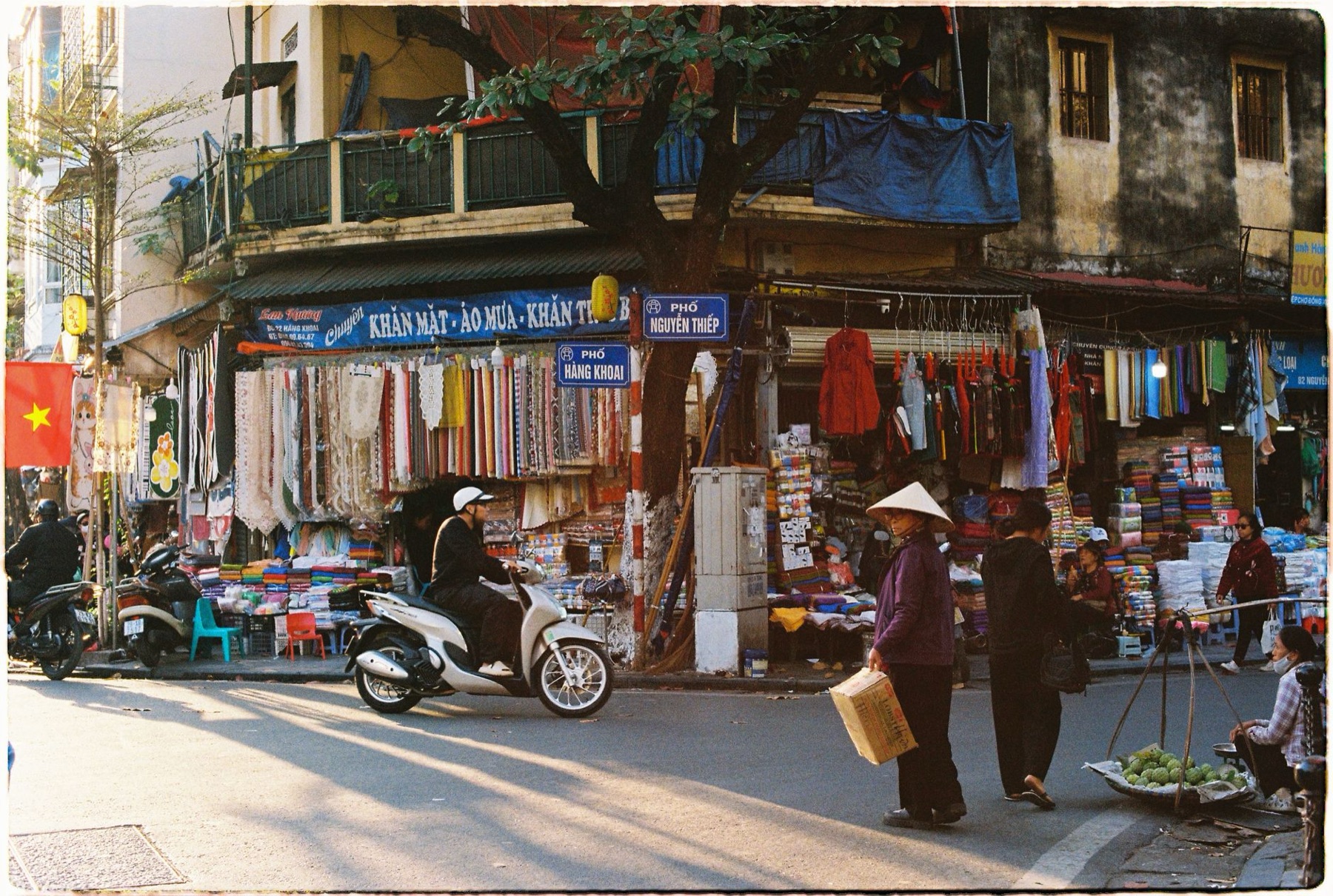
Which Hanoi Neighbourhoods Should Your Tour Actually Cover?
Old Quarter (Hoàn Kiếm District): The default first-timer zone. Narrow streets, 200+ food stalls within 1 km, chaotic at lunch. Tours here cost around $20–30 USD and feel touristy—crowds, inflated stall prices, vendors used to English. Honest take: worth it once for the energy, but you're eating amid motorbike exhaust and photo-taking crowds.
Ba Đình District (morning markets, North Gate area): Where Hanoians actually buy breakfast. Less photographed. A 7 a.m. market walk costs around $30–40 USD (fewer operators run early). You'll find bánh cuốn (rolled cake), mứt (sticky rice), and cháo (rice porridge) at stall prices—around 20,000–40,000 VND per item ($0.80–1.60 USD). Vendors surprise you; you're not on their script. Best for: eaters willing to wake up and miss the Instagram crowd.
Hang Dieu (Silk Street) & Surrounding Alleys: Historic vendor clusters, calmer than Old Quarter, strong neighbourhood regulars. Tours here are rarer—usually private guides or food-history operators. You'll taste specialty bánh (cakes) not on main-tourist routes. Cost is similar to Old Quarter but foot traffic is 30% of peak times.
French Quarter (Ba Đình District west side, near Hoan Kiem Lake): Egg coffee, colonial-era cafés, colonial-era Vietnamese restaurants. Tours here blend history and eating—cafés like Café Phố Cổ offer colonial ambiance, not street food. Cost is higher (around $40–60 USD for a 2–3-hour historical food walk) because you're in tourist-facing restaurants. Quality is reliable, but it's curated, not raw.
Hoan Kiem Lake District (lakeside small streets): Walking tours that loop the lake (5–6 km). You stop for pho, bánh mì, fish cakes, and end at a lake-view café. Cost is around $30–45 USD. This works well if you want walking + eating + sightseeing combined without rushing.
📸 Book an ao dai photoshoot in Hanoi or Saigon (Cáo Studio)
Why Cooking Classes Aren't Just Food Tours (And When to Book One)
Cooking classes are marketed as food tours, but they're different. You start at a market (1 hour), walk and shop with the instructor (learning ingredient names and quality signals), then cook 3–5 dishes (2–3 hours), and eat what you made. Cost: around $65–120 USD per person for a half-day class. Operators include: market-walk-first format (best for curious learners), home-kitchen format (most intimate, fewer people), and restaurant kitchens (more sanitary, less personal).
Real benefit: You learn process and technique—why you add fish sauce at the end, not the start; how to tell a rice noodle is overcooked by touch, not timer. You eat slower because you've invested time.
Real downside: If you're in Hanoi 2 days and also want to see Hoan Kiem Lake and a temple, cooking class eats 4–5 hours. Also, restaurant-kitchen classes mean you're cooking alongside strangers' elbows, not a family stove. Home kitchens are quieter but book far ahead.
Who books cooking classes: Returners to Vietnam, food-obsessed travelers, people who cook at home and want to take techniques back. Skip if you want breadth (15 stalls, one meal); book if you want depth (3 dishes, 3-hour focus).
Early Morning vs. Evening: What You Actually Find at Each Time
Early morning (6:00–9:00 a.m.): Markets are peak—steaming bánh cuốn vendors, cháo (rice porridge) at 20-table alley setups, fresh pho broths just opened. Stalls run 3–5 dishes max, not menus. Crowds are local, not tourists. You eat standing or on plastic stools. Tours at this time are rare but worth seeking (around $35–50 USD for a 3-hour walk). Best for understanding what Hanoians eat daily.
Late morning/lunch (11:00 a.m.–1:00 p.m.): Peak footfall, inflated portions, and chaos. Tourist groups flood Old Quarter. Prices rise 10–15% because vendors expect it. You wait 5–10 minutes at famous stalls. Tours operate constantly (easiest to book). Cost is lowest (around $20–30 USD) because supply is high. Realistic take: it's efficient, loud, and you'll eat well but won't feel the neighbourhood's rhythm.
Afternoon (2:00–5:00 p.m.): Stalls close; many vendors restock or rest. Cafés open, not food stalls. Tours are rare. If you book an afternoon tour, it's usually colonial-era restaurant food or a cooking class, not street eating.
Evening (6:00–9:00 p.m.): Night markets wake up—bánh tráng nướng (grilled rice paper), cơm tấm (broken rice), bia hơi (fresh beer, around 10,000 VND / $0.40 USD). Stalls reset with fresh stock. Tours here are uncommon (operators target lunch tourists). Groups that run evening tours focus on beer culture and grilled snacks. Cost is $25–40 USD. Best for: second-day eaters, people staying longer.
Avoiding 5 Common Food Tour Pitfalls (and How to Check Before You Book)
1. The "tip-heavy" trap: Tours advertise a price (say, $30 USD) but operators hint that tips are "customary." Ask upfront: "Are tips included in the price, or separate?" Legitimate operators will say. If they hedge, they're counting on you tipping 20–30% extra. Budget 15% tip only if the guide is exceptional.
2. Stalls that only serve tour groups: Some Old Quarter vendors give you tiny portions at inflated prices because they know you're on a group circuit. How to spot: if a stall has a red "tour group" sign or you only see other tourists there, it's been corporatized. Private guides know which stalls keep original quality; groups often don't.
3. "All-inclusive" tours that skip water and restroom stops: A 3-hour walk with 6–8 eating stops means 1.5–2 hours of walking between sites. Bad operators don't route near restrooms or mention water access. Before booking, ask: "Where are restroom breaks?" and "Is water/coffee included?" If vague, pass.
4. Mismatched pace (too slow for you, or you're dragged): Some group tours spend 20 minutes at each stall (socializing, photographing); others rush 5 minutes per stop. Neither suits everyone. Ask the operator: "What's the pace—fast eating and walking, or relaxed sitting and chatting?" Then match it to your style.
5. Overpromising "secret" stalls: Marketing says "hidden gems locals only know." In reality, most food stalls in Hanoi serve both tourists and locals—there's no secret. Tours are valuable for context (why a dish tastes that way, how it's made), not for access to places you couldn't find. If a tour's main selling point is "secret," it's overselling.
| Tour Type | Best For | Cost (USD) | Duration | Group Size | What to Check |
|---|---|---|---|---|---|
| Budget group walk | First-timers, quick sampling | $20–30 | 2–3 hours | 8–14 people | Restroom stops, stall authenticity |
| Private guide | Curious eaters, flexible pace | $100–150 (2–3 people) | 3–4 hours | 1–6 people | Guide's market knowledge, seasonal awareness |
| Cooking class | Learners, technique-focused | $65–120 | 4–5 hours | 4–10 people | Kitchen setup (home vs. restaurant), ingredient market time |
| Morning market walk | Early risers, local food | $35–50 | 3 hours | 6–10 people | 6 a.m. start time, real vendor access |
| Evening beer + snacks tour | Returners, social eaters | $25–40 | 2.5 hours | 8–12 people | Grilled stall quality, bia hơi venues |
🎟️ Compare tours & tickets for this place
What to Check Before You Buy (and How to Avoid Wasting Money)
- Verify start time and location: Does the tour meet at your hotel or a landmark? Check Google Maps to confirm the meeting point exists. Some operators say "Hoan Kiem Lake" (too vague) instead of a street address.
- Ask the guide's background: Are they a food historian, cookbook author, local journalist, or just trained? Casual training (2–4 weeks) shows in generic descriptions. Deep expertise (10+ years neighbourhood eating or culinary background) shows in stories and ingredient knowledge.
- Check the stall list ahead: Can the operator name 5–8 specific stalls you'll visit? Or do they say "we visit various street food vendors"? Named stalls = planned route; vague = they'll decide day-of based on crowds (less ideal).
- Read recent reviews for "scams" mentions: Not movie reviews, but traveler forums. Search "Hanoi food tour [operator name] scam." If multiple posts mention sudden upsells or hidden tips, avoid. Legitimate operators have consistent pricing feedback.
- Confirm what's included: Is it food only, or does it include a drink (coffee, water, juice)? Are entry fees included if you visit a café? Does it include a meal at the end (many tours end mid-afternoon, leaving you to dinner). Clarify before paying.
- Check the cancellation policy: If weather is bad or you're sick, can you reschedule free? Reputable operators offer 48-hour free cancellation; scam operators don't mention it.
🗺️ Plan your route: Vietnam itinerary
Food Tours Beyond Hanoi: What's Different in Other Cities
If you're touring Vietnam beyond Hanoi, food tours differ by city. Hoi An has cooking classes and market walks (similar pricing), but the food is lighter and more historic (influenced by Chinese merchant cuisine). Ho Chi Minh City has larger, more commercial group tours (around $30–50 USD) and fewer private guides. Ninh Binh has almost no organized food tours—you eat at family-run restaurants, not street stalls. Sapa focuses on hill-tribe cuisine (foraged, meat-heavy), not street food. Ha Long Bay offers boat + meal combos, not walking tours.
Our Hanoi guide covers neighbourhoods and logistics; our Vietnam itinerary planner helps you decide how many days to spend eating versus sightseeing.
---
Real-world example: A couple in Hanoi for 3 days books a 2.5-hour group morning walk ($55 USD total, $27.50 each) on day 1, then a half-day cooking class ($100 USD total) on day 2. They spend 6.5 hours on food activities, eat 20+ dishes, learn technique, and still have time to visit Hoan Kiem Lake and a temple. Cost: $155 USD, plus $20–25 tips. That's their food-memory budget. On day 3, they eat casually without a guide, using neighbourhood knowledge from the first two days. Total food outlay: around $175–200 USD for 3 days of expert-guided eating.
Alternatively: a solo traveller on a tight budget books one budget group walk ($25 USD) and eats independently at marked stalls for the rest of their 4-day stay. Cost: $25 USD for guidance, $60–80 USD for self-guided meals. Same quality food, less context, but fuller wallet.
---
Ready to Book Your Food Tour?
Match your style to a tour type from the table above. Verify the operator's stall list, guide background, and cancellation policy before paying. Start early (6–7 a.m.) if you want market energy and authentic stall portions. Book private guides if you have 2+ people and 3+ hours; they'll adapt to your appetite.
Food tours are worth the investment—you'll eat faster than solo exploration, taste dishes you wouldn't find on your own, and understand the stories behind each stall. But the best meal you'll have in Hanoi might be at a stall nobody tours to, discovered by walking and asking locals.
Wander in Vietnam recommends: do one guided tour (group or private) to map the scene, then explore independently for the rest of your stay. You'll get context and discovery.
FAQ
Is a food tour necessary in Hanoi, or can I just eat solo?
Solo eating works perfectly—Hanoi's stall owners accept foreign visitors, English menus exist in touristy zones, and food is cheap. Tours add context (why a dish tastes that way, historical background, seasonal knowledge) and speed (you eat 15 dishes in 3 hours vs. exploring aimlessly). Skip if you enjoy slow discovery; book if you want efficiency and stories.
How much should I tip a food tour guide?
If a tip is not included, budget 15% of the tour cost (e.g., $3–4 USD on a $25 USD tour). Don't feel obligated to tip beyond that unless the guide went far above—shared personal stories, took detours, helped with a problem. Some operators count on 25–30% tips; push back if they pressure you.
What if I'm vegetarian or have allergies?
Tell the operator at least 48 hours before. Many stalls offer vegetarian bánh (cakes) and noodle soups (ask for no fish sauce or shrimp paste). Seafood allergies are harder—fish sauce is in almost every dish. Private guides can navigate this; group tours may struggle. Allergies to peanuts or tree nuts are rarer in Hanoi street food but still ask.
Are group food tours safe for solo female travellers?
Yes. Group tours are social and well-established; guides are used to solo female travellers. You'll be with a group, so no safety isolation. Evening tours are fine; early morning (6 a.m.) market walks are busy with local foot traffic. Use the same precautions as any group activity (keep valuables close, stick with the group).
Can I do a food tour if I speak no Vietnamese?
Completely. English-language tours are standard in Hanoi. Stall owners recognize tour groups and use gestures. Guides translate menu items and vendor stories. You won't understand every conversation, but you'll eat and learn. If you want deeper cultural exchange, private guides (often bilingual journalists or food historians) offer richer translation. ===
FAQ
Is a food tour necessary in Hanoi, or can I just eat solo?
Solo eating works perfectly—Hanoi's stall owners accept foreign visitors, English menus exist in touristy zones, and food is cheap. Tours add context (why a dish tastes that way, historical background, seasonal knowledge) and speed (you eat 15 dishes in 3 hours vs. exploring aimlessly). Skip if you enjoy slow discovery; book if you want efficiency and stories.
How much should I tip a food tour guide?
If a tip is not included, budget 15% of the tour cost (e.g., $3–4 USD on a $25 USD tour). Don't feel obligated to tip beyond that unless the guide went far above—shared personal stories, took detours, helped with a problem. Some operators count on 25–30% tips; push back if they pressure you.
What if I'm vegetarian or have allergies?
Tell the operator at least 48 hours before. Many stalls offer vegetarian bánh (cakes) and noodle soups (ask for no fish sauce or shrimp paste). Seafood allergies are harder—fish sauce is in almost every dish. Private guides can navigate this; group tours may struggle. Allergies to peanuts or tree nuts are rarer in Hanoi street food but still ask.
Are group food tours safe for solo female travellers?
Yes. Group tours are social and well-established; guides are used to solo female travellers. You'll be with a group, so no safety isolation. Evening tours are fine; early morning (6 a.m.) market walks are busy with local foot traffic. Use the same precautions as any group activity (keep valuables close, stick with the group).
Can I do a food tour if I speak no Vietnamese?
Completely. English-language tours are standard in Hanoi. Stall owners recognize tour groups and use gestures. Guides translate menu items and vendor stories. You won't understand every conversation, but you'll eat and learn. If you want deeper cultural exchange, private guides (often bilingual journalists or food historians) offer richer translation. ===
More: Hanoi guide · What to eat in Hanoi