Hanoi · Food
Best Food Tours in Hanoi: What to Book & Why
By Wander in Vietnam editorial team · Hanoi, Vietnam
Hanoi's food scene isn't just eating; it's navigating centuries-old vendors, learning family recipes, and understanding why a bowl of phở costs 30,000 VND ($1.20 USD) in one alley and 80,000 VND ($3.20 USD) in another. Food tours are how many of us decode this.
But not all tours are equal. Some rush you through eight stops in three hours, others linger on one dish for 45 minutes. Some charge $15 and deliver nonsense; others ask $100 and overdeliver. This guide cuts through the noise.
What's Actually Included in a Hanoi Food Tour?
Most Hanoi food tours cover the Old Quarter—the tangle of streets between Hoan Kiem Lake and the Red River where vendors have worked the same corner for 30+ years. A typical itinerary includes 5–8 tasting stops: bánh mì, phở or bún chả, egg coffee, one dessert, and drinks. What varies wildly: guide knowledge, group size, photo stops, and whether you eat a full meal or just samples.
Some tours are walks with snacking; others are structured meal experiences. A walk-focused tour might cost around $25–$40 per person and hit 6–8 stops in 2.5 hours. A meal-focused private tour runs $60–$100+ but includes a proper lunch or dinner course and a guide who actually cooks or sources from family vendors.
Translation quality matters. A guide who just points and says "this is phở" wastes your time. A guide who explains why that vendor uses hand-cut noodles or what makes their bone broth distinct is worth the premium.
🗺️ Plan your route: Vietnam itinerary | 🎟️ Compare tours & tickets for this place
Group vs. Private Tours: Which Saves Money Without Wasting Time?
| Tour Type | Group Size | Price per Person | Best For | Biggest Drawback |
|---|---|---|---|---|
| Group walk | 8–15 people | $25–$40 | Budget travelers, social eaters | Rushed pacing, loud, no flexibility |
| Semi-private (4–6 people) | 4–6 people | $45–$70 | Couples, small families | Still some scheduling constraints |
| Private guide | 1–4 people | $70–$120 | Control freaks, dietary needs, photographers | Higher per-person cost unless you split |
| Cooking class + market | 6–12 people | $50–$85 | Learners who want to cook, Instagram-minded | Long commitment (4–5 hours), less eating time |
Group tours win on budget but lose on control. You'll eat what's scheduled, at the pace the guide sets, alongside 10 strangers. Perfect if you're solo and want to meet people. Terrible if you're picky, slow, or want photos without a crowd.
Private guides cost more but let you skip a stop if you hate it, linger if you love it, and ask detailed questions. A family of four splitting a $280 private tour pays $70 each—only $20–$30 more than a group walk, and you keep the afternoon free.
Cooking classes sit in the middle: you hit the market, shop with the guide, then cook 4–5 dishes in a home kitchen. Cost is around $50–$85 per person and eats 4–5 hours. If you like learning more than eating, this wins. If you're hungry and impatient, skip it.
Which Streets and Vendors Are Actually Worth Visiting?
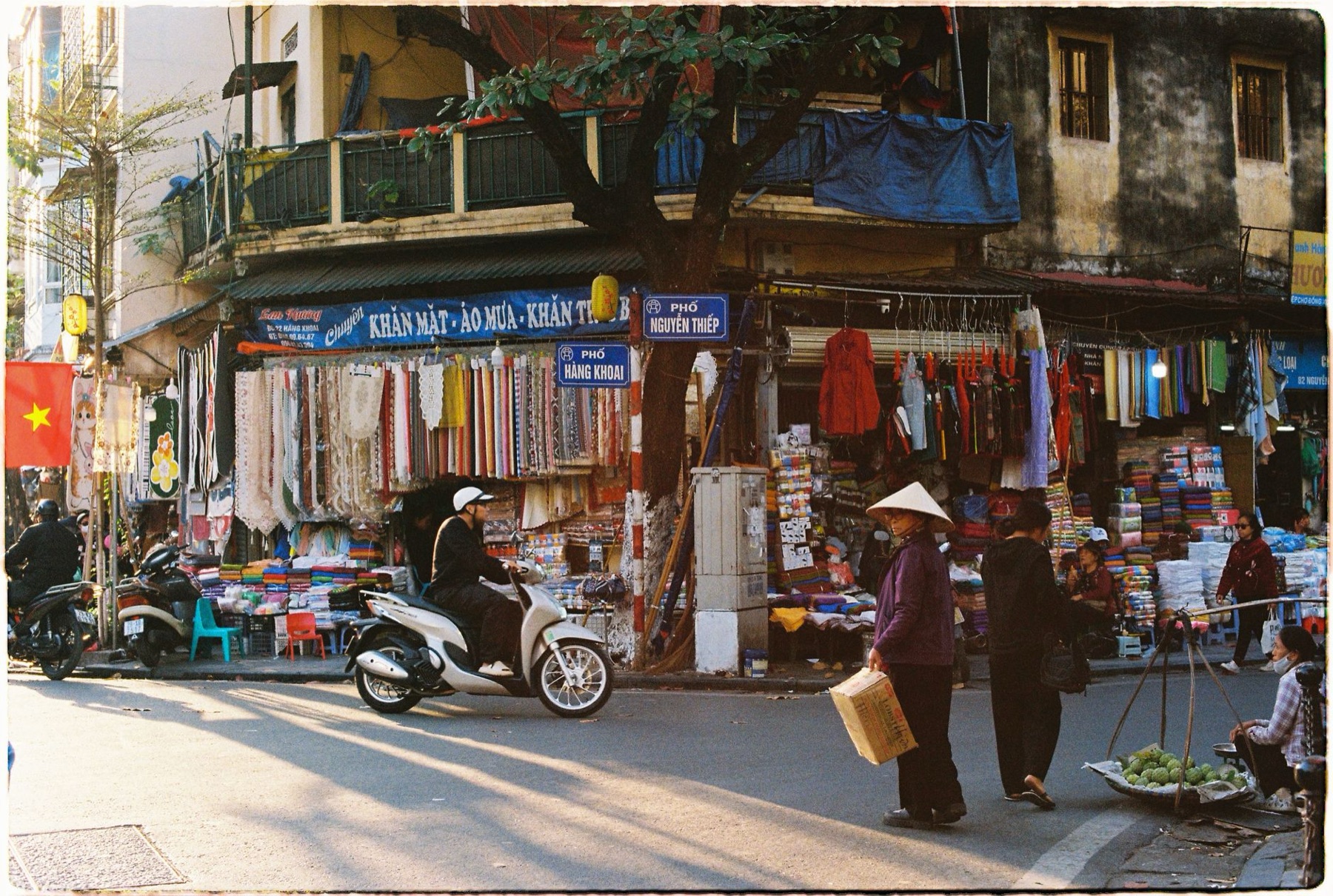
The Old Quarter's food reputation rests on a handful of alleys. Hang Dieu (silk street) and Hang Gai (straw street) are tourist highways now—vendors shout, prices jump 20–30% higher, and the food is competent but not special. Most group tours start here because parking is easy.
Ta Hien (bat street, paradoxically where the old silk market was) sits two blocks east and still has excellent bánh mì and grilled meat vendors. Quieter than Hang Dieu, better prices, same quality.
Hang Manh (hemp street) and the streets around Dong Xuan Market (the Old Quarter's largest indoor market) are where locals eat. Fewer tourists, lower prices, and you'll see families eating breakfast at 6 a.m., which is a good sign.
Phố Cổ (the Old Quarter proper) has dozens of unmarked noodle shops and egg coffee spots tucked into narrow stairs and shophouse courtyards. A guide worth hiring knows these—a generic "foodie" who just points at famous signs doesn't.
We always skip tours that promise "secret family recipes" at marked-up restaurants in the French Quarter. The Old Quarter is the secret.
📸 Book an ao dai photoshoot in Hanoi or Saigon (Cáo Studio)
How Much Should You Actually Spend on a Food Tour?
Budget breakdown:
- Ultra-budget ($15–$25): Group walk, 5–6 stops, 2 hours, minimal guide talk. Expect to eat samples, not meals. Good for testing whether you like organized tours.
- Mid-range ($40–$65): Semi-private or private small group, 5–7 stops, 2.5–3 hours, guide with hospitality background. You'll eat enough to call it lunch. Best value.
- Premium ($70–$120+): Private guide, fully customized route, includes a proper sit-down meal or cooking class, longer time. For control or special diets.
Hanoi's street food itself is cheap—a bowl of phở runs 30,000–50,000 VND ($1.20–$2 USD), bánh mì 20,000–35,000 VND ($0.80–$1.40 USD). A tour markup reflects the guide's time and local connections, not food cost. If a tour promises "eat at five restaurants" for $20, the guide isn't making money and probably doesn't know anyone; you'll be rushed.
A good rule: if the tour costs less than the equivalent of three sit-down meals in your home country, it's probably too cheap to be good.
What to Check Before Ordering—and What Commonly Goes Wrong
Before booking, verify these points:
- Tour length: Is it 2 hours (walks only) or 3.5 hours (includes a sit-down meal)? Shorter tours often misrepresent themselves as "lunch tours."
- Exact stops: Ask for the itinerary, not just "Old Quarter food tour." If the operator can't name five vendors, they're improvising.
- Group size cap: Some list "up to 12" then send you with 15. Ask for a real limit.
- What's included: Water, coffee, and dessert? Or just samples? Do you pay per dish, or is everything pre-paid?
- Dietary needs: If vegetarian or allergic, book private guides or ask three days ahead. Group tours can't pivot.
- Language: English-speaking guides are standard in Hanoi, but quality varies widely. Korean or Mandarin guides exist but often cost more.
- Starting point: Does the tour collect from your hotel (adds 20–30 minutes) or meet at a central location?
Common scams to avoid:
- The "special restaurant price": A guide gets commission at tourist restaurants, not Old Quarter street stalls. If you're eating at an air-conditioned place with a laminated menu, you're off-track.
- Bait-and-switch on group size: Booked a semi-private 4-person tour, showed up with 10 others.
- Overcounted "stops": A "nine-stop tour" often means nine small samples in 2.5 hours—not filling. Don't confuse stops with meals.
- Photo ops masquerading as food tours: You spend 15 minutes eating, 45 minutes taking Instagram shots with filters on sticky backgrounds.
Verify the operator at least three days ahead, ask for a booking confirmation with the exact date, time, and group size, and check if they offer a refund if the tour is cancelled or the guide is late.
Learn more about Hanoi's food culture or explore other Vietnam destinations.
Which Tour Type Matches Your Travel Style?
For time-pressed travelers (2–3 days in Hanoi): Book a mid-range group or semi-private walk (around $40–$65). You'll eat well without losing an entire afternoon.
For foodies and photographers: Private guide ($80–$100+) lets you slow down, ask questions, and compose shots without crowds. Pair with a professional ao dai photoshoot if you want styled images of yourself in the Old Quarter.
For families with dietary restrictions: Cooking classes or private guides (book at least a week ahead). Group tours can't accommodate picky eaters or nut allergies safely.
For solo travelers on a tight budget: Group walk ($25–$35). You'll meet other travelers, eat cheaply, and decide if you want a deeper food experience on day two.
For repeat visitors: Skip organized tours entirely. Hire a local street-food vendor as a guide (ask your hotel) for a fraction of the cost, or take the Vietnam itinerary planner and self-navigate with confidence.
---
🎟️ Compare tours & tickets for this place
Once you've chosen a tour, spend the evening before researching a specific dish or vendor history. Walk through the Old Quarter alone for 30 minutes to get your bearings. You'll appreciate the guide's knowledge more and ask smarter questions.
Most importantly: tours are entry points, not the whole story. The real food education happens when you return solo at breakfast time and order something without a guide translating—and the vendor remembers you.
FAQ
How long does a typical Hanoi food tour take?
Most range from 2 to 3.5 hours. Walks without sit-down meals run 2–2.5 hours and hit 5–8 tasting spots. Tours that include a proper meal or cooking class run 3.5–5 hours. Always confirm before booking, as some operators overstate length.
Do food tours include drinks, or do you pay extra?
It depends. Budget tours (under $40) typically include water and one coffee or juice stop; you pay for additional drinks. Premium tours often include a beverage budget. Ask the operator explicitly what's pre-paid and what costs extra.
Can I book a private food tour same-day in Hanoi?
Rarely. Reputable guides book 2–7 days ahead. Same-day bookings usually go to whoever's available (often newer guides), and the experience suffers. Book at least three days ahead for a choice of guides.
What if I have a nut allergy or vegetarian diet?
Group tours can't reliably accommodate this. Book a private guide or cooking class and notify them at least five days in advance. Small vendors may lack facilities to prevent cross-contact, so a guide who knows your restrictions can steer you to safe stops.
Is it cheaper to eat street food alone than pay for a tour?
Yes, the food itself is cheaper. A meal of bánh mì, phở, and coffee costs around 70,000–100,000 VND ($2.80–$4 USD) if you eat alone. A tour costs $25–$100 per person because you're paying for the guide's time and connections, not the food. Tours are worth it for the knowledge and access to family vendors; if you just want cheap calories, eat alone.
What should I bring on a Hanoi food tour?
Comfortable shoes (lots of walking), sunscreen, a hat or umbrella (narrow Old Quarter alleys offer little shade), a small bag for napkins, and small change in Vietnamese Dong (not all vendors take cards). Bring a reusable water bottle; many tours don't include bottled water. A phone charger is useful if you plan to photograph stops.
FAQ
How long does a typical Hanoi food tour take?
Most range from 2 to 3.5 hours. Walks without sit-down meals run 2–2.5 hours and hit 5–8 tasting spots. Tours that include a proper meal or cooking class run 3.5–5 hours. Always confirm before booking, as some operators overstate length.
Do food tours include drinks, or do you pay extra?
It depends. Budget tours (under $40) typically include water and one coffee or juice stop; you pay for additional drinks. Premium tours often include a beverage budget. Ask the operator explicitly what's pre-paid and what costs extra.
Can I book a private food tour same-day in Hanoi?
Rarely. Reputable guides book 2–7 days ahead. Same-day bookings usually go to whoever's available (often newer guides), and the experience suffers. Book at least three days ahead for a choice of guides.
What if I have a nut allergy or vegetarian diet?
Group tours can't reliably accommodate this. Book a private guide or cooking class and notify them at least five days in advance. Small vendors may lack facilities to prevent cross-contact, so a guide who knows your restrictions can steer you to safe stops.
Is it cheaper to eat street food alone than pay for a tour?
Yes, the food itself is cheaper. A meal of bánh mì, phở, and coffee costs around 70,000–100,000 VND ($2.80–$4 USD) if you eat alone. A tour costs $25–$100 per person because you're paying for the guide's time and connections, not the food. Tours are worth it for the knowledge and access to family vendors; if you just want cheap calories, eat alone.
What should I bring on a Hanoi food tour?
Comfortable shoes (lots of walking), sunscreen, a hat or umbrella (narrow Old Quarter alleys offer little shade), a small bag for napkins, and small change in Vietnamese Dong (not all vendors take cards). Bring a reusable water bottle; many tours don't include bottled water. A phone charger is useful if you plan to photograph stops.
More: Hanoi guide · What to eat in Hanoi