Hanoi · Food
Best Restaurants Hanoi Old Quarter: Where Locals Eat in 2026
By Wander in Vietnam editorial team · Hanoi, Vietnam
The Old Quarter—the 36 streets radiating from Hoan Kiem Lake—is a maze of alleyways where food stalls, family kitchens and hole-in-wall restaurants operate like they did 50 years ago. Most have no signage. Prices haven't changed much either. If you walk at the wrong time or sit where tourists cluster, you'll eat overpriced or mediocre food. Timing, location and knowing what locals order—not ratings—separate the real experience from the trap.
We've split Old Quarter dining into five categories so you can pick by mood, budget and hunger level.
Which stall has the best pho in Hang Manh?
Hang Manh and Hang Ca (the "streets of silk and tinware" in old trader language) hold Hanoi's pho heartland. Arrive 6:30–7:30 a.m.; by 9 a.m., the best stalls close. A bowl (pho bo or pho ga) costs around 40,000–60,000 VND ($1.60–$2.40) and includes broth simmered since 3 a.m., flat rice noodles, beef or chicken, and a plate of fresh herbs to add yourself. Don't expect menus; point at what others are eating. Order "pho tai" (rare beef—the shop cooks it with hot broth) rather than "pho nam" (well-done) unless you like chew. The stalls with plastic stools facing the street, not sit-down rooms, have faster turnover and fresher stock.
🗺️ Plan your route: Vietnam itinerary
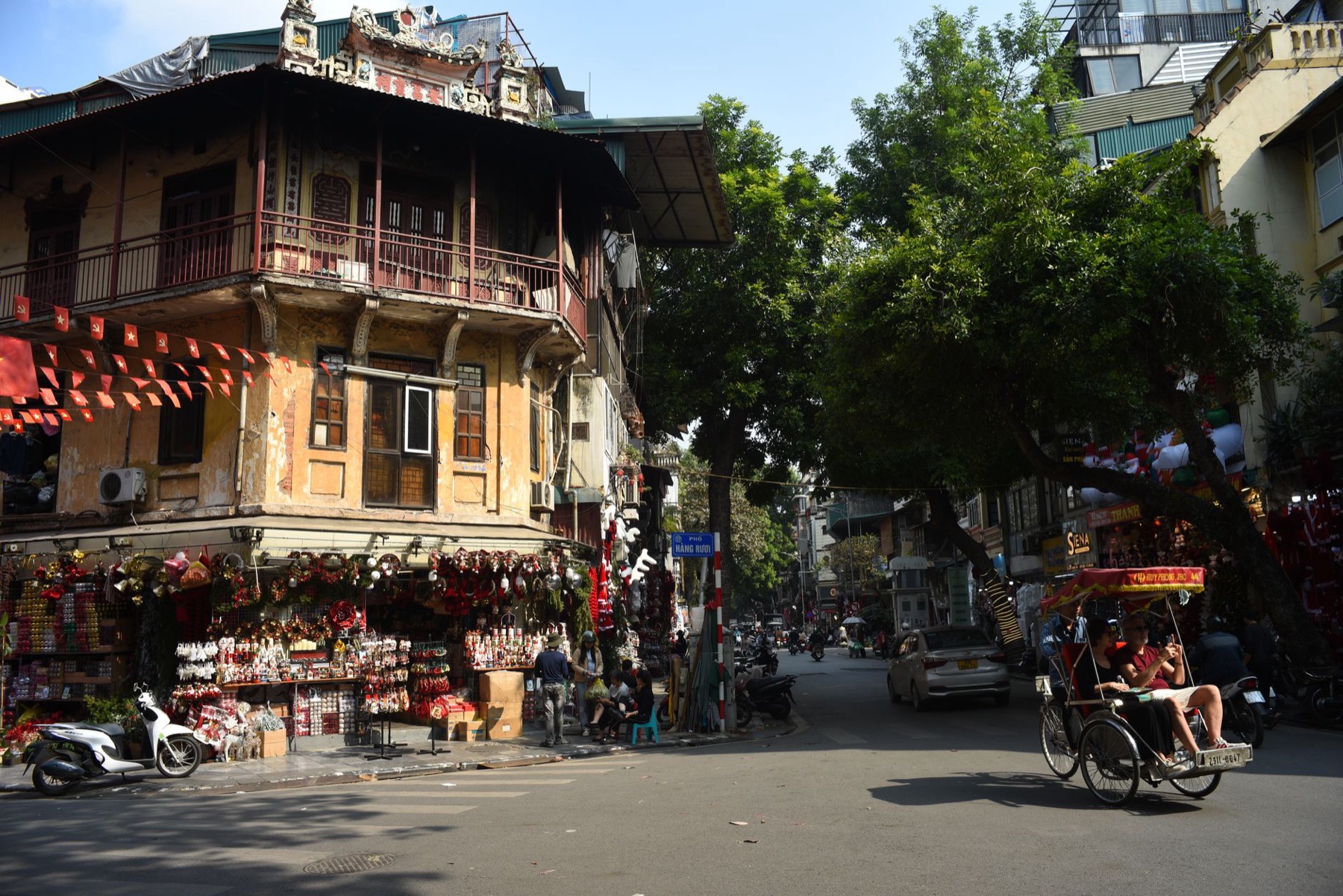
What's the difference between a banh mi stall and a banh mi shop?
A stall is a cart or counter in an alley; a shop is a small storefront. Both sell the same thing: a crispy baguette (legacy of French rule) filled with pâté, head cheese, pickled vegetables, cilantro and chili. A stall banh mi costs around 25,000–40,000 VND ($1–$1.60); a shop charges 35,000–60,000 VND ($1.40–$2.40) for the same sandwich. The difference is speed and seating. Stalls are eat-standing-up or take-away; shops give you a plastic chair. Locals prefer stalls near Hang Manh for breakfast (6–9 a.m.) because turnover is constant and ingredients rotate hourly. Avoid any banh mi with meat that's been sitting in a window for more than two hours; the pâté spoils fast in heat.
Where do locals eat lunch banh cha ca (grilled fish cake)?
Cha Ca La Vong street (between Hang Manh and Hang Dieu) is the banh cha ca heartland. Only four or five family shops operate there; most have run 30–50 years. A plate of grilled fish cake, noodles, peanut sauce and fresh herbs costs around 60,000–100,000 VND ($2.40–$4). These aren't tourist spots; they're where construction workers, office staff and retirees queue shoulder-to-shoulder at lunch (11:30 a.m.–1 p.m.). You sit elbow-to-elbow with strangers. The noise is overwhelming. The food is addictive. Don't expect English; just sit and eat what's brought. Evenings (after 2 p.m.) these places close or serve only alcohol.
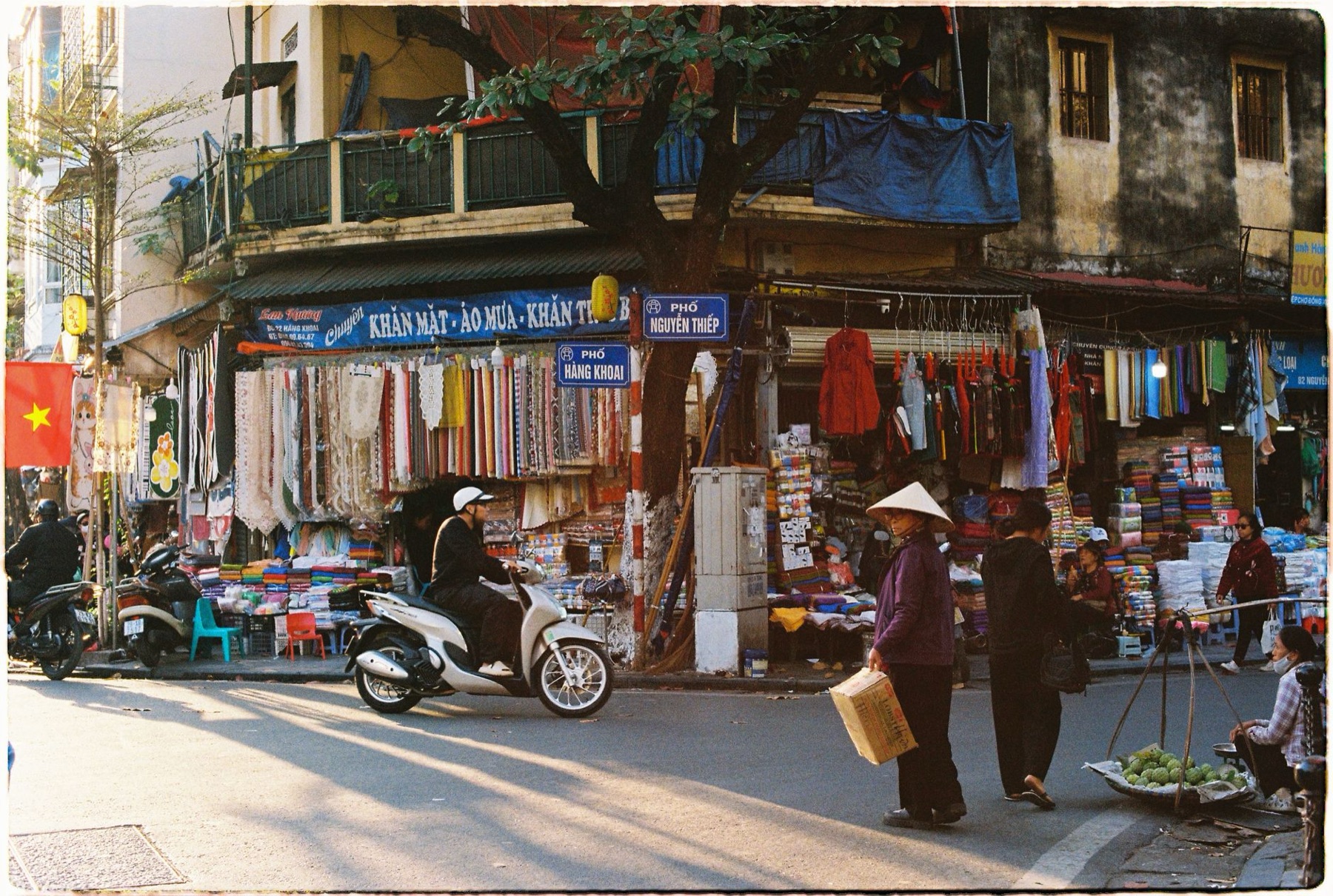
Should I eat seafood in the Old Quarter or wait for the coast?
Old Quarter seafood (crab, shrimp, fish) is freshwater or frozen; it's cheaper but less pristine than what you'll find in Ha Long Bay or Nha Trang. However, family-run shops around Hang Dieu and Hang Buom (the "streets of crab and sail") serve it well-cooked and hot for around 150,000–250,000 VND ($6–$10) per person including rice and soup. These aren't ambush-and-rush operations; they're generational businesses. The catch: you're paying for seasoning and technique, not ingredient quality. If you want ocean-fresh seafood, plan a Ha Long Bay trip instead. In the Old Quarter, order crab in black bean sauce (cua xao dau den) or shrimp with tamarind (tom me) rather than raw or steamed preparations, which expose freezer-burn.
🎟️ Compare tours & tickets for this place
Where do tourists eat badly in the Old Quarter, and how do you avoid it?
Ta Hien Street (the backpacker strip) and the southern rim near Hoan Kiem Lake have restaurants with English menus, inflated prices (around 200,000–400,000 VND / $8–$16 per dish) and inconsistent quality. Tourist menus exist because the stall owner saw a non-local and switched to perceived "safe" dishes: spring rolls that are cold, pho that's been reheated, and grilled meats with Western-style salt. Locals avoid Ta Hien entirely after 6 p.m. To eat well, walk one alley north or south into residential streets. Order what you see other locals eating, not what sounds familiar. Sit where there's a queue at lunch or dinner rush. Ask for "dac biet" (special/house special)—many stalls make an off-menu dish only locals know about. Use Google Translate's camera function to read Vietnamese-only signs, not to read reviews.
Comparison: Old Quarter Dining by Time, Budget & Vibe
| Type | Best time | Budget (per person) | Who it's for | Skip if... |
|---|---|---|---|---|
| Pho stall | 6:30–8 a.m. | 40–60K VND ($1.60–$2.40) | Early risers, purists | You want a sit-down breakfast |
| Banh mi stall | 7–10 a.m. or 11 a.m.–1 p.m. | 25–40K VND ($1–$1.60) | On-the-go, budget | You need napkins |
| Cha ca shop | 11:30 a.m.–1 p.m. | 60–100K VND ($2.40–$4) | Curious about local specialties | You dislike crowds or fish |
| Family seafood | 5–8 p.m. | 150–250K VND ($6–$10) | Groups, seafood lovers | Freezer burn bothers you |
| Tourist restaurant | 6–9 p.m. | 200–400K VND ($8–$16) | Comfort zone, English | You want authentic Hanoi |
Real Scams & How to Avoid Them
The "find my friend's restaurant" trap: A motorbike or cyclo driver offers to take you to a "secret local place." It's a commission scheme; the restaurant charges 30–40% markup and serves tourists, not locals. Walk on foot instead. The best places are never "found"—they're stumbled upon.
The menu switcheroo: You order from a photo menu on the wall; the server brings a different dish at a higher price. Confirm the price and dish name in Vietnamese (use your phone camera) before ordering.
The tourist-price bill: A bowl of pho that costs 40,000 VND for a local is charged 150,000 VND to a foreigner at a corner stall. Eat where you see no tourists. If you're the only outsider at a stall, you've likely found the right place.
The alcohol upgrade: A beer costs 25,000 VND in a stall; a shop charges 60,000 VND. Always ask the price before ordering a drink.
What to Check Before You Order
- Is there a queue at lunch or dinner rush? Lines mean high turnover and fresh ingredients. Empty stalls at 12 p.m. are warning signs.
- Are ingredients visible and being cooked live? Pho should be ladled from a pot you can see; banh mi should be assembled in front of you. Hidden kitchens often mean reheating.
- Is the menu in Vietnamese only? Tourist-friendly menus indicate tourist prices. No sign at all is even better.
- What's the plastic stool style? Faded, worn stools mean decades of service. Bright, clean stools mean a new tourist trap.
- Do locals sit at the same tables? If it's Hanoi residents eating shoulder-to-shoulder while you're seated alone, you're in the right place.
📸 Book an ao dai photoshoot in Hanoi or Saigon (Cáo Studio)
Honest Take: What's Overrated in the Old Quarter
The "must-try" egg coffee shops on the edges of the Old Quarter (near Hoan Kiem) are Instagram bait, not flavor bombs. A cup costs around 50,000–70,000 VND ($2–$2.80) and tastes like sweetened egg foam over cold coffee. Locals don't drink it; tourists photograph it. If you want coffee, order a bia (draught beer) or a simple ca phe den da (black iced coffee) from a stall for 15,000–25,000 VND ($0.60–$1).
Cyclo rides through the Old Quarter at sunset are expensive (around 300,000–500,000 VND / $12–$20 per person for 30 minutes) and slow. Walk instead. You'll see the same streets, eat better food on the go, and keep your money.
Links to Deepen Your Hanoi Trip
For more Hanoi dining and cultural tips, visit our main Hanoi guide. If you're planning a multi-week journey, use our Vietnam itinerary planner to slot Old Quarter meals into a broader route. Interested in capturing your Old Quarter experience? Book an ao dai photoshoot in Hanoi to frame your food adventures in traditional dress.
Expanding to other regions? Check out Ho Chi Minh City, Hoi An, Ninh Binh, and Sapa for regional eating styles. And don't forget: arrange your Vietnam e-visa and grab an eSIM for data so you can navigate stalls on Google Maps offline.
🗺️ Plan your route: Vietnam itinerary
FAQ
How much should I expect to spend on dinner for one person in the Old Quarter?
A stall meal (pho, banh mi, cha ca) runs 40,000–100,000 VND ($1.60–$4). A family seafood shop, 150,000–250,000 VND ($6–$10). A tourist restaurant, 200,000–400,000 VND ($8–$16). Budget around 300,000 VND ($12) if you want a mix of eating experiences in one evening.
Are there vegetarian options in the Old Quarter stalls?
Yes. Order "pho chay" (vegetarian pho with tofu instead of meat), "banh mi chay" (tofu banh mi), or "canh chua" (sour soup with vegetables and tofu). Most stalls have these; point or use translation. Around 35,000–60,000 VND ($1.40–$2.40) per dish.
What's the best way to order if I don't speak Vietnamese?
Use Google Translate's camera function to read signs and menus. Point at what other diners are eating. Say "nhu vay" (like that). For drinks, hold up fingers for quantity. Smiling and making eye contact matters more than perfect Vietnamese.
Do I need to make a reservation at Old Quarter restaurants?
No. Stalls and family shops operate first-come, first-served. Sit at a plastic stool when you arrive. If it's full, wait 5–10 minutes for turnover. Sit-down tourist restaurants take walk-ins but may have a 20–30 minute wait during peak lunch (noon–1 p.m.) and dinner (6–7 p.m.).
Is tap water safe to drink in the Old Quarter?
No. Always drink bottled water, tea or beer. Water bottles cost 10,000–20,000 VND ($0.40–$0.80) at stalls. Iced tea is free at most family restaurants; ask for "che da" (iced tea, no sugar) to avoid sweetness.
When should I avoid eating in the Old Quarter?
Avoid 2–5 p.m. (many stalls close between lunch and dinner). Avoid 9–10 p.m. (many places shut down). Avoid Ta Hien Street after 6 p.m. (overpriced, watered drinks). Best windows: 6–9 a.m. (breakfast), 11 a.m.–1 p.m. (lunch), 5–8 p.m. (dinner with locals).
FAQ
How much should I expect to spend on dinner for one person in the Old Quarter?
A stall meal (pho, banh mi, cha ca) runs 40,000–100,000 VND ($1.60–$4). A family seafood shop, 150,000–250,000 VND ($6–$10). A tourist restaurant, 200,000–400,000 VND ($8–$16). Budget around 300,000 VND ($12) if you want a mix of eating experiences in one evening.
Are there vegetarian options in the Old Quarter stalls?
Yes. Order "pho chay" (vegetarian pho with tofu instead of meat), "banh mi chay" (tofu banh mi), or "canh chua" (sour soup with vegetables and tofu). Most stalls have these; point or use translation. Around 35,000–60,000 VND ($1.40–$2.40) per dish.
What's the best way to order if I don't speak Vietnamese?
Use Google Translate's camera function to read signs and menus. Point at what other diners are eating. Say "nhu vay" (like that). For drinks, hold up fingers for quantity. Smiling and making eye contact matters more than perfect Vietnamese.
Do I need to make a reservation at Old Quarter restaurants?
No. Stalls and family shops operate first-come, first-served. Sit at a plastic stool when you arrive. If it's full, wait 5–10 minutes for turnover. Sit-down tourist restaurants take walk-ins but may have a 20–30 minute wait during peak lunch (noon–1 p.m.) and dinner (6–7 p.m.).
Is tap water safe to drink in the Old Quarter?
No. Always drink bottled water, tea or beer. Water bottles cost 10,000–20,000 VND ($0.40–$0.80) at stalls. Iced tea is free at most family restaurants; ask for "che da" (iced tea, no sugar) to avoid sweetness.
When should I avoid eating in the Old Quarter?
Avoid 2–5 p.m. (many stalls close between lunch and dinner). Avoid 9–10 p.m. (many places shut down). Avoid Ta Hien Street after 6 p.m. (overpriced, watered drinks). Best windows: 6–9 a.m. (breakfast), 11 a.m.–1 p.m. (lunch), 5–8 p.m. (dinner with locals).
More: Hanoi guide · What to eat in Hanoi