Hanoi · Food
Best Street Food Hanoi: Where to Eat & What to Order
By Wander in Vietnam editorial team · Hanoi, Vietnam
Hanoi street food isn't a museum piece. It's how most residents eat breakfast, lunch, and dinner—fast, cheap, and built on recipes that survive because they taste genuinely good, not because they're photogenic.
We've eaten at hundreds of stalls across the Old Quarter (Hang Dau, Hang Buom, Hang Dao streets), Tay Ho Ward, the French Quarter, and westward into Thanh Xuan. The difference between a memorable meal and a tourist-fleecing disaster comes down to one thing: knowing when to eat, where to sit, and what to actually order.
This guide cuts through Instagram hype and gives you a framework to find real food—the kind that doesn't need an English sign.
📸 Book an ao dai photoshoot in Hanoi or Saigon (Cáo Studio)
Where do locals eat street food in Hanoi?
The Old Quarter (36 Pho streets, mostly between Hang Dao and Tran Phu) is the obvious draw, but it's tourist-heavy and prices are inflated. Tay Ho Ward (near the lake) has quieter stalls catering to families and office workers—better value, less camera-waving. The French Quarter around Trang Tien has mid-range stalls popular with younger Vietnamese. For pure locals-only atmosphere, head to Dong Xuan Market (open early morning through early afternoon) or any covered market in Thanh Xuan District.
Real talk: If a stall has laminated color photos, an English menu, or a young guy aggressively waving you in, walk past.
What's actually worth eating (and what's overrated)?
Pho (pronounced "fuh"): Beef or chicken broth simmered 12+ hours, served with rice noodles, herbs, and beef slices you cook in the bowl. Around 35,000–50,000 VND ($1.40–$2.00). Eat before 10 a.m. (most stalls shut by 11). Don't skip: If you see a line of construction workers at 6:30 a.m., join them.
Banh mi (Vietnamese sandwich): Crispy baguette, mayo, pâté, pickled vegetables, cilantro, and your choice of meat (thit nuong = grilled pork, cha = head cheese, ga = chicken). Around 25,000–45,000 VND ($1.00–$1.80). Avoid: Stalls that leave pâté sitting unrefrigerated in heat. Good banh mi smells intensely of cilantro and char.
Com tam (broken rice): Short-grain rice (the bits that break off at mills) with grilled pork, an egg, tomato, and cucumber. Around 40,000–60,000 VND ($1.60–$2.40). Texture is softer than regular rice; texture haters often hate it first bite—give it two tries. Best time: 11 a.m.–2 p.m., any day.
Bun cha (charcoal-grilled pork with noodles): Two pork patties cooked over charcoal, served with rice noodles, fresh herbs, and dipping fish sauce. Around 50,000–70,000 VND ($2.00–$2.80). Real angle: Most tourists order it as a meal; locals eat it as a light lunch or dinner. Sip the broth, dunk the noodles, don't rush.
Egg coffee (ca phe trung): Whipped egg yolk and evaporated milk poured over espresso. Around 30,000–50,000 VND ($1.20–$2.00). Honest take: It's sweet, rich, and tasty as a dessert drink, not a caffeine delivery system. Expect 10+ minutes wait—it's made to order.
Hu tieu (clear pork or seafood soup with tapioca noodles): Around 40,000–60,000 VND ($1.60–$2.40). What to check: Ask if the broth was made fresh today (com hom nay?). If they hedge, try elsewhere.
Overrated: Grilled squid (muc nuong), unless you watch it cook. Pre-grilled squid sitting on a cart gets rubbery. Tom ram (shrimp in salt crust) is fun to watch but pricey (80,000–120,000 VND / $3.20–$4.80) and portion is small.
How much should I actually pay (and how to avoid scams)?
| Dish | Typical range | Red flags | Real price check |
|---|---|---|---|
| Pho | 35–50k VND | English menu, tourist photos, no line at 7 a.m. | Ask a motorbike-taxi driver: "Quanh day pho o dau?" (Where's good pho nearby?) |
| Banh mi | 25–45k VND | Ingredients pre-assembled in plastic wrap | Buy from a stall with a queue, not a shop front |
| Com tam | 40–60k VND | Pre-cooked rice under a heat lamp | Eat where the rice is being grilled fresh on the spot |
| Bun cha | 50–70k VND | Meat from a bucket (not grilled live) | Watch the charcoal grill; see the smoke |
| Egg coffee | 30–50k VND | Instant coffee powder (ask: ca phe nguyen chat?) | Sit down; let them make it fresh |
The scam framework: Hanoi vendors charge based on your accent. If you speak slowly and look lost, expect +15–25% markup. Pre-agreeing on price solves this: point to the dish, ask "Bao nhieu tien?" (How much?), confirm, then order.
Some stalls quote in USD to tourists, then charge at a worse exchange rate than your bank. Always pay in VND. Withdraw at ATMs (BIDV, VietinBank, ACB are reliable; find them on Google Maps).
🗺️ Plan your route: Vietnam itinerary
When should I eat street food to avoid stomach trouble?
Timing matters more than cleanliness. Eat at breakfast (6–10 a.m.) and lunch (11 a.m.–2 p.m.)—peak hours mean high turnover, fresh ingredients, and less time for anything to sit.
Avoid dinner street food unless you've eaten there before. Evening stalls restock mid-afternoon; if ingredients aren't moving, they sit in heat.
Real precautions:
- Use bottled or purified water (com hom nay? = Is this today's rice?).
- Wash hands at the stall's sink or use hand sanitizer before eating.
- Eat cooked food, not fresh salads.
- Choose stalls with a visible cash box (means high volume).
- If your stomach is sensitive, stick to pho and banh mi (both require boiling water).
Most traveler stomach issues come from hotel buffets or unfamiliar spices, not street stalls. Locals eat street food because it's safe and regulated by word-of-mouth.
Which neighborhoods have the best street food neighborhoods?
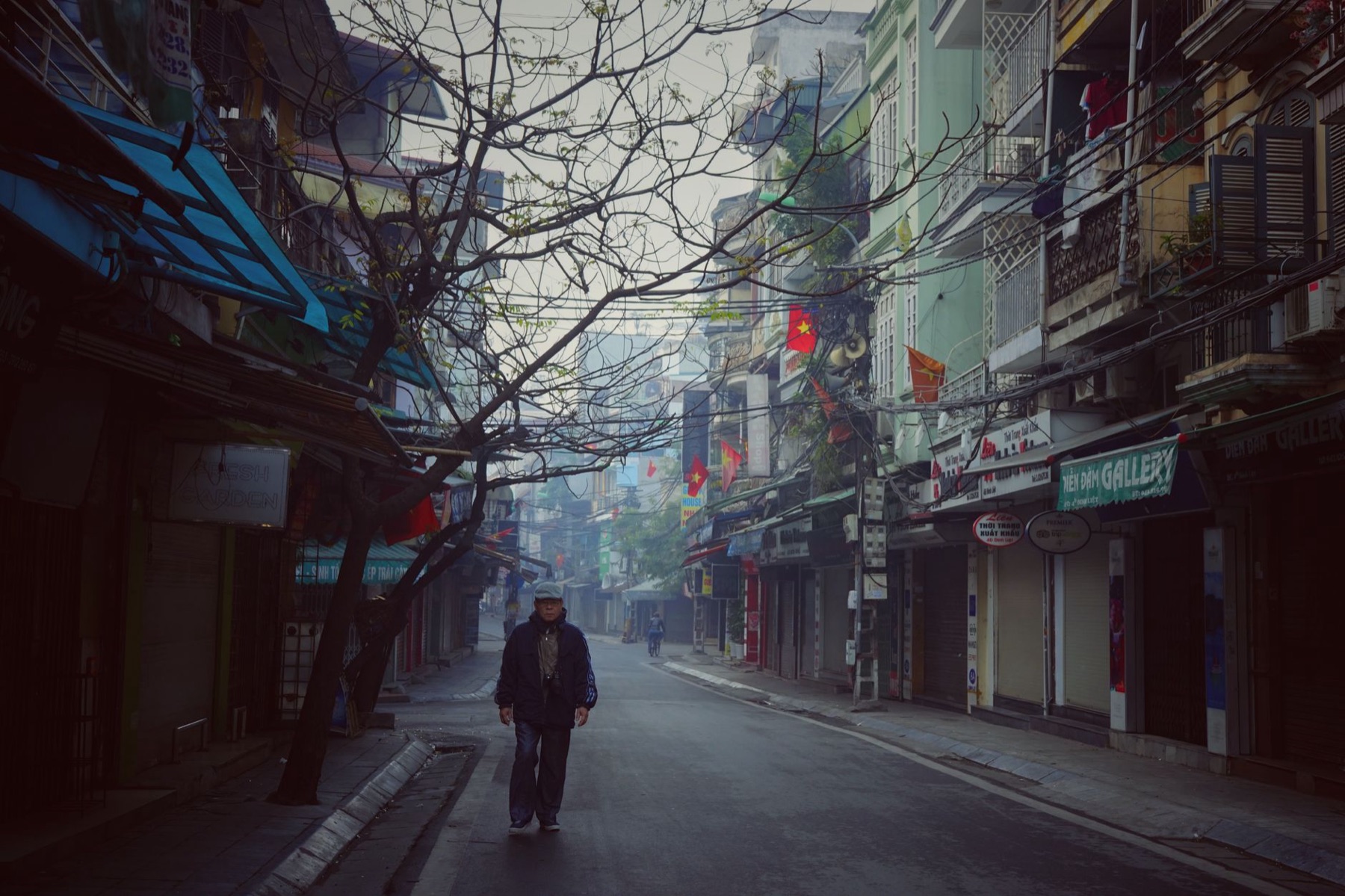
Old Quarter (Hoan Kiem District): Pho, banh mi, egg coffee on every corner. Hang Dao, Hang Buom, and Hang Ga streets. Noise level: High. Tourist density: Very high. Best for: First-timers, photo ops, 11 p.m. stumbling (night stalls open after bars close). Honest take: Quality is uneven; price is inflated +20–30%.
Tay Ho Ward: Lake-side alleys near Nhat Chieu and Au Co streets. Quieter, locals, morning pho and com tam dominates. Noise level: Low. Tourist density: Low. Best for: Returning visitors, authentic experience, real prices. Trade-off: Fewer English speakers; walk around, follow noses.
French Quarter (Ba Dinh District): Trang Tien, Tran Hung Dao area. Mix of upscale and street stalls. Pho, bun cha, hu tieu. Noise level: Medium. Tourist density: Medium. Best for: Daytime eating if you're near Hoan Kiem Lake or St. Joseph Cathedral. Real angle: Evening bun cha stalls here are excellent and less touristy than Old Quarter.
Dong Xuan Market (Hoan Kiem District): Historic covered market (built 1889). Pho, banh mi, noodle soups inside. Open 6 a.m.–midday most days. Noise level: Very high (echo in metal roof). Tourist density: Medium (mixed crowd). Best for: Breakfast, seeing how food is made, experiencing controlled chaos. Heads up: Pickpockets work crowds here; keep phone in front pocket.
How do I choose a stall if I don't speak Vietnamese?
Use this framework:
- Watch for locals. If you see office workers, construction crews, or families, the food is probably good and the price is fair.
- Check the queue. Line = turnover = fresh ingredients. No line at 7 a.m. for a pho stall? Walk.
- Smell the broth. Real pho smells meaty and aromatic, not like a spice tin. Egg coffee should smell like coffee and caramelized egg.
- Ask the price first. Point to the dish, say "Bao nhieu?" (How much?). If they're vague or quote in USD, move on.
- Watch the cook. Is meat sizzling on charcoal now, or sitting in a tray? Is the rice being plated fresh, or sitting under a heat lamp?
- Eat where you stand or sit immediately. Food sitting wrapped in plastic for 20 minutes isn't fresh, no matter how good the stall's reputation.
Real-world example: We stopped at a com tam stall on the corner of Tran Phu and Hang Ga (Old Quarter edge) at 11:45 a.m. on a Tuesday. Eight Vietnamese customers, no tourists. Grilled pork sizzling on-site, rice being pressed to order, fresh herbs in bowls. Cost 45,000 VND ($1.80). That's the stall archetype worth hunting for.
🎟️ Compare tours & tickets for this place
What to check before you buy (honest anti-scam checklist)
- [ ] Price agreed in VND before ordering (no "we'll see" or USD quotes)
- [ ] Ingredients cooked or assembled in front of you (not pre-prepped)
- [ ] Stall has a visible, busy crowd (tourists or locals; both signal turnover)
- [ ] Condiments and fish sauce are at your table (you control flavor; cheap insurance against "bland food" complaints)
- [ ] Water is bottled or purified (ask: "Nuoc co gas?" = Is it carbonated? If yes, it's sealed; if no, ask for a bottle)
- [ ] No laminated English menus (hand-written signs or spoken menu = better odds)
- [ ] Eating time is 6–10 a.m. or 11 a.m.–2 p.m. (peak turnover windows)
- [ ] You've asked a local (hotel staff, taxi driver, passerby) where they eat (not tripadvisor, not YouTube)
---
Other Hanoi food experiences worth combining with street food
If you're spending a full day eating in Hanoi, consider pairing street food with a cooking class or market tour. Explore Hanoi's broader food scene to see options—some combine market visits with stall-to-table eating.
For a keepsake of your meal (or gift inspiration), we offer Vietnam-themed kitchen prints and personalized recipe cards and food-inspired home decor.
If you're staying a few days, use our Hanoi guide to map neighborhoods and Vietnam itinerary planner to schedule meals around transit and activities.
---
FAQ
Is street food in Hanoi safe to eat?
Yes—more reliable than hotel buffets. Eat during peak hours (6–10 a.m., 11 a.m.–2 p.m.), choose stalls with high turnover, and use the price-check framework above. Locals eat street food three meals a day; stomach issues are usually from unfamiliar spices, not food safety.
How much should I budget for street food per day?
Budget around 150,000–300,000 VND ($6–$12 USD) per day for three meals—breakfast pho (40k), lunch banh mi and coffee (50k), dinner bun cha or com tam (70k), plus snacks. Actual spending often trends lower if you eat where locals do.
Can I use a credit card or must I pay cash?
Cash only at stalls. Withdraw VND at ATMs (BIDV, ACB, VietinBank chains are reliable). Use credit cards at restaurants or supermarkets, never at street food vendors.
What's the difference between pho and bun cha?
Pho is noodle soup; bun cha is noodles served with charcoal-grilled pork and dipping sauce, not in broth. Pho is breakfast/comfort; bun cha is lunch/dinner. Both around 40–70k VND ($1.60–$2.80).
Should I eat street food at night or stick to lunch?
Lunch (11 a.m.–2 p.m.) is safest—fresh ingredients, high turnover. Night stalls (8 p.m.+) cater to bar crowds and can be inconsistent. If you want dinner street food, go early (5–7 p.m.) before the late-night scene starts.
How do I know if a stall is clean if I can't read Vietnamese?
Watch the cook's hands (are they washed?), check if utensils are rinsed between customers, and see if the stall has running water on-site. If you feel uncertain after 30 seconds of observation, walk away—there's always another stall 50 meters down the street.
Is egg coffee really made with raw eggs?
Yes, raw egg yolk and evaporated milk. If this concerns you, order regular iced coffee (ca phe sua) instead—same cafes, no egg. Cost is the same (30–50k VND / $1.20–$2.00).
FAQ
Is street food in Hanoi safe to eat?
Yes—more reliable than hotel buffets. Eat during peak hours (6–10 a.m., 11 a.m.–2 p.m.), choose stalls with high turnover, and use the price-check framework above. Locals eat street food three meals a day; stomach issues are usually from unfamiliar spices, not food safety.
How much should I budget for street food per day?
Budget around 150,000–300,000 VND ($6–$12 USD) per day for three meals—breakfast pho (40k), lunch banh mi and coffee (50k), dinner bun cha or com tam (70k), plus snacks. Actual spending often trends lower if you eat where locals do.
Can I use a credit card or must I pay cash?
Cash only at stalls. Withdraw VND at ATMs (BIDV, ACB, VietinBank chains are reliable). Use credit cards at restaurants or supermarkets, never at street food vendors.
What's the difference between pho and bun cha?
Pho is noodle soup; bun cha is noodles served *with* charcoal-grilled pork and dipping sauce, not in broth. Pho is breakfast/comfort; bun cha is lunch/dinner. Both around 40–70k VND ($1.60–$2.80).
Should I eat street food at night or stick to lunch?
Lunch (11 a.m.–2 p.m.) is safest—fresh ingredients, high turnover. Night stalls (8 p.m.+) cater to bar crowds and can be inconsistent. If you want dinner street food, go early (5–7 p.m.) before the late-night scene starts.
How do I know if a stall is clean if I can't read Vietnamese?
Watch the cook's hands (are they washed?), check if utensils are rinsed between customers, and see if the stall has running water on-site. If you feel uncertain after 30 seconds of observation, walk away—there's always another stall 50 meters down the street.
Is egg coffee really made with raw eggs?
Yes, raw egg yolk and evaporated milk. If this concerns you, order regular iced coffee (ca phe sua) instead—same cafes, no egg. Cost is the same (30–50k VND / $1.20–$2.00).
More: Hanoi guide · What to eat in Hanoi