Hanoi · Food
Food Tours in Hanoi: Compare Types, Prices & What to Book
By Wander in Vietnam editorial team · Hanoi, Vietnam
Food tours in Hanoi range from budget street-food walks (around $15–30 USD) to full-day market-and-cook experiences (around $50–90 USD). Walking tours cover Old Quarter alleys and night markets; cooking classes teach you to make pho, banh mi, or spring rolls. Wander in Vietnam recommends pairing tours with independent eating—you'll find equally good dishes at half the price in local-only spots.
What Type of Food Tour Matches Your Budget and Goals?
Three main tour styles exist in Hanoi: walking tours (half to full day, typically $15–50 USD per person), cooking classes (2–4 hours, $25–80 USD), and market-to-table experiences (full day, $40–90 USD). Walking tours work best if you want speed and variety; cooking classes suit you if you want skills; market tours suit foodies who enjoy early mornings and ingredient sourcing. Solo travelers and small groups join public tours; families and groups often book private guides. Budget constraints? Walking tours eat into less of your daily spend and let you eat where locals do, often cheaper than any tour ending.
Should You Book a Walking Tour or Go Solo to Street-Food Spots?
Walking tours bundle convenience—a guide navigates alleys, explains dishes, and secure spots at crowded stalls. Expect to spend $20–40 USD and taste 5–8 dishes in 2–3 hours. The catch: you pay a markup, portions are tour-sized (not filling), and you visit the same stalls every guide recommends. Solo alternative: grab a map, hit Hang Manh or Ta Hien Street at dusk, order at random stalls, spend $5–10 USD, eat more, meet real vendors. Both have merit. Tours work if you're nervous about hygiene or language; solo works if you're adventurous and want authenticity.
| Tour type | Who it's for | Rough cost per person | Why it matters |
|---|---|---|---|
| Walking tour (Old Quarter) | Nervous travelers, first-timers | $20–40 USD | Curated stops, language help, guaranteed seating |
| Solo street-food hunt | Budget backpackers, foodies | $5–15 USD | Authentic crowds, full bellies, real prices |
| Cooking class | Skill-builders, group travelers | $30–80 USD | Take recipes home, hands-on learning, dietary control |
| Market tour (sunrise) | Early risers, ingredient nerds | $50–90 USD | See sourcing, class in market stall, includes lunch |
| Night market walk | Families, casual eaters | $15–35 USD | Less crowded than day, festive vibe, good photo ops |
Where Do Tours Take You, and Are Those Neighborhoods Worth Your Time?
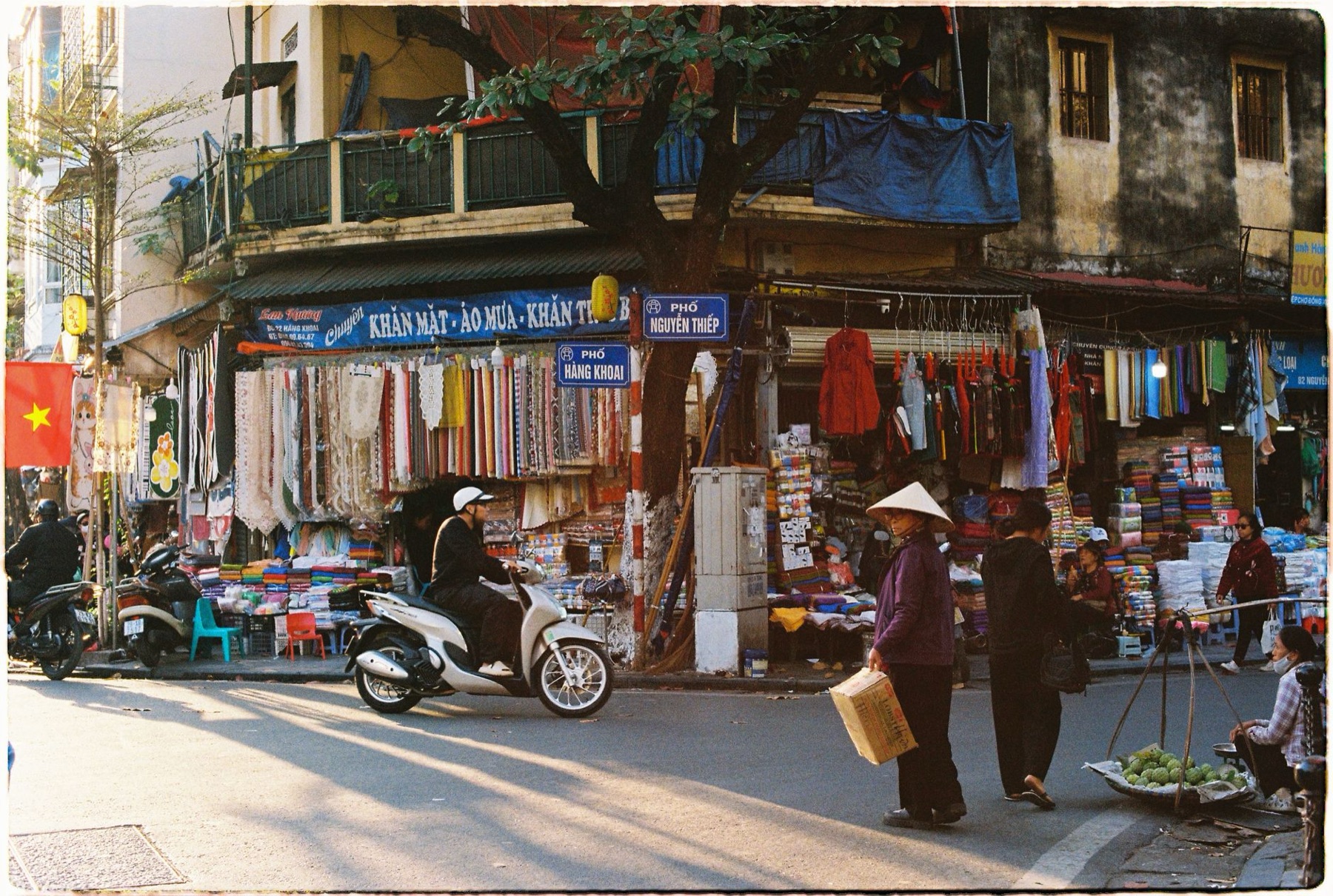
Old Quarter (Hoan Kiem District, around Hang Manh, Ta Hien, Hang Gai): most tours start here. Touristy but genuine—locals eat alongside visitors. Stalls close by 9 p.m. Night markets (typically Hang Buom, Hang Bac areas opening around 6 p.m.): less known to new travelers; real crowds, food carts vanish by midnight. Tran Hung Dao (southern Old Quarter edge): fewer tours, excellent banh mi and com tam vendors, lower prices. Ba Trieu (northern Old Quarter): legendary pho lane; go early (5:30–7 a.m.) before tour buses arrive. Tours cluster around Old Quarter because it's walkable and dense, but the best-value eats are three blocks south or north of the main drag.
🗺️ Plan your route: Vietnam itinerary
What Should You Eat on a Hanoi Food Tour, and Why Are Some Dishes Overpriced?
Must-try (and worth the tour price): pho (beef or chicken noodle soup, $1–3 USD at stalls), banh mi (crusty sandwich, $1–2 USD), spring rolls (fried or fresh, $1–2 USD), com tam (broken-rice, $2–3 USD with meat). Overpriced on tours: shrimp cake, grilled meats, egg coffee. Vendors add a markup for group orders; you pay $4–6 USD for a shrimp cake a local buys for $1.50 USD. Tours shine when they steer you to lesser-known stalls—bun dau mam tom (tofu and fermented shrimp, intense), snail soup, or turmeric fish. Ask your guide: "Where do you eat on your day off?" That answer beats the scripted stops.
How Do You Actually Book and Avoid Common Tour Scams?
Booking methods: hotel concierge (often inflated), online platforms (Viator, GetYourGuide—check reviews but expect some are unreliable), or direct contact with local operators via email. Costs overlap across platforms; compare the same guide's offer on two sites—you'll find $5–15 USD price gaps. Scam red flags: tours advertised at suspiciously low prices ($5–8 USD), pickup at unmarked addresses, no cancellation policy, guides who push expensive upsells mid-tour, or "hidden fees" at checkout. Safe approach: book with operators who list their real address (not a hotel), confirm the itinerary in writing, check recent reviews from travelers (not influencers), and avoid payment to personal accounts. Many small guides are trustworthy; verify with a local travel shop or your accommodation first.
What to Check Before You Book a Food Tour
- Group size cap: small groups (4–8 people) eat better; large tours (15+) mean shorter stops.
- Itinerary detail: does it list specific stalls or just "local street food"? Named stalls are safer.
- Dietary restrictions: does the operator confirm they can accommodate vegetarian, vegan, or allergy needs before booking?
- Cancellation window: can you cancel free if plans change?
- Included drinks: are beverages (water, coffee, beer) included or extra?
- Walking distance: how many kilometers over how many hours? Bring comfortable shoes.
- Meeting point: is it central (Hoan Kiem Lake area), or does pickup cost extra?
- Language: will the guide speak English clearly, or do you prefer a different language?
- Time of tour: sunrise (5–7 a.m.) vs. afternoon (3–5 p.m.) vs. night (6–9 p.m.) affects what you eat and the crowd you join.
🎟️ Compare tours & tickets for this place
Real advice: pair one curated tour (to learn Hanoi's food logic) with 3–4 solo eats. You'll taste more, spend less, and remember the vendors' faces more than a guide's script. If cooking is your goal, a class (even pricey at $60–80 USD) teaches transferable skills; eating alone does not.
Beyond Hanoi, food tours work similarly in Ho Chi Minh City and Hoi An; both cities have strong market-tour cultures. Ha Long Bay and Ninh Binh offer coastal seafood tours. If you're building a multi-city trip, check our Vietnam itinerary planner to slot tours into your schedule.
📸 Book an ao dai photoshoot in Hanoi or Saigon (Cáo Studio)
FAQ
Can I do a food tour alone, or do I need a group?
Solo travelers join public tours daily; most operators accept 1–2 people. You'll share a guide with 4–15 others. If you prefer privacy, book a private guide (roughly $50–100 USD per tour). Public tours are cheaper and more social.
What if I'm vegetarian or vegan—are food tours flexible?
Many tours have meat-heavy itineraries (pho, banh mi, spring rolls). Notify the operator before booking; honest guides will confirm they can source plant-based swaps. Otherwise, go solo and hit veggie-focused stalls like banh mi places with extra vegetables or com tam with tofu.
Do I need to book a tour online, or can I find one in Hanoi after I arrive?
Both work. Online booking (Viator, GetYourGuide) guarantees a slot and English-language certainty. Local booking (at your hostel or a travel shop on Ma May Street, Old Quarter) often costs less ($5–10 USD cheaper) but requires day-of confirmation. Book 1–2 days ahead for best availability.
How much should I tip a food-tour guide?
Tipping is not mandatory in Vietnam but appreciated. $5–10 USD per person for a half-day tour, $10–15 USD for full day, is standard among international tours. Local guides may not expect tips; a simple thank you suffices. If the guide goes above (fixes a dietary issue, finds you the best pho in town), tip generously.
Are food tours better in the morning or evening?
Morning (5–7 a.m.) hits pho stalls at peak; you eat the freshest broth. Evening (6–9 p.m.) crowns the night-market vibe and is less rushed. Afternoon tours are cheaper and calmer but hit stalls during their slow hours. Choose based on your energy and what dishes matter most to you.
Will a food tour fill me up, or do I need to eat lunch separately?
Tours serve tasting portions, not full meals. Expect to eat 5–8 small dishes over 2–4 hours—enough for breakfast or a light lunch, but not a full day's calories. Budget an extra meal, or pair with a cooking class that ends with a full lunch.
FAQ
Can I do a food tour alone, or do I need a group?
Solo travelers join public tours daily; most operators accept 1–2 people. You'll share a guide with 4–15 others. If you prefer privacy, book a private guide (roughly $50–100 USD per tour). Public tours are cheaper and more social.
What if I'm vegetarian or vegan—are food tours flexible?
Many tours have meat-heavy itineraries (pho, banh mi, spring rolls). Notify the operator *before* booking; honest guides will confirm they can source plant-based swaps. Otherwise, go solo and hit veggie-focused stalls like banh mi places with extra vegetables or com tam with tofu.
Do I need to book a tour online, or can I find one in Hanoi after I arrive?
Both work. Online booking (Viator, GetYourGuide) guarantees a slot and English-language certainty. Local booking (at your hostel or a travel shop on Ma May Street, Old Quarter) often costs less ($5–10 USD cheaper) but requires day-of confirmation. Book 1–2 days ahead for best availability.
How much should I tip a food-tour guide?
Tipping is not mandatory in Vietnam but appreciated. $5–10 USD per person for a half-day tour, $10–15 USD for full day, is standard among international tours. Local guides may not expect tips; a simple thank you suffices. If the guide goes above (fixes a dietary issue, finds you the best pho in town), tip generously.
Are food tours better in the morning or evening?
Morning (5–7 a.m.) hits pho stalls at peak; you eat the freshest broth. Evening (6–9 p.m.) crowns the night-market vibe and is less rushed. Afternoon tours are cheaper and calmer but hit stalls during their slow hours. Choose based on your energy and what dishes matter most to you.
Will a food tour fill me up, or do I need to eat lunch separately?
Tours serve tasting portions, not full meals. Expect to eat 5–8 small dishes over 2–4 hours—enough for breakfast or a light lunch, but not a full day's calories. Budget an extra meal, or pair with a cooking class that ends with a full lunch.
More: Hanoi guide · What to eat in Hanoi