Hanoi · Food
Hanoi Food Guide: Street Eats, Markets & Local Restaurants
By Wander in Vietnam editorial team · Hanoi, Vietnam
Hanoi eats in neighborhoods, not at signboards. When we visit a ward for the first time, we ask: where do taxi drivers breakfast? Where do construction crews lunch? Where do grandmothers shop for dinner ingredients? That's where the food is—and it costs almost nothing.
This guide maps the city by food type and neighborhood, gives you real prices in VND and USD, tells you what works and what doesn't, and helps you decide where to spend your appetite.
Where do locals really eat breakfast in Hanoi?
Between 6 and 8 a.m., Hanoi runs on phở, bánh mì, and cơm tấm. The Old Quarter (Hoan Kiem district) floods with dawn vendors: plastic stools, one-pot stalls, no English signs. Tran Quoc Tuan Lane, parallel to Hoan Kiem Lake's east edge, fills with phở carts by 6:30 a.m.—expect around 35,000 VND ($1.50 USD) for a bowl of beef phở, 30,000 VND ($1.25 USD) for chicken. The broth is boiled overnight; the noodles are fresh daily. By 10 a.m., most carts close.
Bánh mì (Vietnamese sandwich) stalls cluster near Hang Gai Street and around Hang Be Market. A filled bánh mì with pâté, egg, and pickled vegetables costs around 25,000–35,000 VND ($1–1.50 USD). The bread is baked in-house or from a local supplier; if the crust isn't crisp, walk on.
Cơm tấm (broken-rice bowls with grilled pork, fried egg, pickled onion) centers on the lanes west of Hoan Kiem—especially Hang Muoi and Pho Duc Chinh streets. Around 40,000 VND ($1.70 USD) gets you a full plate. Arrive before 9 a.m.; breakfast crowds clear by 10.
Which markets should you visit and which ones are tourist setups?
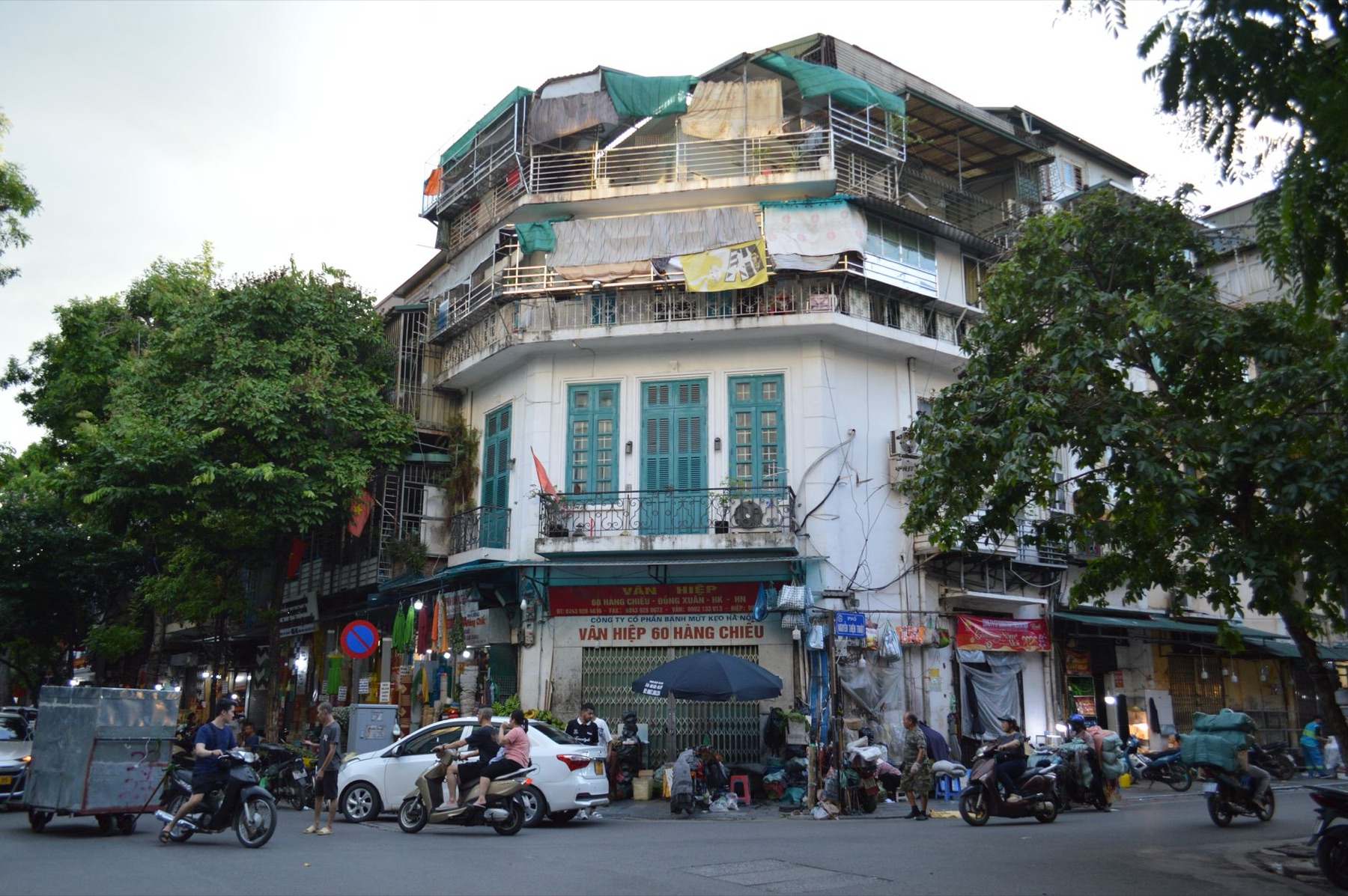
Dong Xuan Market (largest covered market in the Old Quarter, Hoan Kiem district) opens 6 a.m.–noon and again 3–7 p.m. Go before 8 a.m. for produce, fresh herbs, eggs, and meat. No English signs; no printed prices; vendors quote prices in VND only. Bring a calculator app if you're unfamiliar with numbers. The basement level sells prepared foods: rice paper rolls, tofu, pickled items. Prices are what locals pay—a kilo of fresh turmeric, around 15,000–20,000 VND ($0.65–0.85 USD). This is real; no touristic upcharge.
Hang Be Market (smaller, older, Hoan Kiem district, very crowded) specializes in dry goods, spices, and herbs. Open 6 a.m.–5 p.m. daily. It's where locals buy star anise, cinnamon, dried mushrooms, and fresh herbs by weight. Prices are best at opening; crowds thin by 8 a.m.
Old Quarter night markets (6 p.m.–11 p.m., scattered on Hang Gai and Hang Ngang streets when pedestrianized) are semi-touristic: you'll see both locals and visitors. Prices are slightly higher than daytime stalls but still cheap—fried squid around 50,000 VND ($2.15 USD) per stick. Quality varies; buy from stalls with queues.
Avoid: "Authentic market tours" that charge $15–$25 USD per person and are led by English-speaking guides. You end up at a stall where the vendor gives the guide a cut, prices spike, and you leave with a souvenir you didn't want.
What are the must-try dishes and where do you find them?
| Dish | What It Is | Where in Hanoi | Approx. Price (VND) | Time to Go |
|---|---|---|---|---|
| Phở | Rice noodle soup (beef or chicken) | Tran Quoc Tuan Lane, Hang Gai St. | 30,000–40,000 | 6–9 a.m. |
| Bánh mì | Crispy baguette sandwich (pâté, egg, pickles) | Hang Gai, Pho Duc Chinh | 25,000–35,000 | Any time |
| Bún chả | Grilled pork over rice noodles + dipping broth | Hang Manh St. (alley), Ta Hien St. | 40,000–60,000 | Lunch (11–2 p.m.) |
| Cơm tấm | Broken rice + grilled pork + fried egg | Hang Muoi, Pho Duc Chinh | 35,000–50,000 | 6–9 a.m. |
| Egg coffee | Espresso topped with whipped egg yolk | Coffee shops, Hang Gai, Hoan Kiem Lake | 40,000–70,000 | Anytime |
| Bánh hoàn | Pork-filled crispy wonton soup | Hang Gai (multiple small stalls) | 20,000–30,000 | 7–10 a.m. |
| Grilled snails | Escargot in lemongrass sauce (with toothpick) | Hang Manh alley, Ta Hien St. | 50,000–80,000 per plate | 5–10 p.m. |
| Cơm cháy | Crispy rice cakes + stir-fried toppings | Tran Quoc Tuan, Hang Gai | 30,000–45,000 | 6–9 a.m. |
| Bánh cuốn | Steamed rice paper rolls + pork + mushroom | Hang Gai, Tran Quoc Tuan | 20,000–35,000 | 7–11 a.m. |
Real notes: Prices at stalls vary ±10% based on tourist density and time of day. Early morning stalls are always cheaper. "Tourist" restaurants on Hang Gai and Ta Hien streets charge 3–5 times more; locals eat in alleys and side streets without signs.
How do you order if you don't speak Vietnamese?
Most Old Quarter breakfast and lunch stalls have no English menu. The vendor speaks minimal English. Here's the framework:
1. Point at what someone else is eating. You'll see—phở, bánh mì, cơm tấm—on people's tables or plates. Say "like that" or nod.
2. Use your phone's camera or Google Translate camera mode. Snap a photo of the menu board (if there is one) or the food display. Translate to English. The translation won't be perfect, but you'll know what's in it.
3. Hold up fingers for quantity. One finger = one bowl/plate. Two fingers = two bowls/plates. Standard serving is one bowl or plate per person.
4. Ask the price with a question mark: "Bao nhiêu?" (BAO NYOO-OO?) If the vendor replies in rapid Vietnamese numbers, show them your phone calculator and ask them to tap in the price.
5. Pay cash in small notes. Vendors rarely accept cards. Have 50,000 VND notes and coins (10,000, 5,000, 2,000). If you pay a 50,000 note for a 35,000 VND meal, expect change in coins.
6. If you're unsure about cleanliness: Watch how busy the stall is. High turnover = fresh ingredients. If a stall looks empty at typical meal times, skip it.
What neighborhoods have the best food scenes and how do you navigate them?
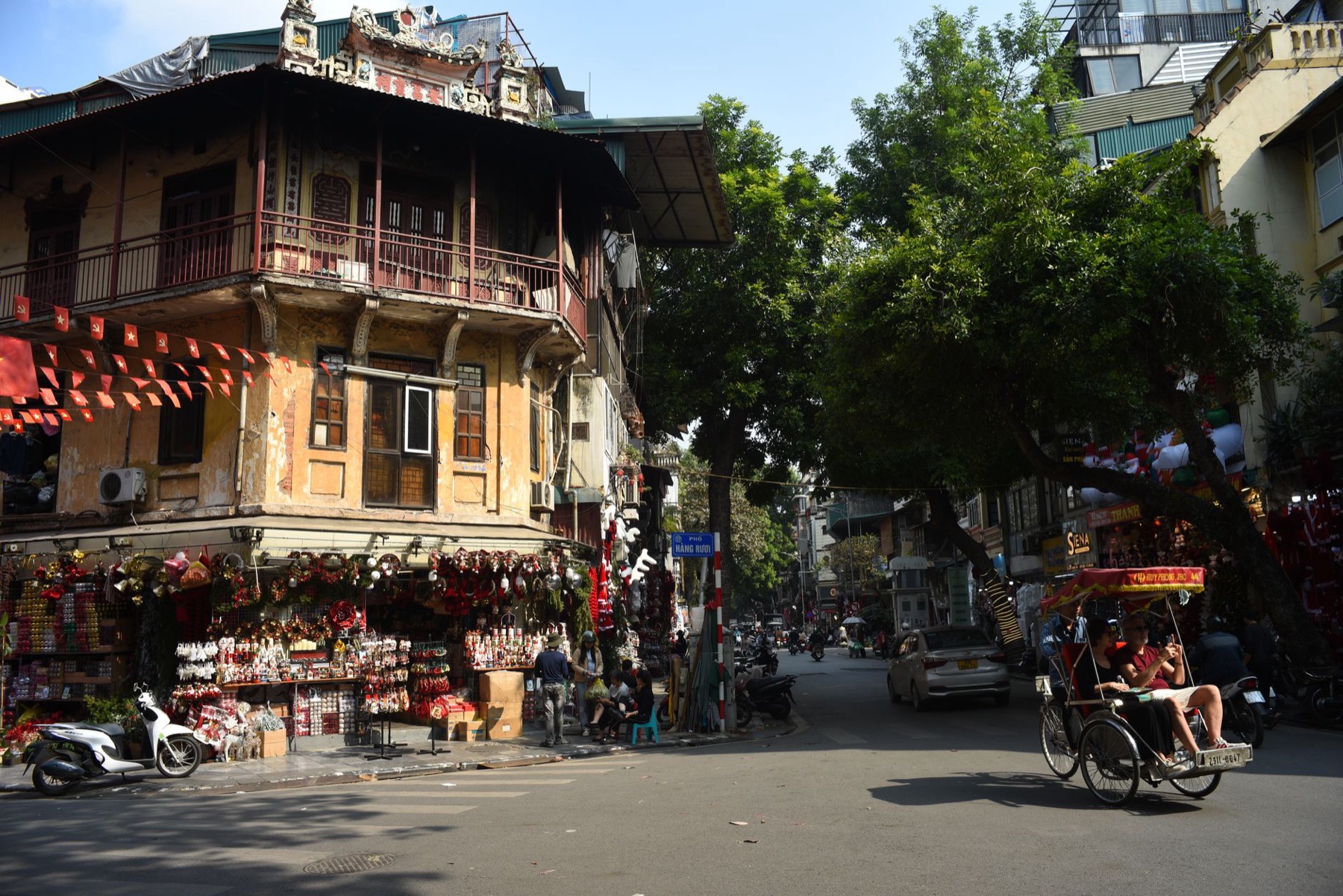
Old Quarter (Hoan Kiem District): The densest food zone. Hang Gai, Tran Quoc Tuan, Hang Manh, Pho Duc Chinh, Ta Hien streets. Breakfast stalls 6–9 a.m., lunch spots 11 a.m.–2 p.m., evening snack carts 5–10 p.m. Every lane has phở, bánh mì, and egg coffee. Most reliable time: 7–8 a.m. Avoid between 12–1 p.m. on weekends (crowds and heat).
French Quarter (Ba Dinh District): Less chaotic than Old Quarter. Parks, tree-lined streets, colonial architecture. Fewer street stalls, more sit-down cafés and small restaurants. Egg coffee shops dot Hang Gai and streets around Hoan Kiem Lake. Good for a slower breakfast or lunch if you want air conditioning and a menu in English.
West Lake (Tay Ho District): Upscale food scene. More Western influences. Vietnamese restaurants with English menus, foreign fast food, waterfront cafés. Prices 2–3 times higher than Old Quarter. Go for the views and Western comfort, not authentic street food.
Thanh Xuan District (south of city center): Local neighborhoods with lower tourist presence. Real home-cook restaurants, bánh mì stalls, and pho spots. If you're staying in Thanh Xuan or Dong Da, eat breakfast and lunch locally—you'll pay 10,000–30,000 VND less than Old Quarter equivalents.
Map tip: Use Google Maps offline in Hanoi (download the map before arrival). Search "phở near me" or "bánh mì" and it will show stall locations. Open the map and drop a pin at your hotel; plan a walking route to food clusters. Most Old Quarter food is within a 10-minute walk.
---
🗺️ Plan your route: Vietnam itinerary
What's overrated and what's genuinely worth your time?
Overrated: Egg coffee at a tourist-branded café (charges 70,000–100,000 VND ($3–4.30 USD) vs. local spot at 40,000 VND ($1.70 USD) for the same drink). The product is identical; the markup is not. Go to a local café on a side street, not a branded shop on Hang Gai.
Overrated: "Old Quarter food tours" sold to travelers ($12–$25 USD). You end up at vendor-partner stalls where prices are hiked and you eat rushed and guided. Better: walk alone, eat where you see queues, sit as long as you want.
Genuinely worth it: Street-side phở at 6:30 a.m. in the Old Quarter. The meat is boiled overnight, the broth is rich, the noodles are fresh. It's the best and cheapest breakfast you'll have in Hanoi.
Genuinely worth it: Grilled snails (ốc nướng) on Ta Hien or Hang Manh streets after 6 p.m. The snails are cooked to order, served with toothpicks, and paired with beer or soft drinks. Around 50,000–80,000 VND ($2.15–3.40 USD) per plate for 6–10 snails. It's theatrical, delicious, and quintessentially Hanoi.
Genuinely worth it: Cơm tấm (broken rice) at a local stall. Cheap, filling, and unique to Vietnam. A full plate with pork, fried egg, pickled onion, and tomato is around 35,000–50,000 VND ($1.50–2.15 USD).
Skip: Restaurants on Ta Hien Street catering only to backpackers (bright signs in English, loud music, beer promotions). Food quality is mediocre, prices are 2–3x higher, and you're eating with other tourists, not locals.
Skip: Expensive "traditional" restaurants in the French Quarter charging 200,000+ VND ($8.50+ USD) per dish. The same dish costs 40,000–60,000 VND at a local stall. Unless you want air conditioning and a waiter, you're paying for ambiance, not flavor.
---
📸 Book an ao dai photoshoot in Hanoi or Saigon (Cáo Studio)
What to check before you eat at a street stall
Cleanliness: Observe for 2–3 minutes before ordering. Is the vendor washing utensils in clean water? Are ingredients covered or exposed to dust? Is trash on the ground or in a bin? High standards here = safer food. If you see raw meat or vegetables left uncovered in heat, move on.
Crowd traffic: Stalls with queues or constant customers have higher turnover and fresher ingredients. Empty stalls, especially at typical meal times, may indicate slower sales or lower quality. An empty phở cart at 7 a.m. is suspicious.
Ingredient visibility: Can you see the meat being cooked or the noodles being boiled? Transparency = confidence. If everything is hidden or pre-made hours ahead, skip it.
Repeat visits: If you find a stall you like, return the next day. Regulars get better portions or better-quality cuts. You also build trust and confidence in the food.
Ask locals: If staying in a guesthouse or hotel, ask staff for their favorite breakfast spot. They'll give you a free, honest recommendation and often directions.
---
🎟️ Compare tours & tickets for this place
Hanoi's food is democratic: the best meals are the cheapest, and they're eaten standing at a plastic stool at 7 a.m., not at a restaurant table at 8 p.m. If you want authentic Hanoi, wake early, bring small cash, and follow your nose. The neighborhoods guide you; the prices are honest; the food is real.
For more on Hanoi neighborhoods, culture, and itineraries, see our full Hanoi guide. Planning a multi-city Vietnam trip? Check our Vietnam itinerary planner to route phở crawls through Ho Chi Minh City, Hoi An, and beyond. Returning to hanoi/food for deeper dives on regional specialties?
FAQ
Is street food in Hanoi safe?
Yes, if you use common sense. Busy stalls with high turnover, visible ingredient prep, and clean water practices are safer than empty or hidden-prep stalls. Locals eat street food daily; the risk is lower than you think. If your stomach is sensitive, start with milder dishes (phở, bánh mì) and avoid raw vegetables initially.
How much should I budget per day for food in Hanoi?
Around 150,000–250,000 VND ($6–10.75 USD) per day if you eat only street food and local stalls. Breakfast 30,000–40,000 VND, lunch 50,000–80,000 VND, dinner 60,000–100,000 VND, snacks 20,000–40,000 VND. If you eat at tourist restaurants or cafés, double or triple that.
What's the best time to visit food markets in Hanoi?
6–8 a.m. for freshness and lowest prices. Dong Xuan and Hang Be markets open at 6 a.m. By 10 a.m., crowds peak and some stalls close. Evening markets (5–11 p.m.) are cooler but slightly more touristic.
Do I need to tip street vendors in Hanoi?
No. Tipping is not expected or common at street stalls. At sit-down restaurants, rounding up or leaving 5–10% is polite but not obligatory. Most vendors appreciate exact or near-exact change.
Can I eat raw vegetables at street stalls or should I avoid them?
Cooked vegetables are always safer. Raw herbs (mint, cilantro, basil) are generally fine at busy, reputable stalls. Raw salads at street stalls—less common in Hanoi anyway—are riskier if you have a sensitive stomach. Stick to cooked dishes if you're new to street food.
FAQ
Is street food in Hanoi safe?
Yes, if you use common sense. Busy stalls with high turnover, visible ingredient prep, and clean water practices are safer than empty or hidden-prep stalls. Locals eat street food daily; the risk is lower than you think. If your stomach is sensitive, start with milder dishes (phở, bánh mì) and avoid raw vegetables initially.
How much should I budget per day for food in Hanoi?
Around 150,000–250,000 VND ($6–10.75 USD) per day if you eat only street food and local stalls. Breakfast 30,000–40,000 VND, lunch 50,000–80,000 VND, dinner 60,000–100,000 VND, snacks 20,000–40,000 VND. If you eat at tourist restaurants or cafés, double or triple that.
What's the best time to visit food markets in Hanoi?
6–8 a.m. for freshness and lowest prices. Dong Xuan and Hang Be markets open at 6 a.m. By 10 a.m., crowds peak and some stalls close. Evening markets (5–11 p.m.) are cooler but slightly more touristic.
Do I need to tip street vendors in Hanoi?
No. Tipping is not expected or common at street stalls. At sit-down restaurants, rounding up or leaving 5–10% is polite but not obligatory. Most vendors appreciate exact or near-exact change.
Can I eat raw vegetables at street stalls or should I avoid them?
Cooked vegetables are always safer. Raw herbs (mint, cilantro, basil) are generally fine at busy, reputable stalls. Raw salads at street stalls—less common in Hanoi anyway—are riskier if you have a sensitive stomach. Stick to cooked dishes if you're new to street food.
More: Hanoi guide · What to eat in Hanoi