Hanoi · Food
Hanoi Food: What to Buy, Where, and How to Avoid Tourist Traps
By Wander in Vietnam editorial team · Hanoi, Vietnam
Hanoi's food economy splits sharply: tourist-facing shops in the Old Quarter mark up 40–100%, while neighborhood markets and direct producers charge what locals pay. What you buy depends on whether you want to eat now, send a gift, or take home authentic ingredients. This guide walks through each category, real costs, and how to avoid overpaying.
What are the main types of Hanoi food to buy?
Hanoi food purchases fall into four categories: street-ready snacks (pâté, spring rolls, banh mi), packaged gifts (mooncakes, dried seafood, coffee), fresh ingredients (herbs, spices, preserved vegetables), and regional specialties (shrimp paste, salted duck). Street food is cheapest per meal. Gifts cost more but travel better. Fresh herbs are best bought same-day at markets. Regional items are niche; buy only if you recognize the producer or market.
Where should you actually buy Hanoi food instead of tourist shops?
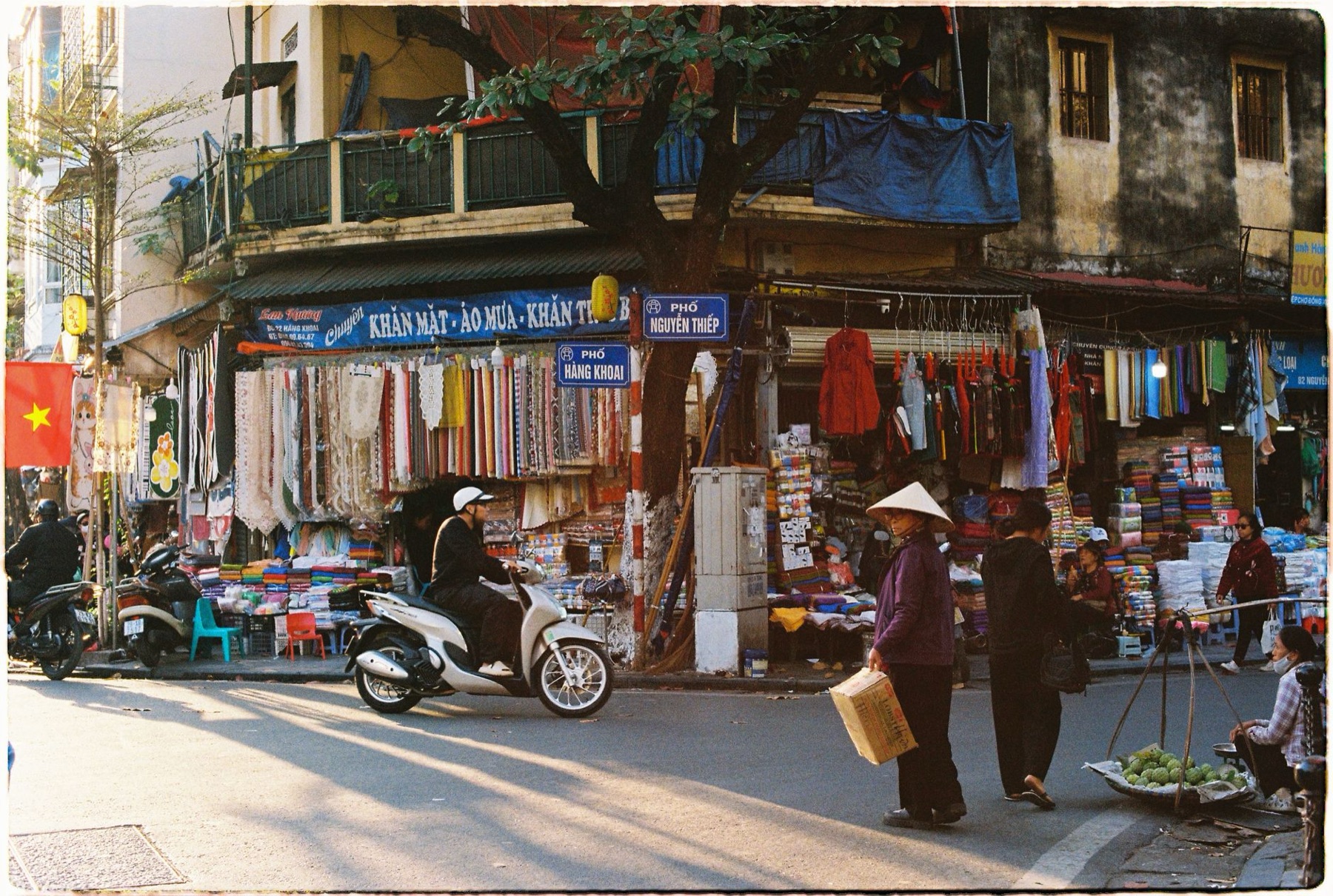
Hang Da Market (Hang Da Street, Hoan Kiem District) is the original wholesale food hub; locals shop here daily. Prices run 20–30% below Old Quarter tourist spots. You'll find fresh seafood, herbs, preserved goods, and coffee vendors who sell by weight. Dong Xuan Market (near the Old Quarter's east edge) is larger and more chaotic but cheaper for bulk buys. Gia Ngu Market (in Thanh Xuan District) is neighborhood-focused and rarely sees tourists; expect slower service but honest scales and pricing. Each opens around 6 a.m., peak traffic 7–9 a.m., quieter after 10 a.m.
🗺️ Plan your route: Vietnam itinerary
How much does Hanoi street food actually cost?
| Item | Where you buy | Typical price (VND) | USD equiv. | Why it varies |
|---|---|---|---|---|
| Banh mi (one) | Street stall, Old Quarter | 30,000–50,000 | $1.20–2 | Filling quality, meat type |
| Spring rolls (6–8) | Market vendor | 25,000–40,000 | $1–1.60 | Wrapper type, filling |
| Pâté (200g pot) | Hang Da Market | 40,000–70,000 | $1.60–2.80 | Freshness, fat content |
| Banh cuon (6 rolls) | Morning stall | 20,000–35,000 | $0.80–1.40 | Rice paper thickness |
| Grilled fish cake (stick) | Street vendor | 15,000–25,000 | $0.60–1 | Size, char level |
| Pho (large bowl) | Street stall | 35,000–60,000 | $1.40–2.40 | Broth quality, toppings |
Prices are higher in Old Quarter tourist corridors (add 10,000–20,000 VND). Off-peak buying (after 10 a.m.) = lower stock but no negotiation pressure. Lunch stalls (11 a.m.–2 p.m.) are busier and pricier; breakfast stalls (6–8 a.m.) are cheapest.
Which packaged foods make sense to bring home?
Mooncakes (banh nuong) are traditional gifts; expect 100,000–200,000 VND ($4–8 USD) for a small box. They ship well and last 2–3 weeks. Salted duck (vit man) from the Hang Da area costs around 150,000–300,000 VND ($6–12 USD) whole; it's dense, keeps 1–2 weeks, and is recognizable to anyone who's eaten Vietnamese food. Dried shrimp (tom kho) runs 80,000–150,000 VND per 100g ($3.20–6 USD); very shelf-stable, lightweight, authentic. Coffee from the Central Highlands growers costs 80,000–120,000 VND per 500g ($3.20–4.80 USD) loose or in valve bags at markets; roasted beans are more practical for travelers than green beans.
Skip: individually plastic-wrapped "tourist mooncakes" on Hang Bac Street (usually marked up 50–80% and of lower quality).
Buy: direct from Hang Da Market vendors or a reputable coffee roaster in Ba Trieu Street area if you have time.
What's the difference between tourist-priced and local-priced Hanoi food?
A banh mi that costs 30,000 VND at a stall on Nguyen Huu Huan Street (Old Quarter) might be sold at 50,000 VND inside a "traditional banh mi shop" ten meters away. The difference isn't quality; it's foot traffic and signage in English. Salted duck, wholesale 120,000 VND at Hang Da, sells for 250,000 VND in a packaged gift box at a tourism-branded store on Hang Bac. Spring roll boxes start at cost in markets (25,000 VND for 8) and retail at 60,000 VND wrapped as a "traditional snack box."
The trick: Tourist shops add English labels, plastic packaging, and printed cards. The food inside is identical. Buy 10 minutes earlier (before peak tourist hours), 100 meters further from Hoan Kiem Lake, or ask locals for the nearest stall. You'll spend half as much.
🎟️ Compare tours & tickets for this place
How do you avoid scams when buying packaged Hanoi food to ship?
Check before you buy:
- Expiration date: All packaged goods must show a Vietnamese date (DD/MM/YYYY or MM/YYYY). If none is visible, ask the vendor aloud. Tourists are rarely told when goods expire.
- Vacuum seal integrity: Press the package. It should feel firm, not soft or puffy (sign of air leakage or age). Sealed mooncakes should have no condensation inside.
- Vendor recognition: Does the market vendor sell this item daily, or is it a one-off tourist counter? Daily vendors have reputation to protect.
- Price vs. competitor: Note prices at two stalls. If one is 30%+ higher with identical packaging, it's tourist-marked.
- Origin label: Reputable salted duck, shrimp paste, and coffee show producer name and address. "Product of Vietnam" alone isn't enough; look for a specific producer (e.g., a known cooperative in Hai Phong for shrimp, or a named roastery).
- Plastic vs. traditional packaging: Overly glossy tourist packaging (gold foil, red ribbon) is rarely from the original producer; it's a repackaging job. Buy from vendors selling in simple kraft paper or vacuum bags instead.
Most common scam: A vendor wraps fresh pâté in layers of plastic and labels it "3-month shelf-stable" when it needs refrigeration and will spoil in 2 weeks. Ask how to store it; honest vendors will say "keep it cool" or "eat within 3 days."
Should you buy fresh herbs and spices at Hanoi markets?
Yes, but only if you're staying in Hanoi or nearby for 2+ more days, or if you have a refrigerator in transit. Fresh herbs (mint, cilantro, dill, Thai basil) are 5,000–10,000 VND per bunch ($0.20–0.40 USD) at Hang Da and will wilt in a backpack after 8 hours in heat. Better for: travelers cooking in guesthouses or homestays in Ha Long Bay, Ninh Binh, or Sapa.
Dried spices (star anise, cinnamon, clove) are excellent buys—50,000–80,000 VND for a mixed 200g bag ($2–3.20 USD)—and pack flat. They're often fresher than supermarket versions and cheaper. Dried chili flakes are particularly good: buy from the spice section of Hang Da, not pre-packaged tourist sets.
Pro tip: If you're touring Hanoi, then heading to Ha Long Bay or Ninh Binh, buy dried goods in Hanoi (lighter, last forever) and fresh herbs in the next city if you need them.
What's worth buying as a souvenir versus just eating fresh?
| Souvenir category | Examples | Who it's for | Why/why not |
|---|---|---|---|
| Packaged mooncakes | Traditional, gift boxes | People with sweet teeth, gift-givers | Lasts 2–3 weeks, recognizable, but expensive |
| Salted duck | Whole bird or portions | Home cooks, gift-givers | Authentic, keeps 1–2 weeks unrefrigerated, polarizing taste |
| Dried seafood (shrimp, squid) | 100g–500g bags | Cooks, umami lovers | Lightweight, stores forever, needs recipes |
| Coffee beans | 500g roasted, whole | Coffee drinkers | Fresh, cheap, better than supermarket, takes luggage space |
| Chili flakes & spices | Mixed dry goods | Cooks | Lasts years, cheap, authentically sourced |
| Street snacks (fresh) | Banh mi, pho, rolls | Hungry travelers | Cheap, delicious, spoils within hours—eat immediately |
| Pâté | Fresh or canned | Cooks with equipment | Canned is safe to ship ($2–3 for 200g); fresh needs refrigeration |
| Shrimp paste (mam tom) | Small jars | Adventurous cooks | Authentic, smells strong, ships fine, an acquired taste |
Honest take: Fresh street food is best eaten in Hanoi. Packaged souvenirs only if the recipient cooks or has a genuine interest; most tourists return home and never use them.
📸 Book an ao dai photoshoot in Hanoi or Saigon (Cáo Studio)
How do shipping and storage change what you should buy?
If you're shipping home from Hanoi:
- Perishables (fresh pâté, salted duck, herbs): Don't ship. They'll spoil in transit or arrive rotten. Eat them in Hanoi or buy canned/vacuum-sealed versions only.
- Dried goods (coffee, spices, dried shrimp, dried squid): Ship freely. They're stable for months, lightweight, and unaffected by temperature or humidity in a standard parcel.
- Mooncakes: Risky. They'll crush in luggage. If shipping, request a rigid box and ship via express (5–10 days is safest). Cost: around 300,000–500,000 VND ($12–20 USD) to the US for a small box.
- Liquids (shrimp paste, bottled chili sauce): Banned on planes. If shipping by parcel post, declare them and expect delays.
Practical rule: If you're backpacking onward to Sapa, Hoi An, or Ho Chi Minh City, carry dried goods and eat fresh food same-day. Buy souvenirs only if you ship or check luggage.
See also: Hanoi guide for neighborhood recommendations and logistics.
What to check before you order or buy Hanoi food online
- Seller location: Is it actually in Hanoi, or a middleman in Ho Chi Minh City or a foreign repackager? Direct Hanoi producers are fresher and cheaper.
- Minimum order size: Many direct sellers require 500g+ or 2–3 items minimum. Check this before committing.
- Delivery timeline: Parcel post takes 7–14 days within Vietnam; express is 1–3 days but costs 2–3x more.
- Packaging material: Vacuum-sealed > plastic bag. Vacuum seal protects from crush and air exposure.
- Producer info: A photo of the producer or farm/roastery on their product page is a good sign. Stock photos of "happy farmers" are not.
- Return/freshness guarantee: Reputable sellers offer a replacement guarantee if goods arrive damaged or expired. Check before buying.
- Price comparison: Compare against Hang Da Market prices for the same weight/volume. If online is >20% higher, buy in person instead.
---
We've walked these markets, tasted hundreds of dishes, and watched vendors serve locals at 6 a.m. and tourists at noon. The gap in price isn't about quality—it's about timing, language, and foot traffic. Buy where locals buy, ask in Vietnamese (or point), and ignore the plastic-wrapped gift-shop versions on Hang Bac Street. Hanoi's food is cheap and authentic everywhere except the three blocks around Hoan Kiem Lake.
FAQ
Is street food in Hanoi safe to eat?
Yes. Hanoi's street food stalls are frequently inspected and have been operating the same way for decades. Busy stalls (where locals queue) are safest. Avoid items sitting out more than 2 hours in midday heat, and skip stalls with no running water or visible trash. Eat where the crowd is.
Can I bring Hanoi food back to the US without customs issues?
Dried goods (coffee, spices, dried seafood) pass through customs easily. Avoid fresh meat (salted duck), dairy, and liquids. Canned pâté is usually okay; check the USDA website for current rules. Pack vacuum-sealed goods and declare them.
What's the best time of day to buy Hanoi food in markets?
6–8 a.m. for the freshest stock and best prices; vendors are trying to move volume. After 10 a.m., crowds thin and some items sell out, but you'll negotiate better. Avoid 11 a.m.–2 p.m. (lunch rush, higher prices, crowded).
How much luggage space do food souvenirs actually take?
Dried goods are lightweight: 500g coffee = one small bag that weighs 500g. A box of mooncakes (500g) takes up about the size of a paperback. Liquids and packaged items are denser. Budget 1–2 liters of luggage space for a meaningful haul.
Should I buy coffee in Hanoi or wait until I travel to the Central Highlands?
Hanoi's coffee (mostly from Central Highlands roasters) is good and cheaper than airports or tourist shops. If you're heading to Da Lat or Lam Dong later, you can buy more directly at the source. For convenience, Hanoi is fine; quality is comparable.
FAQ
Is street food in Hanoi safe to eat?
Yes. Hanoi's street food stalls are frequently inspected and have been operating the same way for decades. Busy stalls (where locals queue) are safest. Avoid items sitting out more than 2 hours in midday heat, and skip stalls with no running water or visible trash. Eat where the crowd is.
Can I bring Hanoi food back to the US without customs issues?
Dried goods (coffee, spices, dried seafood) pass through customs easily. Avoid fresh meat (salted duck), dairy, and liquids. Canned pâté is usually okay; check the USDA website for current rules. Pack vacuum-sealed goods and declare them.
What's the best time of day to buy Hanoi food in markets?
6–8 a.m. for the freshest stock and best prices; vendors are trying to move volume. After 10 a.m., crowds thin and some items sell out, but you'll negotiate better. Avoid 11 a.m.–2 p.m. (lunch rush, higher prices, crowded).
How much luggage space do food souvenirs actually take?
Dried goods are lightweight: 500g coffee = one small bag that weighs 500g. A box of mooncakes (500g) takes up about the size of a paperback. Liquids and packaged items are denser. Budget 1–2 liters of luggage space for a meaningful haul.
Should I buy coffee in Hanoi or wait until I travel to the Central Highlands?
Hanoi's coffee (mostly from Central Highlands roasters) is good and cheaper than airports or tourist shops. If you're heading to Da Lat or Lam Dong later, you can buy more directly at the source. For convenience, Hanoi is fine; quality is comparable.
More: Hanoi guide · What to eat in Hanoi