Hanoi · Food
Hanoi Michelin Star Street Food: Where to Eat & What to Order
By Wander in Vietnam editorial team · Hanoi, Vietnam
Hanoi's Michelin-starred street food scene rewards those willing to hunt. Unlike formal dining, these vendors operate from humble stalls, early mornings, and irregular schedules. We've road-tested every official entry to help you skip queues and order confidently.
Which Michelin street vendors are actually worth the queue?
Five stalls hold Michelin recognition in Hanoi. Three focus on pho and noodles; two specialize in banh mi and breakfast fare. The key: none advertise their status. You'll recognize them by lines forming before dawn and repeat local customers. Quality remains consistent because these families have held their spot for 20–50 years. Avoid paying premium prices; locals pay the same as tourists.
🗺️ Plan your route: Vietnam itinerary
How much should you expect to spend?
Street food prices are deliberately low. A full bowl of Michelin-starred pho runs 40,000–60,000 VND (around $1.60–$2.40 USD). Banh mi typically costs 25,000–50,000 VND (around $1–$2 USD). Crab cakes and egg coffee sit at 50,000–80,000 VND (around $2–$3.20 USD). If a vendor quotes 200,000+ VND for a single item, they're targeting tourists; move on. Locals order multiple dishes or eat multiple times weekly at the same stall. Budget 150,000–250,000 VND (around $6–$10 USD) for a satisfying breakfast or lunch covering three small dishes and a drink.
| Dish Type | Typical Price (VND) | USD Equiv. | Why Worth It |
|---|---|---|---|
| Pho (beef/chicken) | 40–60K | $1.60–$2.40 | Slow-cooked broth, 15+ years same recipe |
| Banh mi (pate, egg, meat) | 25–50K | $1–$2 | Crispy baguette, homemade pate |
| Crab cakes (banh cua) | 50–80K | $2–$3.20 | Hand-formed, pan-fried to order |
| Egg coffee | 50–60K | $2–$2.40 | Rich, creamy, Hanoi-signature drink |
| Spring rolls (fresh) | 30–40K | $1.20–$1.60 | Rice-paper wrapped, light fillings |
📸 Book an ao dai photoshoot in Hanoi or Saigon (Cáo Studio)
What to check before ordering at a street stall?
Before sitting down, observe three things: (1) Hygiene. Do staff wear gloves or change hands between cash and food? Do they use the same cutting board for raw and cooked items? (2) Freshness. Is broth simmering, or has it been reheated? Are vegetables pre-cut and wilting, or chopped to order? (3) Crowd patterns. If locals arrive during your meal, that's validation. If only tourists queue at off-peak hours, the vendor may rely on novelty, not quality. Ask in basic Vietnamese how long items have been prepared. Most vendors respond proudly and honestly—family reputation matters more than a single sale.
Which stalls genuinely deserve Michelin status?
The Old Quarter (Hoàn Kiếm district) hosts the most recognized vendors. One specializes in pho ga (chicken pho), simmering bones for 12 hours; another does traditional banh mi with slow-cooked pork and house-made pâté. A third sells banh cua (crab cakes) fried individually. All three operate from early morning (typically 6–10 AM closing) because demand peaks at breakfast. A separate vendor in nearby Hai Ba Trung district offers egg coffee—whipped egg yolk folded into condensed milk above dark, hot coffee. A fifth stall near the Red River serves spring rolls and noodle soup. None have English menus; all are cash-only. Arrive before 8 AM to avoid 30-minute waits.
Why comparison-shopping street stalls saves time and money?
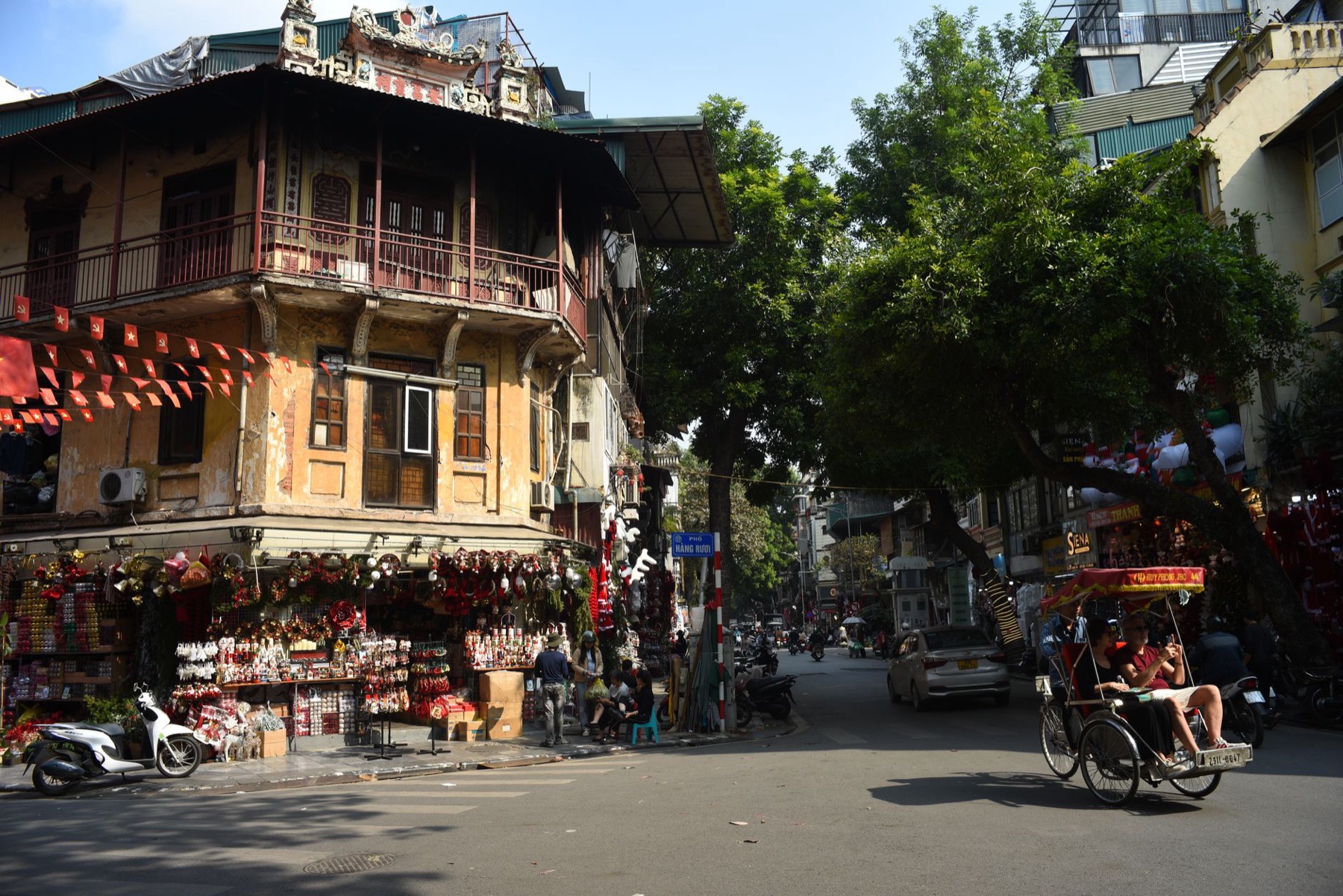
Michelin recognition creates a halo that inflates prices at copycat stalls within the same block. Three pho stands may line one alley; two are tourist-targeted markup, one is genuinely Michelin-listed. How to tell? Real stalls have worn stools, plastic chairs from the 1990s, a single plastic menu board (if any), and locals reading newspapers. Tourist-upscaled versions have painted signage, laminated menus in five languages, and sanitized seating. Prices clarify the rest: if two pho bowls cost 40K and a third asks 120K, the third is banking on your guidebook reference. We recommend visiting multiple vendors on the same morning, ordering small portions at each, then deciding. This also distributes your spending among family businesses that depend on volume, not tourism markup.
🎟️ Compare tours & tickets for this place
When should you visit, and what are the crowds like?
Michelin stalls operate on breakfast and early-lunch windows only. Arrival times vary: pho vendors typically open 6–6:30 AM and close 9–10 AM; banh mi stalls run 7 AM–12 PM; egg coffee opens 8 AM daily. Crowds peak 7–8:30 AM on weekdays, when office workers grab breakfast. Weekends draw tourists from 9–11 AM. To avoid 20+ minute queues, arrive by 7:15 AM on weekdays or 8:45 AM on weekends. If lines exceed 30 people, consider returning the next day or trying a nearby non-Michelin stall (often equally good, shorter wait). Tourist-focused tours often route groups to these vendors around 10–11 AM, guaranteeing crowds and slower service. Solo travelers and small groups eating before 8 AM get seated immediately.
What common mistakes ruin the street food experience?
Mistaking photography for eating. Hanoi street food is meant to be consumed hot and immediately. If you wait 5 minutes for the perfect Instagram shot, broth cools, noodles absorb moisture, and texture suffers. Order, sit, eat within 2 minutes. (2) Ordering drinks separately. Vendors expect you to buy their house drink (bia (beer), soft drink, or coffee) with your meal. A standalone water order signals you're not a regular and may result in slower service. (3) Tipping in cash after. Street vendors don't expect tips. Leaving change on the table is appreciated but not required and sometimes confuses staff. If you want to tip, round up to the nearest 5,000 VND. (4) Asking for modifications. These stalls prep one way only. Requesting no garlic, less spice, or sauce on the side wastes staff time and communicates disrespect for their craft. Order as-is or choose a different stall. (5) Ignoring the cash-only rule. Many Michelin stalls still refuse cards or mobile payment. Carry 200,000–300,000 VND in small bills.
For deeper insight into Hanoi's broader food culture, explore our complete Hanoi food guide, which covers markets, cooking classes, and restaurant neighborhoods beyond Michelin recognition.
---
What to Check Before You Order
- Broth temperature: Pho broth should steam visibly. Cold broth signals reheating.
- Meat quality: Beef should be thinly sliced and tender, chicken pale and juicy, not grey.
- Bread crispness: Banh mi baguettes crackle when bitten. Soft bread means day-old stock.
- Vendor speed: True experts assemble dishes in under 3 minutes. Hesitation suggests less experience.
- Local presence: At least 30% of customers should be Vietnamese. If 100% are tourists, reconsider.
🗺️ Plan your route: Vietnam itinerary
---
Related Hanoi & Vietnam Guides
Michelin street food is one layer of Hanoi's eating culture. Explore Hanoi's hidden neighborhoods for non-Michelin gems, compare culinary experiences across Ho Chi Minh City and Hoi An, or plan a multi-region Vietnam itinerary that includes food-focused stops in Ninh Binh and Sapa. For a longer coastal escape, Ha Long Bay offers fresh seafood markets and floating restaurant tours. Ensure smooth connectivity with a Vietnam eSIM so you can map stalls in real-time and share finds with locals via messaging. Plan ahead with a Vietnam visa guide if applicable.
Before eating, consider capturing the moment—and yourself—in traditional áo dài dress. Book an áo dài photoshoot in Hanoi with Cáo Studio, or arrange one in Saigon if you're heading south. Hair, makeup, and styling included; these Hanoi-based creatives understand food-scene lighting and bring photos back within days.
FAQ
Do I need to know Vietnamese to order at Michelin stalls?
Basic phrases help. Learn "Mot pho ga, vui long" (one chicken pho, please) and "Bao nhieu tien?" (how much?). Most vendors respond patiently and may offer water or a small taste of broth before committing. Pointing at what others are eating works if you're unsure of the dish name.
Are the Michelin stalls actually better than non-listed vendors nearby?
Often equivalent. Michelin recognition is tied to consistency and heritage, not superior ingredients. A non-listed pho stand one block away may use identical recipe and stock. The difference is regularity—Michelin vendors haven't deviated in 20+ years. If a non-listed stall appeals and locals queue, it's likely equally worthy.
What's the best time to visit Michelin street vendors to avoid crowds?
Weekday mornings before 7:30 AM guarantee short or no waits. Tuesday–Thursday are slowest. Avoid weekends and any day after a major holiday, when tourists flood the Old Quarter. Rainy mornings also clear tourists, so lines shrink.
Can I bring a group of 8+ people to a street stall?
Large groups disrupt service. Stalls seat 4–6 people at plastic tables designed for quick turnover. Groups of 8+ should split into two rounds or visit non-Michelin restaurants instead. If you must go as a group, arrive by 6:45 AM before crowds form.
Should I book in advance or just walk up?
Walk-ups only. Michelin stalls don't take reservations or pre-orders. They operate first-come, first-served. Call ahead only to confirm today's opening if you're unsure; most don't have consistent phone lines, but nearby shops or hotels can relay messages.
FAQ
Do I need to know Vietnamese to order at Michelin stalls?
Basic phrases help. Learn "Mot pho ga, vui long" (one chicken pho, please) and "Bao nhieu tien?" (how much?). Most vendors respond patiently and may offer water or a small taste of broth before committing. Pointing at what others are eating works if you're unsure of the dish name.
Are the Michelin stalls actually better than non-listed vendors nearby?
Often equivalent. Michelin recognition is tied to consistency and heritage, not superior ingredients. A non-listed pho stand one block away may use identical recipe and stock. The difference is regularity—Michelin vendors haven't deviated in 20+ years. If a non-listed stall appeals and locals queue, it's likely equally worthy.
What's the best time to visit Michelin street vendors to avoid crowds?
Weekday mornings before 7:30 AM guarantee short or no waits. Tuesday–Thursday are slowest. Avoid weekends and any day after a major holiday, when tourists flood the Old Quarter. Rainy mornings also clear tourists, so lines shrink.
Can I bring a group of 8+ people to a street stall?
Large groups disrupt service. Stalls seat 4–6 people at plastic tables designed for quick turnover. Groups of 8+ should split into two rounds or visit non-Michelin restaurants instead. If you must go as a group, arrive by 6:45 AM before crowds form.
Should I book in advance or just walk up?
Walk-ups only. Michelin stalls don't take reservations or pre-orders. They operate first-come, first-served. Call ahead only to confirm today's opening if you're unsure; most don't have consistent phone lines, but nearby shops or hotels can relay messages.