Hanoi · Food
Hanoi Old Quarter Restaurants: Where to Eat & What to Order #
By Wander in Vietnam editorial team · Hanoi, Vietnam
Hanoi's Old Quarter—the 36 Streets district in central Hoan Kiem—offers everything from $2 street noodle stalls to $15 sit-down restaurants. We recommend starting with a dawn banh mi run on Hang Gai, then exploring themed alleys (Hang Manh for pho, Hang Ga for poultry). Wander in Vietnam guides you past tourist traps to genuine neighbourhood spots where you eat shoulder-to-shoulder with office workers and students.
The Old Quarter isn't one restaurant strip; it's 36 interconnected lanes, each historically specializing in a single ingredient or dish. That legacy persists. Street names tell the story: Hang Gai (Silk Street) fed silk merchants; now it feeds breakfast crowds. Hang Ma (Paper Street) now hosts tourist shops, but the food alleys deeper in remain authentic. Understanding this grid saves time and money.
🗺️ Plan your route: Vietnam itinerary
---
Which alleys have the best food, and are they walkable together?
Yes. Hang Manh (pho alley) sits north of the Hoan Kiem Lake edge; Hang Ga (chicken/poultry) branches west. A two-hour morning walk hits both. Start at Hang Gai banh mi stalls around 6 a.m., move to Hang Manh for pho by 7 a.m., rest at a café, then explore Hang Ga and Hang Dao (knife street, now mixed food) by mid-morning. Wear a crossbody bag, keep valuables close, and avoid peak lunch (11:30–1:30 p.m.) if crowds tire you.
---
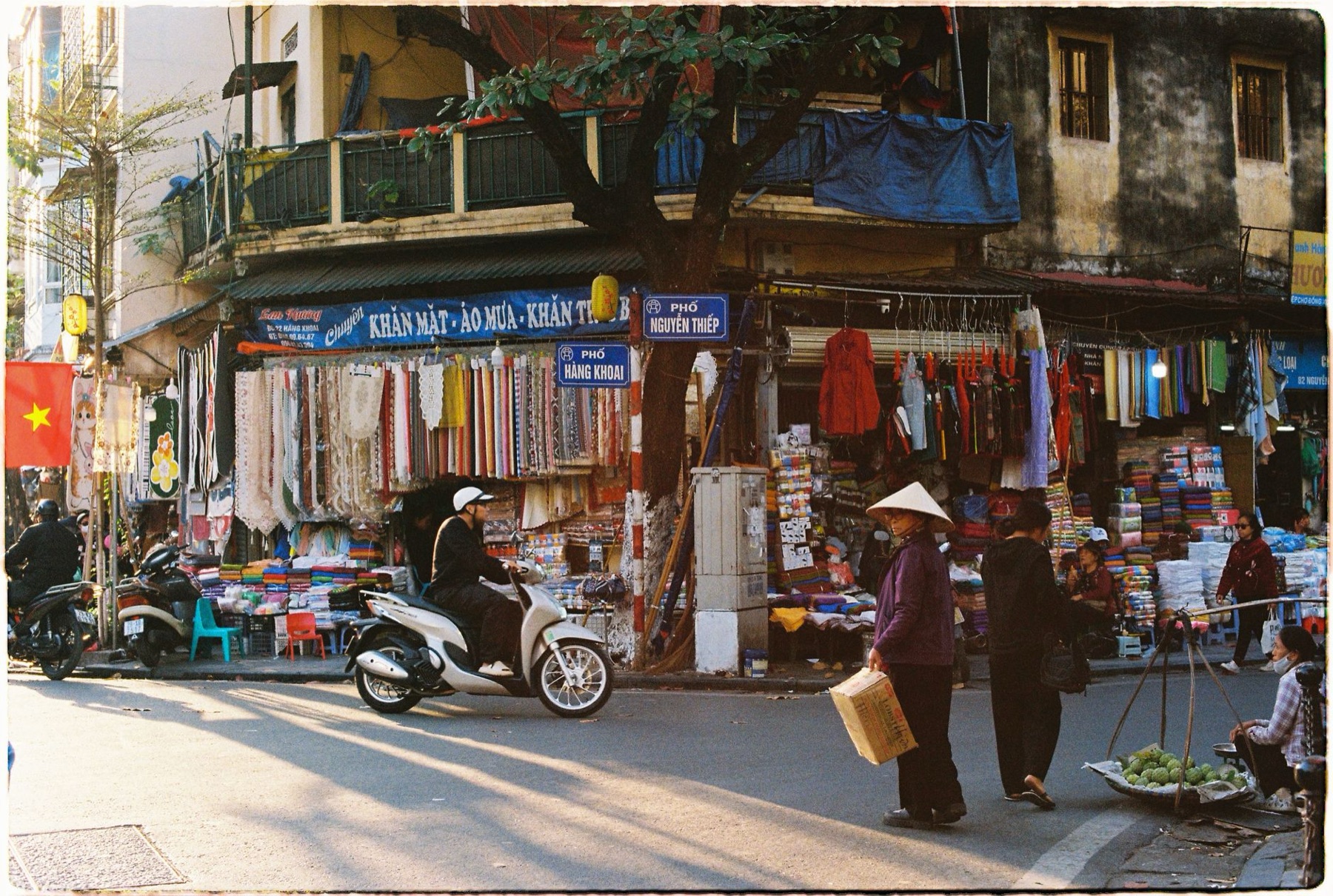
What's the difference between street-side stalls, family shops, and upscale café-restaurants in the Old Quarter?
Street stalls (often plastic stools, no menu board) serve one or two dishes: pho, banh mi, Com tam (broken rice). Turnover is fast; you eat in 15 minutes. Cost: around $1–2 USD. Family-run shops occupy a shop-house ground floor, seat 20–30, have laminated menus in Vietnamese. Cost: around $2–5 USD. Upscale cafés (concrete floors, exposed brick, WiFi, English menu) cater to tourists and young urbanites; they serve fusion, modern takes on classics, or coffee. Cost: around $8–15 USD per dish.
Who each is for:
- Stalls = adventurous, time-pressed, want authenticity on a budget.
- Family shops = curious, local-seeking, comfortable with basic English or a translation app.
- Cafés = prefer comfort, WiFi, photos-first, willing to spend for atmosphere.
The honest truth: family shops give the best value and flavour. Upscale cafés are overpriced for what you get; stalls teach you how Hanoi actually eats.
---
How much should you budget per meal, and where does money go?
| Category | Typical dish | Cost (USD) | How long to eat | Notes |
|---|---|---|---|---|
| Street stall (pho, banh mi) | Bowl or sandwich | $1–2 | 15 min | Cash only, no napkins |
| Family shop (com tam, bun cha) | Rice/noodle plate | $2–4 | 20–30 min | Cash preferred; cold water free |
| Mid-range restaurant (mixed menu) | Noodle or rice dish | $4–8 | 45 min | Card often OK; service charge ~10% |
| Upscale café (fusion, coffee) | Dish + beverage | $10–15 | 60+ min | Cards accepted; Instagram-heavy |
| Tourist-trap restaurant (Hang Gai front) | Marked-up noodles | $8–12 | 30 min | Overpriced; avoid |
What to skip: restaurants on Hang Gai's main strip (menus in 10+ languages, posted prices 2–3× local rates). Instead, turn left into Hang Manh or Hang Dao, where the same dish costs half.
📸 Book an ao dai photoshoot in Hanoi or Saigon (Cáo Studio)
---
What are the real must-try dishes, and where do locals queue for them?
Pho (beef or chicken noodle soup): Hang Manh's ground-floor stalls open 5–9 a.m. Order by pointing; a large bowl is around $1.50–2.50 USD. Broth simmers overnight.
Banh mi (Vietnamese sandwich): Hang Gai, early morning (6–9 a.m.). Fillings include pâté, cold cuts, Vietnamese ham. Cost: $1–1.50 USD. Grab and go, or sit on a plastic stool.
Bun cha (grilled pork with noodles): Hang Dao or side streets. Pork skewers grill over charcoal. You dip noodles in a fish-sauce broth. Cost: $2–3 USD. Lunchtime (11:30 a.m.–1 p.m.) is peak; go early or late.
Com tam (broken rice with egg, pork, tomato): Street corners, especially Hang Ga periphery. Quick, filling, cheap ($1–2 USD). Best at lunch.
Egg coffee (Cau Gau style): Dedicated 1–2 table cafés tucked into alleys; not a full restaurant. Cost: $1.50–2 USD. Frothy, sweet, best after a meal.
Go hungry, carry small bills (VND preferred; $1 USD ≈ 24,500 VND in 2026), and eat where you see queues.
---
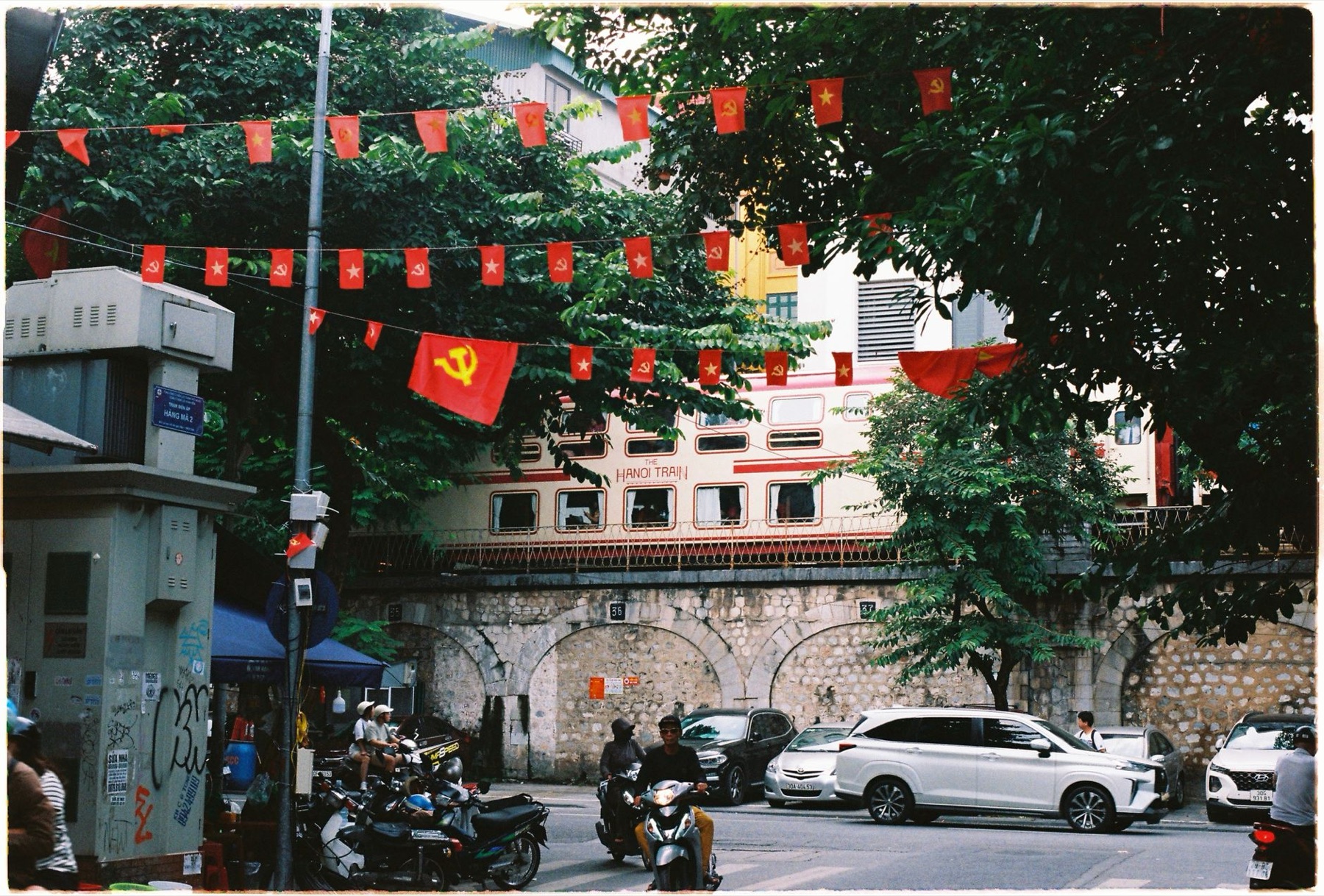
How do you avoid overcharging, tourist scams, or bad food safety in the Old Quarter?
Overcharging: Stalls rarely cheat—they're busy and reputational. Sit-down spots with no menu or verbal prices are risky. Ask the price of a dish before ordering, in Vietnamese if possible ("Bao nhieu tien?" / How much money?). Tourist-facing restaurants on Hang Gai's main drag mark prices up 150–200%; avoid them.
Scams: Cyclo drivers offering "secret restaurant" tours earn commission; you'll overpay. Skip it. Street vendors selling "special" snacks to tourists are safe if busy; quiet ones are not. Don't buy drinks from unmarked vendors.
Food safety: Busy stalls are safe—high turnover, cooked fresh. Avoid raw greens at cheap stalls (wash them at your hotel if worried). Family-run shops refrigerate meat properly; trust visual queues. Upscale cafés are safest but priciest.
Checklist before you order:
- [ ] Is there a visible price (posted or confirmed)?
- [ ] Are locals eating there (stall/family shop)?
- [ ] Is food being cooked in front of you or refrigerated visibly?
- [ ] Do you have small cash, or is a card openly accepted?
- [ ] Can you point at what you want if language is a barrier?
🎟️ Compare tours & tickets for this place
---
What's nearby, and should you eat in the Old Quarter or nearby areas?
The Old Quarter is steps from Hoan Kiem Lake (walking distance, free), Hang Luoc Temple (small, quiet), and the night market on Hang Dao (weekends, 6–10 p.m., low-cost street food). Nearby Hanoi districts like the French Quarter (south, 10–15 min walk) have fancier restaurants and more WiFi—but less authentic food.
Stay in the Old Quarter for: speed, immersion, budget dining, cultural experience. Leave for: upscale sit-down meals, coffee with calm, air-conditioned shopping.
If you're staying longer, explore Ha Long Bay (seafood-focused restaurants, 3 hours north by car) or Ninh Binh (farm-to-table, 2 hours south) for variety.
---
What to check before you order
- Ask the price aloud before sitting, even at family shops. Nod if you agree.
- Watch the dish being made—at stalls, this is normal and expected.
- Confirm portions: one bowl, one plate? Point.
- Carry enough small VND (coins and 10k/20k notes). Many stalls don't break large bills.
- Check the bill—family shops will write it on paper or a calculator. Round numbers are honest.
- Take photos before eating if it matters to you; after, you'll be too hungry.
- Ask for a plastic bag or napkins if eating on the street; bring wet wipes.
Hanoi's Old Quarter rewards curiosity and a full stomach before arrival. Eat local, ask questions, and skip the neon signs.
---
Shop thoughtfully for your trip
If you're bringing gifts from your meal experience home, consider curating personalised travel keepsakes or Vietnam-themed prints & art to remind you of these moments. Or send flowers from Hanoi to loved ones back home with flower delivery in Hanoi (Hoa Lang Thang).
Before you go, check visa requirements and pick up a local eSIM for map access and translation apps while eating.
---
#
FAQ
Do I tip at Old Quarter restaurants and stalls?
No. Tipping is not expected at street stalls or family shops. Upscale cafés may have a 10% service charge added to the bill. If you're moved to leave coins, staff appreciate it, but it's never obligatory. Rounding up to a nice number (if paying cash) is kind.
What's the best time of day to eat in the Old Quarter without crowds?
Early morning (6–8 a.m.) for pho and banh mi stalls; they're peaceful and food is freshest. Avoid 11:30 a.m.–1:30 p.m. (lunch rush) and 5–7 p.m. (dinner rush) if you dislike crowds. Late breakfast (9–10 a.m.) is a sweet spot.
Can I eat vegetarian in the Old Quarter, or is every dish meat-heavy?
Yes, vegetarian options exist. Order "Com chay" (vegetarian rice) or "Pho chay" (vegetable pho); stall vendors understand. Upscale cafés label vegetarian clearly. However, "fish sauce" flavours most dishes; strict vegans should check the broth base.
Are credit cards accepted, or must I carry cash?
Stalls and family shops are cash-only (VND preferred). Mid-range and upscale restaurants accept Visa/Mastercard, but some add a 2–3% surcharge. Carry 500k–1m VND ($20–40 USD equivalent) in small notes. ATMs are on every corner.
Is the Old Quarter safe to walk around at night looking for food?
Yes. The alleys are lit, busy, and populated. Stick to main lanes (Hang Gai, Hang Dao, Hang Manh), avoid unlit side alleys after 10 p.m., and keep bags close. Petty theft (phone, wallet snatching) is rare but possible in crowds; don't flash valuables.
FAQ
Do I tip at Old Quarter restaurants and stalls?
No. Tipping is not expected at street stalls or family shops. Upscale cafés may have a 10% service charge added to the bill. If you're moved to leave coins, staff appreciate it, but it's never obligatory. Rounding up to a nice number (if paying cash) is kind.
What's the best time of day to eat in the Old Quarter without crowds?
Early morning (6–8 a.m.) for pho and banh mi stalls; they're peaceful and food is freshest. Avoid 11:30 a.m.–1:30 p.m. (lunch rush) and 5–7 p.m. (dinner rush) if you dislike crowds. Late breakfast (9–10 a.m.) is a sweet spot.
Can I eat vegetarian in the Old Quarter, or is every dish meat-heavy?
Yes, vegetarian options exist. Order "Com chay" (vegetarian rice) or "Pho chay" (vegetable pho); stall vendors understand. Upscale cafés label vegetarian clearly. However, "fish sauce" flavours most dishes; strict vegans should check the broth base.
Are credit cards accepted, or must I carry cash?
Stalls and family shops are cash-only (VND preferred). Mid-range and upscale restaurants accept Visa/Mastercard, but some add a 2–3% surcharge. Carry 500k–1m VND ($20–40 USD equivalent) in small notes. ATMs are on every corner.
Is the Old Quarter safe to walk around at night looking for food?
Yes. The alleys are lit, busy, and populated. Stick to main lanes (Hang Gai, Hang Dao, Hang Manh), avoid unlit side alleys after 10 p.m., and keep bags close. Petty theft (phone, wallet snatching) is rare but possible in crowds; don't flash valuables.