Hanoi · Food
Hanoi Old Quarter Street Food: What to Order & Where to Eat
By Wander in Vietnam editorial team · Hanoi, Vietnam
The Hanoi Old Quarter is the beating heart of Vietnam's street food culture. Order pho, bánh mì, egg coffee, and bún chả by pointing or using hand gestures; prices range from around 30,000–80,000 VND ($1.20–$3.20 USD). Eat where queues form at dawn and avoid English menus—a sign of tourist markup.
Walking into the narrow streets around Hàng Mã, Hàng Gai, and Tạ Hiện at 6:30 a.m., you'll see vendors already standing behind steaming pots, metal trolleys laden with fresh herbs, and wooden boards lined with bánh mì. This is not Instagram-friendly chaos—it's breakfast for 10,000 people before 9 a.m. Street food here isn't a novelty; it's infrastructure. Families have owned the same corner for three generations. Tourists and office workers queue shoulder-to-shoulder. Understanding the rhythm, the unwritten rules, and the real costs saves money, prevents stomach trouble, and gets you fed like a local.
🗺️ Plan your route: Vietnam itinerary
What's the actual cost of eating at Old Quarter stalls?
Expect to pay 30,000–80,000 VND ($1.20–$3.20) per bowl or plate, depending on dish and portion. A small phở (beef or chicken) runs 35,000–50,000 VND. Bánh mì with cold cuts and pâté costs 25,000–40,000 VND. Bún chả (grilled pork with noodles) is 40,000–60,000 VND. Egg coffee, Hanoi's famous dessert-drink, is 35,000–50,000 VND at a proper café. None of these prices include tip—tipping is not customary at street stalls. If you see laminated menus in English with photos and prices doubled, walk past. Vendors with handwritten signs on cardboard (or no sign at all) are almost always cheaper and busier.
Compare before ordering:
| Dish | Best for | Typical Price | Why Order Here |
|---|---|---|---|
| Phở (beef) | Dawn breakfast, comfort | 40,000–50,000 VND | Rich broth simmered 12+ hours; beef quality varies by vendor |
| Bánh mì | Quick lunch, under 15 min | 25,000–40,000 VND | Crusty baguette, fresh herbs, mayo, pâté; hygiene depends on vendor cleanliness |
| Bún chả | Midday, social eating | 40,000–60,000 VND | Charred pork, dipping sauce, vermicelli; vendors grill continuously so pork is hot |
| Egg coffee | Dessert, mid-afternoon | 35,000–50,000 VND | Whipped egg yolk, condensed milk, dark roast; requires 3–5 min prep |
| Bánh cuốn | Breakfast, softer texture | 30,000–40,000 VND | Steamed rice rolls with pork and shrimp; eaten warm, immediately off steam cart |
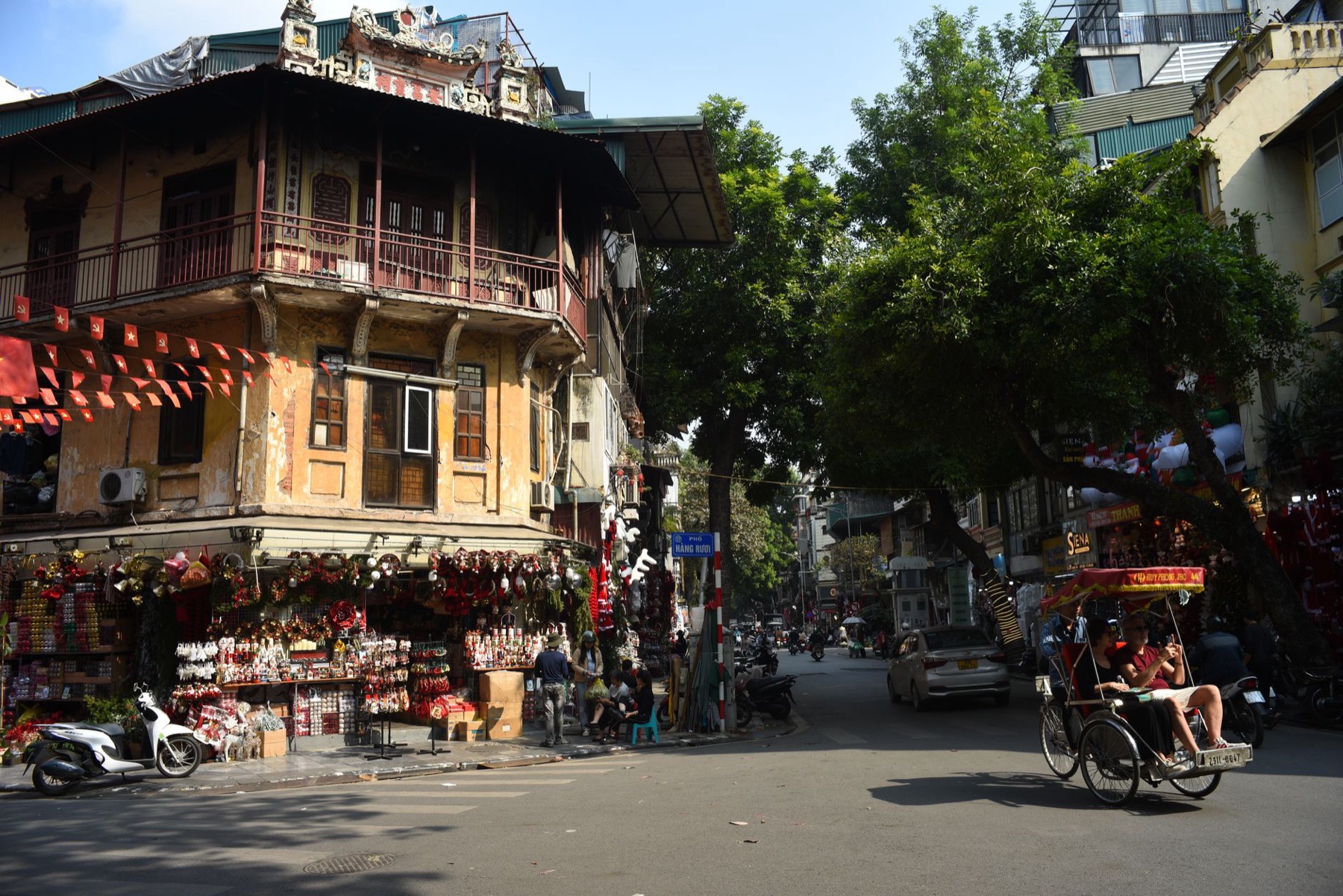
Which neighborhoods have the best vendor clusters?
Hàng Mã (near the intersection with Hàng Gai) is the pho and bánh cuốn heartland. Arrive before 8 a.m. to avoid lines wrapping into the street. Hàng Gai itself is clogged with tourists by 9 a.m., but the northern end (toward Hàng Buồm) still has locals-only stalls. Tạ Hiện is tourist-heavy but unavoidable—it's where egg coffee vendors set up tiny tables on the sidewalk. If you're staying near Hoàn Kiếm Lake, walk south to Lý Quốc Sư or west to Phố Huế; fewer tourists, same quality, cheaper. The area around Đông Xuan Market (the covered market in the heart of the Old Quarter) has stalls selling bánh mì and dried goods; food vendors cluster outside the north entrance. Avoid high-traffic tourist intersections like Phó Hí and Thanh Hà after 9 a.m.—the prices jump, the meat quality drops, and vendors become less careful about ice and cross-contamination.
What should you check before ordering to stay safe?
Look for these five signs of a clean, reliable vendor:
- High turnover: The pot is bubbling, steam is rising, customers eat and leave fast. Slow stalls = old broth and old ingredients.
- Visible prep: Watch the vendor make your dish. If herbs are pre-cut and sitting in open bowls for hours, skip. Fresh herbs should be torn or sliced moments before serving.
- Ice source: Ask (or observe) if ice came from a sealed bag, not a communal bucket. Hanoi tap water is potable after boiling, but ice made from unfiltered water causes traveler's diarrhea.
- Condiments covered: Sauce bottles and chili jars should have lids, not sit open in the humid air. Open sauce = higher bacterial load and flies.
- Vendor's hands: Are they washed between customers? Do they touch money and then food? A vendor wearing an apron or gloves (even if inconsistently) suggests some hygiene awareness.
Stomach trouble is rare if you eat where locals eat—the competition is brutal, and a single outbreak kills a family business. Tourist traps and shortcuts are the real risk.
📸 Book an ao dai photoshoot in Hanoi or Saigon (Cáo Studio)
How do you order when you don't speak Vietnamese?
Point. Smile. Use your fingers. Most vendors understand "one," "two," and "more" in English. Stand at the stall, make eye contact, and gesture to your choice—either point at other customers' bowls or at the ingredient display (you can point at the pork, noodles, or broth to confirm). Vendors are patient because this happens 50 times a day. If you want it extra spicy, say "cay" (pronounced "kay-ee"). For less chili, say "không cay" (not spicy). "Ngon" means delicious, and saying it after your meal makes them happy. Phone translator apps (Google Translate, offline mode) work, but hand signals are faster. Never assume a vendor speaks English; many don't, and that's usually a good sign for authenticity and price.
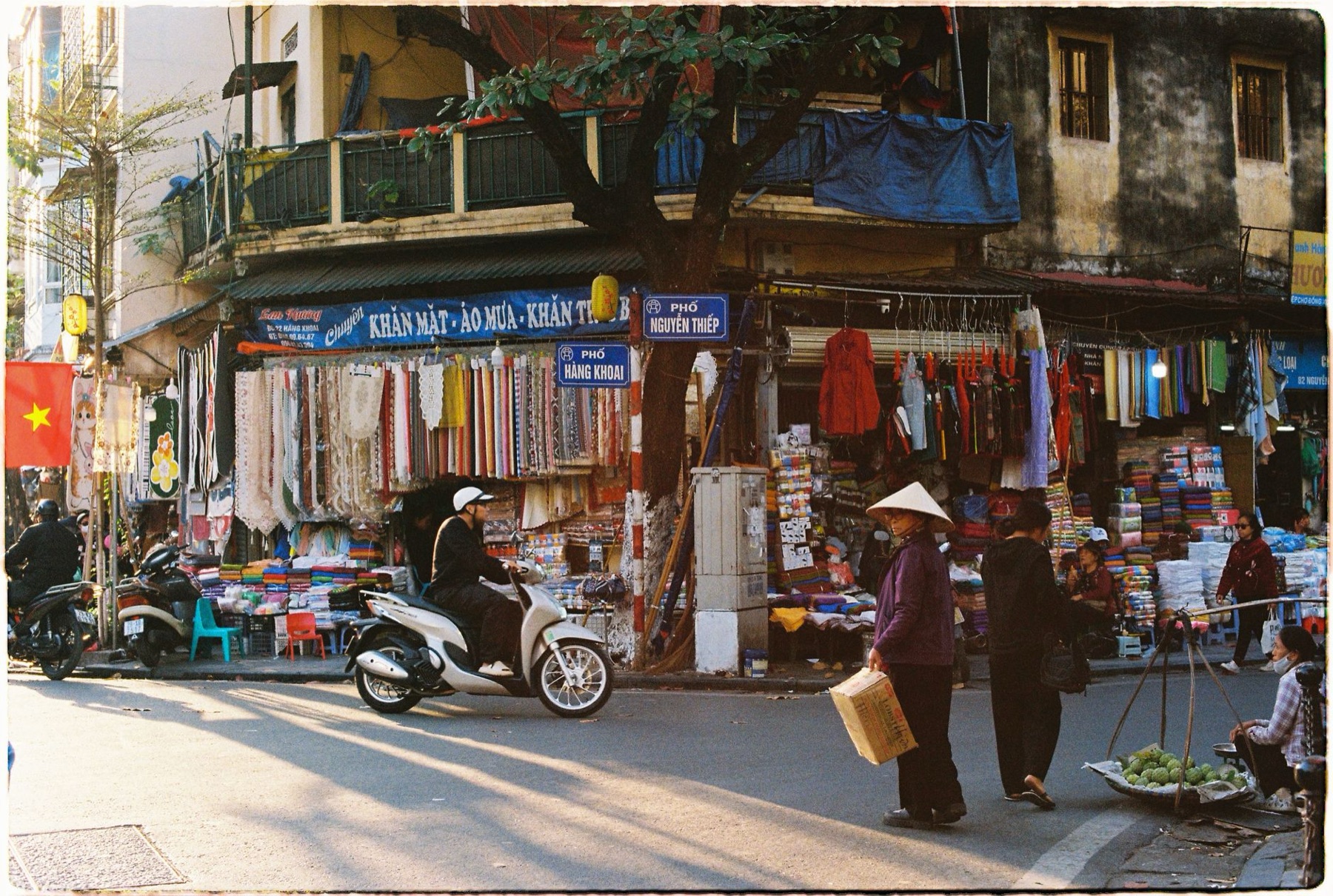
What's the rhythm of the Old Quarter food day?
Breakfast (5–9 a.m.): Phở, bánh cuốn, and cơm tấm (broken rice with egg and pork). Vendors set up in darkness; the smell of broth hits you three blocks away. Locals eat standing, grab napkins, and leave within five minutes. Lunch (11 a.m.–2 p.m.): Bánh mì, bún chả, and com tam peak. Queues form outside popular spots. Tourists arrive en masse. Late afternoon (3–6 p.m.): Snacks and drinks—egg coffee, bánh mì for dinner prep, sugarcane juice. Dinner (6–8 p.m.): Some phở vendors reopen; most food stalls are breaking down. After 8 p.m., only egg coffee cafés and late-night bánh mì carts are active. The sweet spot for avoiding crowds and eating fresh food is 6:30–7:30 a.m. on a weekday.
🎟️ Compare tours & tickets for this place
What to avoid—and what's overrated.
Skip the high-street stalls on Hàng Bac and Phó Huế after 8 a.m.; they've pivoted entirely to tourists and portion sizes have shrunk while prices doubled. Avoid "fusion" street food (bánh mì with mayo and beef steak instead of traditional cold cuts)—it's Instagram bait, not authentic, and you're paying 80,000 VND for a confused sandwich. Icecream and shaved-ice vendors on Hàng Gai sometimes use suspect ice; if you want a cold treat, get it from a proper ice cream shop or convenience store. The famous "Hanoi Hilton" phở (often recommended in blogs) has decent broth but charges 60,000 VND and serves tourists; Hàng Mã vendors with no English signs charge 35,000–40,000 VND for comparable quality and busier tables.
Egg coffee is worth trying once—it's uniquely Hanoi and tastes better than it sounds—but it's also become a tourist trap. A proper egg coffee takes 3–5 minutes to whip and costs 40,000–50,000 VND. Vendors cramming tourists into tiny alley cafés and charging 80,000 VND are cutting corners on freshness. If you want good egg coffee, go to a proper café (not a street stall), or ask a hotel receptionist for a recommendation.
For gifts or keepsakes from your Hanoi food experience, consider personalized travel journals or prints to document your meals, or premium Vietnam-inspired home décor for your kitchen—star map prints or engraved boards with Vietnamese phrases are popular with travelers who want to remember the food scene.
Learn more about Hanoi's broader food culture and explore other Vietnamese regions' signature dishes and coastal seafood traditions.
---
What to check before you buy (ordering guide):
- Arrive early: 6:30–7:30 a.m. ensures fresh ingredients, smaller lines, and local prices.
- Watch locals eat: If a stall is packed with Vietnamese customers, sit down. If it's all tourists and empty Vietnamese tables nearby, walk.
- Inspect the broth: Phở broth should be clear or light golden, not cloudy or grey.
- Confirm price before sitting: Point at the menu or ask "bao nhiêu?" (how much?). Avoid surprises.
- Bring small bills: Vendors often claim they don't have change for a 100,000 VND note; use 50,000 or smaller.
🗺️ Plan your full Vietnam itinerary | 🎟️ Browse Hanoi tours & experiences
---
FAQ
Is street food in Hanoi safe for tourists?
Yes, if you eat where locals eat and follow basic hygiene checks—turnover, visible prep, covered condiments, and clean ice. Stomach trouble is rare at established, busy stalls. Tourist traps and low-turnover vendors are the real risk. Start with phở or bánh mì if you're nervous; they're cooked fresh and harder to ruin.
How much cash should I carry for Old Quarter meals?
Carry 200,000–500,000 VND ($8–$20 USD) per day if you're eating only street food. One meal costs 30,000–80,000 VND. Most stalls take cash only; a few accept mobile payments (Momo, ZaloPay), but don't rely on it. No street vendor takes cards.
Can I eat at night in the Old Quarter?
Limited options after 8 p.m. Phở vendors close by 7 p.m.; bánh mì carts stay open until 9–10 p.m. Egg coffee cafés stay open late (until 11 p.m. or midnight). For proper dinner, eat between 6–8 p.m. or head to a restaurant. The Old Quarter food scene is built around breakfast and lunch.
What if I'm vegetarian?
Order bánh mì with just vegetables and egg (bánh mì chay), or bánh cuốn with vegetables. Tell vendors "không thịt" (no meat) and point at what you want. Phở vegetarian (phở rau) exists but is uncommon at street stalls; ask at a sit-down phở restaurant instead. Egg coffee and rice-based dishes (cơm tấm) are vegetarian-friendly if you skip the meat topping.
What's the difference between eating at a stall versus a sit-down phở restaurant?
Street stalls are faster, cheaper (30,000–50,000 VND for phở), and where locals eat. Sit-down restaurants are quieter, have more menu variety, and cost 50,000–100,000 VND. Choose stalls for authentic breakfast and speed; restaurants for a slower meal or if you prefer a chair and table.
FAQ
Is street food in Hanoi safe for tourists?
Yes, if you eat where locals eat and follow basic hygiene checks—turnover, visible prep, covered condiments, and clean ice. Stomach trouble is rare at established, busy stalls. Tourist traps and low-turnover vendors are the real risk. Start with phở or bánh mì if you're nervous; they're cooked fresh and harder to ruin.
How much cash should I carry for Old Quarter meals?
Carry 200,000–500,000 VND ($8–$20 USD) per day if you're eating only street food. One meal costs 30,000–80,000 VND. Most stalls take cash only; a few accept mobile payments (Momo, ZaloPay), but don't rely on it. No street vendor takes cards.
Can I eat at night in the Old Quarter?
Limited options after 8 p.m. Phở vendors close by 7 p.m.; bánh mì carts stay open until 9–10 p.m. Egg coffee cafés stay open late (until 11 p.m. or midnight). For proper dinner, eat between 6–8 p.m. or head to a restaurant. The Old Quarter food scene is built around breakfast and lunch.
What if I'm vegetarian?
Order bánh mì with just vegetables and egg (bánh mì chay), or bánh cuốn with vegetables. Tell vendors "không thịt" (no meat) and point at what you want. Phở vegetarian (phở rau) exists but is uncommon at street stalls; ask at a sit-down phở restaurant instead. Egg coffee and rice-based dishes (cơm tấm) are vegetarian-friendly if you skip the meat topping.
What's the difference between eating at a stall versus a sit-down phở restaurant?
Street stalls are faster, cheaper (30,000–50,000 VND for phở), and where locals eat. Sit-down restaurants are quieter, have more menu variety, and cost 50,000–100,000 VND. Choose stalls for authentic breakfast and speed; restaurants for a slower meal or if you prefer a chair and table.
More: Hanoi guide · What to eat in Hanoi