Hanoi · Food
Hanoi Old Quarter Street Food: Where to Eat & What to Buy
By Wander in Vietnam editorial team · Hanoi, Vietnam
Hanoi's Old Quarter street food isn't random. Every block specializes. Phở vendors don't sell bún chả; bún chả stalls don't serve phở. This focus—passed down 30+ years—means each dish reaches peak flavor because the cook, broth, and method never change.
We've eaten here dozens of times, sat on plastic stools watching vendors work, paid in cash only, and watched tourists order at the wrong stall. Here's what actually works.
Which Old Quarter street dishes are worth your time?
The top four warrant a dedicated trip each. Phở (beef noodle soup) is best at dawn; the broth simmers overnight. Bún chả (grilled pork with rice noodles) peaks at lunch and dinner—meat chars fresh over charcoal every 15 minutes. Egg coffee (whipped egg yolk over strong coffee) is a post-meal ritual, not breakfast. Bánh mì (crispy bread, pâté, pickled vegetables) works as a between-meal snack around 10 a.m.
None of these are tourist food. Locals eat them daily because each requires precision. A weak broth, underseasoned meat, broken egg foam, or soggy bread marks an amateur stall—and there are many.
🗺️ Plan your route: Vietnam itinerary
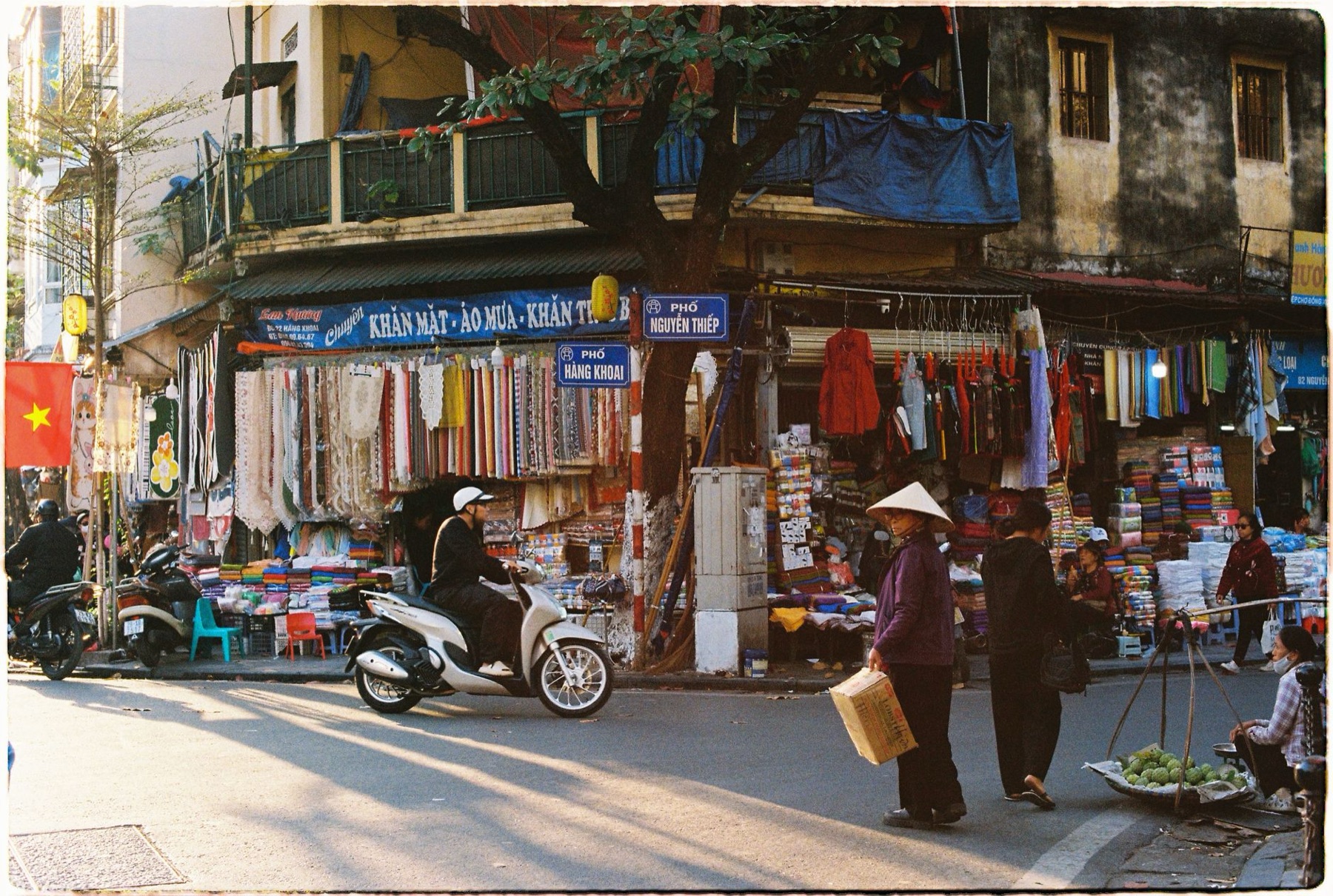
Where exactly do you go to find the real stalls?
Hang Manh Street (the north end, between Hang Ga and Hoan Kiem Lake) has three phở spots that open at 5:30 a.m. and close by 10 a.m. Locals line up. No English menu, no signage, cash only. Expect a bowl—around 35,000–50,000 VND ($1.40–$2.00)—on a shared bench.
Ta Hien Street (the backpacker strip, but don't dismiss it) has genuine bún chả vendors at the south end near Hang Dao intersection. The famous one operates 11 a.m.–2 p.m. and 5–8 p.m. A plate runs 40,000–60,000 VND ($1.60–$2.40). Arrive early; it fills in 20 minutes.
Hang Ga Street (parallel to Ta Hien, quieter) hosts egg coffee shops tucked into nooks. These aren't tourist cafés—they're 6-seat operations where regulars book the corner table. Coffee runs 25,000–35,000 VND ($1–$1.40).
Hoan Kiem Street (the lake's east side, morning only) has bánh mì carts that set up at 6 a.m., sell out by 10 a.m., and never restock. A sandwich costs 20,000–30,000 VND ($0.80–$1.20).
Walking the alleys, you'll spot stalls by queue length, not signs. If locals aren't eating there, neither should you.
📸 Book an ao dai photoshoot in Hanoi or Saigon (Cáo Studio)
What are the real costs and what should you expect to pay?
| Dish | Typical Price (VND) | USD Equivalent | Portion Size | When to Go |
|---|---|---|---|---|
| Phở | 35,000–55,000 | $1.40–$2.20 | 1 large bowl | 5:30–9:30 a.m. |
| Bún chả | 40,000–70,000 | $1.60–$2.80 | 1 plate + broth | 11 a.m.–2 p.m., 5–8 p.m. |
| Egg coffee | 25,000–45,000 | $1–$1.80 | 1 small cup | 8 a.m.–5 p.m. |
| Bánh mì | 20,000–35,000 | $0.80–$1.40 | 1 sandwich | 6–10 a.m. |
| Spring rolls (chả giò) | 15,000–30,000 | $0.60–$1.20 | 3–4 pieces | 10 a.m.–8 p.m. |
Prices haven't moved much since 2023. If a stall quotes 100,000+ VND for phở or 150,000 VND for bún chả, it's a tourist trap. Walk away.
Always confirm the price before ordering. Point to the bowl or plate, ask "bao nhiêu?" (how much?), and listen. Verbal agreement avoids surprises.
Tipping isn't expected. Rounding up 5,000 VND is kind but rare.
How do you tell a genuine stall from a tourist version?
Real signs: plastic stools worn smooth, broth bubbling in a massive pot, hand-written price on cardboard, no English menu, cash only, 4–8 tables crammed into a 3m × 2m space, owner cooking not just serving.
Tourist traps: color-printed menus with photos, English staff, card payments accepted, "Best phở in Hanoi!" signs, chairs that don't wobble, music playing, mirrors on walls, "fresh" ingredients emphasized in English.
The Old Quarter's most famous stall (often rated top online) sits on Ta Hien Street, charges double, adds table service, and serves an identical bowl because it's the same broth—but 20 years of TripAdvisor reviews made it unrecognizable. Locals stopped going in 2015.
Our rule: if you see other tourists and no Vietnamese diners at the same time, leave.
One more test: ask the vendor how long they've been there. A genuine stall owner will say "20 years" or "my mother started this." A staff member will pause, confused.
🎟️ Compare tours & tickets for this place
What mistakes do first-timers make and how do you avoid them?
Mistake 1: Eating lunch (11 a.m.–5 p.m.) without planning. Most Old Quarter stalls close 2–5 p.m. to rest. Phở stalls close after breakfast. Bún chả reopens at 5 p.m. If you're hungry at 2 p.m., you'll find tourist restaurants only. Fix: Eat phở at 7 a.m. or bún chả after 5 p.m. Bánh mì only at sunrise.
Mistake 2: Assuming every packed stall is good. Tourists swarm the same three spots on social media. The equally good phở stall 30m away has no queue and better broth. Fix: Ask your hotel staff (not reception—ask the cleaner or guard). Locals know.
Mistake 3: Refusing to sit shoulder-to-shoulder with strangers. There are no solo tables in the Old Quarter. You'll share with 3–5 Vietnamese diners. Fix: It's the experience. Smile, nod, point at their bowl and ask "ngon?" (tasty?). Many locals enjoy the encounter.
Mistake 4: Not having cash. Many stalls (80%+) don't take cards or apps. An ATM in the Old Quarter is hard to find during busy hours. Fix: Withdraw 200,000 VND ($8) from a Hoan Kiem district ATM the night before. Use it up—change will be coins.
Mistake 5: Ordering without watching first. You'll sit down, order, and wait 15 minutes while a bowl arrives stone-cold because it was pre-made. Real phở is made to order. Fix: Arrive when the stall opens. Watch the cook ladle broth. You'll wait 5 minutes for a hot bowl.
Mistake 6: Eating street food with a weak stomach. Raw herb plates, hanging meat, no refrigeration—this isn't sanitized. If you have IBS or take antibiotics, eat at established restaurants instead. Fix: Stick to stalls where the line never stops and turnover is high. High velocity = fresh.
What should you buy or bring to enhance the experience?
If you're visiting the Old Quarter for food, consider pairing it with a keepsake:
- Hanoi-themed prints or maps: Capture the alley grid you'll navigate—a postcard-size frame works beautifully at home as a memory anchor.
- Travel journals: Log the stall names, addresses, prices, and your honest rank. Future trips will benefit; you'll have a personal guide.
- Engraved drinkware: A stainless steel cup for egg coffee keeps it warm, looks local, and works for your whole Vietnam trip.
Consider booking an ao dai photoshoot in Hanoi at Cáo Studio before or after your food crawl—dressed in traditional Vietnamese áo dài on the Old Quarter's narrow streets creates stunning images that capture your trip's culinary energy.
If you're staying nearby, Hoa Lang Thang offers same-day flower delivery to Hanoi hotels—a thoughtful way to thank a local friend or acknowledge a meal shared.
What to Check Before You Order
- Broth color: Should be amber or caramel, never cloudy or pale.
- Meat temperature: Pork in bún chả must be warm to touch, charred edges visible.
- Herb plate: Mint, basil, and coriander should be crisp and vivid green, never wilted.
- Price agreement: Always repeat the number back. "35,000?" gets a nod or correction before you sit.
- Timing: If the cook isn't actively cooking when you arrive, the food was made hours ago—leave.
- Seating hygiene: Wipe the plastic stool with a napkin. Sticky seats mean stall hasn't cleaned in hours.
Most food safety issues stem from long sit times (food left warm, not hot) and poor produce rotation. High-turnover stalls (always busy, new customers arriving steadily) are safer than quiet ones.
---
More to Explore in Hanoi
The Old Quarter is one lens. Expand your food knowledge:
- Full Hanoi guide: Districts beyond the Old Quarter, neighborhoods by vibe and cuisine, where to stay.
- Hanoi food pillar page: Street food, restaurants, coffee culture, night markets—a deeper dive.
- Nearby day trips: Ninh Binh, Ha Long Bay, Sapa: Each region has signature dishes worth trying.
- Hoi An guide: If heading south, Hoi An's street food is calmer, more walkable, equally authentic.
- Ho Chi Minh City guide: Saigon's street food is faster, spicier, noisier—a different energy but equally rewarding.
🎟️ Compare tours & tickets for this place
---
FAQ
Is it safe to eat street food in Hanoi's Old Quarter?
Yes, if you choose high-turnover stalls where locals queue. Avoid leftovers (always watch the cook), eat only at peak hours, and skip stalls that sit empty. Hepatitis A vaccination and decent digestion help. Stomach issues are rare if you follow these rules—most come from backpacker bars' ice, not street stalls.
Do I need to speak Vietnamese to order?
No. Point to someone else's bowl and say "like that" or nod. For price, ask "bao nhiêu?" Vendors in the Old Quarter don't speak English and are used to gestures. Bring a translation app if you want to chat—many enjoy the effort.
What's the best time to visit the Old Quarter for food?
Dawn (6–8 a.m.) for phở and bánh mì, when broth is hottest and bread is freshest. Evening (5–7 p.m.) for bún chả and spring rolls, before stalls close. Avoid 2–5 p.m. when most shut.
Can I pay with card or app at these stalls?
Rarely. 80% of Old Quarter stalls are cash-only. Withdraw 200,000–300,000 VND before entering. A few on Ta Hien Street now accept Momo or Zalo Pay, but assume cash. No ATMs inside the alleys.
Should I book a food tour instead of going alone?
Only if you want translation and background stories. A tour costs 3–5× more (around 600,000–1,000,000 VND / $24–$40 per person vs. 200,000 VND / $8 for the same food alone). You'll eat less—tourists pace slower. Go alone if you're adventurous; take a tour if you want a guide and context.
Which street food will make my stomach upset?
Rare if you're healthy. Risk rises with raw greens in summer heat, pre-made dishes left at room temperature, and stalls near standing water. Stick to cooked-to-order items, high-turnover stalls, and places that look clean. Hepatitis A immunity + normal digestion = very low risk.
Can I find vegetarian phở or bún chả?
Phở with vegetable broth exists but is hard to find in the Old Quarter (more common at tourist restaurants). Ask "cơm chay" (vegetarian). Bún chả without meat is rare—the dish is about the pork. Spring rolls, egg coffee, and bánh mì have vegan versions at some stalls; ask and point. Most vendors won't have alternatives on hand.
What should I wear to eat comfortably in the Old Quarter?
Shorts, light shirt, slip-on shoes (plastic stools are low; easy on/off helps). Avoid backpacks (alleys are tight, you'll bump people). A small cross-body bag works. It's hot, humid, and cramped—comfort matters more than style here.
FAQ
Is it safe to eat street food in Hanoi's Old Quarter?
Yes, if you choose high-turnover stalls where locals queue. Avoid leftovers (always watch the cook), eat only at peak hours, and skip stalls that sit empty. Hepatitis A vaccination and decent digestion help. Stomach issues are rare if you follow these rules—most come from backpacker bars' ice, not street stalls.
Do I need to speak Vietnamese to order?
No. Point to someone else's bowl and say "like that" or nod. For price, ask "bao nhiêu?" Vendors in the Old Quarter don't speak English and are used to gestures. Bring a translation app if you want to chat—many enjoy the effort.
What's the best time to visit the Old Quarter for food?
Dawn (6–8 a.m.) for phở and bánh mì, when broth is hottest and bread is freshest. Evening (5–7 p.m.) for bún chả and spring rolls, before stalls close. Avoid 2–5 p.m. when most shut.
Can I pay with card or app at these stalls?
Rarely. 80% of Old Quarter stalls are cash-only. Withdraw 200,000–300,000 VND before entering. A few on Ta Hien Street now accept Momo or Zalo Pay, but assume cash. No ATMs inside the alleys.
Should I book a food tour instead of going alone?
Only if you want translation and background stories. A tour costs 3–5× more (around 600,000–1,000,000 VND / $24–$40 per person vs. 200,000 VND / $8 for the same food alone). You'll eat less—tourists pace slower. Go alone if you're adventurous; take a tour if you want a guide and context.
Which street food will make my stomach upset?
Rare if you're healthy. Risk rises with raw greens in summer heat, pre-made dishes left at room temperature, and stalls near standing water. Stick to cooked-to-order items, high-turnover stalls, and places that look clean. Hepatitis A immunity + normal digestion = very low risk.
Can I find vegetarian phở or bún chả?
Phở with vegetable broth exists but is hard to find in the Old Quarter (more common at tourist restaurants). Ask "cơm chay" (vegetarian). Bún chả without meat is rare—the dish *is* about the pork. Spring rolls, egg coffee, and bánh mì have vegan versions at some stalls; ask and point. Most vendors won't have alternatives on hand.
What should I wear to eat comfortably in the Old Quarter?
Shorts, light shirt, slip-on shoes (plastic stools are low; easy on/off helps). Avoid backpacks (alleys are tight, you'll bump people). A small cross-body bag works. It's hot, humid, and cramped—comfort matters more than style here.
More: Hanoi guide · What to eat in Hanoi