Hanoi · Food
Hanoi Street Food Old Quarter: What to Eat & Where
By Wander in Vietnam editorial team · Hanoi, Vietnam
Hanoi's Old Quarter street food scene is overwhelming at first glance. Hundreds of narrow stalls, motorbikes honking, vendors calling out. But once you understand the layout, price ranges, and which dishes are actually worth eating versus overrated Instagram bait, it becomes manageable—and genuinely rewarding.
We've spent years eating through these streets, noting which vendors have been in the same spot for decades, which corners attract scams, and which dishes deliver real flavor at fair prices. Here's what you need to know before you order.
What dishes dominate Old Quarter street food, and are they worth it?
The big five—pho, banh mi, egg coffee, bun cha, and banh cuon—account for most tourist meals here. Pho (beef noodle soup) costs around 40,000–60,000 VND ($1.60–$2.40) for a bowl; vendors on Hang Manh and Ta Hien serve it fast and warm, though quality varies wildly by stall. Banh mi (crispy baguette with pâté, egg, cold meat, pickles) runs 35,000–50,000 VND ($1.40–$2) and is genuinely good—even "tourist" versions are edible. Egg coffee (egg yolk, condensed milk, strong coffee) costs 50,000–70,000 VND ($2–$2.80) and tastes like dessert in a cup; order it at a café, not a street stall.
Bun cha (grilled pork patties with noodles and dipping sauce) is around 60,000–80,000 VND ($2.40–$3.20) and worth eating once; banh cuon (rolled rice pancakes with pork and shrimp) from 30,000–45,000 VND ($1.20–$1.80) is lighter and less hyped but more authentic to daily Hanoi eating.
Skip "pho bo 24h" places marketed as historic—most are rebranded tourist traps. Eat where you see Vietnamese people eating.
Which streets should you walk, and what's the scam pattern?
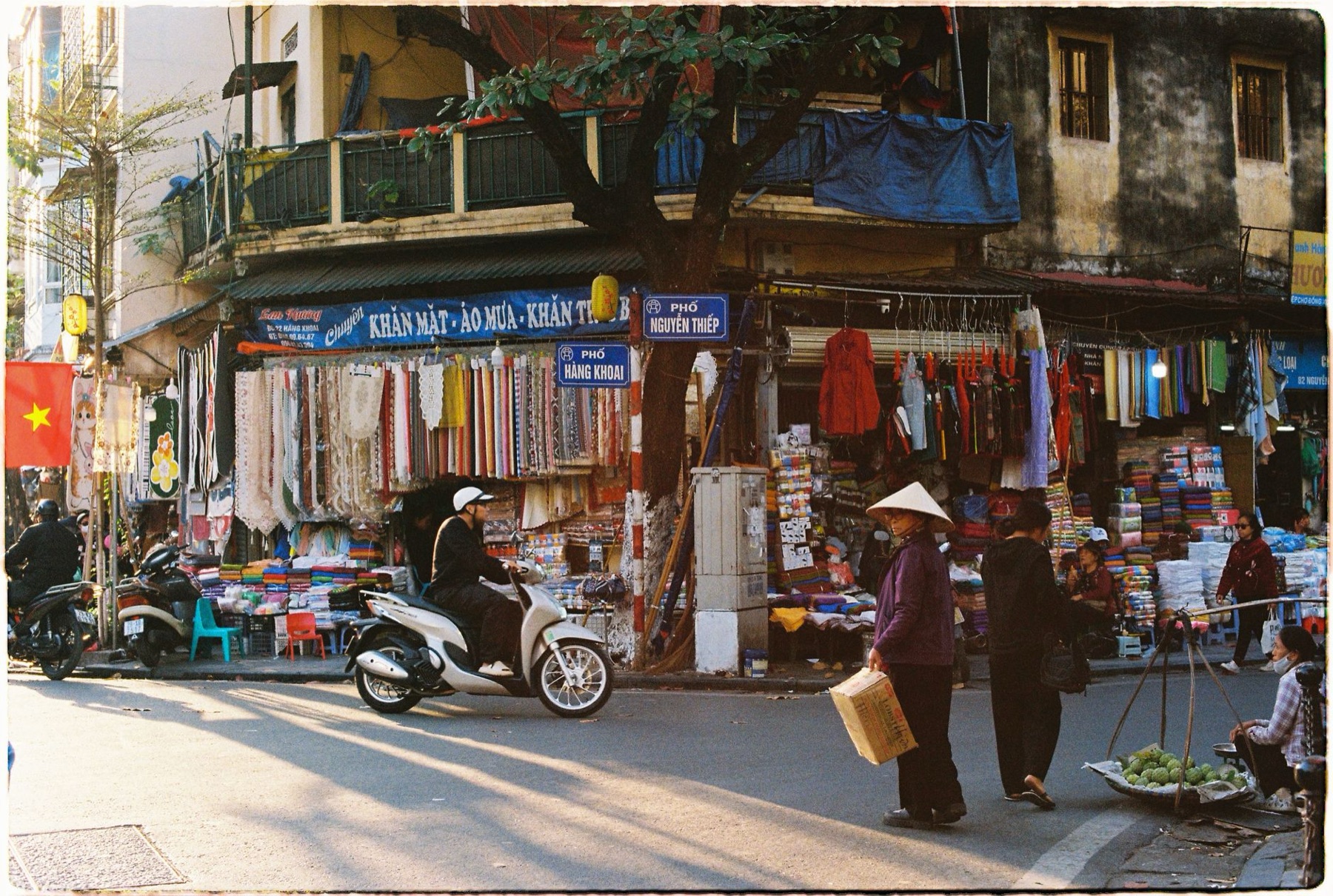
Ta Hien Street is the loudest, most touristy. Stalls line both sides, serving pho, banh mi, and spring rolls. Prices are marked higher here (add 20–30% to the minimums above), but food is safe and portions are decent. Go early (7–8 a.m.) or late (9–10 p.m.) to avoid peak tourist hours.
Hang Manh runs parallel to Ta Hien and is quieter. More Vietnamese customers, similar price range, less aggressive upselling. This is where we eat when we want real food without the circus.
Hang Ga (Chicken Street) has roasted chicken stalls and egg vendors; less obvious to tourists but worth a detour. Expect grilled chicken around 80,000–120,000 VND ($3.20–$4.80) per half.
The scam: vendors who don't display prices upfront often overcharge by 2–3x when you pay. Always ask price before ordering. If a stall refuses, walk. Thousands of alternatives exist.
The genuine risk: tap water in street stalls isn't drinkable. Bring your own bottle or buy sealed drinks (10,000–20,000 VND / $0.40–$0.80).
How do you choose which vendor to eat at if they all look the same?
Look for queues of Vietnamese people, not backpackers. Vietnamese queues = good food at fair price. Long lines of tourists = photos first, flavor second.
Check if the vendor preps food in front of you. Watch them cook pho broth, grill banh mi bread, or roll banh cuon. Hygiene isn't always obvious, but active cooking and high turnover are good signs.
Ask your hotel staff to recommend one stall per street. They know locals and can point you to the 20-year-old pho stall versus the three-year-old Instagram copy.
Test the dipping sauce (nuoc cham) before buying: it should be tangy and salty, not overly sweet. Sweet dipping sauce often signals a stall targeting tourists who don't know the real thing.
What's the honest comparison: Old Quarter street food vs. sit-down restaurants?
| Meal type | Street stall | Sit-down restaurant | Cost difference | Best for |
|---|---|---|---|---|
| Pho | 40–60K VND | 60–100K VND | Stall cheaper | Breakfast, speed |
| Banh mi | 35–50K VND | 60–80K VND | Stall cheaper | Lunch, portability |
| Egg coffee | 50–70K VND (café) | 60–90K VND | Negligible | Atmosphere matters |
| Bun cha | 60–80K VND | 100–150K VND | Stall cheaper | Authentic taste |
| Spring rolls | 30–50K VND | 80–120K VND | Stall cheaper | Volume, speed |
Street stalls win on price and authenticity. Sit-down restaurants offer seats, cold beer, and less chaos—worth it if you're tired or eating with non-adventurous people. Most visitors do both.
🗺️ Plan your route: Vietnam itinerary
What common mistakes do visitors make, and how do you avoid them?
Eating only on Ta Hien Street. You'll get fed, but not well-fed. Wander one block south or east. The real Old Quarter isn't in the guidebooks.
Not carrying small notes. Vendors prefer exact change; bring 10,000 and 20,000 VND notes. Large notes cause friction and delays.
Ordering "the most famous" dish. Fame here = Instagram fame. Eat what looks fresh and smells good, not what has the most reviews on a tourism website.
Skipping street food entirely because of hygiene fear. Street food in the Old Quarter is generally safer than you'd expect. Thousands of tourists eat daily with no issues. The real risk is eating at a stall that's been sitting in midday heat for hours—go early or late.
Trusting hand-drawn signs over actual stall setup. A stall with a laminated menu and outdoor seating is more reliable than one with a chalk sign updated daily.
Photographing before ordering. Many vendors expect payment first, then eating. Ordering for photos only will annoy them and sometimes cost you.
How much should you budget for a full Old Quarter food crawl?
A bowl of pho, banh mi, spring rolls, and egg coffee runs around 170,000–240,000 VND ($6.80–$9.60) total. That's a full meal for one person. A night out eating street food for two people with drinks: 400,000–600,000 VND ($16–$24).
If you stay in the Old Quarter itself (hostels from around 200,000–400,000 VND / $8–$16 per night), you can eat breakfast at 6 a.m. when stalls are freshly restocked and locals are eating. This is the sweet spot for both flavor and atmosphere.
📸 Book an ao dai photoshoot in Hanoi or Saigon (Cáo Studio)
What to check before you order: a practical checklist
- [ ] Price display: stall has visible pricing or you've asked aloud in front of others
- [ ] Active cooking: food is being prepared now, not sitting under a heat lamp
- [ ] Ingredient freshness: herbs, pickles, and meat look vibrant; no gray or brown edges
- [ ] Liquid clarity: pho broth is clear and fragrant, not cloudy; dipping sauce is balanced
- [ ] Vendor confidence: they're not hesitant when you ask what's in the dish
- [ ] Local customers: at least one Vietnamese person is ordering or eating
- [ ] Your comfort level: you feel okay with the setup; if not, leave without guilt
More detailed eating guides for other regions: Ho Chi Minh City's street food, Hoi An's specialty dishes, and Ha Long Bay seafood.
Return to the main Hanoi food guide for sit-down restaurants, cooking classes, and market tours.
🎟️ Compare tours & tickets for this place
FAQ
Is Old Quarter street food safe to eat?
Yes, for most visitors. High turnover means fresh ingredients. Avoid stalls with food sitting in heat, drink sealed beverages or bottled water, and eat where locals eat. Thousands eat here daily without illness. Your stomach might adjust for a day or two—this is normal, not dangerous.
What's the best time of day to eat Old Quarter street food?
Early morning (6–8 a.m.) for pho and banh cuon; ingredients are fresh and crowds are light. Late evening (8–10 p.m.) for grilled items. Midday (11 a.m.–2 p.m.) is tourist peak and heat is intense. Avoid midnight walks alone.
Can you get a full meal for under 100,000 VND ($4)?
Yes. One pho or banh mi plus one spring roll order runs 70,000–95,000 VND ($2.80–$3.80). Add a drink and you're at budget. Skip egg coffee if you're counting pennies—it's a treat, not a meal.
Do vendors accept card payments?
Rarely. Most Old Quarter stalls are cash-only (VND preferred). Keep small notes on you. A few sit-down cafés on the quieter edges accept digital payment, but assume cash everywhere else.
Which dish should I try if I only have time for one?
Banh mi. It's portable, filling, genuinely tasty even at tourist stalls, and representative of Hanoi eating culture. Pho is iconic but requires sitting and a bowl. Banh mi is pure Old Quarter practicality.
Are there any dishes I should skip as a visitor?
Organ meats (heart, intestine, lung) and "mystery meat" items require adventurous taste—not necessary to skip, but know what you're ordering. Dishes that have been sitting in room temperature for hours are worth skipping anywhere. Stick to high-turnover stalls and you'll be fine.
FAQ
Is Old Quarter street food safe to eat?
Yes, for most visitors. High turnover means fresh ingredients. Avoid stalls with food sitting in heat, drink sealed beverages or bottled water, and eat where locals eat. Thousands eat here daily without illness. Your stomach might adjust for a day or two—this is normal, not dangerous.
What's the best time of day to eat Old Quarter street food?
Early morning (6–8 a.m.) for pho and banh cuon; ingredients are fresh and crowds are light. Late evening (8–10 p.m.) for grilled items. Midday (11 a.m.–2 p.m.) is tourist peak and heat is intense. Avoid midnight walks alone.
Can you get a full meal for under 100,000 VND ($4)?
Yes. One pho or banh mi plus one spring roll order runs 70,000–95,000 VND ($2.80–$3.80). Add a drink and you're at budget. Skip egg coffee if you're counting pennies—it's a treat, not a meal.
Do vendors accept card payments?
Rarely. Most Old Quarter stalls are cash-only (VND preferred). Keep small notes on you. A few sit-down cafés on the quieter edges accept digital payment, but assume cash everywhere else.
Which dish should I try if I only have time for one?
Banh mi. It's portable, filling, genuinely tasty even at tourist stalls, and representative of Hanoi eating culture. Pho is iconic but requires sitting and a bowl. Banh mi is pure Old Quarter practicality.
Are there any dishes I should skip as a visitor?
Organ meats (heart, intestine, lung) and "mystery meat" items require adventurous taste—not necessary to skip, but know what you're ordering. Dishes that have been sitting in room temperature for hours are worth skipping anywhere. Stick to high-turnover stalls and you'll be fine.