Hanoi · Food
Hanoi Street Food Vietnam: What to Eat, Where, How Much
By Wander in Vietnam editorial team · Hanoi, Vietnam
Hanoi street food isn't a photo op—it's how the city eats. Every morning, before 8 a.m., vendors set up plastic stools on sidewalks. Families sit elbow-to-elbow, slurping pho at 6 a.m. before work. By noon, bánh mì carts vanish. By 10 p.m., grilled meat stalls on Hang Buom Street glow orange over charcoal. This isn't tourism; this is survival, tradition, and flavor at a price locals can afford.
We've eaten thousands of bowls across Hanoi. Here's how to navigate it without wasting money, stomach, or time.
🗺️ Plan your route: Vietnam itinerary
---
Where Should I Eat Hanoi Street Food?
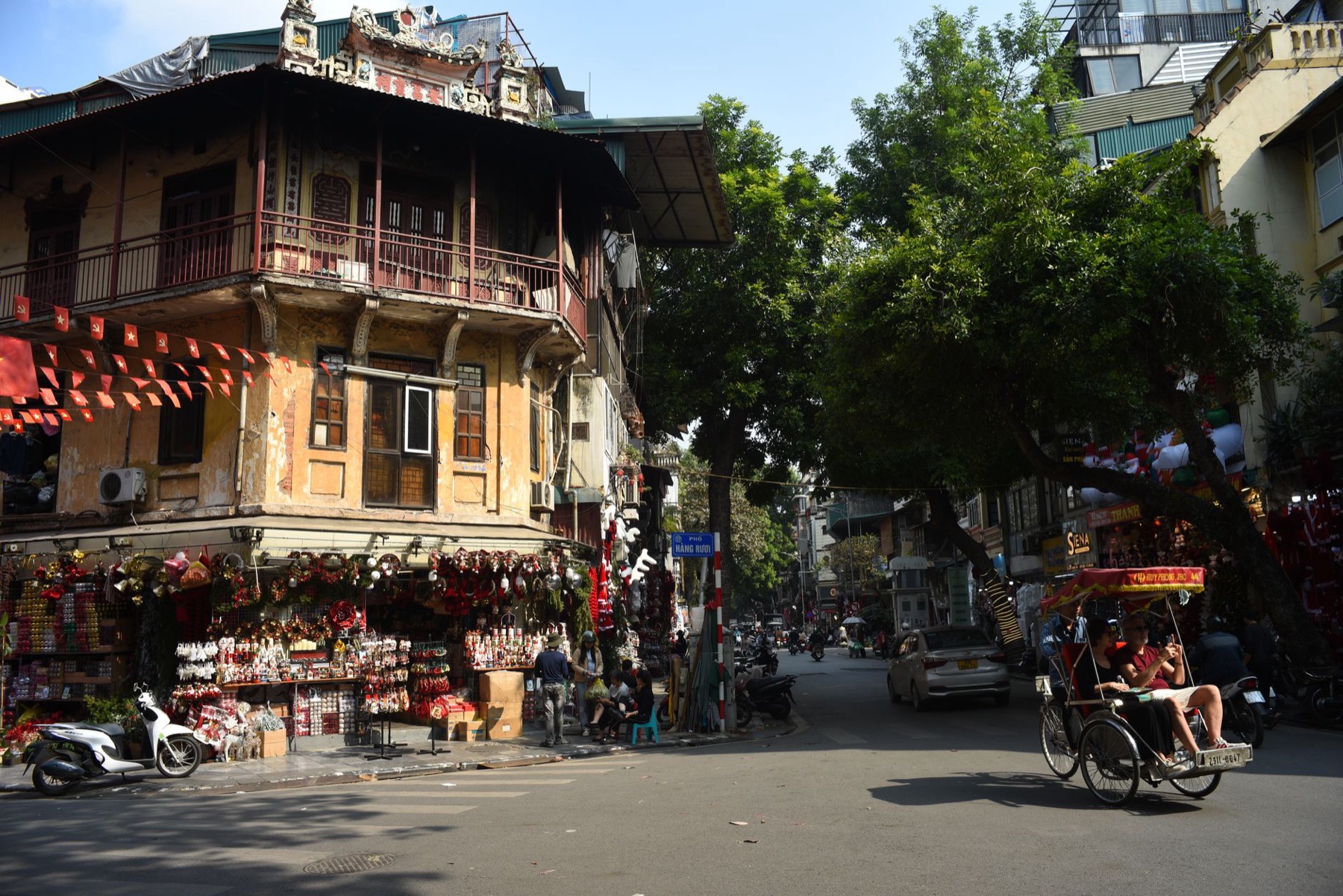
The Old Quarter (Hoan Kiem district, around Hang Dao and Hang Buom streets) has the highest density of stalls and the longest history—but also the highest prices and most persistent touts. Tay Ho (West Lake) is cleaner, quieter, and where Hanoi residents actually eat; you'll pay the same or less. Thanh Xuan district (north of the Old Quarter) has zero tourists and real prices. If you only have one evening, Hang Buom Street (Old Quarter) offers the full sensory experience: grilled shrimp paste, roasted meats, sizzling snails, all under one sky.
Budget-conscious travelers should eat breakfast in Thanh Xuan and dinner on Hang Buom. Solo travelers can sit at any stall—vendors expect it. Groups of 4+ can order a shared spread: five dishes, three drinks, under 500,000 VND ($20).
---
Which Dishes Are Worth Your Money?
Not every Hanoi street food hit is worth lining up for. Here's a decision framework:
| Dish | Best for | Typical Price | Why or Skip |
|---|---|---|---|
| Pho (beef or chicken) | Breakfast, solo, first-timers | 40K–60K VND ($1.60–$2.40) | Essential. Find stalls with a line at 6–7 a.m.; broth simmered 12+ hours. Skip if stall only opens at 9 a.m. |
| Bánh mì (pâté, head meat, egg) | Lunch, budget traveler | 35K–50K VND ($1.40–$2.00) | Fast, filling. Check: fresh baguette (crispy crust), cold fillings, no brown edges on pâté. |
| Egg coffee | Dessert, Instagram, cold mornings | 50K–70K VND ($2.00–$2.80) | Worth once. Tastes like tiramisu. Tourist stalls charge 100K+; avoid. Old Quarter stalls are cheaper. |
| Bánh cuon (steamed rolls) | Breakfast, light, vegetarian option | 30K–50K VND ($1.20–$2.00) | Soft, bland on its own; dipping sauce matters. Only buy if stall makes them fresh (visible steamer). |
| Bun cha (grilled pork, noodles, broth) | Lunch, groups, meat-lovers | 50K–80K VND ($2.00–$3.20) | Iconic, filling. Hanoi's signature dish. The meat should sizzle on charcoal; ask to watch. Skip pre-cooked meat in a pan. |
| Grilled shrimp paste on sugar cane | Adventurous, appetizer, groups | 40K–60K VND ($1.60–$2.40) | Textural, salty-sweet. Freshness critical—paste should smell ocean-like, not fishy-rotten. Pass if in doubt. |
| Snails (ốc) | Adventurous, evening, groups | 60K–100K VND ($2.40–$4.00) | Served hot in broth or grilled. Flavor is intense (garlic, lime, chili). Not for picky eaters. |
| Cơm tấm (broken rice + grilled pork/egg) | Lunch, solo, budget | 40K–70K VND ($1.60–$2.80) | Humble, hearty. Rice is intentionally broken (cheaper, fluffier). The grilled item is the star. |
Most overrated: Pho in the Old Quarter near Hoan Kiem Lake (tourists pay 80K–150K VND). Best value: Bánh mì in Thanh Xuan (35K, same quality). Most dangerous for foreigners: Live snails (ốc sống)—only eat if you've seen them boiled first.
---
How Do I Avoid Scams and Stomach Issues?
Scams are real, stomach trouble is real, but both are avoidable with observation.
Scams to watch:
- Overcharging tourists at Old Quarter stalls (ask price before sitting; locals pay 40K–60K for pho, tourists get quoted 100K+).
- Hidden charges: "free" water that costs 10K; a second bowl of broth you didn't order.
- Taxi drivers dropping you at a specific stall (they get commission; the stall marks up 30%).
Avoid stomach trouble:
- Eat hot food (avoid cold cuts older than 2 hours).
- Choose stalls with high turnover (food is fresher; usually where locals queue).
- Skip tap water; order bottled or canned drinks.
- Avoid raw herbs if your stomach is sensitive; cooked pho is safest.
- Eat breakfast and lunch on Hanoi time (6–8 a.m. for pho, 11 a.m.–1 p.m. for bánh mì). Skip late-night raw oysters unless from a reputable seafood restaurant.
What to check before you order:
- Broth: Should steam and smell aromatic (cinnamon, star anise), not bitter or sour.
- Meat: Cooked, not gray or slimy. If you're unsure, ask the vendor to cook it longer.
- Baguette (bánh mì): Crust should crack when you bite; interior soft. If soggy, it's old.
- Vegetables (herbs, greens): Crisp, not wilted or brown-edged.
- Vendor hygiene: Hands washed; food covered when not served; no smoking directly over the food.
---
Should I Eat at a Restaurant or a Street Stall?
Both have a place. Here's when to choose each:
Street stalls win if: You want authentic, cheap, fast, and don't mind plastic stools. You have 20–45 minutes. You speak a little Vietnamese or can point. You want to eat what locals eat.
Restaurants win if: You want air conditioning, a clean toilet, table service, English menu. You're dining after 8 p.m. (most stalls close). You want a guaranteed meal (stalls sometimes run out by 10 a.m.). You're traveling with someone with dietary restrictions. You're booking a group of 8+.
Hybrid option: Pho restaurants (air-conditioned stalls with a permanent roof, communal tables, 50K–80K VND pho). These exist in every neighborhood and occupy the middle ground. They serve breakfast until 10 a.m., then close and reopen at 5 p.m. for lunch.
Avoid high-end "modern Hanoi cuisine" restaurants aimed at tourists (mains 200K–400K VND / $8–$16). They're overpriced. For the same cost, eat three street meals plus a beer.
---
What Times Should I Eat to Get the Best Experience?
Timing is everything in Hanoi street food. Vendors operate on a strict window.
- Breakfast (6–8 a.m.): Pho, bánh cuon, cơm tấm. Longest lines, freshest ingredients, cheapest prices. Go hungry.
- Mid-morning (9–11 a.m.): Bánh mì, bánh hoai (noodle cakes). Fewer crowds. Pho stalls often close by 10 a.m.
- Lunch (11 a.m.–2 p.m.): Bun cha, cơm tấm, bánh mì. Peak traffic. Stalls restock; quality dips. Aim for 11–11:30 a.m.
- Afternoon (2–4 p.m.): Most stalls close. Grab cà phê (Vietnamese iced coffee, 25K–40K VND / $1–$1.60) or egg coffee (50K–70K VND) at a café.
- Evening (5–7 p.m.): Grilled meat stalls open (Hang Buom, Hang Gai streets). Bun cha vendors restock. Best for social eating.
- Late evening (7–10 p.m.): Snails, grilled seafood, beer joints. Tourist crowds peak 7–9 p.m. Locals eat 8–9 p.m. Go after 9 p.m. for quieter stalls.
- After 10 p.m.: Pho vendors reopen for late-night (college students, night workers). Food is fresh; crowds are gone.
Pro tip: Eat lunch instead of dinner. Prices are identical, food fresher, and you'll have your evening free. Have beer and snacks later.
📸 Book an ao dai photoshoot in Hanoi or Saigon (Cáo Studio)
---
How Should I Order If I Don't Speak Vietnamese?
You don't need to. Point, mime, and use your phone.
- Approach a stall. Stand and watch for 30 seconds. Observe what locals order. Copy them.
- Get the vendor's attention. Say "Chào" (hello). Smile.
- Point at a dish. Point at another customer's bowl. Say "Cái này" (this one). The vendor will nod.
- Confirm quantity. Hold up one finger for one, two fingers for two. Say the number in Vietnamese if confident (một, hai, ba = one, two, three). Pointing works fine.
- Negotiate add-ons. The vendor will ask (in Vietnamese) if you want extra broth, noodles, or herbs. Smile, nod, or shake your head.
- Ask the price. Say "Bao nhiêu tiền?" (How much?). They'll show a number on their fingers or a calculator.
- Pay. Hand over cash. Coins are normal; don't worry about underpaying.
Common words:
- "Một" = one
- "Nước" = water
- "Bia" = beer
- "Thêm" = more (repeat broth, etc.)
- "Ngon lắm" = very delicious (vendors love this)
---
Is Hanoi Street Food Safe for First-Time Visitors?
Yes, with caveats. Hanoi street food has fed millions of tourists safely. The key is judgment, not fear.
Actual risks (low if you follow rules):
- Foodborne illness (E. coli, cholera): Rare if you eat hot food from busy stalls. Higher risk from raw vegetables and shellfish.
- Allergic reactions: If you have shellfish or peanut allergies, speak to a doctor before eating; many dishes contain hidden shrimp paste or peanuts.
- Parasites: Almost nonexistent in Hanoi; rare in rural Vietnam if you're careful.
Perceived risks (overblown):
- "Dirty" stalls: Hanoi street food is regulated. Vendors who get sick customers go out of business. High turnover = high hygiene.
- Dodgy meat: Modern Hanoi has refrigeration and inspections. Pre-cooked meat kept in broth at 60°C+ is safer than you think.
Stomach adjustment: If you're not used to street food, your gut may adjust over 2–3 days (mild nausea, loose stools). This is normal. Eat light (pho, bánh mì) on day one; progress to richer food (bun cha, grilled meat) by day three.
See our Hanoi travel guide for more health and logistics tips.
🎟️ Compare tours & tickets for this place
---
How Much Should I Budget for Street Food in Hanoi?
Daily breakdown (solo traveler):
- Breakfast (pho): 50K VND ($2.00)
- Lunch (bánh mì + drink): 70K VND ($2.80)
- Snack (egg coffee, fruit): 60K VND ($2.40)
- Dinner (bun cha + bia): 100K VND ($4.00)
- Total: 280K VND ($11.20) per day
Group of 4 (shared meals):
- Shared pho + egg rolls: 160K VND ($6.40)
- Lunch spread (bánh mì, bánh cuon, fruit): 120K VND ($4.80)
- Dinner (grilled meat, snails, beer): 280K VND ($11.20)
- Total per person: 190K VND ($7.60) per day
This assumes eating only street stalls. Add 30–50% if you mix in a few café meals or a casual restaurant lunch. Budget 500K–700K VND ($20–$28) per day per person to include sit-down meals, beer, and coffee.
Money-saving hacks:
- Eat where tour groups don't go (Thanh Xuan, north Old Quarter, Tay Ho residential streets).
- Eat breakfast and lunch, skip dinner (two big meals cost less than one meal at a restaurant).
- Share dishes with travel companions.
- Avoid seafood stalls after 7 p.m. (tourists drive up prices; locals eat 8–9 p.m. when prices drop slightly).
- Drink tap water from a purified dispenser (many stalls have them) instead of buying bottled water.
---
What Else Should I Know About Hanoi's Food Scene?
Check our Hanoi food pillar for restaurant recommendations, cooking classes, and market tours. If you want professional photos eating street food—or in traditional áo dài—book an ao dai photoshoot in Hanoi with Cáo Studio. Images help you remember the experience and make great shareable content.
Extend your trip with guides to Ha Long Bay, Ninh Binh, Sapa, and Hoi An, each with distinct regional food specialties. Before you go, get a Vietnamese eSIM to stay connected while eating, and confirm you have a valid visa.
---
FAQ
Is it rude to eat at a street stall alone if I don't speak Vietnamese?
No. Solo eating is normal and expected at breakfast pho stalls. Vendors don't expect conversation. Smile, point, eat, pay, leave. No apology needed. If you sit for 30 minutes, someone will think you're waiting for a friend.
Can I get food poisoning from Hanoi street food?
Rarely, if you follow basic rules (eat hot, avoid raw, busy stalls, clean vendor). More tourists get sick from tap water or ice than from food. Stomach adjustment (mild bloating) is common; severe illness is not.
How do I know a stall is "authentic" and not a tourist trap?
Watch for locals eating there. Locals know. If a stall has a mixed queue of locals and tourists, it's legit. If only tourists sit there and the vendor speaks English before you speak, it's a trap.
Should I tip at street stalls?
No. Tipping isn't expected at street food stalls in Hanoi. Round up 5K–10K VND if you're paying with a large note and don't want change. Vendors don't refuse it, but won't expect it.
What's the difference between street stalls and stall restaurants (phở nhà)?
Stalls are open-air plastic tables on sidewalks (cheap, fast, no toilet). Stall restaurants are permanent covered structures with a roof, table service, and a toilet (slightly more expensive, cleaner, slower). Both serve identical food at nearly identical prices; choice is comfort.
Can I book a tour that includes street food?
Yes. Many Hanoi food tours are available through local operators and platforms like our tours & tickets page. Expect to pay 50–80 USD per person and eat 4–6 dishes with a local guide in 3–4 hours.
What drink pairs best with street food in Hanoi?
Vietnamese iced coffee (cà phê đen đá, 25K–40K VND / $1–$1.60) in the morning; bia (local beer, 30K–50K VND / $1.20–$2.00 for a small bottle) in the evening. Avoid sugary soft drinks; they overpower delicate flavors.
Is street food safe for pregnant women or people with weakened immunity?
Risk is higher. Pregnant women should avoid raw herbs, undercooked meat, and raw shellfish. People with weakened immunity should eat only boiling-hot food from very busy stalls. Consult a doctor before your trip.
FAQ
Is it rude to eat at a street stall alone if I don't speak Vietnamese?
No. Solo eating is normal and expected at breakfast pho stalls. Vendors don't expect conversation. Smile, point, eat, pay, leave. No apology needed. If you sit for 30 minutes, someone will think you're waiting for a friend.
Can I get food poisoning from Hanoi street food?
Rarely, if you follow basic rules (eat hot, avoid raw, busy stalls, clean vendor). More tourists get sick from tap water or ice than from food. Stomach adjustment (mild bloating) is common; severe illness is not.
How do I know a stall is "authentic" and not a tourist trap?
Watch for locals eating there. Locals know. If a stall has a mixed queue of locals and tourists, it's legit. If only tourists sit there and the vendor speaks English before you speak, it's a trap.
Should I tip at street stalls?
No. Tipping isn't expected at street food stalls in Hanoi. Round up 5K–10K VND if you're paying with a large note and don't want change. Vendors don't refuse it, but won't expect it.
What's the difference between street stalls and stall restaurants (phở nhà)?
Stalls are open-air plastic tables on sidewalks (cheap, fast, no toilet). Stall restaurants are permanent covered structures with a roof, table service, and a toilet (slightly more expensive, cleaner, slower). Both serve identical food at nearly identical prices; choice is comfort.
Can I book a tour that includes street food?
Yes. Many Hanoi food tours are available through local operators and platforms like [our tours & tickets page](/vietnam/tours). Expect to pay 50–80 USD per person and eat 4–6 dishes with a local guide in 3–4 hours.
What drink pairs best with street food in Hanoi?
Vietnamese iced coffee (cà phê đen đá, 25K–40K VND / $1–$1.60) in the morning; bia (local beer, 30K–50K VND / $1.20–$2.00 for a small bottle) in the evening. Avoid sugary soft drinks; they overpower delicate flavors.
Is street food safe for pregnant women or people with weakened immunity?
Risk is higher. Pregnant women should avoid raw herbs, undercooked meat, and raw shellfish. People with weakened immunity should eat only boiling-hot food from very busy stalls. Consult a doctor before your trip.
More: Hanoi guide · What to eat in Hanoi