Hanoi · Food
Late Night Food Hanoi: Where to Eat After Dark
By Wander in Vietnam editorial team · Hanoi, Vietnam
Hanoi doesn't sleep—and neither does its food. After midnight, the city's street-food culture shifts into high gear: pho vendors fire up fresh broths, banh mi stands prep sandwiches under neon signs, and night-market crowds swell in working-class neighborhoods. If you're arriving late from the airport, nursing jet lag, or simply craving a 2 a.m. bowl of vermicelli, you have real options. This guide covers the actual neighborhoods, street names, dish names, and price points—without exaggeration.
🗺️ Plan your route: Vietnam itinerary
What are the best 24-hour pho neighborhoods in Hanoi?
The Old Quarter (Hoàn Kiếm district) and the streets radiating south toward Hoan Kiem Lake hold the densest cluster of all-night pho shops. Hang Manh, Hang Ga, and Ta Hien streets have at least three dedicated pho vendors each that open 10 p.m.–6 a.m., most serving beef or chicken varieties. A small bowl costs around 50,000–70,000 VND (USD $2–$2.70). Avoid the brightly lit tourist-facing ones with laminated English menus; instead, look for unmarked stalls with plastic stools and a queue of local truck drivers and night-shift workers. Tay Ho (West Lake) has a newer crop of late-night pho spots catering to university students; expect slightly higher prices (70,000–90,000 VND / USD $2.70–$3.50) and cleaner seating, but less authentic atmosphere.
The catch: pho quality after 2 a.m. drops noticeably as broth simmers longer and meat freshness declines. Order before 1 a.m. for best results.
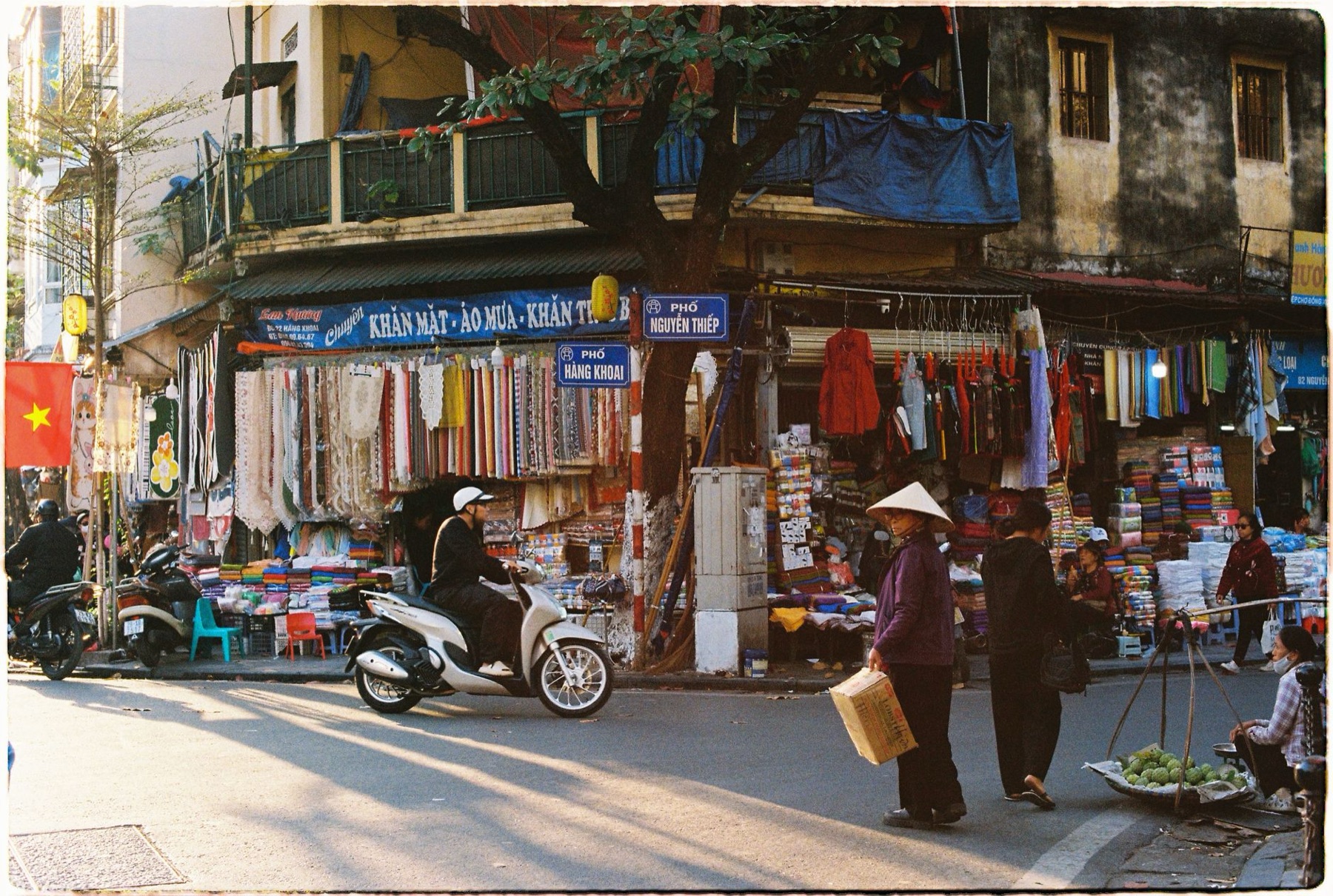
Where do locals buy banh mi and sandwiches after 10 p.m.?
Ba Tieu street (near Hang Dao market, Hoàn Kiếm) and the stretch around Nguyen Sieu street (Old Quarter perimeter) host 3–5 banh mi carts that operate 9 p.m.–3 a.m. A standard banh mi—with pâté, cold cuts, pickled vegetables, and cilantro—costs 35,000–55,000 VND (USD $1.35–$2.10). Early evening (9–11 p.m.) means fresh baguettes; after midnight, bread softens slightly but is still acceptable. Fillings stay consistent. The real risk: over-ice-packed meat that's borderline warm by 1 a.m. Ask the vendor to show you the meat—if it's grayish or separated, skip it.
A safer late-night bet is banh mi from 7 Doves or similar branded chains with refrigerated display cases; they operate until 11 p.m. in most districts and cost around 50,000–70,000 VND (USD $1.90–$2.70).
📸 Book an ao dai photoshoot in Hanoi or Saigon (Cáo Studio)
Which night markets and stalls stay open longest?
Dong Xuan Market (the Old Quarter's largest covered market, Hoàn Kiếm) closes by 10 p.m., but the outdoor food section wrapping its perimeter runs until 2–3 a.m. You'll find grilled meats (thit nuong), spring rolls (nem), and sticky rice carts. Budget 40,000–100,000 VND (USD $1.50–$3.80) per dish. Authenticity is high, hygiene varies—pick vendors with high turnover and crowds.
Hang Manh night market (same district) operates 11 p.m.–4 a.m., with noodle soups, grilled fish, and tofu stalls. It's grittier and cheaper (40,000–60,000 VND / USD $1.50–$2.30) but attracts workers, taxi drivers, and serious food hunters rather than tourists. Language barrier is real; point and nod.
Tay Ho has no true night market, but a string of 24-hour ramen and pho shops cluster near the university (Thang Long Road), staying packed until 3 a.m.
How much do late-night dishes cost, and what's worth ordering?
| Dish | Best time to order | Rough cost (VND) | Rough cost (USD) | What to check |
|---|---|---|---|---|
| Pho (small bowl) | Before 1 a.m. | 50,000–70,000 | $1.90–$2.70 | Broth clarity; avoid if cloudy |
| Banh mi (full) | 9 p.m.–11:30 p.m. | 35,000–55,000 | $1.35–$2.10 | Bread texture; meat temperature |
| Grilled pork skewers (thit nuong) | 11 p.m.–1 a.m. | 60,000–100,000 | $2.30–$3.80 | Char marks; ask for extra sauce |
| Spring rolls (nem) | Before midnight | 30,000–50,000 | $1.15–$1.90 | Wrapper color; filling cohesion |
| Ramen/egg noodles | 11 p.m.–3 a.m. | 50,000–80,000 | $1.90–$3.05 | Broth temperature; noodle texture |
| Sticky rice w/ meat (xoi) | 7 p.m.–midnight | 40,000–60,000 | $1.50–$2.30 | Not oily; firm texture |
Pho and ramen are safest after midnight: hot broths mask minor spoilage and keep food hot through digestion. Avoid raw or cold-served dishes (salads, spring rolls) after 1 a.m. Grilled meat is reliable if the cart has visible flame and high customer turnover.
🎟️ Compare tours & tickets for this place
What scams and food-safety issues should you watch for?
Overcharging foreign faces: Quote prices before ordering. A banh mi should never exceed 60,000 VND; pho, 80,000 VND. If the vendor hesitates or doesn't quote, walk. Tipping isn't expected and not typical at street stalls.
Unrefrigerated meat after 1 a.m.: Pork and chicken sit at room temperature in warm nights. Ask which meat was prepared that day—vendors are usually honest. If you're uncertain, order vegetarian options or soup only.
Tap water and ice: Most late-night stalls use tap water in ice and soups. If your stomach is sensitive, ask for hot tea (che) instead (around 10,000–20,000 VND / USD $0.40–$0.75). Bottled water (nước lọc) is always safer and costs 20,000–40,000 VND (USD $0.75–$1.50).
Counterfeit branded drinks: If a vendor offers Coca-Cola from a cooler with no seal, it's likely refilled. Stick to opened cans or bottles you watch them crack open.
Theft and bag safety: Late-night stalls sit on busy streets. Keep bags zipped and phones in front pockets. Groups of young people occasionally target distracted diners. Eat with your back to a wall and be aware.
How to find safe late-night vendors:
- Eat where locals eat (crowds = turnover = freshness).
- Avoid stalls that look abandoned or lit only by phone screens.
- Ask your hotel staff which vendors they use.
- Order hot dishes and visible-prep foods.
- Eat before 1 a.m. if your stomach is fragile.
Which neighborhoods are safest for late-night eating?
Hoàn Kiếm (Old Quarter): Highest concentration of late-night food, most police presence, but also most tourist scams. Stick to main streets (Hang Ga, Hang Manh, Nguyen Sieu).
Ba Dinh: Quieter; university-area stalls near Thang Long Road are authentic and heavily frequented by students. Safer after dark than touristy zones.
Tay Ho: Gentrifying; 24-hour ramen and pho chains are modern, clean, and reliable. Prices are higher. Fewer crowds after 2 a.m.
Avoid after midnight: Hoan Kiem lakefront after 11 p.m. (fewer vendors, fewer people); alleys not directly on a main street; anywhere more than one turn away from a lit, busy road.
---
What to check before ordering late-night food
- Ask the vendor how long the dish has been sitting. Pho should be hot enough to wince; if it's lukewarm, decline.
- Watch the meat or protein being added. If you don't see it from raw or a clearly marked cooler, pass.
- Confirm the price in Vietnamese or on your phone calculator before they prepare it.
- Inspect ice and water. Cloudy ice signals questionable source. Stick to hot drinks if uncertain.
- Pay only when you eat. Most stalls accept cash only; no card processing after 11 p.m.
- Leave if the vendor looks evasive. Your instinct matters more than hunger.
---
For more on Hanoi's food culture and daytime eating, see our full Hanoi food guide. Planning a trip across Vietnam? Start with our Vietnam itinerary planner to map dining highlights in Hoi An, Ho Chi Minh City, Ha Long Bay, Ninh Binh, and Sapa. Staying longer? Check our eSIM guide for Vietnam to stay connected while hunting street food, and review visa requirements if you're timing an extended foodie trip.
---
FAQ
Is it safe to eat from street stalls in Hanoi after midnight?
Yes, if you follow basic rules: eat where locals eat, order hot dishes, watch preparation, and confirm prices first. Avoid raw foods and tap water after 1 a.m. Theft and bag-snatching are the bigger risk than food poisoning.
What's the cheapest late-night meal in Hanoi?
Sticky rice with grilled meat (xoi) or spring rolls run 30,000–50,000 VND (USD $1.15–$1.90). A small pho or ramen is around 50,000–60,000 VND (USD $1.90–$2.30). Both fill an average stomach.
Do late-night food vendors accept card payments or apps like Momo?
Rarely before 1 a.m.; almost never after. Carry cash (VND). Some newer chains in Tay Ho accept Momo or card, but street carts are cash-only.
Which late-night dish is safest for sensitive stomachs?
Clear pho broth (without beef) or hot ramen, ordered before midnight. Avoid raw vegetables, cold dishes, and unrefrigerated protein after 1 a.m. Ask for extra broth and minimal toppings.
How do I find a late-night food vendor near my hotel?
Ask the hotel staff for their personal recommendations, or use Google Maps to search "pho" or "banh mi" and filter by open now. Walking main streets (Hang Ga, Thang Long) after 10 p.m. will show you stalls; crowds signal reliability.
FAQ
Is it safe to eat from street stalls in Hanoi after midnight?
Yes, if you follow basic rules: eat where locals eat, order hot dishes, watch preparation, and confirm prices first. Avoid raw foods and tap water after 1 a.m. Theft and bag-snatching are the bigger risk than food poisoning.
What's the cheapest late-night meal in Hanoi?
Sticky rice with grilled meat (xoi) or spring rolls run 30,000–50,000 VND (USD $1.15–$1.90). A small pho or ramen is around 50,000–60,000 VND (USD $1.90–$2.30). Both fill an average stomach.
Do late-night food vendors accept card payments or apps like Momo?
Rarely before 1 a.m.; almost never after. Carry cash (VND). Some newer chains in Tay Ho accept Momo or card, but street carts are cash-only.
Which late-night dish is safest for sensitive stomachs?
Clear pho broth (without beef) or hot ramen, ordered before midnight. Avoid raw vegetables, cold dishes, and unrefrigerated protein after 1 a.m. Ask for extra broth and minimal toppings.
How do I find a late-night food vendor near my hotel?
Ask the hotel staff for their personal recommendations, or use Google Maps to search "pho" or "banh mi" and filter by open now. Walking main streets (Hang Ga, Thang Long) after 10 p.m. will show you stalls; crowds signal reliability.
More: Hanoi guide · What to eat in Hanoi