Hanoi · Food
Old Quarter Hanoi Street Food: Where to Eat & What to Buy
By Wander in Vietnam editorial team · Hanoi, Vietnam
The Old Quarter's narrow streets overflow with Vietnam's most authentic street food. We show you which stalls deliver real flavour—and which charge tourists triple.
The Old Quarter (Hoàn Kiếm District) serves iconic street dishes: phở at dawn stalls around Tạ Hiến Street (around 40,000–60,000 VND / $1.60–$2.40 USD per bowl), bún chả near Hàng Than (around 50,000–80,000 VND / $2–$3.20), egg coffee on Hàng Gai (around 35,000–50,000 VND / $1.40–$2), and bánh mì from corner vendors (around 20,000–35,000 VND / $0.80–$1.40). Wander in Vietnam recommends eating where locals queue—never the tourist-facing menu with inflated prices.
Where do locals actually eat phở in the Old Quarter?
Skip the famous street-front stalls. Real phở happens in the early morning (5–7 a.m.) at unmarked soup shops tucked into side alleys off Tạ Hiến and Hàng Bạc. Look for plastic stools, no English menu, and a queue of construction workers. One broth simmers for hours; the vendor ladles into a bowl with fresh herbs, rice noodles, and rare or cooked beef. Cost: around 40,000–60,000 VND. Tourists eating here at 11 a.m. miss the point—these stalls close by 8 a.m.
What's the real difference between street bún chả and restaurant bún chả?
Bún chả—grilled pork patties over cold noodles with dipping broth—costs around 50,000–80,000 VND from a street cart near Hàng Than or Hàng Gà. A sit-down restaurant charges 120,000–180,000 VND for the same dish. Street vendors grill the meat fresh on a small charcoal brazier; you watch it happen. Restaurants add rent markup and a plate fee. Flavour? Identical. The vendor's version often better because turnover is faster. Arrive late afternoon (4–6 p.m.) when the meat is freshest.
How do you avoid the egg coffee tourist trap on Hàng Gai?
Egg coffee—hot coffee with a sweet, whisked egg-yolk foam—sells everywhere now. A café on the main Hàng Gai street charges around 50,000–70,000 VND (sometimes more for "special" versions). A street-side vendor three doors down or on a side alley charges around 35,000–45,000 VND. The taste is nearly identical. The trap: tourist-facing cafés on the main street have laminated menus with inflated prices. Walk 20 meters into a quieter lane, order at a hole-in-the-wall café with no sign, and save 40%. Check the price before ordering—verbal agreement avoids argument later.
Which bánh mì vendors are worth buying from?
Bánh mì (Vietnamese sandwich: meat, pâté, coriander, pickled carrot, chilli, on a crispy baguette) costs around 20,000–35,000 VND from street vendors scattered throughout the Old Quarter. The best move: identify a corner vendor with a small mobile cart or a tiny shopfront with locals eating. Watch how fast the bread sells (high turnover = fresher). Avoid pre-made sandwiches sitting under plastic wrap; order made-to-order. Tourist-friendly bánh mì vendors near Hoan Kiem Lake charge 40,000–60,000 VND for the same item. No English menu = better price and better meat quality.
What to buy: Street Food Gift & Souvenir Comparison
| Item Type | Who It's For | Rough Price (VND) | Rough Price (USD) | Why It Works |
|---|---|---|---|---|
| Instant phở packet (for home cooking) | Food lovers, cooking hobbyists | 15,000–25,000 per packet | $0.60–$1 | Lightweight, authentic taste, easy mail |
| Bottled Vietnamese hot sauce or chilli paste | Spice enthusiasts, gift-givers | 30,000–60,000 per bottle | $1.20–$2.40 | Compact, shelf-stable, real Hanoi origin |
| Dried shrimp or anchovy snacks | Snackers, umami fans | 40,000–80,000 per pack | $1.60–$3.20 | Protein-rich, travels well, unique flavour |
| Roasted peanuts (candied or salted) | Budget gift-givers | 20,000–40,000 per pack | $0.80–$1.60 | Cheap, delicious, easy to carry |
| Bamboo sticky rice container (new, decorative) | Home décor, collectors | 150,000–300,000 | $6–$12 | Reusable, photogenic, authentic craft |
Browse Vietnamese condiment & snack collections for packaged versions that travel well and won't spill in your suitcase.
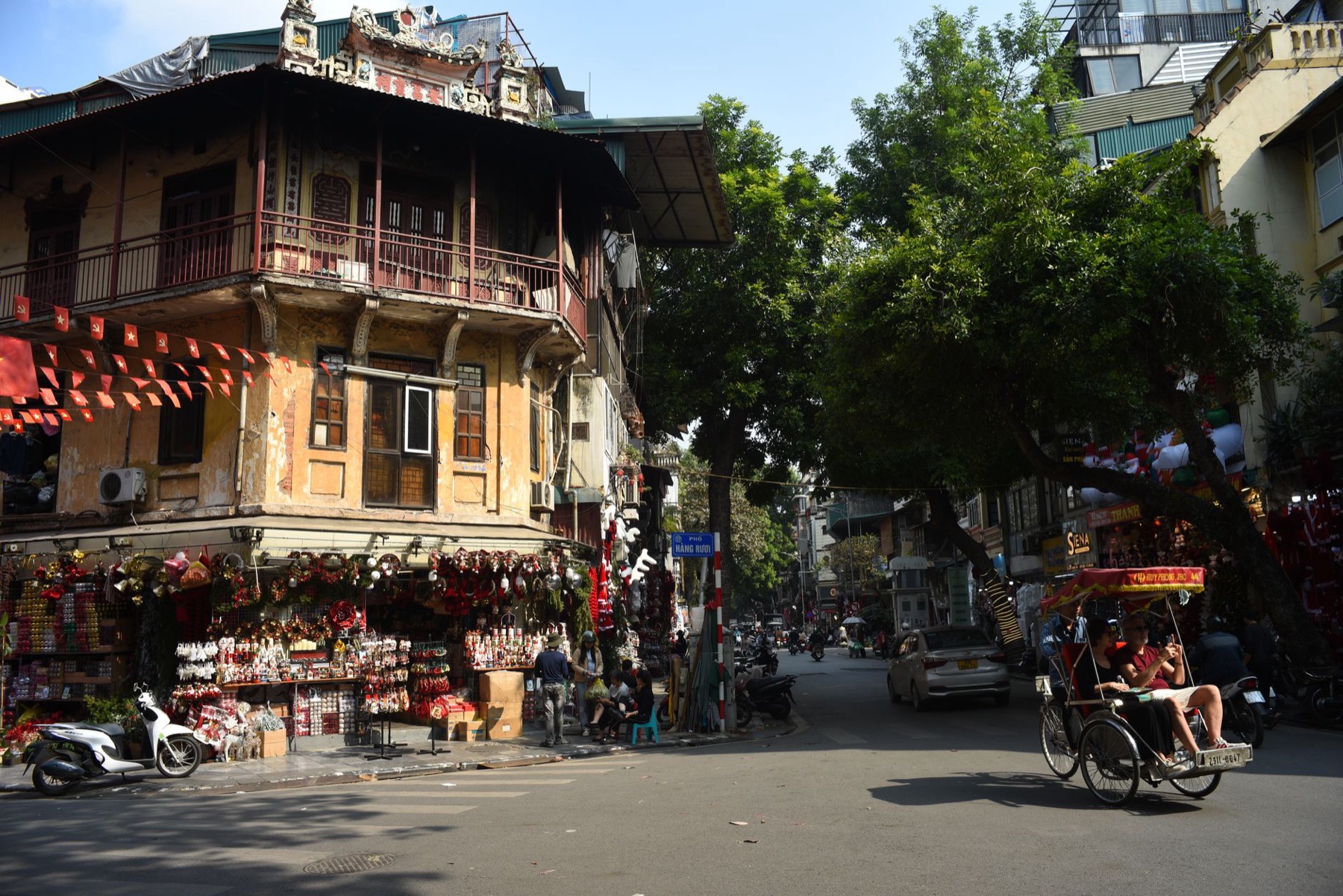
Which streets should you walk for the full street food experience?
Tạ Hiến Street (north side): Phở stalls, early morning only; close by 8 a.m.
Hàng Than: Bún chả carts (afternoon/evening), busy 4–7 p.m.
Hàng Gà & Hàng Gai: Egg coffee holes, bánh mì vendors, open all day; prices inflated at main-street cafés.
Hàng Bạc: Mixed street food, late-night grilled items, 6 p.m.–11 p.m.
Lý Tự Trọng (near Hoan Kiem Lake): Tourist-heavy; skip for authentic experience.
Walk these streets on foot. Moped traffic is intense; stick to the pavement. Bring small bills (10,000 VND notes); vendors rarely have change for large denominations. Eat standing or perched on a plastic stool—there are no queues, just a flow of people. Photos are fine; ask first at sitting-down stalls out of respect.
📸 Book an ao dai photoshoot in Hanoi or Saigon (Cáo Studio)
How much should you actually pay (and when are you being overcharged)?
A phở bowl at a local stall: 40,000–60,000 VND. Tourist menu: 80,000–120,000 VND. Red flag: laminated menu or large signage in English.
Bún chả at a street cart: 50,000–80,000 VND. Restaurant: 120,000–180,000 VND.
Egg coffee at a side-alley café: 35,000–50,000 VND. Main street café: 50,000–80,000 VND.
Bánh mì from a vendor: 20,000–35,000 VND. Tourist café: 40,000–80,000 VND.
Golden rule: If a menu is printed, laminated, or in English, prices are inflated. If the vendor speaks no English and cooks in front of you, you're paying local price.
What to check before you order
- Time of day: Phở vendors close by 8 a.m.; don't hunt them at lunch.
- Queue length: Long queue = good food, fresh ingredients, fast turnover.
- Meat visibility: Can you see the grilled meat, fresh herbs, or boiling broth? If food is pre-made and covered, pass.
- Verbal price agreement: Point, say the number, get confirmation before eating. Avoids "surprise" bills.
- Plastic stool condition: If the stool looks unsanitary, eat standing or find another vendor.
- Change: Bring small notes (10,000 VND). Vendors don't carry change for 100,000 notes.
- Water: Bottled water (around 5,000–10,000 VND) is safer; tap water is not recommended for tourists.
Related guides to deepen your Hanoi food journey
Explore the broader Hanoi food scene for restaurant recommendations, cooking classes, and markets beyond street food. Plan a full Hanoi itinerary that blends street food with temples, museums, and walking tours. If you're traveling across Vietnam, check out street food in Ho Chi Minh City (bánh mì, bánh canh, cơm tấm) and Hoi An's famous cao lầu and bánh hoài.
For travelers carrying gifts home, shop Vietnamese specialty items and souvenirs that are lightweight and airport-safe.
🎟️ Compare tours & tickets for this place
FAQ
Is the Old Quarter street food safe to eat?
Street food in the Old Quarter is safe if you follow one rule: eat where locals eat, in broad daylight, at busy stalls with high turnover. Avoid food that's been sitting under plastic wrap or left uncovered overnight. Use bottled water. The risk of stomach upset is low if you choose stalls with active cooking and queues.
What's the best time of day to eat street food in the Old Quarter?
Phở: 5–7 a.m. (closes by 8 a.m.). Bún chả: 4–7 p.m. (lunch service is weaker). Bánh mì: all day, best 10 a.m.–12 p.m. and 5–7 p.m. Egg coffee: all day. Avoid midnight stalls unless you know the vendor's reputation; many cater to drunk tourists and raise prices.
Do I need to speak Vietnamese to order street food?
No. Point at what you want, say a number (price), and nod. Most Old Quarter vendors understand basic hand signals. Avoid menus in English—they signal inflated prices. If the stall has no menu, point at someone else's bowl and say "same." Vendors respect this approach.
Can I find vegetarian street food in the Old Quarter?
Yes, but with effort. Bánh mì vendors can omit meat (ask for "không thịt"). Phở with vegetable broth exists but is rare at street stalls; ask a local café instead. Egg coffee is vegetarian. Most bún chả is meat-based. Best option: visit a local vegetarian shop or temple café near the Old Quarter rather than haggling with meat-focused street vendors.
How do I know if a street food vendor is clean?
Watch the vendor handle food. Do they touch raw meat, then cooked items, without washing hands? Red flag. Is the chopping board visibly dirty? Pass. Are herbs stored in a covered container or exposed to street dust? Covered is safer. Use the queue as a proxy: if locals are eating, the health standard is acceptable. Street food vendors without customers for 30+ minutes may be slower at restocking, meaning older ingredients.
Should I buy packaged street food souvenirs to take home?
Yes, for instant phở, hot sauce, dried shrimp, and roasted peanuts. Browse Vietnamese condiment & snack collections for travel-safe options that won't leak or spoil. Avoid fresh meat products, unpasteurized cream (egg coffee base), or anything without a sealed package and expiration date. Packaged versions taste authentic and pass customs in most countries.
FAQ
Is the Old Quarter street food safe to eat?
Street food in the Old Quarter is safe if you follow one rule: eat where locals eat, in broad daylight, at busy stalls with high turnover. Avoid food that's been sitting under plastic wrap or left uncovered overnight. Use bottled water. The risk of stomach upset is low if you choose stalls with active cooking and queues.
What's the best time of day to eat street food in the Old Quarter?
Phở: 5–7 a.m. (closes by 8 a.m.). Bún chả: 4–7 p.m. (lunch service is weaker). Bánh mì: all day, best 10 a.m.–12 p.m. and 5–7 p.m. Egg coffee: all day. Avoid midnight stalls unless you know the vendor's reputation; many cater to drunk tourists and raise prices.
Do I need to speak Vietnamese to order street food?
No. Point at what you want, say a number (price), and nod. Most Old Quarter vendors understand basic hand signals. Avoid menus in English—they signal inflated prices. If the stall has no menu, point at someone else's bowl and say "same." Vendors respect this approach.
Can I find vegetarian street food in the Old Quarter?
Yes, but with effort. Bánh mì vendors can omit meat (ask for "không thịt"). Phở with vegetable broth exists but is rare at street stalls; ask a local café instead. Egg coffee is vegetarian. Most bún chả is meat-based. Best option: visit a local vegetarian shop or temple café near the Old Quarter rather than haggling with meat-focused street vendors.
How do I know if a street food vendor is clean?
Watch the vendor handle food. Do they touch raw meat, then cooked items, without washing hands? Red flag. Is the chopping board visibly dirty? Pass. Are herbs stored in a covered container or exposed to street dust? Covered is safer. Use the queue as a proxy: if locals are eating, the health standard is acceptable. Street food vendors without customers for 30+ minutes may be slower at restocking, meaning older ingredients.
Should I buy packaged street food souvenirs to take home?
Yes, for instant phở, hot sauce, dried shrimp, and roasted peanuts. [Browse Vietnamese condiment & snack collections](/collections/vietnam-gifts) for travel-safe options that won't leak or spoil. Avoid fresh meat products, unpasteurized cream (egg coffee base), or anything without a sealed package and expiration date. Packaged versions taste authentic and pass customs in most countries.
More: Hanoi guide · What to eat in Hanoi