Hanoi · Food
Phở Hanoi Street Food: What to Order, Where & How Much
By Wander in Vietnam editorial team · Hanoi, Vietnam
Hanoi's phở culture moves fast and early. You're not hunting a sit-down "experience"—you're grabbing a working bowl before 9 a.m., standing or on a plastic stool, broth still steaming at dawn. Most tourists miss this rhythm entirely and end up at inflated, air-conditioned tourist versions by lunchtime. We've eaten phở across every ward from Hoàn Kiếm to Hà Đông; here's what actually matters when you order.
Which phở type should I order: chicken or beef?
Phở gà is lighter, subtler, traditional in northern Hanoi. Phở bò is richer, slightly more complex, beloved south of the Red River and in Saigon. Neither is "better"—it depends on your palate and how early you wake. Chicken phở broth simmers 8–12 hours; beef can go 15+ hours. If you want umami depth and don't mind beef, go bò. If you're eating before 7 a.m. and want something cleaner, gà is faster and fresher. First-time visitors often overthink this; locals just order whichever stall they trust and move on.
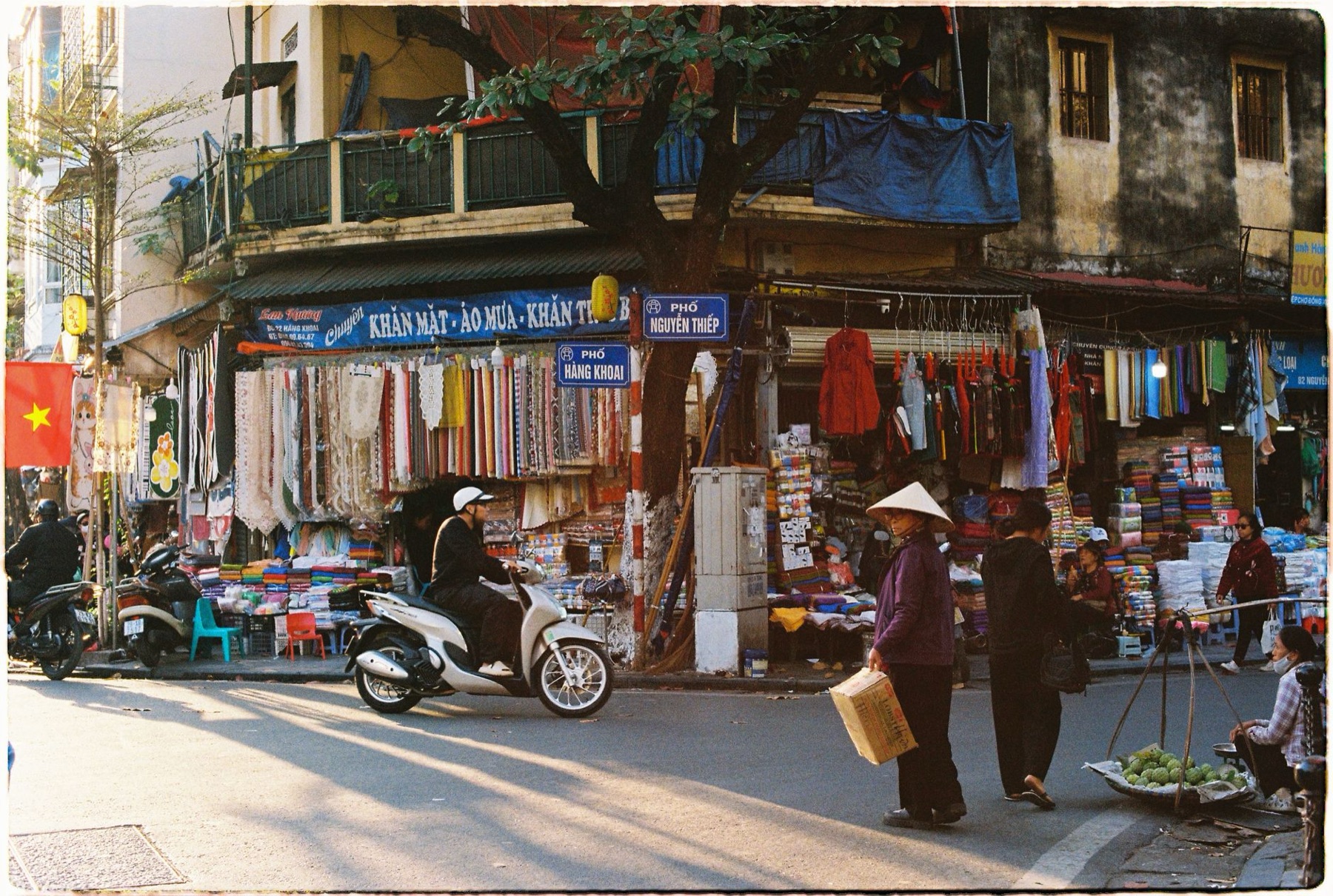
Where do real Hanoians buy phở, not tourists?
The Old Quarter's famous corners (Phố Hàng Gai, near Nguyễn Hữu Huân) charge 20–30% markup because foot traffic is dense. Skip those. Instead:
- Hoàn Kiếm district, backstreets between Phố Hàng Ngoài and Phố Hàng Mành: vendors set up 5–7 a.m., gone by 10 a.m. No English menus. Locals only. Around 45,000–55,000 VND / $1.80–$2.20 per bowl.
- Hà Đông district, near Chợ Hàng Mành market: harder to reach but cheapest and least touristy. Around 40,000–50,000 VND / $1.60–$2 per bowl.
- Hoài Đức district (northwest outskirts): if you're heading to Ha Long Bay, stop here on your way. Bowls around 35,000–45,000 VND / $1.40–$1.80.
The rule: if there's English signage or plastic chairs facing the street, you're paying tourist tax.
What's the real price breakdown, and when should I spend more?
| Bowl type | Size | Typical price (VND) | USD equiv. | Who it's for |
|---|---|---|---|---|
| Phở gà (chicken), local stall | Vừa (medium) | 45,000–55,000 | $1.80–$2.20 | Budget travelers, early risers, locals |
| Phở bò (beef), local stall | Vừa (medium) | 50,000–70,000 | $2–$2.80 | Beef lovers, casual tourists |
| Phở bò (beef), tourist-zone stall | Vừa (medium) | 80,000–120,000 | $3.20–$4.80 | Time-pressed, prefer air-con, comfort priority |
| Phở đặc biệt (special: extra meat) | Lớn (large) | 90,000–150,000 | $3.60–$6 | Hungry travelers, meat focus |
| Phở tái (rare beef, sliced fresh) | Vừa (medium) | 60,000–85,000 | $2.40–$3.40 | Adventurous eaters, beef texture lovers |
When to spend more: only if you're eating in the Old Quarter after 9 a.m., prefer sitting indoors, or want consistent temperature (some street stalls run uneven heat). Otherwise, 45,000 VND gets you a real bowl.
How do I avoid scams and rip-offs when ordering?
- Always confirm size before paying. Say "Một tô vừa" (one medium bowl, not large). Vendors will try to upsell "lớn" without asking.
- Watch the broth ladle. They should fill the bowl 2/3 with broth. If it's watery, walk out. Takes 30 seconds to check.
- Avoid stalls with pre-cut meat sitting out. Phở meat should be sliced fresh; if it's been exposed to air for over 2 hours, bacteria risk climbs.
- Never trust "tourist phở kits" sold in shops. These vacuum-packed noodle packets (around 15,000–30,000 VND / $0.60–$1.20) are convenience snacks, not real phở. Broth depth is impossible in a sealed bag.
- Refuse water that's not sealed. Free water at street stalls can come from unfiltered taps. Bring a bottle or buy sealed water (around 5,000–8,000 VND / $0.20–$0.30).
- Steer clear of stalls with no queue at 6–7 a.m. If locals aren't there, food quality is likely low. Queue = safety.
When should I get phở to-go vs. sitting?
Sit-down (plastic stool or bench):
- Broth stays hot longer.
- You can ask for a second helping of herbs and veg.
- Takes 15–20 minutes; slower pace.
- Local crowds; immersive.
- Same price as standing.
To-go (bag/container):
- Broth cools slightly but stays warm 10–15 minutes.
- Faster; ideal if you're rushing to a tour or hotel.
- They'll pack plastic utensils (ask for "dùm để").
- Common around 6–8 a.m. when workers grab breakfast.
We suggest sit-down your first time; you'll taste the broth better, and it's where Hanoi's food culture actually lives. Standing vendors are faster but the sensory experience is thinner.
🗺️ Plan your route: Vietnam itinerary
How to build your phở bowl: herbs, hot sauce & customization
Most stalls auto-load your bowl with:
- Rice noodles (bánh phở)
- Broth (nước dùng)
- Cooked meat (bò nạm or gà)
- Scallions & white onion
You add at the table:
- Thai basil (húng quế): peppery, herbaceous. Use liberally if you like funk.
- Cilantro (ngò): mild, fresh. Balance for cilantro-haters.
- Bean sprouts (giá đỗ): crunch, slight bitterness. Raw; adds texture.
- Lime (chanh): acid brightness. Squeeze at the end.
- Chili (ớt): fresh red or green slices, or ground chili powder (cay). Go slow; local heat tolerance is high.
- Hoisin (tương): sweet, funky, brown. Mix into broth or skip if you prefer clean taste.
- Sriracha (tương ớt): less common at street stalls; more Vietnamese at tourist spots. Not traditional.
Pro move: ask the vendor "thêm gì không?" (add anything?). They'll hand you a plate with all options. Mix in small amounts, taste, then add more. Phở broth is meant to be a blank canvas.
What happens if you're not an early riser—can you still eat good phở?
Yes, but expect different options. Most street vendors close by 10 a.m. (or when broth runs out). By noon, you're choosing between:
- Sit-down phở shops (open 10 a.m.–late): cleaner, air-con, consistent quality, slight markup (around 60,000–90,000 VND / $2.40–$3.60 for a medium bowl).
- Lunch-hour stalls (11 a.m.–2 p.m.): second wave of vendors in markets; still cheap (around 50,000–65,000 VND / $2–$2.60), less crowded.
- Tourist-zone stalls (any time): always open, always expensive (80,000–150,000+ VND / $3.20–$6+), broth quality varies.
If you're staying in Hanoi for multiple days, set at least one alarm for 6 a.m. The difference between breakfast phở and noon phở is real.
🎟️ Compare tours & tickets for this place
---
What to check before you order (the short checklist)
- Queue presence: Locals in line = good sign.
- Broth clarity & steam: Should be cloudy-white (stock emulsion) and actively hot.
- Meat visibility: If raw beef (tái), it should be pink-red, not brown. Cooked meat should smell clean.
- Vendor hygiene: Hands washed, utensils rinsed, broth pot covered when not in use.
- Price confirmation: Ask "bao nhiêu tiền?" (how much?) before sitting. No surprises.
- Bowl size naming: Vừa (medium) ≈ 400–500 ml. Lớn (large) ≈ 600–700 ml. Most tourists under-estimate portion.
- Seasoning control: Taste broth plain first. Add salt (muối) or fish sauce (nước mắm) only if needed.
---
📸 Book an ao dai photoshoot in Hanoi or Saigon (Cáo Studio)
If you're visiting Hoi An or Ninh Binh on the same trip, phở culture shifts slightly south; each region has texture preferences we've mapped in our regional guides. And if you're heading further east to Sapa or Ha Long Bay, phở availability drops—stock up your first days in Hanoi.
FAQ
Is street phở safe? Will my stomach handle it?
Yes, if you follow the hygiene checklist above. Thousands of visitors eat it daily without issue. Risk rises if you ignore the "no standing water" rule or eat from vendors with no queue. Start with phở gà (lighter broth) if your stomach is sensitive.
How much should I tip at a phở stall?
Tipping isn't expected at street stalls. Leave 5,000–10,000 VND / $0.20–$0.40 if the vendor goes extra (extra broth, fresh herbs refill). At sit-down shops, 10% is courteous but not required.
Can I eat phở for dinner?
Most real vendors close by 10 a.m. Dinner phở is rare and usually at sit-down shops (more expensive, broth can taste day-old). Hanoi treats phở as breakfast/lunch food. Dinner is cơm (rice) or bún (noodle) based.
What's the difference between phở and bún (rice vermicelli)?
Phở uses thick rice noodles in hot broth; bún uses thin rice vermicelli, cold or warm, with toppings on the side. Bún is cheaper (around 25,000–40,000 VND / $1–$1.60), lighter, and appears more at lunch. Phở is heavier, more warming, breakfast staple.
Can I get vegetarian phở?
Yes. Ask for "phở chay" (phở vegetarian). Broth is usually mushroom or vegetable stock, tofu replaces meat. Around 35,000–50,000 VND / $1.40–$2. Less common at street stalls; more reliable at sit-down shops in Hoàn Kiếm or near Hoan Kiem Lake tourist areas. Quality varies; ask the vendor if broth was made vegetarian from the start (not just meat-free after the fact).
What should I bring to eat phở comfortably?
A small spoon (most stalls provide plastic), small napkins, and wet wipes for your hands afterward. Phở broth splashes. We recommend grabbing a Vietnam eSIM before your trip so you can text your hotel if you need directions to a recommended stall, and booking your Vietnam visa at least a week ahead if needed.
FAQ
Is street phở safe? Will my stomach handle it?
Yes, if you follow the hygiene checklist above. Thousands of visitors eat it daily without issue. Risk rises if you ignore the "no standing water" rule or eat from vendors with no queue. Start with phở gà (lighter broth) if your stomach is sensitive.
How much should I tip at a phở stall?
Tipping isn't expected at street stalls. Leave 5,000–10,000 VND / $0.20–$0.40 if the vendor goes extra (extra broth, fresh herbs refill). At sit-down shops, 10% is courteous but not required.
Can I eat phở for dinner?
Most real vendors close by 10 a.m. Dinner phở is rare and usually at sit-down shops (more expensive, broth can taste day-old). Hanoi treats phở as breakfast/lunch food. Dinner is cơm (rice) or bún (noodle) based.
What's the difference between phở and bún (rice vermicelli)?
Phở uses thick rice noodles in hot broth; bún uses thin rice vermicelli, cold or warm, with toppings on the side. Bún is cheaper (around 25,000–40,000 VND / $1–$1.60), lighter, and appears more at lunch. Phở is heavier, more warming, breakfast staple.
Can I get vegetarian phở?
Yes. Ask for "phở chay" (phở vegetarian). Broth is usually mushroom or vegetable stock, tofu replaces meat. Around 35,000–50,000 VND / $1.40–$2. Less common at street stalls; more reliable at sit-down shops in Hoàn Kiếm or near Hoan Kiem Lake tourist areas. Quality varies; ask the vendor if broth was made vegetarian from the start (not just meat-free after the fact).
What should I bring to eat phở comfortably?
A small spoon (most stalls provide plastic), small napkins, and wet wipes for your hands afterward. Phở broth splashes. We recommend [grabbing a Vietnam eSIM](/vietnam/esim) before your trip so you can text your hotel if you need directions to a recommended stall, and booking [your Vietnam visa](/vietnam/visa) at least a week ahead if needed.
More: Hanoi guide · What to eat in Hanoi