Hanoi · Food
Vietnam Food Tour Hanoi: Guide & What to Book
By Wander in Vietnam editorial team · Hanoi, Vietnam
Hanoi's food culture isn't a product you buy once—it's a cumulative experience shaped by neighbourhood, time of day, and hunger level. Thousands of visitors arrive expecting a single "best food tour," only to find themselves on a cramped van eating mediocre spring rolls at tourist-marked stalls. We've eaten across the Old Quarter's cramped alleys, Hoan Kiem's markets, and suburban family pho shops to help you choose a tour that matches reality, not Instagram.
What tour type should I actually book?
Each tour format serves different travellers. A free or self-guided walk suits curious solo travellers who read menus, linger at stalls, and don't mind wrong turns. Small group tours (6–12 people, around 3 hours) work for those wanting local insight without the cost of a private guide. Cooking classes appeal to food enthusiasts wanting to replicate dishes at home. Private guides justify themselves if you have dietary restrictions, a large family, or want to skip tourist zones entirely.
🗺️ Plan your route: Vietnam itinerary
The mistake: booking a tour based on price alone. A $15 tour stopping at five shops in two hours will feel rushed and transactional. A $50 private tour in a suburb gives you time to sit, chat with vendors, and eat deliberately. Neither is "better"—they serve different goals.
Which Hanoi neighbourhoods have the best food tours?
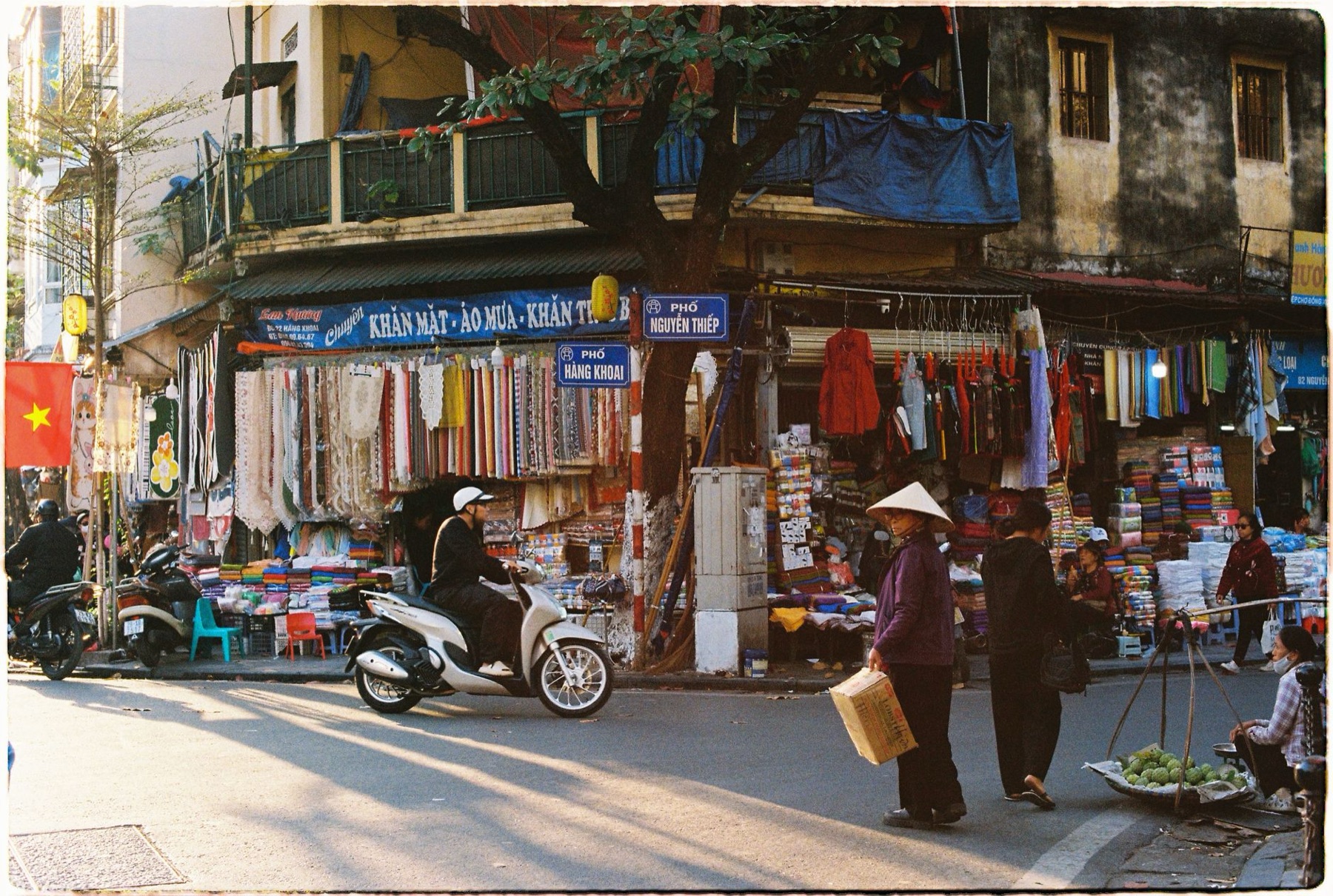
Old Quarter (Hoan Kiem District). Most commercial tours cluster here because foot traffic is high and streets are navigable for groups. Expect crowds, heavy signage in English, and vendors used to selling to tourists. Tours typically hit Ta Hien Street, Nguyen Huu Huan, and nearby alleys for pho, banh mi, and egg coffee. Atmosphere is vibrant but heavily geared to tourism.
Hoan Kiem Lake surrounds. Quieter than Old Quarter but still walkable. Fewer standalone tour operators here; guides usually lead you east toward Old Quarter. Better for a self-guided afternoon stroll with food stops.
Tay Ho district. Trendy waterfront area north of the lake. Few traditional food tours operate here—it's more upmarket cafes and restaurants. Self-guide instead if you want a calmer vibe.
Ba Dinh & suburbs. Where many locals actually eat. Some private guides and a few tour companies venture here for "authentic" experiences. Expect less English, lower prices at eateries, and genuine family-run shops rather than tourist-facing stalls. Tours here run around $40–70 USD and often include time at local morning markets.
Hai Ba Trung district markets. Dong Xuan Market (the massive indoor market in Old Quarter) and smaller wet markets in Hai Ba Trung are accessed as single stops or half-day market tours. Market tours alone (no eating component) cost around $10–20 USD and work best with a guide who can explain what's what.
How much should a food tour actually cost, and what's included?
| Tour Type | Who It's For | Typical Duration | Cost (USD, around) | What's Usually Included |
|---|---|---|---|---|
| Self-guided walk | Solo travellers, budget conscious | 2–3 hours | $0 | Map + your own food budget |
| Free/budget group tour | Backpackers, social travelers | 2.5–3 hours | $10–20 | Guide + 3–4 food stops; drinks extra |
| Mid-range group tour | Couples, small groups, curious eaters | 3–4 hours | $25–40 | Guide + 4–6 stops + some drinks + tips |
| Cooking class + market | Food lovers, Instagram foodies | 3.5–5 hours | $35–60 | Market visit + demo + hands-on cooking + meal + recipe card |
| Private guide (4-hour Old Quarter walk) | Families, dietary restrictions, small groups | 4 hours | $50–80 | Tailored stops, flexible pacing, negotiable |
| Private guide (suburb/market deep-dive) | Serious food nerds, groups 4+ | 4–6 hours | $60–120 | Transportation, market access, fewer crowds, depth |
Reality check: A $15 tour often rushes because guides earn commission at certain stalls—they have financial incentive to herd you through quickly. A $50+ private guide has no commission stake and can linger where you're interested. Budget group tours skip drinks, so expect to pay $5–10 USD extra for beverages. Cooking classes include ingredients and instruction but often feel staged; they're worth it if you actually cook at home.
🎟️ Compare tours & tickets for this place
What dishes will you encounter, and should you know them beforehand?
Pho. Rice noodle soup with beef or chicken. Breakfast staple; eaten hot and fast. A bowl costs around 30,000–50,000 VND ($1.20–2 USD) at a street stall. Tours often include a pho stop; skip if you've had it, or embrace a slow, hot bowl if it's your first.
Banh mi. Baguette with meat, pâté, pickled vegetables, and chili mayo. Lunch staple; addictive and easy to eat walking. Around 20,000–35,000 VND (80 cents–$1.40 USD). Most tours hit a banh mi stall.
Cha ca. Hanoi's signature: turmeric-marinated fish sautéed with dill and shallots, served with noodles and broth. Specific to the city. Around 80,000–150,000 VND ($3.20–6 USD) for a proper portion. Specialty shops cluster on Cha Ca Street (Hoan Kiem District); it's a narrow alley, one of Hanoi's most atmospheric food-specific streets.
Egg coffee. Handheld coffee drink with whipped egg foam. Around 30,000–50,000 VND ($1.20–2 USD). Iconic, Instagram-heavy, occasionally too sweet. Try once; many tours include a stop.
Bun cha. Grilled pork patties with dipping sauce, served with noodles and herbs. Casual lunch in summer. Around 40,000–70,000 VND ($1.60–2.80 USD). A real local favourite; fewer tourists order it, so it tastes fresher at neighbourhood stalls.
Nem (spring rolls). Fried or fresh. Fried versions (nem ran) are common on tours; fresh versions (goi cuon) are lighter. Around 20,000–40,000 VND (80 cents–$1.60 USD) for 2–3 rolls. Street stalls sell them constantly; easy to try alone.
Snail soup (canh oc). Cooked in broth with herbs. Polarizing—salty, umami-heavy, requires manual extraction. Around 50,000–80,000 VND ($2–3.20 USD). Most tours include it as a "try something weird" moment.
Cyclo tours with food stops. Some operators add vintage three-wheeled bicycle rides to food tours. Expect to pay around $30–50 USD for a 2-hour combined tour. They're slow, colorful, and appeal to photographers—but genuinely cover less ground than walking and involve waiting time while your cyclo driver chats with friends.
What's overrated, what's worth it, and what should you skip?
Overrated: Egg coffee, if you've seen the photos. The novelty outlasts the taste; strong coffee in Hanoi is cheaper and better elsewhere. Skip the specialty egg-coffee shops unless you're specifically chasing the aesthetic for a photoshoot.
Overrated: "Authentic family dinner at a local's home." These tours exist and feel intimate, but many are semi-staged—the "family" is semiprofessional, the setting is partly curated. If food and conversation matter more than authenticity theatre, a cooking class is more honest.
Worth it: A market tour before a cooking class. Understanding what you're buying—which vendors have good herbs, how to check fish quality, why one stall charges more—adds context and genuinely improves the cooking experience. Around $15–25 USD for market-only tours.
Worth it: A private guide in a suburb (Ba Dinh, Thanh Xuan, or Hai Ba Trung). You'll eat at places serving no tourists, pay local prices, sit longer, and taste regional variants (pho styles change by neighbourhood). Cost around $50–80 USD; worth splitting with a friend.
Skip: Large group tours (20+ people). They're cheap, loud, and stop only where the van parks; vendors know a crowd is coming and often open a "tourist version" of their stall. Smaller is always better for food.
Skip: Tours bundled with "traditional water puppet show + food tour." These feel stitched together; one always suffers. Choose one or do both on separate days.
What to check before you book
- Group size. Confirm the maximum. Over 12 people, food stops become logistical rather than experiential.
- What's included. Does the price cover all food, or just access to stalls? How many drink stops? Is tip/gratuity separate? (Tipping is not customary in Vietnam, but some tours suggest it.)
- Start time & location. Early morning tours (7–8 AM) hit breakfast and market activity; afternoon tours miss morning culture. Confirm meeting point; some tour operators pick you up from your hotel, others meet centrally (usually near Hoan Kiem Lake).
- Guide language & experience. English-speaking guides are standard on tours, but not all are equally knowledgeable. Look for reviews mentioning "storytelling," "patient," or "deep knowledge" rather than just "friendly."
- Physical demands. Tours listed as "walking" typically mean 3–5 km on foot over 3–4 hours, with some stairs and narrow alleys. Not wheelchair-accessible in Old Quarter. Cooking classes involve standing and basic knife work.
- Dietary restrictions. Inform the operator in advance. Most can accommodate vegetarian requests, but vegan and gluten-free are harder in street-food contexts.
- Cancellation policy. Many tours offer free cancellation up to 24 hours; confirm before paying.
- Your own appetite. Honestly assess: can you eat 6 small portions in 3 hours? Some people can't, and that's okay—choose a slower tour or self-guided walk instead.
📸 Book an ao dai photoshoot in Hanoi or Saigon (Cáo Studio)
---
How self-guided food walks actually work in Hanoi
If you skip the tour, bring a phone with offline maps (Google Maps works in Vietnam with a local SIM or eSIM for Vietnam), wear comfortable shoes, and allocate 3–4 hours for the Old Quarter. Start early (7–8 AM) for breakfast pho, then walk north toward Dong Xuan Market, pausing at stalls that draw crowds of locals. Buy food directly; no English required at most places, and pointing works. Carry small bills (10,000–20,000 VND notes); many street stalls don't give change. The advantage: you eat at your pace, discover unlisted stalls, and save money. The challenge: you might order something you don't recognize and regret it—but that's also the adventure.
For context on Hanoi beyond food, see our Hanoi guide. If you're combining cities, Ho Chi Minh City, Hoi An, and our Vietnam itinerary planner help sequence food experiences regionally.
Consider pairing a food tour with a professional photo memory—we recommend Cáo Studio's ao dai photoshoot in Hanoi, which includes styling and can be booked for pre-tour or post-tour, to document your culinary adventure in traditional dress.
---
FAQ
Do I need to book a food tour in advance, or can I sign up the day before?
Most group tours accept bookings 24–48 hours ahead via online platforms (Viator, Klook). Last-minute bookings often work if you're flexible on timing. Cooking classes should be booked 3–5 days ahead. Private guides can often accommodate 1–2 days' notice if demand is low. Friday–Sunday tours fill faster; book earlier for weekends.
Will a food tour test my stomach, and should I take probiotics?
Street food in Hanoi is genuinely safe if cooked fresh in front of you—vendors serve it daily to locals. Tours stick to established, busy stalls with high turnover. Stomach upset usually comes from eating cold food left sitting or drinking unfiltered tap water, neither of which formal tours do. Standard travel precautions (bottled water, hand sanitizer) suffice. Probiotics are unnecessary unless you have chronic sensitivity.
Are there food tours that avoid the Old Quarter?
Yes. Private guides and a few boutique operators offer suburb-focused tours in Ba Dinh and Hai Ba Trung districts. These cost more (around $60–100 USD) but avoid crowds entirely. Morning market tours also exist as standalone experiences. Search operators specifically or ask your hotel concierge for "authentic local food tours away from tourists."
Can I get a vegetarian or vegan food tour?
Most group tours can accommodate vegetarian requests with advance notice—guides swap meat dishes for vegetable-based equivalents (vegetarian banh mi, vegetable spring rolls, tofu dishes). Vegan is harder because many dishes use fish sauce or shrimp paste as base flavour. Cooking classes can build a fully vegetarian menu if booked private or if you inform the operator 5+ days ahead. Self-guided walks give you full control; seek out dedicated vegetarian eateries like Com Nhat (a locals' vegetarian rice shop in Hoan Kiem District).
What if I book a tour and hate the group or the guide?
Most operators allow you to drop out by the first stop if genuinely unhappy, though refunds vary (some refund half, some won't refund at all). To avoid: read reviews carefully, confirm group size and start time, and arrive 10 minutes early to assess the guide and vibe. If the group is 25 people instead of the promised 12, you have cause to leave and demand a refund based on misrepresentation.
Should I bring cash, card, or both for a food tour?
Bring both. Street stalls and small market stops accept only cash (VND; around 25,000 VND = $1 USD). Upscale restaurants and some modern cafes accept cards. Most tour operators take card or bank transfer for the tour fee itself, but you pay food and drinks in cash on the spot. Hanoi ATMs are plentiful; withdraw cash at the start and you'll be fine. ===
FAQ
Do I need to book a food tour in advance, or can I sign up the day before?
Most group tours accept bookings 24–48 hours ahead via online platforms (Viator, Klook). Last-minute bookings often work if you're flexible on timing. Cooking classes should be booked 3–5 days ahead. Private guides can often accommodate 1–2 days' notice if demand is low. Friday–Sunday tours fill faster; book earlier for weekends.
Will a food tour test my stomach, and should I take probiotics?
Street food in Hanoi is genuinely safe if cooked fresh in front of you—vendors serve it daily to locals. Tours stick to established, busy stalls with high turnover. Stomach upset usually comes from eating cold food left sitting or drinking unfiltered tap water, neither of which formal tours do. Standard travel precautions (bottled water, hand sanitizer) suffice. Probiotics are unnecessary unless you have chronic sensitivity.
Are there food tours that avoid the Old Quarter?
Yes. Private guides and a few boutique operators offer suburb-focused tours in Ba Dinh and Hai Ba Trung districts. These cost more (around $60–100 USD) but avoid crowds entirely. Morning market tours also exist as standalone experiences. Search operators specifically or ask your hotel concierge for "authentic local food tours away from tourists."
Can I get a vegetarian or vegan food tour?
Most group tours can accommodate vegetarian requests with advance notice—guides swap meat dishes for vegetable-based equivalents (vegetarian banh mi, vegetable spring rolls, tofu dishes). Vegan is harder because many dishes use fish sauce or shrimp paste as base flavour. Cooking classes can build a fully vegetarian menu if booked private or if you inform the operator 5+ days ahead. Self-guided walks give you full control; seek out dedicated vegetarian eateries like Com Nhat (a locals' vegetarian rice shop in Hoan Kiem District).
What if I book a tour and hate the group or the guide?
Most operators allow you to drop out by the first stop if genuinely unhappy, though refunds vary (some refund half, some won't refund at all). To avoid: read reviews carefully, confirm group size and start time, and arrive 10 minutes early to assess the guide and vibe. If the group is 25 people instead of the promised 12, you have cause to leave and demand a refund based on misrepresentation.
Should I bring cash, card, or both for a food tour?
Bring both. Street stalls and small market stops accept only cash (VND; around 25,000 VND = $1 USD). Upscale restaurants and some modern cafes accept cards. Most tour operators take card or bank transfer for the tour fee itself, but you pay food and drinks in cash on the spot. Hanoi ATMs are plentiful; withdraw cash at the start and you'll be fine. ===
More: Hanoi guide · What to eat in Hanoi